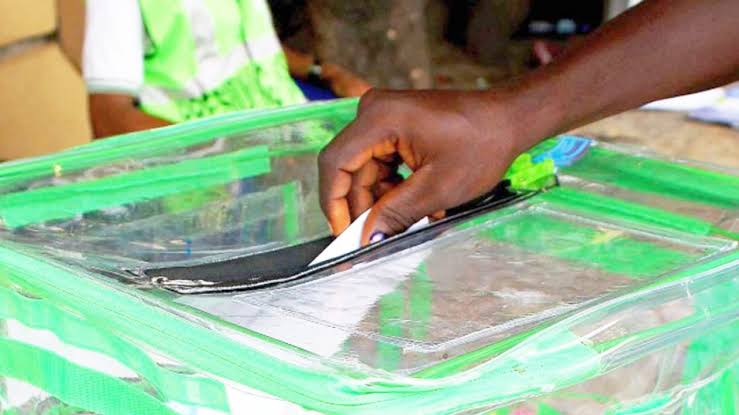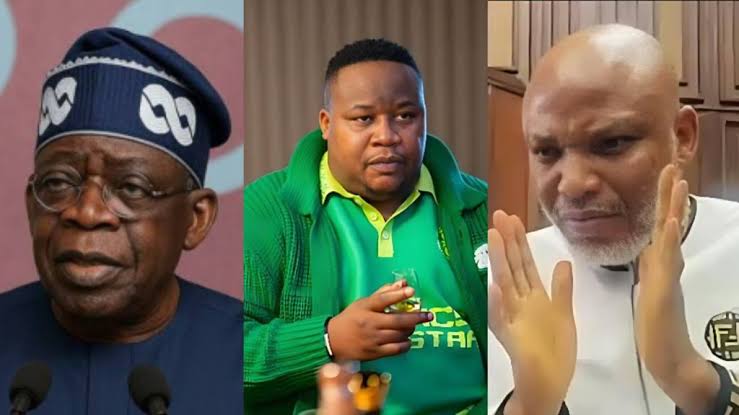
Nigeria in 2026 is in the midst of political reflection and strategic calculation, as the nation begins to prepare for the 2027 general elections. Among the most closely watched developments is the ongoing discussion surrounding Nnamdi Kanu, the leader of the Indigenous People of Biafra (IPOB), who was convicted of terrorism-related offenses on 29 December 2025 and is serving a life sentence. His detention has become more than a legal issue; it has become a symbol of regional and ethnic considerations in national politics. Kanu’s imprisonment continues to fuel tension and debate in the South-East, where many view his incarceration as a reflection of marginalization, while others see it as a legal imperative for national security.
In early February 2026, the conversation took on a new dimension when Cubana Chief Priest, a prominent Nigerian businessman and social influencer, publicly suggested that political alignment with President Bola Tinubu could offer the South-East leverage over both Kanu’s detention and the possibility of a future Igbo presidency. This idea, while speculative, has captured national attention and provoked discussion on the practical, ethical, and long-term implications of strategic political alignment in Nigeria.
The suggestion that aligning with the current federal government could influence both justice outcomes and ethnic representation underscores the interplay between politics, regional aspirations, and national governance. Historically, Nigerian politics has operated on a mixture of formal constitutional rules and informal agreements that shape power distribution among ethnic groups. This interplay has often led to negotiations where loyalty and strategic support can translate into policy influence, appointments, or electoral consideration.
Cubana Chief Priest’s comments, made in response to a video of Enugu State traditional ruler Lawrence Agubuzu appealing to President Tinubu to release Kanu on 10 February 2026, tie these historical patterns to current political realities, creating both intrigue and controversy in public discourse.
Understanding Kanu’s Detention and Its Political Significance
Nnamdi Kanu was first arrested in 2015 and later re-arrested in 2021 under the administration of President Muhammadu Buhari. After a series of legal proceedings, Kanu was convicted on 29 December 2025 for terrorism-related charges and sentenced to life imprisonment. His case has always been polarizing because it intersects legal, social, and political narratives. For many in the South-East, Kanu is seen as a figure who embodies both regional pride and resistance to perceived federal marginalization. His incarceration is often viewed through the lens of ethnic representation and political exclusion. Protests, advocacy campaigns, and social media discussions have kept Kanu’s case in the public eye, ensuring that his imprisonment remains a flashpoint for debates about South-East influence in national politics.
The significance of Kanu’s detention goes beyond the courts. Analysts have noted that his imprisonment has become a barometer for the South-East’s relationship with the federal government. It reflects the tension between enforcing national law and recognizing the unique political and historical grievances of the region. In this context, discussions around aligning with the ruling party become not only a tactical question but also a reflection of broader debates about whether negotiation, collaboration, or confrontation is more effective in achieving political and social objectives. Kanu’s continued detention is a reminder that justice, politics, and ethnic representation in Nigeria are often intertwined, and navigating this intersection is crucial for the South-East as it approaches the 2027 general election.
Cubana Chief Priest’s Perspective
On 12 February 2026, Cubana Chief Priest publicly suggested that the South-East could gain leverage in both political and social matters by aligning with President Bola Tinubu. His remarks were made during an interview with a Lagos-based media platform, where he emphasized the importance of strategic alignment rather than confrontation. He argued that opposing the federal government through protests or isolation had historically yielded little result, and that supporting the ruling party could translate into tangible political returns, including negotiation opportunities for Kanu’s release.
Cubana Chief Priest framed his comments within the broader context of Nigeria’s political landscape. He cited Tinubu’s victory in the 2023 presidential election, which was achieved despite minimal support from the South-East, as evidence of the president’s capacity to shape leadership outcomes and influence national policy. By highlighting Tinubu’s strength and political reach, Cubana Chief Priest presented alignment as a pragmatic choice for the South-East, suggesting that collective electoral support could serve as leverage for both immediate and long-term objectives.
He also introduced the speculative notion that backing Tinubu in 2027 could help pave the way for a future Igbo presidency. The logic is that demonstrating loyalty to a powerful political figure could position the South-East to negotiate influence over future leadership selections, echoing historical patterns where political alliances have been used to secure regional representation at the federal level. This framing connects the personal issue of Kanu’s detention with the broader, enduring aspiration of the South-East to achieve equitable representation in Nigeria’s political hierarchy.
Strategic Implications for the South-East
The suggestion to align with the ruling party carries both opportunities and risks for the South-East. On one hand, supporting Tinubu could provide the region with political leverage to influence federal decisions on a range of issues, including Kanu’s imprisonment, appointments, and infrastructure projects. Analysts argue that strategic alignment could serve as a pragmatic approach to achieving multiple objectives simultaneously. By demonstrating electoral cohesion and political discipline, the South-East could negotiate effectively with federal authorities, thereby translating symbolic loyalty into tangible benefits.
On the other hand, the approach also carries risks. Critics argue that tying political support to individual or ethnic objectives may be perceived as transactional and could undermine principles of good governance. There is a possibility that the strategy might alienate segments of the population who view Kanu as a symbol of resistance and who oppose engagement with the federal government. Maintaining a balance between ethical principles, public perception, and pragmatic political calculation is therefore a critical challenge.
Moreover, the South-East must consider the complexities of Nigeria’s judicial system. Kanu’s release, while politically desirable for some, cannot be guaranteed solely through alignment or negotiation. The courts maintain independence, and legal rulings must adhere to established procedures. The alignment strategy proposed by Cubana Chief Priest therefore serves more as a means of increasing influence and leverage rather than as a guarantee of immediate legal outcomes.
Historical Context of Igbo Presidency Aspirations
The aspiration for an Igbo presidency in Nigeria has deep historical roots. Since the end of military rule in 1999, no Igbo candidate has been elected president through a direct vote, despite the region’s economic and social significance. Informal power rotation arrangements, political alliances, and strategic negotiations have often been used to balance ethnic representation, but the South-East has yet to secure the presidency through popular election. These historical patterns inform current discussions about aligning with the ruling party. Political analysts note that in previous elections, demonstrating loyalty to a dominant political figure often translated into regional representation, appointments, and influence within the federal administration.
Cubana Chief Priest’s argument builds on this historical understanding. By framing alignment with Tinubu as a strategy to secure both immediate and long-term objectives, he is connecting contemporary electoral strategy to historical patterns of political negotiation. The notion is that strategic electoral support can be leveraged to achieve both justice outcomes, such as Kanu’s release, and broader regional objectives, such as increasing the probability of an Igbo presidency in the next election cycle. This framing highlights the intricate relationship between historical precedent, contemporary politics, and aspirational goals within Nigerian democracy.
Possible Outcomes and Political Scenarios
If the South-East chooses to align with Tinubu, several potential outcomes could emerge. Politically, the region could gain leverage in federal negotiations on infrastructure, appointments, and policy implementation. Symbolically, alignment could demonstrate the South-East’s capacity to act cohesively, potentially enhancing its negotiating position in both 2027 and future elections. Strategically, demonstrating support for a powerful political figure could position the region to influence discussions surrounding leadership succession, thereby indirectly increasing the likelihood of an Igbo presidency.
However, there are counter-scenarios to consider. Alignment does not guarantee immediate action regarding Kanu’s detention, as judicial processes and national security considerations will remain decisive. There is also the risk of internal division, with some communities perceiving alignment as compromising ethical standards or betraying the symbolic resistance represented by Kanu. These outcomes illustrate the high-stakes nature of political calculation in the South-East, where the region must balance practical influence with public perception and ethical considerations.
Public and Expert Reactions
Reactions to Cubana Chief Priest’s statements have been mixed. Many in the South-East view his perspective as pragmatic and grounded in political realism. They see alignment as a mechanism to achieve multiple objectives, including influencing federal policy and enhancing prospects for regional representation. Others, however, criticize the approach as transactional, arguing that linking political support to individual or ethnic gain risks undermining democratic principles and could alienate segments of the population who oppose engagement with the ruling party.
Legal experts have emphasized that Kanu’s detention remains primarily a judicial matter. The Federal High Court’s decision in December 2025 established the basis for his life sentence, and any intervention by political actors must adhere to constitutional and legal norms. This highlights the complexity of intertwining political negotiation with judicial outcomes. Despite this, public discourse has increasingly focused on strategic alignment, illustrating the perceived connection between political influence and legal or social outcomes in Nigeria’s contemporary political landscape.
Socio-Political Implications for 2027
The approaching 2027 elections represent a pivotal moment for South-East Nigeria. Decisions made during this period will influence both immediate concerns, such as Kanu’s case, and long-term objectives, such as regional representation and the possibility of an Igbo presidency. Strategic alignment could yield leverage, yet it requires careful consideration of public perception, ethical boundaries, and the risks of over-reliance on a single political figure.
The broader implications extend to national governance. Demonstrating political unity, negotiating leverage, and strategically engaging with the ruling party could provide the South-East with a platform to influence federal decisions beyond electoral cycles. The stakes are high, as the choices made now will shape perceptions of regional agency, political efficacy, and the potential for equitable representation in the federal government.
Final Reflection
The discussions surrounding Nnamdi Kanu, a potential Igbo presidency, and alignment with President Bola Tinubu highlight the complex interplay between law, ethnicity, and politics in Nigeria. The South-East faces decisions that will shape immediate outcomes and long-term regional aspirations. Cubana Chief Priest’s comments in February 2026 illustrate the potential for strategic political engagement to influence both justice-related outcomes and regional representation.
While alignment may provide leverage, it carries uncertainties related to legal procedures, public perception, and political ethics. The 2027 election represents a critical juncture in Nigeria’s political history, with the South-East positioned to negotiate influence, assert agency, and potentially advance the cause of regional representation within the federal framework. The interplay between strategy, loyalty, and aspiration will define the region’s engagement in the upcoming electoral process, making every decision consequential for both the present and the future.