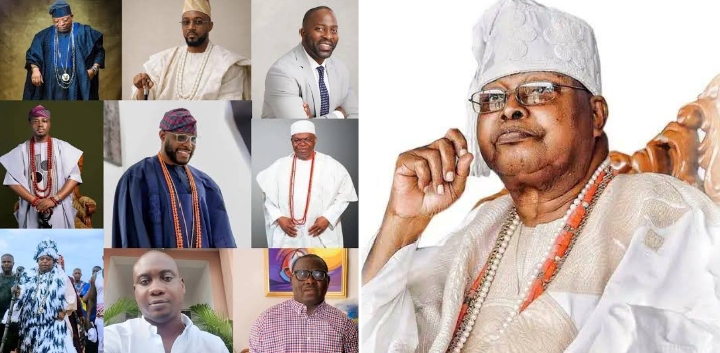
In the heart of Ijebuland in Ogun State, a profound event that carries centuries of tradition and identity is unfolding with a gravity that touches every corner of this storied community. The stool of the Awujale and Paramount Ruler of Ijebuland stands vacant for only the third time in modern memory following the death of Oba Sikiru Kayode Adetona on 13 July 2025 at the age of 91. His passing concluded a reign that began in 1960 when he was crowned the Awujale after years of service and leadership. His tenure stretched for 65 years and anchored the life of Ijebuland through shifts in society, economy, religion, and the larger fabric of Nigerian governance.
In early January 2026, the ruling house next in rotation and entitled by traditional custom and state chieftaincy law to present candidates began the solemn and elaborate process of nominating contenders for this sacred stool. The Fusengbuwa Ruling House of Ijebu‑Ode convened a nomination meeting at the Bisi Rodipe Hall in the Government Residential Area of Ijebu‑Ode, where delegates from all family branches gathered to record names. On Monday, 12 January 2026, the historic day saw a total of 95 aspirants formally listed as nominees for the vacant stool of the Awujale. Of these 95 contenders, 94 were male princes and one was a princess who presented herself alongside her male counterparts.
These 95 aspirants represent not only a long list of names but a tapestry of individual stories, aspirations, and deep familial heritage within one of Ijebu’s most revered royal lineages. It was a ceremony marked by high tradition, ancient responsibility, and a palpable sense of history in motion. Elders and family leaders spoke of continuity, unity, and peace even as the shadow of competition settled upon the great task ahead.
The Legacy of the Awujale Stool
To understand the significance of the nomination of 95 aspirants, one must first understand the institution these princes and princess seek to lead. The title Awujale is not a ceremonial appellation but the spiritual and cultural symbol of Ijebu identity. The Awujale of Ijebuland stands as the traditional ruler of the entire Ijebu kingdom and is venerated not only within Ijebu towns but across the Yoruba cultural world, where monarchs are seen as custodians of history, morality, and spiritual balance.
Oba Sikiru Kayode Adetona was one of the longest-serving traditional rulers in Nigeria and was often described by admirers and detractors alike as a stabilizing force whose presence bridged generations. His coronation on 2 April 1960 ushered in an era where the stool became a point of reference for Ijebu unity throughout Nigeria’s tumultuous political history. After his death, the entire community was gripped by reflection on his legacy and the question of who could carry forth the responsibilities he bore for so long.
The stool itself is defined by custom and the Ogun State Chiefs Law under customary practice, which designates which royal houses can put forward candidates during their rotation. The Fusengbuwa Ruling House is next in line under this regulation and therefore became the body responsible for the nomination exercise. The process is not a simple declaration but an intricate procedure involving lineage verification, genealogical claims, and adherence to tradition.
The Meeting at Bisi Rodipe Hall
On the day of the nomination meeting, many were present not simply to witness but to affirm something larger than any individual ambition. In attendance were the leading elders of the Fusengbuwa Ruling House, including the Chairman Olori Ebi Otunba Lateef Owoyemi, who addressed the gathering. With a measured voice, he reminded those present that the task before them was not simply a contest of names but a reaffirmation of the lineage itself. He spoke of peace, decorum, and the importance of submitting to process and tradition as the names were recorded.
Around him sat representatives from family units across Ijebu‑Ode, families tracing descent in patterns that extend back generations. The meeting was dignified and solemn, the air heavy with anticipation and the weight of history. Leaders reminded those present that the Awujale stool carries not only cultural preservation but the hopes of future generations of Ijebu people. Every candidate to be nominated had to present detailed genealogy tracing their descent from the Fusengbuwa lineage, confirming that they were born into a line whose ancestors once walked the same paths and upheld the traditions that bind Ijebu identity.
The names of the 95 aspirants were read one by one, scribes recorded them into the official list to be forwarded to the kingmakers, the Afobajes, who will in due course begin screening before narrowing down to a shortlist and eventual selection. Among the nominees were individuals of varied background and experiences, some known within local communities, others engaged in business and professional spheres beyond Ijebu. The diversity underscored how deeply the stool resonates beyond customary realms into modern life.
The 95 Nominated Aspirants for the Awujale Stool
The Fusengbuwa Ruling House officially submitted the full list of nominees during the January 2026 meeting in Ijebu‑Ode. This list includes 94 princes and one princess, all publicly confirmed by major Nigerian news outlets. Below are the officially published names of all aspirants:
Prince Adetunji Adeleke
Prince Bello Ayodeji
Princess Oluwakemi Onanuga
Prince Babatunde Alesinloye
Prince Ayodeji Osibogun
Prince Oluwatosin Osunsanya
Prince Abimbola Onabanjo
Prince Adekunle Adeite
Prince Aderibigbe Morounfolu
Prince Adekoya Onakoya
Prince Odedina Taiwo
Prince Gbadebo Ali Adebambo
Prince Ogunwo Adebowale Emmanuel
Prince Abayomi Kadiri
Prince Hassan Adekunle Olubola
Prince Akintola Adewunmi
Prince Olabode Onanuga
Prince Ayo Olugbenga
Prince Ademorin Kuye
Prince Olamilekan Badiru
Prince Odubiyi Olufemi
Prince Abdulrasheed Kukoyi
Prince Ottun Olaseni
Prince Kayode Adenuga
Prince Adeleye Onanuga
Prince Olanrewaju Mabawonku
Prince Adeyemi Akeem
Prince Nurudeen Akeju
Prince Adeleke Adewale
Prince Olaide Ashiru
Prince Oriola Yusuf
Prince Ajibola Odunsi
Prince Aderibigbe Azeez
Prince Oriola Olawale Yusuf
Prince Fatai Adesegun Arowolo
Prince Alatise Saheed
Prince Bakare Adeleke
Prince Olukokun Adedeji
Prince Oludamisi Tuyo
Prince Jide Taiwo
Prince Adeyinka Bakare
Prince Sakiru Ademola
Prince Aderibigbe Adewunmi
Prince Adeleye Abdul
Prince Ademola Kazeem
Prince Sherrifideen Kazeem
Prince Bello Abiodun
Prince Bashorun Akeem Adetola
Prince Oshifuye Oduntan
Prince Bello Tajudeen
Prince Adegboyega Banjoko
Prince Abdulwaheed Shote
Prince Kama’ldeen Abdul
Prince Odejayi Akintunde
Prince Muideen Adeleye Adio
Prince Olalekan Shote
Prince Mustapha Mojeed
Prince Adegbenga Bakare
Prince Adebiyi Adeleye
Prince Okeowo Olusegun Obafemi
Prince Olumoko Qudus
Prince Shote Kazeem Olawale
Prince Adebowale Olufeko
Prince Muizdeen Abimbola
Prince Bamidele Adenuga
Prince Ogidan Adewale
Prince Adefuwape Adegboyega Abimbola
Prince Oduwole Tajudeen
Prince Adelaju Adenuga
Prince Odedina Oluwatobi
Prince Adekunle Adenuga
Prince Sulaimon Odubanjo
Prince Otun Abubakre Taiwo
Prince Olajibu Olalekan Azeez
Prince Abdul Olamilekan
Prince Adeleye Adeyemi
Prince Odedina Olukayode
Prince Osunsanya Oladapo
Prince Abiodun Onanuga
Prince Muftaudeen Abimbola
Prince Kamorudeen Lawal
Prince Abimbola Olusegun
Prince Tajudeen Abimbola
Prince Hammed Babatunde
Note: more additional names were also nominated, bringing the total to 95 aspirants, but these names were not individually named in the published reports.
Dissecting the List of Aspirants
As the names were called, it became clear that the nomination was not a perfunctory formality but a serious reflection of the pride and heritage contained within the Fusengbuwa Ruling House. At the top of that list was Prince Adetunji Adeleke, a young man whose deep involvement in community affairs had already made him a recognizable name among the elders. Following him was Prince Bello Ayodeji, known for his contributions to local charity and development initiatives. The lone female nominee Princess Oluwakemi Onanuga stood among these men as a testament to evolving tradition and a challenge to the conventional boundaries of aspiration within the community.
Also on the list were names that carried weight in their own right from every corner and branch of the Fusengbuwa family. Prince Babatunde Alesinloye and Prince Ayodeji Osibogun both trace back to lineages revered for their historical stewardship of family lands and heritage. Prince Abimbola Onabanjo, known for his work in youth empowerment, stood close to Prince Adekunle Adeite, whose voice has been strong in religious and cultural circles. Each name represented more than a person; it represented an entire branch of familial heritage passed down in stories and practices through generations.
These princes and princess carry with them not only their personal aspirations but the hopes of extended family groups who have supported them through education, entry into public life, or sustained their place in the lineage. Some names like Prince Abdulrasheed Kukoyi and Prince Fatai Adesegun Arowolo reflect families that have historically held positions of local influence, whether through commerce, community leadership, or spiritual counsel. Others such as Prince Olaide Ashiru and Prince Oriola Yusuf represent the rising generation of Ijebu youth whose identity is anchored in tradition even as they navigate the modern world.
The list extended in this manner for all 95 nominees, each with a story of heritage, each representing a thread in the tapestry of Ijebu’s history. And in the extended family gathering, there was a deep sense that no matter the eventual choice, there was shared pride that so many had committed themselves to the service and heritage of their land.
The Fusengbuwa Ruling House and Its Lineages
The Fusengbuwa Ruling House is composed of multiple lineages, each contributing to the pool of eligible candidates. The Abidagba Okunrin Lineages include male descendants from the Olufadi and Tunwase families. Historically, these lineages are prioritised in succession due to Yoruba cultural emphasis on male descent in certain contexts. Candidates from these families have often held influential positions in palace councils and local governance.
The Abidagba Obinrin Lineages represent female-derived or collateral branches, including families such as Adebiyi and Adeberu. These lineages are considered when primary male lines do not yield suitable candidates or when cultural practice allows for broader eligibility.
The Abidoye Lineages, encompassing ancient families such as Osinuga and Adekenu, represent older genealogical units whose influence predates the establishment of the Fusengbuwa Ruling House itself. These branches may be called upon to provide candidates when other lines are exhausted, demonstrating the adaptability of Yoruba succession practices.
Candidates must demonstrate legitimate descent through comprehensive genealogical documentation, tracing lineage up to seven generations. This process is not ceremonial alone but a rigorous verification of heritage, reflecting the deep respect for history and custom in Ijebu society. Many aspirants maintain certified lineage documents, which are reviewed by palace historians and kingmakers to confirm eligibility.
The nomination of 95 candidates illustrates both the size of the Fusengbuwa Ruling House and the diligence with which genealogical verification is conducted. Each candidate’s inclusion represents a balance between personal ambition, family pride, and the collective responsibility of maintaining the integrity of the Awujale institution.
Challenges in Modern Context
Even as this process unfolded, there were undercurrents of debate and scrutiny that reflected how deeply this ancient process intersects with modern dynamics. One prominent figure outside the listed 95 was the Fuji music star Wasiu Ayinde, popularly known as Kwam 1, who had sought to contest the stool on lineage claims but was formally rejected by the Fusengbuwa Ruling House as not belonging to the family according to the documented lines of descent maintained by family elders. His claim and subsequent rejection sparked strong public discussion about heritage legitimacy and how tradition intersects with public prominence.
This episode highlighted a central tension in the modern succession process. While on one hand, the people deeply respect customary law and genealogical proof as the foundation for eligibility, on the other hand, modern personalities seek to affirm identity and contest for leadership roles on broader terms. The ruling house’s adherence to documentation, lineage certification, and extended genealogical proof underscores how seriously it regards the sanctity of tradition even amid shifting social expectations.
This tension is compounded by the involvement of state authority. In late January 2026, the Ogun State Government placed a temporary halt on further steps in the selection process citing concerns over security, public order, and integrity of the stool following petitions and reports from security agencies. This government intervention revealed how public interest stakes now extend beyond cultural ceremony into the larger framework of Nigerian governance and law enforcement. Armed agencies were deployed, and nominees were summoned for briefing and screening as part of the wider concern that the process must be protected from undue influence and unrest.
Such interventions fuelled conversations among Ijebuland residents about what it means to balance tradition, cultural sovereignty, and modern governance. For many elders, the state’s involvement is viewed through a lens of caution, ensuring public peace and order. For younger commentators, it raises questions about how traditional institutions can be protected from political or personal interests that might erode the primacy of custom.
The Weight of History and Hope
Amid these complex dynamics, a common thread persisted through community dialogue: this succession is not merely about selecting a leader but affirming a legacy. For the Ijebu people, the Awujale stool carries the hopes of millions who trace their identity back through centuries of cultural practice, social organization, and spiritual heritage. It is not simply a title to be bestowed but a mantle to be carried with humility, dedication, and reverence for the ancestors and the future.
The 95 nominees knew this as they placed their names before family elders and delegates. Each entrant understood that if chosen, they would become the next custodian of a living tradition stretching back through time. To be an Awujale is to become the living embodiment of the Ijebu spirit, guiding communal decision-making, sustaining cultural practices, and representing the people in times of joy and in times of trial.
There was also a profound sense of unity even amid competition. The nomination process concluded with commitments from all aspirants that they would accept the outcome of the traditional selection and remain committed to the peace of the community regardless of who is eventually chosen. This statement of unity reflects the deep bonds that transcend individual ambition and underscores the fundamental belief that the stool itself belongs to the people and to the shared history of Ijebuland.
What Comes Next
With the list of 95 aspirants officially submitted, the process is now moving forward to the next phase where traditional kingmakers, known as the Afobajes, will undertake detailed screening and evaluation of each candidate. This stage is expected to weigh lineage documentation, personal character, community contributions, and adherence to cultural values. The Afobajes serve as the custodians of tradition who will ultimately forward a shortlist and then a single name to the Ogun State Government for formal approval and installation.
It is at this moment that the ancient and modern converge fully. The screening will be deeply rooted in tradition, yet bound by statutory law and public interest considerations. The nominee selected from this distinguished list will carry a profound responsibility to steward the legacy of Oba Sikiru Kayode Adetona, honor the traditions of the Ijebu people, and help guide Ijebuland into a future that balances reverence for the past with the demands of the present.
For the people of Ijebu‑Ode and the wider Ijebu community, the coming weeks and months promise deliberation, reflection, and eventually celebration. The path ahead is rooted in history and guided by the values of unity, community service, and cultural stewardship. In the end, the selection of a new Awujale will not simply be the appointment of a ruler; it will be an affirmation of Ijebu identity, the resilience of its traditions, and the collective hope that the next bearer of this revered title will honor the ancestors and chart a course that brings peace, prosperity, and dignity to all who call Ijebuland home.