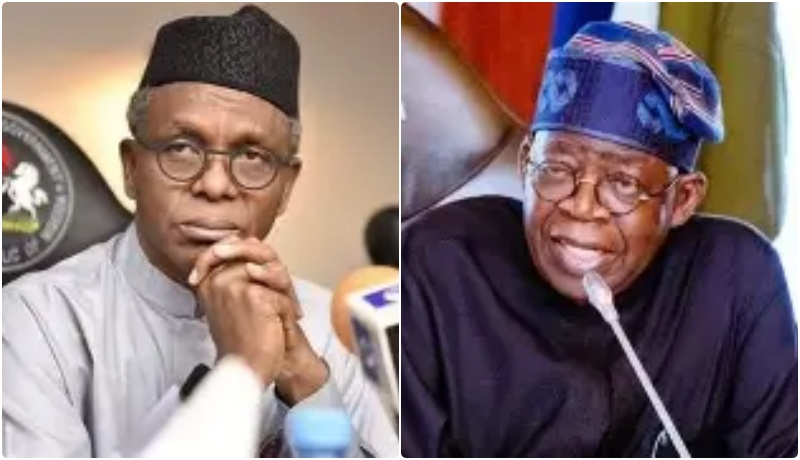
On March 2, 2026, the Independent Corrupt Practices and Other Related Offences Commission, ICPC issued a statement, giving why it has continued to detain the former governor of Kaduna state, Malam Nasir El-Rufai.
According to the Commission, it received a petition accusing Mr. El-Rufai and officials of his administration of financial misconduct between 2015 and 2023.
(ICPC) has told the Federal Capital Territory (FCT) High Court, Abuja, that it is detaining former Kaduna State Governor, Nasir El-Rufai, to conclude an investigation into alleged corruption during his time in office.
In any case, Mr El-Rufai had earlier on filed a suit at the court, alleging that his arrest and detention violated his fundamental rights.
He however, asked the court to declare the actions of the anti-graft agencies unlawful and to award him N1 billion in damages.
ICPC responds, Explains reasons for the detention
However, the ICPC had filed a counter-affidavit explaining why it arrested and detained him.
The petition, attached to the court filings dated 26 February and seen and made available to newsmen explained that the allegations are relating to loans obtained by the Kaduna State Government, procurement processes, transfers from government accounts and payments to companies and individuals.

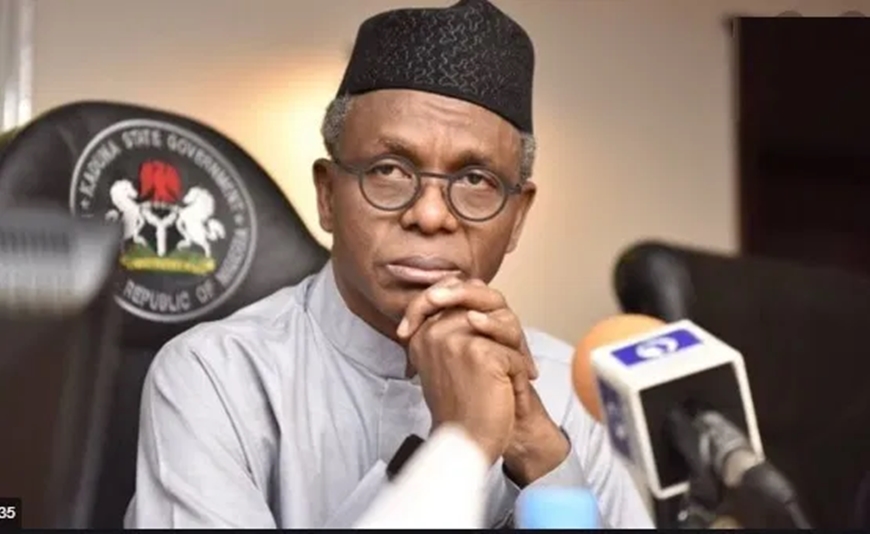
ICPC said it began preliminary investigations and obtained documents from banks and government institutions. It then issued an invitation letter dated 9 February.
According to the commission, the letter could not be served earlier because Mr El-Rufai was outside Nigeria. It said he was eventually served on 12 February after his return.
The commission stated that Mr El-Rufai, through his lawyers, requested to appear on 18 February.
Recall also that the former Kaduna state governor was also arrested and detained by the Economic and Financial Crimes Commission, EFCC.
He was later granted administrative bail.
“Contrary to depositions of the Applicant in his supporting affidavit, he is lawfully held in the custody of the Commission and the Commission has not breached any of the fundamental rights of the Applicant as claimed.
“That the 4th Respondent’s (ICPC’s) mandate is to investigate cases of corruption and abuse of office and other related offences and where there is prima facie evidence, prosecute any alleged offender,” the counter-affidavit read.
The ICPC said he did not meet the bail conditions and remained in EFCC custody. On 18 February, ICPC arrested him after the EFCC released him.
Remand order
On 19 February, the commission said it obtained a remand order from a Chief Magistrate Court in Bwari, Abuja, permitting it to detain Mr El-Rufai for 14 days pending investigation into allegations of money laundering and abuse of office.
The order, granted by Magistrate Okechukwu Akweke, directed that he be kept in ICPC custody for 14 days, with a return date in March for a report.
The commission told the High Court that the remand order will expire on 5 March and that it intends to file charges before then.
Searching his Abuja home
The ICPC also said it executed a search warrant at Mr El-Rufai’s residence at 12 Mambilla Street, Asokoro, Abuja, on 19 February. According to the commission, the search was witnessed by his wife, Hadiza El-Rufai, and his son, Mohammed El-Rufai.
It said several electronic devices and documents were recovered. The commission claimed that some of the documents relate to security matters and that certain equipment capable of intercepting communications was found.
The ICPC further stated that Mr El-Rufai declined to give consent for forensic access to some of the devices recovered.
“During the said search which was witnessed by the Applicant’s wife,Hadiza Isma El-Rufai and his son Hon. Mohammed Bello El-Rufai, the Commission retrieved sensitive security documents capable of compromising nation security.
“During the Search operations, the Commission retrieved electronic magnetic equipment capable of tapping conversations and he was asked to give consent to enable the Commission access to the equipment but he refused,” the document read.
The commission also informed the court that a potential witness wrote to it requesting protection, alleging threats after public comments made during a television interview.
“The Applicant herein is also threatening likely prosecution witnesses and one of such witnesses has written to the Commission for protection. A copy of the said letter is hereby attached and marked as Exhibit ICPC 6,” the document read.
By and large, the family of Nasir el-Rufai, has faulted the allegation by the Independent Corrupt Practices and Other Related Offences Commission (ICPC) that wiretapping equipment and secret documents were recovered from the Abuja residence of the former FCT minister.
Also, in a post shared on X, el-Rufai’s wife, Hadiza Isma, stated: “I was there. No such equipment was found. They lie. But why? An agency with no credibility at all.”
However, the ICPC filed a counter-affidavit explaining why it arrested and detained the former Kaduna helmsman.
ICPC had earlier claimed that suspected surveillance devices, capable of intercepting confidential communications and accessing classified security materials, were recovered during a raid on el-Rufai’s Abuja home.
El-Rufai family replies ICPC
However, the family has replied to the ICPC on their allegations.
According to the family, el-Rufai is entitled to the right of silence and non-cooperation with regards to the search of his residence, until his prosecution before a competent court of law.
In a statement issued on behalf of the el-Rufais by his son, who is also a member of the House of Representatives, representing Kaduna North Federal Constituency, Muhammed Bello el-Rufai yesterday, noted: “We noted with a mixture of contempt and amusement the recent litany of allegations, falsehoods and theatrical posturing emanating from the ICPC.

“It is deeply unfortunate that a constitutionally established agency has descended into what can only be described as a circus of chicanery, apparently designed to prosecute a media war rather than adhere to the rule of law. We are compelled to set the record straight and expose the malicious intent behind this orchestrated smear campaign.”
He stated that on the right to silence and non-cooperation, “the ICPC has ludicrously attempted to weaponise the silence of Nasir el-Rufai against him, claiming he refused to cooperate.”
He remarked: “We must educate the Commission on the most basic tenet of Nigerian jurisprudence: The Constitution of the Federal Republic of Nigeria guarantees every citizen the right to remain silent.
“This is not an act of non-cooperation; it is a fundamental human right. No law enforcement agency, regardless of its frustration at a failed operation, is entitled to draw any negative inference from a citizen’s decision to exercise this constitutional hermetic seal.
“That the ICPC believes silence implies guilt is a confession of its inquisitorial mindset and disregard for the very laws it swore to uphold. Our father, Nasir el-Rufai, has said in all interactions with law enforcement: ‘charge me, if you have anything against me. You have had more than two years investigating me. Take it to court, please.”
He argued that ICPC’s press statement presented a list of seized equipment designed to conjure images of espionage and criminality. “This list is a work of fiction, for reasons which will soon become known,” he added.
Reacting to the allegations, she described the claims as false and politically motivated.
The family’s response underscores rising tensions between political figures and anti-corruption agencies in Nigeria, as legal and procedural disputes continue to dominate public discourse.
El-Rufai described the investigation as politically motivated and said he would respond to the allegations in court.
El-Rufai’s criticism against Tinubu government
In recent time, the former FCT minister has continued to raise his opposition voice against the administration of President Bola Ahmed Tinubu.
In September 2025, Nasir El-Rufai, has claimed that President Bola Tinubu’s administration poses a greater threat to democracy than any military regime Nigeria has experienced.
El-Rufai made the remark while hosting former Vice-President Atiku Abubakar at his Kaduna residence over that weekend. During their discussion, the issue of Tinubu and military regime tactics was a focal point of concern for both leaders.
During Atiku’s visit, El-Rufai accused the Tinubu administration of centralising power and undermining federalism, warning that the president could become like Cameroon’s Paul Biya, who has ruled since 1982. These centralising actions are reminiscent of strategies often used in a military regime.
“Honestly, sir, to me, it is even a disgrace. I mean, for people to behave the way they are behaving, it means that all the years of saying that we are for democracy and NADECO, all the claims that we are fighting for true federalism, and so on—it was all a pretence, all fake again. Because this government (Tinubu’s administration) is trying to centralise everything instead of devolving power to the lower levels.
“The sum total of this is that we are facing an evil of such a large proportion in the history of this country that if we don’t come together and end this Tinubu administration by 2027, Tinubu will try to be our Paul Biya. All the signs are there, this is how Paul Biya started,” El-Rufai said.
The former governor further argued that past leaders never harassed opponents the way Tinubu’s government does. Such harassment was typically associated with a military regime, but now, Tinubu’s tactics are drawing such comparisons.
“You (Atiku Abubakar) are our leader, you have done this fight before, you have fought the military, you have experience in democratic governance. And when you and Obasanjo were in charge of this country, no one was being harassed because he had a different political feel, never, not once. Even President Buhari, with his military background, never did that, and here we are facing full-fledged civilians, but they are worse than any military regime we’ve ever had.
“Your call that we must unite is a timely one. I think the people of Nigeria have made up their mind that APC must be voted out. Nigerians are looking forward to his (Tinubu’s) ouster. We must provide the leadership and the unity of purpose that we have talked about, and then I am sure with your leadership, forbearance and diplomatic skills of bringing people together, I am sure we will reach the Promised Land.”
Tinubu’s Policy & Economic Issues:
Nasir-El-Rufai has continued to criticize the government Bola Ahmed Tinubu for failing to improve citizens’ lives, especially with regards to highlighting agricultural policies that he claims impoverish farmers .
El-Rufai claimed the policy has forced the farmers to compete with subsidized foreign products
Internal Party Conflict
He has accused the APC of abandoning its founding principles. He also accused the party of allowing the president to pocket it with his dictatorial tendencies.
Personal Grievances
Since the alleged removal of his name from the ministerial list, El-Rufai has noted that he would have resigned as a minister had he been appointed, following the withdrawal of his nomination in 2023.
His defection to ADC
The former Kaduna state officially defected to the African Democratic Congress, ADC signaling a major realignment ahead of the 2027 general elections.
His defection sparked off a heavy political conflagration against the government of Bola Ahmed Tinubu as he was instrumental to the election of the former government of Lagos. Until his defection, he was a stalwart of the All Progressives Congress (APC) and formalised his move when he registered and collected his membership card of the ADC at his Unguwar Sarki ward in Kaduna.
El-rufai was accompanied by political associates and former appointees who served under him as governor of Kaduna State.
The ADC vice chairperson in charge of Northwest, Jafaru Sani, and the National Membership Secretary, Sadiq Yar’adua, were also in his entourage.
His journey through SDP, ADC
Mr El-Rufai said he chose to join the ADC after the Social Democratic Party (SDP) failed to agree to the terms and conditions of the opposition coalition leadership, alleging the leadership of the SDP had been compromised.
“I’m a bona fide member of the African Democratic Congress,” he boasted after obtaining the membership card.
“The SDP would not agree to open up to the coalition leadership because the government has bribed and compromised some of the leaders. However, the ADC agreed to the terms and conditions of the coalition leadership,” Mr. El-Rufai stated at a brief ceremony at the Unguwar Sarki ward.
He expressed gratitude to the organisers for arranging the event on short notice, saying that, “I was informed at 6 p.m. yesterday (Wednesday) to be here at 4 o’clock, and I managed to get here.”
“I want to call on all citizens of Kaduna State, 18 years and above, to come out en masse and register with the African Democratic Congress.
“By the grace of God, we are going to repeat what we did in 2015, when we got rid of the incompetent, thieving, stealing, and corrupt PDP administration,” he alleged.
Mr. El-Rufai received membership number 000002, following the coalition Vice National Chairman North West, who was assigned 000001 as the first to register in the state.
El-Rufai’s political journey
He rose to national prominence under the Peoples Democratic Party (PDP) as the Director-General of the Bureau of Public Enterprises (BPE) and later as Minister of the Federal Capital Territory (FCT) under President Olusegun Obasanjo.
He later actively participated in the formation of the APC in 2013, dubbed a political merger, the platform that unseated the incumbent president, Goodluck Jonathan, in 2015.
Following the controversial rejection of his ministerial nomination by the Senate, his move from the ruling APC to the ADC marks his latest pivot, suggesting a determination to remain a key player in the 2027 political landscape, likely as a kingmaker or challenger.