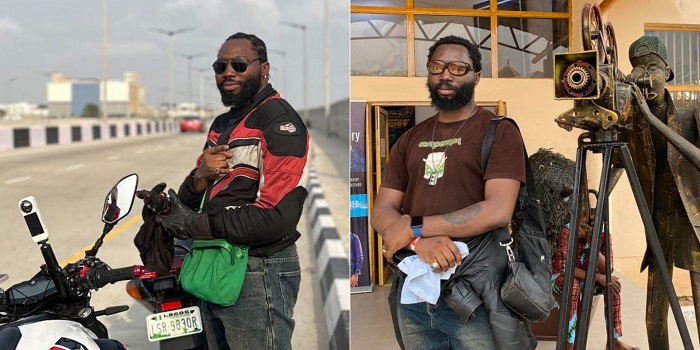
On Sunday, March 1, 2026, what began as an exciting milestone for a vibrant member of Nigeria’s biking community ended in tragedy that has left friends, followers, and family in deep shock. Kola Onifoto, whose real name was Orowole Samuel Kolapoz, was widely known for his daring road trips, captivating photography, and visible passion for motorcycles. His final journey, which he described as his first solo ride outside Lagos, has now become the most talked about chapter of his life, and the most painful.
The news of his passing on Monday, March 2, 2026, spread quickly across Facebook, Instagram, and WhatsApp groups dedicated to bikers, creatives, and travel enthusiasts. What made the story even more haunting was the timeline of events.
This is a detailed reconstruction of what has been reported so far about his life, his final ride, the medical response, and the aftermath that continues to ripple across communities, both online and offline.
The Man Behind the Helmet
Before the headlines, and before the tributes, Kola Onifoto was first a creative spirit who built a name for himself through persistence and passion. He was not merely a biker chasing adrenaline. He was a photographer who saw stories in ordinary streets, a brand influencer who collaborated with companies that valued authenticity, and a travel enthusiast who documented Nigerian landscapes from angles that many people rarely noticed.
Friends describe him as someone who believed that life should be lived boldly, but thoughtfully. His social media pages reflected that philosophy. He posted carefully curated photographs of city skylines, roadside encounters, and cultural moments. His captions were often reflective. He spoke about courage, growth, and faith without sounding preachy. Over time, he cultivated a sizeable following, many of whom were young Nigerians drawn to his energy and consistency.
His love for motorcycles came later, but it quickly became central to his identity. He documented his transition into the biking community, sharing the learning curves, the discipline required, and the brotherhood among riders. When he celebrated becoming a biker, he did so publicly, expressing gratitude for safety and skill. That openness is one reason his death has resonated so deeply. People felt like they knew him.
The Announcement of a First Solo Ride
On Sunday, March 1, 2026, Kola posted on his Facebook page that he was embarking on his first solo motorcycle trip outside Lagos. According to the timestamp visible on the post, it was made earlier in the day, before noon. He explained that he was heading toward Akure, in Ondo State, and described the ride as a personal milestone. It was not framed as a reckless adventure, but as a step forward in confidence and experience.
Commenters responded enthusiastically. Some fellow bikers gave practical advice about road conditions between Lagos and Akure. Others simply wished him safe travels. A few friends jokingly told him not to speed. He replied to some of them, promising to ride responsibly. The tone of the exchange was light, celebratory, and hopeful.
In retrospect, that post has taken on a different emotional weight. Screenshots have circulated widely. Many readers have pointed out that he had previously written about praying not to fall and die while riding. That earlier statement, which was once seen as a normal expression of vulnerability, now feels chilling to those who revisit it. The irony has not been lost on anyone.
The Crash in Lagos State
Hours after his departure, reports began to emerge that he had been involved in a motorcycle crash within Lagos State. Initial information from colleagues and members of the biking community described the incident as a lone bike accident. This means that, at the time of early reporting, there was no confirmed involvement of another vehicle. It was believed that he may have lost control of the motorcycle, although the precise mechanics were not immediately clear.
The crash reportedly occurred on Sunday, March 1, 2026, later in the day. Exact times have varied in online accounts, but multiple sources agree that it happened only hours after his departure post. Eyewitness details have remained limited, and authorities had not released a detailed reconstruction of events as of early March 2026.
What is known is that the impact was severe enough to cause critical injuries. Fellow bikers who later spoke online described receiving distress calls and rushing to verify the situation. The speed with which the news traveled within the biking network underscores how closely connected the community is. For many riders, every accident feels personal, because they understand the risks involved each time they mount their machines.
Emergency Response and Transfer
Following the crash, Kola was reportedly taken first to the Federal Road Safety Corps emergency unit in Ojota, Lagos. The Federal Road Safety Corps, commonly known as FRSC, often provides immediate response in road traffic incidents. Colleagues stated that officers and emergency personnel acted swiftly to stabilize him before further transfer.
From there, he was moved to Lagos University Teaching Hospital, commonly referred to as LUTH. Federal Road Safety Corps and Lagos University Teaching Hospital were both mentioned in accounts shared by friends and associates. The decision to transfer him to LUTH suggests that his injuries required more advanced medical intervention.
Inside hospital walls, the atmosphere shifted from urgency to uncertainty. Close friends who gathered reportedly began contacting family members. Some took to social media, asking for prayers without immediately disclosing full details. That period between hospitalization and confirmation of death was filled with hope, fear, and speculation. Many followers refreshed their timelines repeatedly, waiting for positive updates.
Confirmation of Death on March 2, 2026
On Monday, March 2, 2026, the devastating confirmation came that Kola Onifoto had succumbed to his injuries. The announcement was shared by friends, and later amplified by multiple social media accounts. By then, screenshots of his final post had already gone viral. The shift from hopeful updates to condolence messages happened almost instantly.
The date, March 2, 2026, is now etched into the memory of those who followed his journey. In less than twenty four hours, he had moved from planning a milestone ride to becoming the subject of nationwide conversation. That speed is part of what has made the loss feel surreal. People who interacted with him on Sunday morning were reading tributes by Monday afternoon.
As of early reports, no official detailed breakdown of the cause of death, beyond injuries sustained in the motorcycle crash, had been publicly released. Authorities had not provided a comprehensive technical account of how the accident occurred. This absence of detailed official clarification has fueled both curiosity and calls for patience. Many within the community have urged others not to speculate until verified information is available.
The Online Outpouring
Within hours of the confirmation, social media timelines were flooded with tributes. Fellow bikers shared photos from group rides. Photographers posted images of collaborations and behind the scenes moments. Brands he had worked with released short statements mourning his passing, and praising his professionalism.
A recurring theme in many tributes was his courage. Friends described him as someone who refused to let fear dictate his path. Others emphasized his discipline and respect for safety protocols. Several posts acknowledged the inherent risks of biking, while insisting that he was not careless. That distinction mattered deeply to those who knew him well.
The resurfacing of his earlier statement about praying not to fall and die on his motorcycle added an emotional layer to the mourning. For some, it was a reminder of human vulnerability. For others, it was a call to reflect on how unpredictable life can be. His page transformed into a memorial space where people continue to write messages addressed directly to him.
Unanswered Questions and Official Silence
Despite widespread reporting, some critical details remain unconfirmed. The exact location of the crash within Lagos State has not been consistently reported in early accounts. The speed at which he was traveling, and the specific conditions of the road at the time, have also not been officially detailed.
Authorities have not yet released a full accident report that explains whether mechanical failure, road conditions, or human factors played a decisive role. In the absence of such a report, responsible voices within the biking community have discouraged rumor spreading. They emphasize that speculation does not honor his memory.
This period of waiting for clarity can be emotionally taxing. When a public figure dies suddenly, people search for explanations, because explanations offer a sense of control. Yet road accidents often involve complex variables that take time to analyze. Until official findings are made public, the narrative remains anchored to confirmed facts, rather than assumptions.
The Human Cost Beyond Headlines
Beyond statistics and timelines lies the deeper reality of loss. Kola was not just a content creator or biker. He was a son, a friend, a collaborator, and a mentor to younger creatives who admired his journey. Private grief unfolds differently from public mourning. While social media captures the loudest reactions, it cannot fully reveal the silence inside a family home after such news.
Those who rode alongside him have spoken about the psychological impact of losing one of their own. For many bikers, every ride now carries a heavier awareness. Helmets and gloves feel less like accessories, and more like symbols of fragile protection. Conversations about safety have intensified across riding groups.
The tragedy has also reignited discussions about road infrastructure, emergency response systems, and the need for continuous safety education. While it would be simplistic to assign blame without full information, his death has become part of a broader conversation about how to reduce fatalities on Nigerian roads.
A Life Remembered
As of early March 2026, the story of how Kola Onifoto died rests on a confirmed sequence. On Sunday, March 1, 2026, he announced his first solo ride outside Lagos, heading toward Akure. Hours later, he was involved in a lone motorcycle crash within Lagos State. He was taken to the FRSC emergency unit in Ojota, and then transferred to LUTH for advanced care. On Monday, March 2, 2026, he passed away due to injuries sustained in that crash.
Everything beyond those established facts remains either personal reflection, or pending official clarification. What cannot be disputed is the impact he had during his lifetime. In a digital age where many chase visibility, he built connection. In a culture that often celebrates noise, he offered authenticity.
His final ride has ended, but the conversations it has sparked about courage, caution, faith, and community continue. For those who followed him, the question is no longer simply, how did he die. It is, how do we carry forward the lessons of a life that burned bright on two wheels, and in countless photographs across the Nigerian landscape.