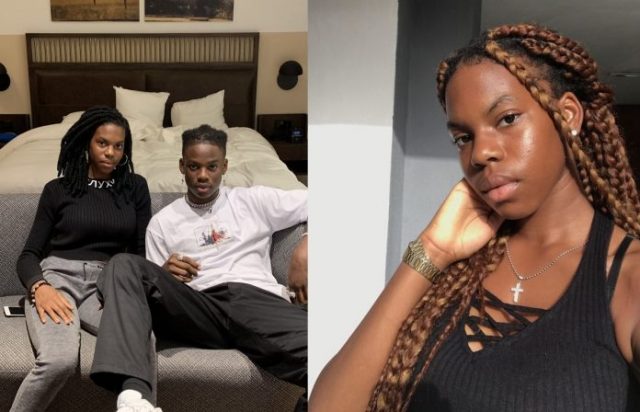
Just recently, the Nigerian entertainment industry was suddenly thrown into intense discussion after a series of emotional social media messages posted by Afrobeats singer Crayon triggered speculation about a serious internal conflict within Mavin Records. The posts spread quickly across Nigerian blogs, fan pages, and entertainment platforms, with screenshots circulating within hours. What began as an ordinary music release quickly escalated into one of the most talked about industry stories of March 2026.
At the center of the unfolding drama was the long standing relationship between Crayon and Don Jazzy, the influential producer and label founder who had introduced him to mainstream audiences years earlier. For several years, the singer had been viewed as part of the close knit creative ecosystem built around the label. Because of that history, the sudden tone of his social media posts shocked fans who believed the relationship between the artist and the label leadership had remained positive.
Understanding why the controversy created such widespread attention requires examining several interconnected developments. These include the discovery of Crayon before his rise to fame, the mentorship environment inside the Mavin structure, the collaborative culture that defined the label during his early career, and finally the dramatic social media outburst in March 2026 that raised questions about whether his relationship with the label had fractured behind the scenes.
The following breakdown traces those events step by step, moving from the earliest stage of Crayon’s journey inside the Mavin ecosystem to the exact tweets that ignited the controversy.
The discovery that brought Crayon into the Mavin ecosystem
Before he became known across the Afrobeats scene, Crayon was simply a young artist named Charles Chibueze Chukwu trying to find his place in the competitive Nigerian music landscape. Like many emerging performers, he recorded songs independently and shared them within his immediate environment while hoping they would reach the right ears.
One unusual aspect of his early journey was that some of the music he recorded was not even widely posted on social media platforms. In later interviews, he explained that several of his songs circulated informally among listeners and industry connections rather than through major online promotion. Despite that limited exposure, his talent eventually reached individuals connected to the Mavin network.
A key figure in that discovery process was Mavin in house producer Baby Fresh. Producers often act as informal talent scouts because they constantly listen for fresh voices that could fit evolving musical trends. When Baby Fresh encountered Crayon’s music, he reportedly recognized a melodic ability that could resonate strongly within the contemporary Afrobeats sound.
Instead of simply acknowledging the talent privately, he introduced the young singer to Don Jazzy. That introduction would eventually transform Crayon’s career because the producer had built a reputation as one of the most successful talent developers in Nigerian pop music.
May 2019 and the public introduction to the industry
The turning point came in May 2019, when Don Jazzy officially introduced Crayon to the public as a new addition to the Mavin ecosystem. Rather than signing directly to the parent label, he entered through Blowtime Entertainment, an imprint that operates within the broader Mavin structure.
The announcement immediately attracted attention among fans who closely followed the label’s activities. By that time, Mavin Records had already produced major stars and had established itself as a dominant force within the Afrobeats industry. Being introduced by Don Jazzy carried symbolic significance because the producer’s endorsements were often interpreted as signals that a promising new artist had arrived.
For Crayon, this moment marked the transition from underground musician to professionally managed performer. The label system provided resources that independent artists rarely possess, including recording facilities, production teams, marketing expertise, and access to collaborations with other musicians already established in the industry.
His early releases under the label gradually helped him build recognition among listeners while reinforcing the perception that he was part of a larger creative movement driven by the Mavin brand.
Understanding the mentorship relationship with Don Jazzy
Inside the Mavin ecosystem, Don Jazzy’s role in Crayon’s career was not that of a day to day manager, but rather a mentor and executive creative guide. The label operates through multiple departments where responsibilities are divided among executives, producers, and artist managers.
Within this structure, Don Jazzy serves as founder and executive producer whose influence shapes the overall creative direction of the label. Artists benefit from his experience and strategic guidance while business operations are handled by specialized executives within the company.
For a developing artist like Crayon, the environment offered valuable exposure to professional music production and marketing strategies. Being part of a label where artists regularly collaborate meant that he could learn directly from colleagues who were already achieving international success.
The mentorship narrative surrounding Don Jazzy has long been central to the public image of the label. Many musicians who passed through the Mavin system described him as someone who provided both creative encouragement and strategic guidance during critical stages of their careers.
The collaborative culture inside Mavin Records
One defining characteristic of the label is its emphasis on collaboration. Instead of promoting artists as isolated competitors, the Mavin model encourages musicians to work together across projects. This approach helps create a collective identity that strengthens the brand while expanding audiences for individual performers.
Crayon frequently appeared alongside fellow Mavin artists such as Rema, Ayra Starr, Magixx, and Boy Spyce. These collaborations occurred in studio recordings, promotional campaigns, and live performances.
Working within such an environment allowed the young singer to grow creatively while also benefiting from exposure to fans who already followed other artists on the roster. Each collaboration reinforced the perception that the artists were part of a creative community rather than a group of disconnected individuals.
This culture of collaboration eventually culminated in major collective projects that showcased the unity of the label’s roster.
December 2022 and the Chapter X milestone
One of the most symbolic projects in the label’s history arrived in December 2022, when Mavin released the compilation album Chapter X. The project celebrated a decade since the founding of the label and featured contributions from several artists including Don Jazzy, Crayon, and other members of the roster.
For fans, the album represented a celebration of the label’s journey from its formation in 2012 to its status as a global Afrobeats powerhouse. For the artists involved, it was an opportunity to demonstrate the collaborative energy that defined the Mavin brand.
Crayon’s participation in the project reinforced the perception that he was an integral part of the label’s future. The album presented the artists as a unified creative collective and strengthened the public image of strong relationships inside the organization.
Personal struggles during the early career years
Behind the scenes, Crayon later revealed that his journey through the industry was not always smooth. In interviews, he spoke about periods when he struggled with addiction and mental health difficulties. These personal challenges occurred during the early years of his career when pressure and sudden changes in lifestyle created emotional strain.
At one point, he described experiencing a crisis outside the label office. According to his account, he received support from individuals within the Mavin circle who encouraged him to seek help and refocus on his music. He particularly credited fellow artist Rema with stepping in during that difficult moment.
Such experiences often deepen personal connections among artists who share the same creative environment. The support he described contributed to the perception that the label functioned not just as a business institution but also as a supportive community.
13 March 2026 and the beginning of exit speculation
The controversy that eventually shook the Nigerian entertainment industry began quietly on 13 March 2026. Observant fans noticed that Crayon had released a new single titled Baami online, but the release appeared without the usual Mavin branding attached to it.
Instead, the song carried the imprint Olodum Entertainment. This detail immediately sparked speculation among listeners who follow the internal structure of record labels. Many began wondering whether the singer had already left the Mavin system or was preparing to launch an independent imprint.
At that point, no public confrontation had occurred. The discovery of the new branding simply raised questions about whether a contractual transition might be happening behind the scenes.
However, the situation escalated dramatically two days later.
15 March 2026 and the viral X posts
On 15 March 2026, Crayon posted a series of emotional messages on the platform X, formerly known as Twitter. These posts quickly circulated across Nigerian entertainment media and dramatically intensified speculation about tension inside the label.
One of his earliest tweets mentioned Don Jazzy directly.
“Don jazzy na my boy!!!!!! Una dey maddddd!!?? Shayennnnn sharayyyyyy333”
Although the message appeared playful in tone, it immediately drew attention because it referenced the label founder during a moment when fans were already speculating about a possible exit.
Shortly afterward another tweet appeared that seemed to target a senior Mavin executive.
“Tega highest criminal!!!!!!!!!”
Observers interpreted the message as a reference to Tega Oghenejobo, the chief operating officer of the label. The wording intensified discussion online because it represented a direct attack on someone within the company’s leadership structure.
The posts then escalated further with a statement that shocked many industry watchers.
“Mavin is going down!!!!!!”
This tweet was widely interpreted as a direct criticism of the label itself, something that rarely happens publicly between artists and their record companies.
Another message brought fellow artist Rema into the controversy.
“Rema for the next 100 years no feature. You stole my star from me. Yeah I took tha shiiiiii backkkkk hoeeeeerrrr!!!!! Snakkkkkkkeeeeeesssssssss”
This post triggered even more debate among fans because Rema had long been perceived as one of Crayon’s closest collaborators within the label.
During the same series of tweets, Crayon also hinted at a new direction for his career by promoting Olodum Entertainment and sharing contact details for bookings.
One of the final viral messages from the thread read
“Any weird creatives that can come with OLODUM ENT FLAGGSSSSS!!!! Gets 500M million naira cash !!!!! With love WARAAAAAAAAA!!!!!!”
The unusual wording of the posts led some observers to question whether the messages were emotional reactions, promotional tactics, or something else entirely.
16 March 2026 and the media explosion
By 16 March 2026, screenshots of the tweets had spread across Nigerian blogs and social media platforms. Entertainment news outlets began reporting the situation as a possible conflict between the artist and the label.
Several narratives began circulating simultaneously. Some reports suggested that Crayon had already left Mavin Records. Others believed the tweets might represent a promotional strategy designed to attract attention to his new music.
Another possibility discussed online was whether the account had been compromised or hacked. Because of the unusual tone of the messages, some observers questioned whether the posts truly reflected the artist’s intentions.
At the time the controversy erupted, neither Don Jazzy nor Mavin Records immediately released a detailed response addressing the tweets. The absence of an official explanation allowed speculation to spread rapidly across the entertainment community.
Leaving With This
The March 2026 controversy involving Crayon and the Mavin leadership did not emerge from nowhere. It unfolded against the backdrop of a relationship that had once been viewed as a successful example of artist development within the Nigerian music industry. From his discovery by producers inside the Mavin network to his introduction to the public in May 2019, the singer’s early career had been closely tied to the mentorship environment created by Don Jazzy.
For several years, the collaboration appeared stable and productive. Crayon participated in major projects, collaborated with fellow artists, toured internationally, and spoke positively about the support he received from the label.
That history explains why the tweets posted on 15 March 2026 created such intense discussion. The sudden public criticism of the label contrasted sharply with the earlier narrative of mentorship and unity. Whether the messages represented emotional frustration, strategic promotion, or deeper tensions within the label remains a question that observers continue to examine.
What is clear is that the controversy transformed a private industry relationship into a national conversation about artist independence, label structures, and the pressures faced by musicians navigating the modern Afrobeats industry.