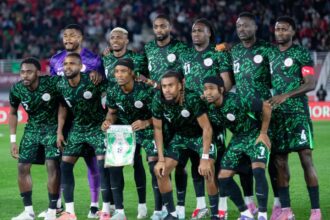
Nigeria’s campaign to reach the 2026 FIFA World Cup ended on the pitch on November 16, 2025, when DR Congo edged them 4-3 on penalties following a 1-1 draw in Rabat. Or at least, that is what the official record currently shows. In the weeks since that defeat, the Nigeria Football Federation has pursued a formal legal route through FIFA, arguing that DR Congo fielded players who were ineligible under both Congolese domestic law and FIFA’s own eligibility framework. The case has dragged on through December, January, and into late February 2026 without a verdict, and the intercontinental play-offs in Mexico, scheduled for March, are approaching fast.
- How Nigeria Got to This Point: The CAF Qualifying Journey
- The Night It All Ended: Nigeria vs DR Congo in Rabat
- What Nigeria Filed With FIFA and Why
- The Central Legal Argument: Congolese Law vs FIFA Regulations
- Key Players at the Centre of the Dispute
- Historical Precedents and How FIFA Has Ruled Before
- DR Congo’s Response and the Political Dimension
- What a FIFA Ruling Could Actually Mean
- The Financial and Symbolic Cost of Missing Out
- Conclusion
This is not a story about refereeing decisions or tactical failures. It is about a specific regulatory dispute that, if resolved in Nigeria’s favour, would restore the Super Eagles to the qualification process through the back of FIFA’s judiciary rather than the front of their own results. Whether that happens, and what the realistic chances are, requires a clear understanding of what actually took place across the full qualifying cycle, what Nigeria’s legal argument is, and how FIFA has handled similar complaints in the past.
FIFA Case Puts Nigeria 2026 World Cup Qualification in Question
Nigeria’s road to the 2026 World Cup has taken an unexpected legal twist, with a pending FIFA case adding uncertainty to the qualification picture. While the situation has created anxiety among supporters, the key question remains: can the Nigeria national football team still secure their place on the pitch regardless of the outcome?
With qualification mathematics, regulatory decisions, and on-field performances all intersecting, the Super Eagles’ path to 2026 now depends on both football and governance, and the final verdict could shape the direction of their campaign.
How Nigeria Got to This Point: The CAF Qualifying Journey
The Super Eagles entered the 2026 World Cup qualifying cycle in CAF Group C alongside South Africa, Benin, Zimbabwe, Rwanda, and Lesotho. Nigeria finished the group stage second with 17 points, earning four wins, five draws, and one loss, with a goal difference of +7. South Africa topped the group on 18 points, securing their first World Cup appearance since they hosted the tournament in 2010.
The group stage itself had its own controversy. The South Africa versus Lesotho match, which originally finished as a 2-0 win for South Africa, was later awarded as a 3-0 win to Lesotho after South Africa fielded an ineligible player, Teboho Mokoena. That points deduction did not cost Bafana Bafana the top spot, but it is relevant context: Nigeria were directly affected by South Africa’s administrative breach during the group stage and failed to capitalize on it. The Super Eagles had the chance to climb above South Africa as the group leader but fell short in the final reckoning.
As runners-up, Nigeria advanced to the CAF second-round play-offs, which brought together the four best group runners-up: Cameroon, DR Congo, Gabon, and Nigeria, competing to determine which team would advance to the inter-confederation play-offs. The draw placed Nigeria against Gabon in the semi-final, a match the Super Eagles won 4-1. The reward for that win was a final against DR Congo, and it was that match that has become the centre of the dispute now sitting before FIFA.
The Night It All Ended: Nigeria vs DR Congo in Rabat
The decisive clash took place in Morocco on November 16, 2025. Nigeria started aggressively and struck early. In just the 3rd minute, Frank Onyeka’s deflected effort gave the Super Eagles a dream start. However, DR Congo responded with composure. Meschack Elia equalized in the 31st minute, capitalizing on defensive hesitation to level the match at 1-1. The score did not change through normal time or extra time. Nigeria were eliminated from direct qualification in heartbreaking fashion after losing 4-3 on penalties.
DR Congo’s victory sent them through to the intercontinental play-offs in Mexico, where they are scheduled to face the winner of New Caledonia vs Jamaica for a place in the expanded 48-team 2026 World Cup field. For Nigeria, there was no immediate route back. The Super Eagles had also exited the 2022 World Cup qualification at the play-off stage, meaning back-to-back absences from football’s biggest tournament for a country that had appeared at six previous editions.
The reaction within Nigeria’s football community was not only grief but also a degree of suspicion, partly fuelled by the composition of the DR Congo squad. A significant number of the Leopards’ players had only recently switched international allegiance, having grown up and developed their football in Europe. That observation was not incidental to what followed.
What Nigeria Filed With FIFA and Why
Within weeks of the defeat, the Nigeria Football Federation acted. In December, the NFF filed a formal complaint with FIFA over some DR Congo players, claiming they were ineligible to play. The NFF argued that Congolese law did not allow dual citizenship, raising concerns about players holding European passports while representing the African country.
The petition was filed on December 15, 2025. The NFF submitted a complaint to FIFA alleging the use of between six and nine ineligible players during the November 2025 playoff match. Cameroon reportedly filed a similar protest, also questioning the eligibility of several DR Congo players. The fact that a second federation raised similar concerns strengthened the perception, at least within Nigeria’s camp, that this was not a case of sour grapes but a genuine regulatory issue worth pursuing.
NFF General Secretary Mohammed Sanusi was direct in his assessment. “The Congolese rules say you cannot have dual nationality,” he told reporters. “There are so many of them that have European passports, some of them French passports, some of them Dutch passports. The rules are very clear. We cannot say anything now but we have submitted our protest to FIFA. There are players that got theirs in just three months.”
The NFF’s core claim was not simply that these players existed as dual nationals, but that the Congolese Football Federation may have provided FIFA with incomplete or misleading documentation when requesting clearance for their participation. Nigeria’s petition focused on DR Congo’s domestic law, which largely prohibits dual citizenship for adults. According to the NFF, some Leopards players allegedly retained foreign passports, including European nationality, without formally renouncing their previous citizenship. Among the players referenced in the petition were individuals reportedly holding Belgian, English, French, or Dutch passports.
The Central Legal Argument: Congolese Law vs FIFA Regulations
This is where the case becomes genuinely complicated, and why a straightforward ruling has not emerged despite months of review.
FIFA’s own regulations on player eligibility operate on the basis of sporting nationality rather than domestic citizenship law. While the Congolese Constitution does not recognize dual citizenship, FIFA’s own regulations only require players to hold the passports of the representative country in order to be cleared to play for that country, and it was on the basis of holding valid Congolese passports that FIFA cleared the players.
DR Congo’s position rests entirely on this distinction. Their Director of Football Hérita Ilunga made it clear that FIFA’s definition of sporting nationality, not domestic citizenship law, governs eligibility. If that argument holds, then the players in question were cleared through the correct process and Nigeria’s complaint has no grounds for altering the result.
Nigeria’s counter-argument is more nuanced. Nigeria claims that several players, holding European passports including French and Dutch, retained foreign citizenship while representing DR Congo. The NFF argues that although FIFA cleared the players, the information provided by the Congolese federation may have been misleading. In other words, the argument is not that FIFA made the wrong decision based on what it was told, but that what it was told may not have been the full picture. If Congolese law does not legally recognize the renunciation of prior citizenship, then players cannot have validly obtained Congolese nationality in the manner FIFA requires, regardless of what the paperwork said.
NFF General Secretary Sanusi made this precise point: “It is not FIFA’s responsibility to enforce Congolese law; they act based on the documentation presented.” This framing is significant. It positions the federation’s argument not as a challenge to FIFA’s process, but as an allegation that the process was compromised by inaccurate submissions. Whether FIFA finds that framing compelling is the crux of the entire matter.
Key Players at the Centre of the Dispute
The specific individuals involved in Nigeria’s complaint have been the subject of considerable attention. Nigeria’s complaint reportedly referenced players such as Aaron Wan-Bissaka and Axel Tuanzebe, who hold dual nationality and previously represented other countries at youth or senior levels.
Wan-Bissaka’s eligibility situation is particularly complex. The former Manchester United right-back grew up in England, represented England’s youth teams, and later switched to represent DR Congo at senior level. Whether that switch was completed in full compliance with FIFA regulations on nationality changes is one of the specific questions the NFF raised. FIFA’s regulations on switching international allegiance are detailed, requiring that a player has not appeared for a senior national team at a competitive level and meets specific nationality criteria through birth or parentage before being cleared for a new association.
The time element is also part of Nigeria’s complaint. Sanusi referenced players who reportedly obtained their Congolese clearance in a very short timeframe, which the NFF interpreted as an indicator that proper due diligence may not have been carried out. The speed of the clearances, combined with the constitutional questions around dual nationality under Congolese law, forms the backbone of the NFF’s case before FIFA’s adjudicating bodies.
Historical Precedents and How FIFA Has Ruled Before
Nigeria’s case is not without precedent, though the outcomes of similar disputes paint a complicated picture of what the Super Eagles can realistically expect.
In 2013, Cape Verde qualified for the playoffs against Tunisia for a place at the 2014 World Cup, but were later disqualified after fielding Fernando Varela despite an unserved suspension. FIFA awarded Tunisia the spot, a precedent that underscores the seriousness of Nigeria’s current complaint. However, that case differed significantly from the current situation. Varela’s suspension was a clear administrative breach with documented evidence. The question of whether a player with a valid Congolese passport was nonetheless ineligible under a different legal framework is a considerably more abstract argument.
It is also relevant that during the 2026 qualifying group stage itself, South Africa fielded an ineligible player, Teboho Mokoena, and their match result was overturned. That decision resulted in points being redistributed. Nigeria, however, did not benefit enough from that episode to change their group standing, and the irony is not lost on observers: South Africa’s administrative failure was punished by FIFA, yet Nigeria could not capitalize on it on the pitch, and now Nigeria finds itself in a parallel situation, asking FIFA to intervene on similar grounds.
The general pattern in FIFA jurisprudence is that documentary fraud or clear misrepresentation leads to stronger sanctions, while regulatory grey areas tend to be resolved in favour of the original result. Sanctions could range from fines to possible disqualification, though retroactive changes to results are rare without clear evidence of fraud. FIFA traditionally applies severe punishment only in clear-cut cases of fraud. This observation from football’s governing body itself signals the difficulty of Nigeria’s task.
DR Congo’s Response and the Political Dimension
The Leopards have been vocal in rejecting Nigeria’s complaint, and their response has been less about legal arguments and more about the principle of results being decided on the pitch.
A post on DR Congo’s official X account read: “If you can’t win on the pitch, don’t try to win from the back door. The World Cup has to be played with dignity and confidence, not with lawyers’ tricks.” Their Director of Football offered a blunter assessment, telling Nigerian football: “If that is the case, I advise my dear Naija to focus instead on AFCON.”
Beyond the public messaging, there are reports of behind-the-scenes manoeuvres. DR Congo reportedly made a late move ahead of FIFA’s verdict, with the Congolese allegedly trying to use the influence of CAF Secretary General Véron Mosengo-Omba, who is Congolese, to lobby at FIFA and receive a favourable verdict. Nigeria, in turn, has been accused by sections of the Congolese media of placing political pressure on FIFA through the Nigerian federal government’s involvement. A section of the media in DR Congo accused the NFF of trying to arm-twist the world football governing body, claiming that the NFF, backed by the Federal Government, is putting too much pressure on FIFA to replace the Super Eagles with the Leopards.
These counter-allegations reveal how politically charged the situation has become beyond the pure regulatory question. With the intercontinental play-offs in March approaching, both federations have an interest in shaping the narrative before FIFA delivers its judgment.
What a FIFA Ruling Could Actually Mean
As of February 28, 2026, FIFA had not issued any verdict. Local and international news outlets have been following the case closely. If FIFA had reached a decision, it would have been widely reported. Social media posts claiming a ruling in Nigeria’s favour have circulated multiple times and have been debunked repeatedly. NFF Director of Communications Ademola Olajire described such claims as false and misleading: “There is no decision from FIFA at this time. Any claims that a ruling has been made are false. FIFA has not communicated any verdict to the NFF or the Congolese federation.”
If FIFA does rule in Nigeria’s favour, the pathway back to the World Cup is not automatic but it is real. If FIFA rules in Nigeria’s favour, the Super Eagles would be reinstated and advance to the six-team Intercontinental Play-Off tournament scheduled for March in Mexico. A top finish in that playoff would secure a spot at the 2026 World Cup, co-hosted by the United States, Canada, and Mexico.
DR Congo are scheduled to meet either Jamaica or New Caledonia for a World Cup berth, meaning Nigeria would step into that tie if the result is overturned in their favour. The Super Eagles would enter the game as favourites.
However, the range of possible outcomes from a favourable ruling is wider than simple reinstatement. Possible outcomes could include disqualification of DR Congo from the play-off result, a forfeited match, or a 3-0 win awarded to Nigeria. Each outcome would carry different implications for the intercontinental play-off bracket and for DR Congo’s standing within that process. A forfeiture of the specific match would likely see Nigeria inserted into DR Congo’s position in the draw. A 3-0 default win would simply reflect in the records but may not automatically advance Nigeria, depending on how FIFA constructs its remedy.
If FIFA finds no wrongdoing, the matter closes. DR Congo’s result stands, Nigeria’s campaign ends officially, and the Super Eagles begin their preparations for the 2030 World Cup cycle. The NFF would have exhausted every available channel, and the focus would shift to rebuilding.
The Financial and Symbolic Cost of Missing Out
The stakes extend well beyond pride. FIFA has confirmed that the total prize fund for the 2026 World Cup will be $655 million, a 50 per cent increase from Qatar 2022. Each qualified nation will receive at least $9 million in prize money, in addition to $1.5 million earmarked for preparation costs. Nigeria’s failure to qualify immediately shut the door on a guaranteed $10.5 million.
For a federation that has consistently operated with funding gaps and delayed payments to players and staff, that guaranteed minimum represents a significant financial blow. The deeper runs Nigeria could realistically have made would have multiplied that figure. Teams finishing between ninth and sixteenth place, effectively the Round of 16, will earn $15 million, excluding the preparation grant. Teams finishing between fifth and eighth, the quarter-finalists, will earn $19 million.
The commercial implications compound the prize money shortfall. World Cup participation typically raises a country’s football brand in terms of sponsorship value, player market valuations, and broadcast reach. Nigeria’s absence from two successive tournaments weakens those levers considerably at the precise moment when the tournament is expanding to 48 teams and generating more global attention than ever before.
The symbolic dimension carries its own weight. Nigeria is a three-time African champion with six World Cup appearances in the previous seven editions before the Qatar miss. For a nation that once built its football identity on consistent World Cup appearances, missing successive tournaments is damaging both symbolically and financially. A generation of Nigerian football fans under the age of 20 has not seen the Super Eagles at a World Cup. That absence reshapes how the national team is perceived domestically and across the continent.
The broader context of the 2025 Africa Cup of Nations is worth noting here. Nigeria reached the semi-finals without losing a match in regulation time at the 2025 AFCON, eventually finishing third after a penalty shoot-out win over Egypt. The Super Eagles are not a team in decline by continental standards. The sting of the World Cup absence is sharpened precisely because the talent pool and competitive performances suggest a team capable of performing at that level.
Conclusion
Nigeria’s chance of appearing at the 2026 World Cup rests entirely on a FIFA verdict that has not yet arrived. The NFF filed a legitimate complaint based on a genuine regulatory argument, one that touches on the tension between domestic citizenship law and FIFA’s own framework for determining sporting nationality. The argument has merit in the abstract, but FIFA’s historical reluctance to overturn match results without clear evidence of deliberate fraud sets a high bar that Nigeria must clear.
The outcome is binary and the timeline is tight. The intercontinental play-off semifinals are scheduled for March 26, with finals on March 31. Any FIFA ruling in Nigeria’s favour would need to come before that window to allow for their reinstatement. Shehu Dikko, Chairman of the National Sports Commission, captured the situation accurately when he said: “From a competitive standpoint, the World Cup is closed for us, but the legal proceedings are ongoing. The relevant independent bodies within FIFA will make the final decision.”
Nigeria 2026 World Cup qualification is no longer a football matter. It is a regulatory one, sitting in FIFA’s courts while the intercontinental play-offs inch closer. If the governing body finds that DR Congo’s clearance process was compromised by inaccurate documentation, the Super Eagles get a second chance, and they would enter it as a team ranked among Africa’s strongest. If FIFA upholds the original result, Nigeria’s preparation for the next cycle begins now. Either way, the decision will have consequences that stretch far beyond two nations and one penalty shoot-out in Rabat.