When people talk about Premier League greats, they usually focus on trophies, longevity, and iconic moments. But football is not always that fair. Some players had the talent to sit comfortably in that conversation, yet their careers tell a different story. Not because they were not good enough, but because timing refused to cooperate.
- Daniel Sturridge — The Striker Whose Injuries Stole His Prime
- Michael Owen — From Teenage Star to Time-Lost Talent
- Owen Hargreaves — The Midfielder Who Was Never Fit Long Enough
- Nicklas Bendtner — Talent Overshadowed by Timing and Choices
- Harry Kewell — A Brilliant Star Dimmed by Misfortune
- Rolando Aarons — The Unlucky Wonderkid Who Could Not Catch a Break
- Ibrahim Afellay — Stoke’s Talented Playmaker Who Could Never Stay Fit
- The Common Thread — Wrong Moments, Not Lack of Ability
This is what makes Premier League players who had world-class talent but terrible timing so fascinating. These were footballers with real quality in their boots: touch, intelligence, movement, confidence, the kind of ability that does not come around often. Yet injuries arrived at the worst moments. Transfers happened at the wrong stage. Managers changed. Systems shifted. Opportunities disappeared just when they were ready to take them.
Their careers did not collapse because of lack of skill. They stalled because football does not wait for anyone to get comfortable.
This article looks at seven Premier League players whose talent was never in doubt, but whose timing quietly shaped their legacy in ways their ability never deserved. And once you look closely at their stories, you start to realise how thin the line really is between being remembered as elite… and being remembered as a “what if.”
Premier League Players Who Had World-Class Talent But Terrible Timing
Sometimes football is not about how good you are. It is about when everything happens.
You can have the touch, the vision, the pace, the confidence, the kind of talent that makes defenders panic. But if injuries arrive at the wrong moment, if you join the wrong team at the wrong time, or if your best years clash with bad decisions around you, football does not care how gifted you are. It just moves on.
The Premier League is full of players like that. Not players who lacked ability. Not players who were frauds. But players who were genuinely good enough to be remembered very differently if timing had been kinder. This piece is about those careers. The ones that make you shake your head and say, “If only…”
Seven Premier League players who had everything needed to be spoken about in a different category, except the one thing nobody can control: timing.
And when you look closely at their stories, you start to realise how thin the line really is between a legend and a forgotten talent.
-
Daniel Sturridge — The Striker Whose Injuries Stole His Prime
When Daniel Sturridge arrived at Liverpool in January 2013, it felt like the club had finally found a forward capable of blending technical quality with the instinctive finishing that so many elite strikers possess. In his first season, he didn’t just score goals, he blew people away. Sturridge scored 21 Premier League goals in the 2013–14 campaign, finishing second in the Golden Boot race behind Luis Suárez and outscoring elite names such as Sergio Agüero and Yaya Touré. That tally didn’t just highlight his finishing ability, it underscored his rare combination of pace, movement, and composure that made him one of the deadliest forwards in England’s top flight that season.
Liverpool’s SAS partnership, Sturridge and Suárez, became the fiercest strike duo in the league that year. Between them they scored 53 league goals, dragging Liverpool into a genuine title challenge they would ultimately lose by a narrow margin. Goals against big rivals, including a memorable winner at Old Trafford and multiple Merseyside derby contributions, solidified Sturridge’s reputation as a world-class attacker at his peak.
Recurring Injuries at Peak Years
But just as his star seemed set to rise, football’s cruelest variable, injuries, began to define his career. In September 2014, only months after his sensational breakthrough, a thigh injury struck during England training, shelving him for weeks and breaking the momentum he had built. Before long, a calf strain and subsequent thigh problems compounded the situation, keeping him out of action for more than 30 Premier League matches between September 2014 and January 2015.
This pattern of setbacks didn’t just interrupt his playing rhythm, it fractured his ability to build consistency. Rather than developing into a core long-term force for Liverpool or earning a move to a perennial title contender, Sturridge became synonymous with uncertainty and absence. Between 2014 and 2018 he suffered a cascade of injuries, from hamstring strains to hip issues, that repeatedly interrupted his playing time and robbed him of the explosive pace and sharpness that once made him virtually impossible for defenders to contain.
Some of these injuries came at the absolute worst possible moments, just as Liverpool were gearing up for title pushes, Champions League campaigns under Jürgen Klopp, or critical contract seasons. Each time Sturridge looked ready to return, another setback arrived, stalling his progress and leaving Klopp and the club to reshuffle plans without a reliable number nine.
Missed Opportunities and Decline
The cruel irony of Sturridge’s career is how timing repeatedly robbed him of chances to elevate his legacy. At Liverpool he scored 67 goals in 160 appearances across all competitions, a remarkable strike rate given how frequently he was unavailable, and made Liverpool’s all-time Premier League goals list. Still, his overall tally of 76 Premier League goals, while impressive, never reflected the world-class trajectory many expected after 2013–14.
Beyond Liverpool, his moves after leaving Anfield failed to recapture that peak. Sturridge’s time at clubs such as West Bromwich Albion was marred by injuries and inconsistent fitness, and his career was further complicated by off-field issues, including a betting ban that kept him out of the game for months.
In many ways, Sturridge’s story is a case study in timing’s unforgiving logic. At his best, he was a striker with real world-class finishing, link-up play, and tactical intelligence. At his worst, and far too often, his injuries came at moments when he could have cemented his position among the elite, derailing momentum just as key seasons, big matches, and transfer narratives were about to unfold.
What remains in the memory, then, is not just what he did but what he almost became, and that nearly has followed him as much as the goals themselves. His talent was never in question. The timing of his body, unfortunately, was.
-
Michael Owen — From Teenage Star to Time-Lost Talent
Michael Owen’s career is one of the great “what ifs” in Premier League history. When you think back to the late 1990s and early 2000s, there was a forward who seemed to have everything: pace that left defenders in his wake, a cool, clinical finish, and a sense of timing in front of goal that made him one of the deadliest young attackers anywhere in world football. Owen did not just break through, he exploded, and the football world quickly took notice.

Instant Impact as a Teenager
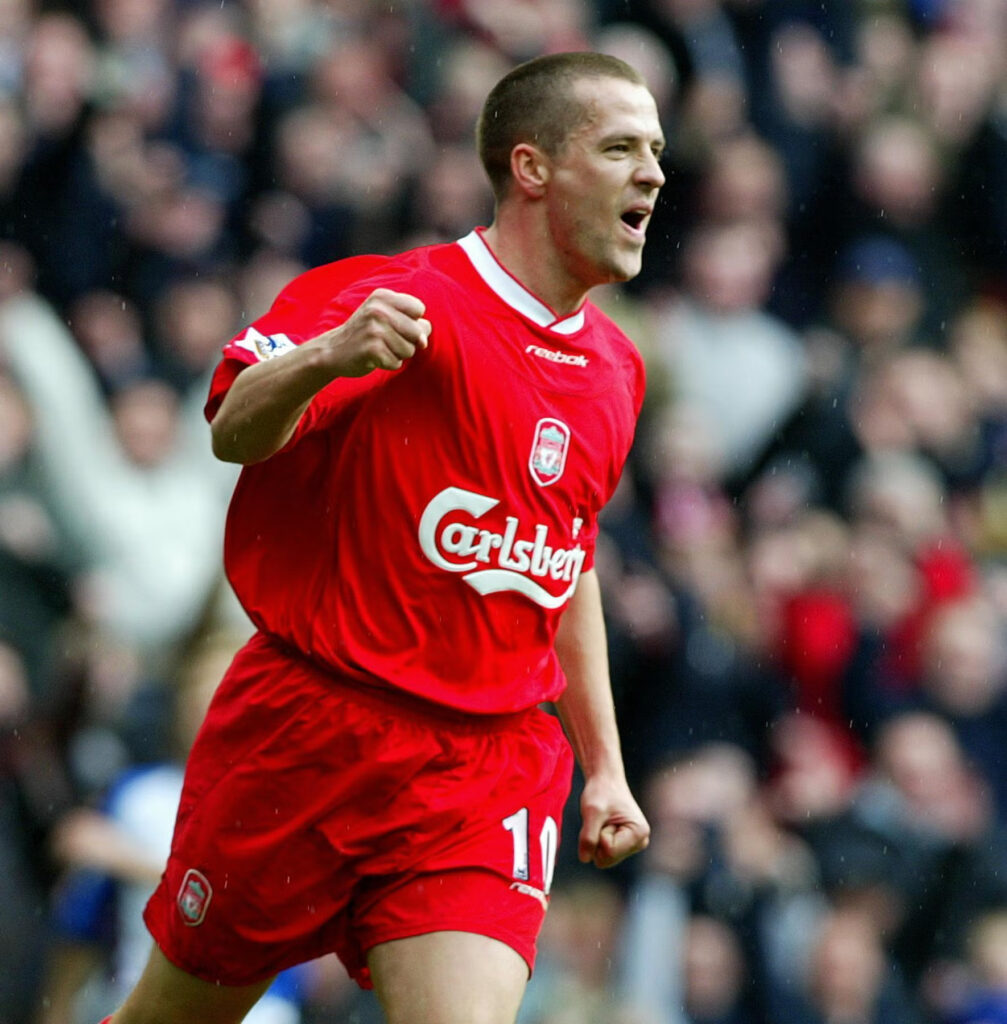
Owen’s rise was almost cinematic. Debuting for Liverpool in 1996, he scored on his very first Premier League appearance and became the youngest goalscorer in the competition at the time. In his first full season in England’s top flight, he scored 18 league goals and shared the Premier League Golden Boot at just 18 years old, a feat that marked him as not just talented, but truly elite among peers and seasoned professionals alike.
His influence did not stop there. Owen went on to win the Golden Boot again the next season and, in 2001, became the fourth Englishman ever to win the Ballon d’Or, beating luminaries like Raúl and Oliver Kahn to the prize. At the time, he was only 21, and for a moment it felt like he was poised to become not just one of England’s greatest ever forwards, but one of the world’s best.
During his Liverpool years, Owen was a constant goal threat, not just a scorer, but a forward whose pace, intelligence and technique helped Liverpool lift major trophies. In 2001, he scored two late goals in the FA Cup final and completed a historic treble for the club, a demonstration of his ability to perform in the moments that mattered most.
Key Injuries at the Worst Moments
But then timing, in the form of injury, intervened.
At 19, Owen suffered a serious hamstring injury that would change the course of his career. The injury was not a short-term setback. It lingered and recurred, limiting his explosive pace, the very trait that made him so dangerous in the first place. Owen himself has acknowledged that the hamstring healed incorrectly, leaving one leg weaker and altering his biomechanics, which in turn led to a cascade of further problems including groin, calf and knee issues.
The injuries did not come in isolation. In 2005–06, after leaving Liverpool for Real Madrid and then joining Newcastle United, he suffered a metatarsal break and, worse still, a ruptured anterior cruciate ligament (ACL) during the 2006 World Cup, a devastating blow that kept him out of action for more than 300 days.
That sequence of injuries could not have come at a worse time. Owen arrived at Real Madrid as a forward with genuine world-class credentials but was often used as a substitute and never quite given the consistent run needed to reestablish himself at the highest level. Although he still scored 16 goals in 45 appearances for Los Blancos, it was clear his body was no longer the weapon it had once been.
The Timing of Decline
After Madrid, his moves to Newcastle United, Manchester United and Stoke City showed flashes of his old brilliance, including a dramatic Premier League winner for United in a Manchester derby and memorable moments in Europe and domestic cups, but by then Owen’s explosive edge, the hallmark of his teenage years, had faded.
The toll of all those injuries was not just physical. As Owen himself has admitted, by the end of his career he struggled with the mental side of the game because he could no longer play the way he once did, with the fearsome pace and confidence that had made him one of England’s most feared strikers.
With 150 Premier League goals, two Golden Boots, and one of England’s most iconic goals at the 1998 World Cup, Owen’s statistical legacy remains impressive. He is also one of only a few Englishmen to reach such milestone tally in the Premier League.
But the sense of what might have been, the timing of his injuries, the timing of his club moves, and the timing of his peak years falling just before the modern era of sports science, leaves his career feeling like one defined as much by circumstance as by talent. In another world, with different timing, Owen could easily have been spoken of alongside the all-time greats rather than as one of England’s most brilliant but ultimately time-lost talents.
-
Owen Hargreaves — The Midfielder Who Was Never Fit Long Enough
When Owen Hargreaves made the move from Bayern Munich to Manchester United in 2007, it felt like one of those transfers that could define a club’s midfield for years. He was coming off a superb run with England at the 2006 FIFA World Cup, where many considered him the nation’s best performer, and he arrived in England with a reputation for relentless work rate, tactical intelligence, and defensive mastery, the kind of engine every top side craves.

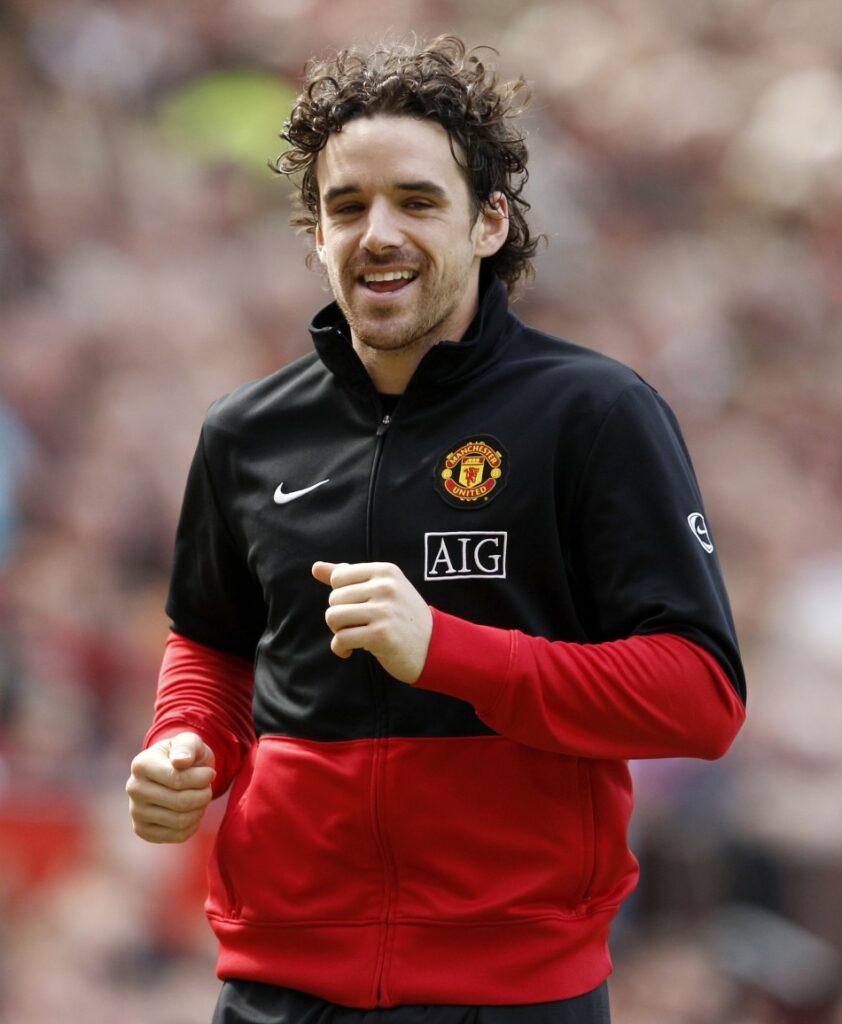
At Bayern, he had been a central figure in a team dominating the Bundesliga, regularly winning titles and showing an ability to control games from deep. At United, he played more than 30 times in his first season, reclaimed the Premier League title, and helped them lift the UEFA Champions League against Chelsea in Moscow in 2008. He even scored in the shootout, a rare moment of attacking contribution from a player whose real strength was his reading of the game and tireless press resistance.
Brilliance Before the Break
Before injuries overtook him, Hargreaves was the kind of midfielder who made those around him better. He combined tactical discipline with remarkable stamina, covering ground, breaking up play, and moving the ball forward with a calmness that belied his tough upbringing in England’s youth ranks and his early development in Germany. Across the early part of his career at Bayern and those first thrilling months at United, he looked like a midfielder who could anchor the centre of the park for a decade or more.
But football can be unforgiving, and timing, as always, is part of that game.
Knee Troubles That Never Ended
It all started with a broken leg at Bayern in 2006, a setback he technically recovered from, but one that planted the seed of persistent trouble. By the time he joined United, a chronic knee condition was beginning to reveal itself. During his second season at Old Trafford, he began suffering from patellar tendinitis, a deep knee tendon problem that resisted treatment and continued to flare up no matter how many specialists he saw.
United even sent him to the United States to see renowned knee surgeon Dr. Richard Steadman in November 2008, but that ultimately led to surgeries on both knees and a lengthy rehabilitation that kept him out of competitive football for 20 months, during which he missed out on major honours such as another Premier League title, the League Cup, the FIFA Club World Cup, and the Community Shield.
When he finally attempted a comeback in 2010 after two years in recovery, it was painfully clear that his body was nowhere near the same. He started a match in September 2010 but was forced off after just a few minutes due to another flare-up, a cruel echo of his ongoing struggles with recurring injuries.
Hargreaves later admitted that, despite his best efforts, “I was never the same” after those operations and the injections he underwent. He spoke candidly about the constant pain he carried, the muscle injuries that followed as his body compensated for knee discomfort, and the psychological toll of never being able to train or play as he once did.
Timing Was Unforgiving
What makes Hargreaves’ story resonate, and what places him firmly in this article’s theme, is how his promise intersected with a period when Manchester United was still one of Europe’s greatest teams. The late 2000s and early 2010s were seasons in which United contended for league titles and Champions League glory, and yet Hargreaves was rarely available to take part.
Instead of anchoring midfield battles, calling the tune in big matches, or mentoring younger midfielders around him, he was in treatment rooms, flying across continents for scans and surgeries, constantly trying, and often failing, to recover the fitness that once made him so effective.
His total United appearances stand at just 27 in the Premier League, a tiny number for someone many saw as a potential long-term lynchpin in midfield. A brief spell at Manchester City toyed with the idea of a second chapter, but it produced just one league appearance, a stark reminder of how injuries had erased the potential of a midfielder who once looked capable of dominating midfield battles in the toughest environments.
A Career Cut Short, Not Forgotten
Owen Hargreaves retired in his early thirties, long before many midfielders of his quality reach their tactical peak. Yet even in retirement, he remains a figure discussed with genuine affection and regret by fans who saw glimpses of his best. Many believe that if timing had been kinder, if injuries had not collided with his peak years, he could have become as legendary as the teams he joined, not just another great signing undone by physical misfortune.
Instead, his career stands as a reminder that sometimes the body fails while the talent remains unquestioned, a painful intersection of brilliance and bad timing that few careers encapsulate better than his.
-
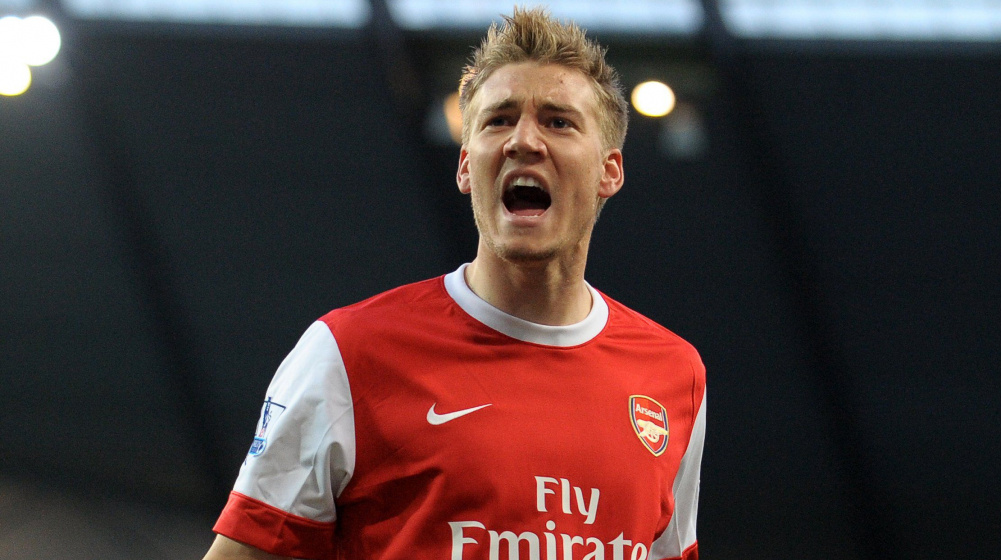
Nicklas Bendtner — Talent Overshadowed by Timing and Choices
Nicklas Bendtner is one of those players whose career feels like a mirror reflecting both genuine ability and moment after moment of missed chances. At his best, he had the physical gifts and technical tools to thrive at the highest level. At his worst, poor timing, inconsistent discipline, and off-field distractions combined to keep him from fulfilling the potential many believed he had as a young striker in the Premier League.

Gifted Forward Profile
When Bendtner first broke through at Arsenal, the raw ingredients were unmistakable. Tall, strong, and technically comfortable, he blended physical presence with a forward’s instinct that made defenders uneasy. He was capable in the air, comfortable holding up play, and possessed an ability to finish and create with either foot, the very traits that once prompted Arsène Wenger to describe him as a “potentially unstoppable striker” with “good technique, good stature, good pace” and “good link play.”
Those abilities were not exaggerated. He remains one of Denmark’s highest-scoring internationals, finding the net in major tournaments like the World Cup and European Championships, and scoring goals for club sides across Europe.
Yet as impressive as Bendtner’s physical and technical profile was, it was never matched by a consistent trajectory that might have taken him into elite status among Premier League forwards.
Inconsistency and Bad Breaks
Part of Bendtner’s story was the constant oscillation between promise and setback. During his early years at Arsenal, he had moments of real quality, including a goal that Guinness World Records lists as the fastest ever scored by a substitute in the Premier League, coming off the bench to head home against Tottenham Hotspur just seconds after entering play.
Still, that spark was not steady. Injuries cropped up at inconvenient times. He aggravated a groin problem in late 2009 and underwent surgery in Germany, a setback that cost him crucial months of development just when regular first-team action could have cemented his Premier League status.
Loans and moves were peppered with flashes of effectiveness, he finished as Sunderland’s top scorer in the 2011–12 Premier League season on loan, but even then his figures rarely approached the consistent output you expect from a forward with elite potential.
One of the most unluckily timed moments in his career came much later: during the 2013–14 season, at Arsenal, he scored twice in a league game only to pick up an injury himself, adding to an already lengthy list of fitness interruptions across the squad.
Mental Timing Issues and Off-Field Noise
Beyond physical setbacks, Bendtner’s career was shaped by choices and behaviours that undermined his progress. Even in interviews after his playing days, he confessed that confidence and ego were double-edged swords for him, traits that pushed him forward but also sat awkwardly with the consistency needed at the top levels.
Off-field incidents, far from typical for most professionals, frequently overshadowed his moments on it. Celebrations that led to fines and bans, and a lifestyle that occasionally made headlines in tabloid culture, helped define his public image more than his footballing contributions.
Those distractions did not just attract media attention; they created moments when Bendtner’s focus and discipline were called into question. In an era when elite forwards are measured not just by goals but by reliability and professionalism, such inconsistencies in mentality can have real consequences on timing, precisely what opportunities arrive and whether a player is ready to seize them.
A Career of Missed Peaks
By the time Bendtner left Arsenal permanently in 2014 and later retired from football in 2025 at age 33, his legacy was a blend of unfulfilled potential and quirky infamy. He scored important goals, he experienced success at different levels, and he was beloved by certain fan communities, but the narrative around him often revolved as much around the times he was stopped short as the times he made an impact.
In another world, one without interruptions, without off-field antics, without ill-timed injuries, and with the discipline that elite athletics demands, Bendtner’s blend of height, technical capacity, positional sense, and finishing instinct might have made him a Premier League legend. Instead, his story became a lesson in how talent alone does not determine legacy. Timing, behaviour, consistency, and readiness at pivotal moments matter just as much.
Nicklas Bendtner was never lacking in ability. What he lacked, more often than not, was the kind of timing that turns good players into truly great ones.
-
Harry Kewell — A Brilliant Star Dimmed by Misfortune
When Harry Kewell arrived in the Premier League in the summer of 2003, it genuinely felt like Liverpool had signed a player capable of changing the club’s creative footprint. Fresh from his impressive years at Leeds United, where he had been a key figure in pushing the club to a Champions League semi-final in 2001, Kewell joined Liverpool amid interest from big clubs across Europe. He was seen as a dynamic attacking threat capable of unlocking defences with pace, dribbling and sharp combinations with fellow forwards.
In his very first Premier League season (2003–04), Kewell played 49 times in all competitions, scoring 11 goals and quickly becoming a fan favourite at Anfield. His ability to beat defenders, his vision from wide and his knack for landing decisive contributions, such as a thunderous first-time strike in a 3-0 Merseyside derby win over Everton, showed he had the talent to be a major creative force in one of Europe’s toughest leagues.
Early Arrival and Instant Class
On the left flank or tucked inside, Kewell’s movement and technique gave Liverpool an extra dimension they hadn’t quite possessed before. His first season was filled with moments that hinted at how special he could be: not just goals, but assists, clever dribbles past markers, and the kind of attacking spark that turned half-chances into real opportunities. That level of production in a league as physically demanding as the Premier League spoke to real quality, the kind that separates good players from world-class ones.
Injury’s Relentless Grip
But then came the nagging injuries that would come to define his time at Liverpool, and ultimately shape his career in ways no one expected.
Though able to play through many matches in that first campaign, as early as 2004–05 Kewell began to struggle with a serious torn adductor muscle in the Champions League final against AC Milan, forcing him off the pitch before halftime. Fans’ frustration in that particular game, some booed his early withdrawal, spoke more to the emotional expectations rather than the physical toll his body was under; Liverpool later clarified the seriousness of the injury.
Over the next couple of seasons, Kewell’s injury issues multiplied and grew more complicated. He suffered from persistent groin strains, inguinal hernia problems, muscle issues and septic arthritis in his foot, a bacterial infection so severe it forced long layoffs and disrupted his ability to regain peak conditioning.
These injuries frequently came at the worst possible moments. They struck just as Kewell looked ready to recapture consistency, in seasons where Liverpool were fighting at the top end of the table or deep in Europe, and they often forced him out of crucial matches. He missed large chunks of entire campaigns, including the start of the 2006–07 season, and this made it difficult for him to build continuity with teammates or sustain the sort of momentum that makes elite players truly transcendental.
Even when he recovered enough to return, the injuries left lingering effects. High-level athletes talk about how a groin strain or adductor tear can sap confidence as much as physical sharpness, and in Kewell’s case, that seemed to be true. He often looked like a shadow of his best self: still technically capable, still hungry to contribute, but unable to sustain bursts of speed or take on defenders as regularly as he once did.
Unlucky Timing With Contracts and Squad Plans
Injuries also influenced Liverpool’s broader decisions around him. As his playing time became more fragmented, his contract discussions and role within the squad shifted. After repeated layoffs and the inability to string together long runs of form, Liverpool opted not to renew his contract after the 2007–08 season, instead allowing him to move on to Galatasaray where he enjoyed a resurgence for a period.
That decision was as much about timing as it was about fit. Kewell’s contract was up just as Liverpool were evolving their squad with younger attacking options and reshaping their wage structure, and the club’s hesitation to offer a long-term deal was tied closely to his fitness record. In another era, one without those persistent interruptions, he might have been a long-term fixture in title-challenging Liverpool sides.
A Career Defined as Much by Setbacks as Skill
By the time Kewell moved on from the Premier League, his body had experienced far more challenges than most professionals face in a lifetime. Though still capable of excellent football, including significant contributions at Galatasaray and later in Australia’s A-League, his peak years at Liverpool had been systematically interrupted by injuries that withheld a sustained period of elite performance.
His Liverpool stat line: 139 appearances and 16 goals across five seasons, does not reflect the raw talent he carried, nor the moments when he looked as unstoppable as any winger in English football. Instead it tells the story of a brilliant star dimmed by misfortune and poor timing.
Kewell’s journey remains one of the most poignant reminders in Premier League history that even the most gifted players are only human, and that injuries at the wrong time can change not just a season, but an entire legacy.
-
Rolando Aarons — The Unlucky Wonderkid Who Could Not Catch a Break
Rolando Aarons’ story is one of raw, electric talent that never got the chance to settle, grow and reshape a Premier League career, not because he lacked ability, but because timing and injuries crushed every opportunity before he could build genuine momentum. When he burst onto the scene at Newcastle United, fans and pundits saw a winger with natural pace, quick feet and genuine creativity, a player who could turn games on his own. But as his career unfolded, almost every season was interrupted by a fresh setback, career-altering injury, or a string of loan moves that never allowed him to establish a rhythm only a fully fit footballer knows.
Explosive Talent as a Youngster
Aarons joined Newcastle United’s academy in 2012 after being released by Bristol City, and it did not take long for his qualities to show. He made his senior squad debut on the opening weekend of the 2014–15 Premier League season, coming off the bench against Manchester City and hinting at the impact he could have as a direct, lightning-quick winger.
Aarons’ first senior goal came in an entertaining 3–3 draw with Crystal Palace, where he also set up a teammate, moments that suggested he could combine flair with end product in England’s top flight. At just 18-19 years old, his pace on the left, direct runs at defenders and ability to create chances made him one of the most exciting young talents in the league, the kind of winger capable of unlocking tight defenses and changing games in a flash.
A Career Marred by Injuries
But almost as soon as his breakthrough arrived, so did the physical problems. Aarons’ 2014–15 season was disrupted by hamstring injuries and thigh problems, forcing him off the pitch for long spells just as he was settling into first-team football. The cycle of injury, recovery, reinjure began early and never truly went away.
In August 2016, his injury woes turned serious when he suffered a metatarsal fracture, a month-long setback that should have been serious but manageable on its own. Days after returning to training, a tackle during practice left him with a ruptured anterior cruciate ligament (ACL) in his right knee, a devastating injury for any player and one that typically requires months of rehabilitation.
Across the 2016–17 season alone, those injuries kept him sidelined for over 227 days, robbing him not just of match fitness but confidence, momentum and the chance to build continuity under a manager and within a squad. His tally of just 22 Premier League appearances over nine years at Newcastle reflects how rarely he was able to string together extended playing time.
On top of that major ACL setback, he endured ankle injuries, calf strains, and a long hamstring layoff in later seasons, injuries that would disrupt the careers of fully established players, let alone a young winger still trying to prove himself.
Bad Timing at Every Turn
Each time Aarons looked ready to take the next step, misfortune struck again. Rather than emerging as a mainstay on Newcastle’s flanks, he was shuffled into a series of loan spells, including stints at **Hellas Verona in Serie A, Slovan Liberec in the Czech Republic, Sheffield Wednesday, Wycombe Wanderers and Motherwell, none of which allowed him to recapture the spark he showed as a teenager.
After leaving Newcastle in 2021, he signed with Huddersfield Town, but even there his impact was limited by continued fitness issues. Subsequent loans back to Motherwell and a move to NK Celje in Slovenia reflected how far his career had drifted from the promise of those early Newcastle days. In September 2025, Aarons signed with Morecambe at age 29 in search of a fresh start, a reminder that while his talent never fully materialised at the top level, he remains determined to play and contribute in the game.
Beyond the physical setbacks, Aarons’ trajectory was also hurt by the timing of transfers, managerial changes, and a sequence of loan spells that never matched his ability with the right platform to thrive. It became a story where injuries and misfortune repeatedly halted his progress, leaving glimpses of brilliance but no sustained Premier League impact.
Aarons once called himself “the most unlucky footballer in the world” because of how these breaks came repeatedly at the worst possible moments. The emotional and mental toll of these setbacks was well documented, at times leaving him contemplating his future in the sport he loved.
-
Ibrahim Afellay — Stoke’s Talented Playmaker Who Could Never Stay Fit
Ibrahim Afellay arrived in the Premier League with a reputation that promised creativity, intelligence, and technical grace in midfield, the kind of attributes that rarely come together in one player. Before joining Stoke City, he had built a solid career across Europe, starring at PSV Eindhoven, earning a big move to FC Barcelona, and winning major trophies including a UEFA Champions League and La Liga title. Afellay was known for his ability to pick passes, manipulate space, and influence the tempo of play, a midfielder who could unlock defences with a simple touch or turn.
Technical Elegance and Football IQ
When Stoke City signed Afellay on 27 July 2015 on a two-year deal, there was genuine optimism that his vision and creative passing would add a fresh dimension to the Potters’ midfield. In the 2015–16 Premier League season, he made 36 appearances, playing both as a number ten and in deeper creative roles, and scored his first Stoke goal in a 2–0 League Cup win before netting in the league against AFC Bournemouth and again on his 30th birthday in a draw with Swansea City.
Afellay possessed a level of technical ability that was noticeable even in a Stoke team built around physicality and direct play. His first touch, angled passes, and composure under pressure were reminiscent of the midfield architects who succeed in possession-based sides, rare for a club of Stoke’s typical style. Fans often saw moments where his ability to shift tempo or pick out a forward carried a quality that few of his teammates could match on the ball.
Long-Term Knee Injuries
Just as Afellay was settling into life in English football, misfortune struck. On 22 April 2016, during training with Stoke, he suffered a serious knee injury involving ligament damage, and was ruled out for an extended period, initially projected at up to eight months by the club’s official announcements and press reports.
By the time he returned to action in December 2016, Afellay had already lost much of the rhythm he had built in his first half-season at Stoke. Although he signed a contract extension in March 2017, further knee surgery and recurring issues kept him off the pitch and limited him to just 13 appearances in the 2016–17 season, with only three starts.
These injuries were not isolated blips. Afellay’s injury history, including a previous cruciate ligament tear in 2011 while at Barcelona and a long muscle injury while out on loan, showed a pattern of long layoffs that consistently disrupted his momentum and denied him a chance to settle physically in a demanding league.
Missed Momentum and Second Chances
Afellay’s attempts to regain form were repeatedly thwarted. After his return from injury in September 2017, he struggled to establish himself under manager Mark Hughes, making limited appearances and unable to lay down a consistent run in the team. In the 2017–18 season, he only featured six times, and according to squad records, did not make a Premier League appearance at all in 2018–19 before his contract was mutually terminated on 28 January 2019.
Beyond the club context, these fitness issues robbed Afellay of the chance to impress on a broader stage. When fully fit earlier in his career, particularly at PSV and Barcelona, he demonstrated the combination of vision and technique that national team managers valued, earning 53 appearances for the Netherlands and appearances at Euro 2008 and World Cup 2010. But in England, his injuries meant he rarely had the minutes needed to translate that quality into consistent Premier League influence.
In many ways, Afellay’s time in English football is a stark example of how fragile a player’s impact can be when injuries coincide with critical career moments. The physical demands of the Premier League exposed a vulnerability in his fitness that previous leagues had not fully tested, and every time he looked ready to build something lasting, another setback arrived. The result was a brief period of promise followed by long silences on the pitch, a career that, despite its underlying class and intelligence, never matched the talent he carried into it.
The Common Thread — Wrong Moments, Not Lack of Ability
If you zoom out from the individual names, this is what hits you: none of these players lacked talent. That is not the story here. The story is that football has a very cruel habit of punishing people for things that are not always in their control, and the Premier League is probably the harshest place for that kind of punishment.
With these seven, the pattern is almost always the same. A player shows you the level. Proper level. The kind of level that makes defenders change their positioning, makes managers adjust systems, makes fans start saying, “This guy is special.” And then the timing turns against them.
Sometimes it is injuries, but not just “he got injured.” It is the kind of injury timing that destroys momentum. The kind that happens right after a breakout season, right before a new contract, right before a major tournament, right when a manager finally starts building around you. That is why Sturridge feels like such a painful one. When he was fit, you could see the complete striker: movement, finishing, timing, confidence, that sharp half-second decision-making that top forwards have. But his body kept interrupting him at the exact moments when a player normally turns a great season into a great career.
Sometimes it is not even one big injury. It is the constant cycle: return, start two games, feel sharp again, then something small goes, and you are out for weeks. And in the Premier League, weeks become months quickly, because teams move on fast. Another player takes your spot, the season moves forward, the manager changes, the style changes, and by the time you return you are trying to catch a train that already left the station.
Then there is the kind of timing that comes from decisions around the player. Transfers that look good on paper but land you in the wrong situation. A manager who wanted you gets sacked. A new manager arrives and does not trust you. A club changes its playing style and suddenly the things you do best are not valued the same way. That is where someone like Bendtner fits into this conversation, because with him it was not just “bad luck.” It was a mix: moments where the pathway was there, and then choices, discipline, and focus did not match the opportunity. Timing is not only about injuries. Timing is also about when you mature, when you take responsibility, when you lock in. If that part comes late, football does not always wait.
With Owen and Hargreaves, you see another angle: the body and the era. Owen’s game was built around explosive pace and sharpness over short distances. Once that physical edge dulled, he was still intelligent, still capable of finishing, but the thing that made him terrifying was no longer available to him every week. Hargreaves, on the other hand, was the kind of midfielder every top side needs in big matches: disciplined, tactically switched on, aggressive without being reckless, able to do the dirty work and still play. But if you are never fit long enough to build rhythm, you never get to become what your football brain says you should become.
Football is not only about how high your peak is. It is about how long you can stay there, and whether your best years line up with the right club, the right manager, the right system, and the right physical condition.
That is why these stories feel compelling and heartbreaking at the same time. Because you can see the quality. You can see the world-class flashes. You can see what the career was supposed to be. But timing did not cooperate, and football does not give refunds for that.