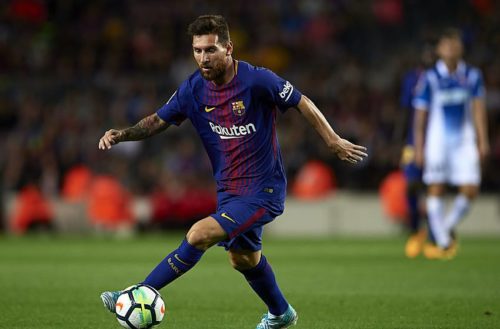
If you watch Messi in a full match, not just highlights, one thing is impossible to miss. He walks a lot. Sometimes he looks like he is not even involved. While others are running up and down, he is just moving slowly, scanning, waiting. And if you are not paying attention, you might even think he is doing nothing. But then, out of nowhere, he changes the game.
That is what makes it confusing for people. How can someone who walks so much still be the most dangerous player on the pitch? How can someone who is not constantly pressing still control matches better than players who never stop running?
The truth is simple. Messi does not move to show effort. He moves when it matters. He uses walking to read the game, to understand where defenders are shifting, to know where the next space will appear. He is not chasing the ball. He is waiting for the moment the ball becomes useful.
In this article, I am not trying to praise him blindly. I am trying to explain a habit that most people misunderstand. Why Messi walks more than he runs, what he gains from it, and why that style has worked at the highest level for so long.
Because once you really understand his movement, you stop asking why he walks. You start asking why everyone else runs so much without thinking.
Why Messi Walks More Than He Runs
Lionel Messi is one of those players football will never replace. He is the Barcelona legend who broke every club record, the Argentina captain who finally won the World Cup, the man with more Ballon d’Or awards than anyone else in history. People know him for his left foot, his dribbling, his calm finishing, and his ability to decide games without looking rushed.
When fans talk about Messi, they usually talk about goals, assists, and moments. But if you actually sit and watch a full Messi match, something else always stands out. He walks. A lot. He walks while defenders are running. He walks while midfielders press. He walks while the game is moving around him. And yet, he is still the player everyone is worried about. Still the one defenders keep checking. Still the one who ends up creating or finishing the important moments.
That is where the confusion comes from. How can a player who walks so much still control games? How can someone who does not look busy still look dangerous? And why has this pattern followed him from Barcelona to Argentina, from PSG to Inter Miami?
Now, let me explain what is really happening when he walks, what he is gaining from it, and why it has worked for him at the highest level for so long. Because with Messi, what you see on the surface is rarely the full story.
Messi’s Movement Patterns
Lionel Messi’s walking is not a myth built by television angles or slow-motion clips. It is measurable, repeatable, and consistent across different teams and competitions. Tracking data from multiple seasons has shown that Messi spends the majority of his time on the pitch walking or moving at very low intensity, while his sprinting and high-speed running occupy only a small fraction of his total movement.
In several high-profile match analyses, including Champions League and Clásico games, Messi has been recorded walking for roughly 75 to 83 percent of total playing time. In one widely referenced breakdown of an El Clásico at the Bernabéu, his movement split showed more than four-fifths of the match spent walking, with sprinting barely crossing one to two percent of total time. Over full match distances, Messi has often covered around 7 to 8 kilometres in total, with close to 4.5 to 5 kilometres of that distance coming from walking alone.
That pattern has remained stable across different stages of his career. Even in his prime years at Barcelona, when his acceleration was at its peak, his sprint volume was always lower than most elite forwards. The difference is that Messi’s sprints were almost always attached to ball contact, direction changes, or final actions, not defensive chasing or pressing sequences.
When placed beside other elite attackers, the contrast becomes clearer. Cristiano Ronaldo, for example, consistently recorded higher total distance and higher sprint volume in comparable competitions. Forwards operating in pressing systems, such as Roberto Firmino or Karim Benzema in certain tactical phases, also covered significantly more ground per match. Messi’s numbers sat at the lower end of elite attacking distance charts, yet his involvement in goals, assists, and chance creation remained at the very top.
This is where context matters. Messi has rarely been used as a pressing forward whose job is to lead defensive intensity. His role has almost always been to stay connected to attacking zones, maintain positional relevance, and remain available when the team regains control of the ball. His movement is designed around availability, not activity.
The walking is not random drifting. It is controlled positioning. He walks along defensive lines to stay onside. He walks between midfield and defence to remain in the blind spot of holding midfielders. He walks diagonally across zones so that when the ball shifts, he is already aligned with the next action. Every step is small, but every step is placed.
Messi himself has explained in interviews that he uses walking time to study opponents’ body orientation, defensive spacing, and passing lanes. He does not want to arrive late into situations by reacting. He wants to arrive early by anticipating. That anticipation only works when the body is not rushed.
What makes the numbers even more striking is that despite this low running volume, Messi still ranks among the most involved players in attacking sequences. His touches in the final third, progressive carries, and key passes remain elite across competitions. In other words, he does not need to run more to influence more. He needs to move correctly.
This is why judging Messi through distance-covered statistics has always been misleading. His influence is not built on volume. It is built on timing. He spends less energy reaching places and more energy deciding what happens once he arrives there.
Once this is understood, the statistics stop looking strange. They start to look logical. Messi does not walk because he cannot run. He walks because he understands exactly when running is worth it.
The Tactical Logic Behind Walking
Messi’s walking is closely tied to how he processes football. His game is built around anticipation, spacing, and decision control rather than physical volume. When he walks, he is not detached from play; he is positioning himself inside the structure of the match. He studies how defenders hold their lines, how midfielders step out, and how teammates move in relation to him. This information allows him to choose his actions earlier than most players, which is why he rarely looks rushed when the ball arrives.
Former teammates and coaches have repeatedly explained that Messi often knows what he wants to do before he even receives the ball. His walking gives him the time and visual clarity to make those decisions. By slowing his own movement, he speeds up his thinking. That mental advantage is what allows him to turn in crowded areas, release passes under pressure, or change direction without losing balance.
From a physical perspective, this approach also preserves his energy. Football matches are decided in short, intense actions rather than constant running. By limiting unnecessary movement, Messi keeps his body fresh for the moments that demand acceleration, balance, and precision. When he dribbles past defenders or breaks into space, his legs are responding from a state of control rather than exhaustion.
Positionally, Messi’s walking helps him remain available between defensive lines. Instead of drifting wide or dropping too deep, he holds areas where he can influence both build-up and final actions. Defenders are forced to stay alert around him even when he is not moving quickly, because his presence alone affects their spacing. If they step forward, they expose space behind. If they hold back, they allow him time to receive and turn.
Modern tactical analysis supports this idea. Occupying valuable zones of the pitch has become as important as movement itself. Messi consistently places himself where attacks can develop, rather than where running distances are highest. His walking allows him to maintain that positional balance throughout the match.
His dribbling also benefits from this rhythm. Balance, coordination, and timing depend on freshness. By avoiding constant sprinting, he protects the qualities that make his close control so effective. When he accelerates, it feels natural because it comes from control rather than urgency.
This is why Messi’s movement pattern looks different from most elite attackers. He does not try to dominate games through distance covered. He controls them through positioning, awareness, and timing. His walking is simply the visible expression of how his mind stays ahead of the match.
Messi’s Own Explanation and Psychological Adaptation
Messi has addressed the walking conversation directly in past interviews, and the details matter because he describes it as a conscious habit rather than something accidental. In June 2024, he explained that when he is walking, he is analysing what the opponent is doing and how the game is shaped in that moment. He specifically mentioned paying attention to the opponent’s positioning, how his own team is set up when they do not have the ball, and how to move away from a marker so he can be ready to start the next action quickly, including counterattacks.
That same set of comments also shows how he thinks about modern performance culture. Messi said he does not pay much attention to GPS numbers, running statistics, or data about distance covered, and he added that he never cared much about how much he ran in a match. What he emphasised instead was understanding the game and making the right decision when the ball arrives, which fits neatly with what has been visible across his career: lower running volume, very high involvement in decisive actions, and a style built around arriving at the right moment rather than staying in constant motion.
There is also a psychological element in how Messi frames it. In the same interview, he described himself as self-critical, meaning the walking is not coming from a place of being unaware of how it looks to people. The point being made was that the walking is a working phase of his match, because it gives him the chance to monitor spacing, defenders’ attention, and the timing of when to separate from a marker.
Childhood anecdotes reflecting how early this habit started
The “walking Messi” story often gets treated like something that appeared late in his career, when pace drops and older players start managing their minutes differently. Messi’s own childhood anecdote pushes against that idea because it suggests the preference for thinking first has been there since he was young.
In that same June 2024 discussion, he joked that as a kid he disliked running drills without the ball, and he would sometimes hide behind a tree to avoid being dragged into that kind of running. The key detail is not the joke itself, but what it reveals about his instincts even then: training that felt like running for running’s sake did not appeal to him in the way the ball and the game appealed to him.
That anecdote also helps explain why his movement patterns have always looked different. Messi’s football has consistently leaned toward reading the situation, holding useful positions, and waiting until the moment is worth the physical output. Even in his most explosive Barcelona years, the match rhythm often followed the same structure: long spells of measured movement and scanning, then sudden sharp actions tied to receiving, turning, dribbling, passing, or finishing. When that kind of approach shows up in childhood stories and adult explanations, it stops looking like a late-career adaptation and starts looking like a long-running personal preference that matured into a professional weapon.
What stands out in Messi’s own explanation is how ordinary he makes it sound. There is no attempt to turn it into a philosophy lesson. The idea is practical: walking gives time to read opponents, to detach from markers, and to arrive ready for the next decisive phase. That is a psychological advantage as much as a tactical one, because it reduces rushed decisions and keeps his actions connected to clear information rather than adrenaline.
Why Walking Works
Messi’s walking makes more sense when it is linked to the type of athlete and technician he has always been. His game was never built around repeated long sprints, constant pressing, or covering huge distances just to look active. It has always leaned on short-distance separation, balance in tight spaces, and making decisions early enough that the body does not need to panic. When those things are put together, walking stops looking like a lack of effort and starts looking like a practical way to keep his best weapons available deep into a match.
Low centre of gravity and energy efficiency
Messi’s body type matters here. At around 1.70m (5ft 7in), he naturally carries a lower centre of gravity than taller forwards, and that gives him two advantages that show up repeatedly in his clips and in how coaches describe him: stability when contact arrives, and the ability to change direction quickly without needing a big run-up.
That is the hidden link between walking and explosive action. A lower centre of gravity supports quick shifts in weight, which supports quick changes in direction, which supports the kind of dribbling Messi does where the ball stays close and the defender is forced to react late. It also supports his balance when defenders lean into him, because his body is already set up to stay upright and keep the ball within a short radius. That balance-and-turn advantage is a major reason he can accelerate from a walking start and still stay in full control of the ball immediately.
Energy efficiency also comes in here. Walking is the lowest-cost way to stay connected to play while still staying ready. A player who spends long stretches jogging aimlessly can rack up kilometres, but they also rack up fatigue, and that fatigue shows up first in sharp movements: the first step, the deceleration, the sudden turn. Messi’s style depends on those sharp movements staying clean late into games, which is one reason his match rhythm has always been measured, even when he was younger and faster.
Close ball control and dribbling efficiency
Messi’s dribbling is not only about skill, it is about how his body and his touch work together at speed. Tight control in football is usually lost when the stride length grows and the ball is pushed too far ahead, because defenders can then time the tackle or force a heavy touch. Messi’s stride length is shorter, his touches are smaller, and he can change direction without needing to take extra steps to recover balance. That is why he can carry the ball through crowded areas where other players either slow down too much or push the ball away and lose it.
This is also where walking fits neatly into the bigger picture. The aim is not constant speed. The aim is controlled speed at the exact moment a defender’s shape is wrong. Messi’s best dribbles often start from a slow base, because the defender’s stance relaxes when the tempo looks low, and then the change of pace arrives suddenly. The first two steps after that change are usually the most important part of the dribble, because they create separation. Messi’s walking helps him preserve those first steps, and it helps him keep the ball under immediate control when he accelerates.
There is a reason coaches and analysts often describe his bursts as “short-distance dominance” rather than long sprint dominance. Many of his most dangerous actions happen within five to fifteen metres: a quick turn between midfield and defence, a slip past a defender at the edge of the box, a sharp dribble that forces a second defender to step out and opens a passing lane. Walking keeps his legs fresh enough to repeat those actions across an entire match, especially in games where opponents try to crowd him and force constant physical contact.
Scanning and anticipation as a pre-movement advantage
Messi’s walking is also tied to how early he processes information. In 2024, he explained that when he walks, he is analysing the opponent’s positioning and thinking ahead about what he will do next, rather than chasing movement for its own sake. That matters because it lines up with what sports-science research says about scanning in football: players who scan their surroundings before receiving the ball tend to make faster decisions and execute more forward actions because they already know where pressure and options are likely to be.
This is where Messi’s walking becomes a mental advantage that shows up physically. Walking gives time to look over shoulders, check defenders’ distances, notice a teammate drifting into space, and decide whether the next action should be a turn, a one-touch pass, a dribble, or a pause. That preparation reduces rushed touches. It also reduces the need for panic sprints, because the position is already chosen before the ball arrives.
A well-known description of this came from Pep Guardiola, who spoke about Messi’s early-game walking as a way of building a mental “map” of the defence, so that later actions come from knowledge of where the weak points are, not guesswork. Whether that “map” language is used or not, the practical point holds: walking buys the time that anticipation needs, and anticipation is one of the biggest reasons Messi can look calm in crowded situations where other players look hurried.
Put together, these factors explain why walking works for him in a way it would not work for many others. Low centre of gravity helps him stay balanced and change direction quickly. Close control and short bursts mean he does not need long runs to be dangerous. Scanning and anticipation mean actions are prepared before the ball arrives. Walking sits in the middle of all of it as the pacing tool that keeps those strengths available for the moments that decide matches.
Conclusion: The Science Behind Messi’s Movement
Football analytics has moved past “distance covered” as a serious way to explain influence, because the sport is not won by who runs the most. What modern tracking-based models try to measure is who controls space, who creates time, and who forces the opponent into worse decisions.
That shift in thinking is important for understanding Messi’s walking, because his style fits the logic of these models almost perfectly: slow movement that still produces valuable positioning, and short, high-value accelerations that arrive when the defensive structure is already stressed.
Positional data models and pitch control research
The biggest jump in football analytics came when clubs and analysts started using tracking data, meaning the location of every player and the ball across the match, not only event data like passes and shots. That is the foundation for pitch control and pitch ownership models, which estimate which team is more likely to control the ball at different points on the pitch if the ball were to arrive there.
William Spearman, whose work on pitch control has been widely referenced in analytics circles, described pitch control as a probability concept tied to who can reach and control the ball at a location first, based on positioning and movement.
What makes pitch control useful for a Messi discussion is that it captures a reality that the eye test already hints at: a player does not need to be sprinting to influence space. If a player holds a zone that forces opponents to adjust their spacing, the “control” map changes. If a player positions himself in a pocket that blocks a passing lane for the opposition while keeping an option open for his own team, the team’s spatial advantage changes even if his speed is low. Pitch control and pitch ownership research has continued to expand, including more recent academic work that uses tracking context to model ownership and control dynamics rather than relying on isolated events.
Analytics conference presentations and public explainers around pitch control often make the same underlying point: the game is shaped by positioning and access, and access is shaped by where players are and how quickly they can react from those positions. In practical terms, this is why a player like Messi can appear to be moving slowly and still be “present” in the most valuable parts of the pitch, because his starting position is already chosen to reduce the cost of reacting.
Space generation without high speed
Space in football is not created only by fast running. Space is also created by timing, by taking up positions that force defenders into awkward choices, and by moving in ways that change the opponent’s reference points. Messi’s walking fits this because it often functions as a positioning tool rather than a speed tool. He drifts along defensive lines to stay aligned with passing angles. He holds pockets that defenders do not want to abandon. He stays close enough to the danger zone that a defender cannot relax, but far enough from physical pressure that he can receive cleanly.
This is where slow movement still becomes space manipulation. When a forward sprints repeatedly, defenders receive constant cues that allow them to match runs and reset. When a forward walks into a zone and waits, defenders have to decide whether to step out or hold shape, and both choices carry risk. That kind of “soft pressure” does not show up in sprint totals, but it shows up in how teams stretch, compress, and rotate defensively.
Even the famous 2017 El Clásico walking breakdown became widely discussed because it captured the contradiction perfectly: tracking showed Messi walking for over 80 percent of the match, sprinting for just over one percent, and still producing a goal and an assist. The main analytical value of that kind of example is not the sensational “he walked” headline. It is the reminder that slow movement can still be purposeful positioning that keeps a player connected to the attack and ready to act when the structural moment arrives.
Energy efficiency models versus running volume
Sports science and analytics increasingly treat movement as a resource management problem rather than a moral one. The question is no longer “who ran the most,” it is “who used their energy in ways that produced the highest match value.” Tracking-based approaches allow analysts to compare running volume with contribution timing: where high-intensity actions occur, what they lead to, and whether the player is arriving into decisive zones fresh enough to execute correctly.
This is where Messi’s profile becomes interesting. Walking preserves energy for explosive actions that require precision: the sudden change of pace that breaks a defender’s stance, the quick separation needed to receive on the half-turn, the sharp deceleration and turn that creates the shooting lane. In matches, the visible pattern is often low-intensity movement followed by short accelerations tied to ball contact and decision-making. That style aligns with a broader scientific critique of treating sprint volume as a proxy for influence, because influence depends on timing and outcome, not only exertion.
The cognitive side of the same story appears in scanning research. Studies on scanning describe it as deliberate head movement and information gathering before receiving the ball, and research has linked scanning behaviour to better subsequent actions and decision outcomes. Walking supports scanning because it reduces the physical noise of the moment, giving time to gather information and prepare the next action. Messi’s own explanation of walking as a way to observe opponents’ positioning and prepare the next move sits neatly within that research direction, because it frames low-intensity movement as information work rather than rest.
Overall, modern analytics does not “prove” that walking is superior as a general rule, because roles and systems change movement demands. What it does show is that value can be created through slow movement when the positioning is correct, the scanning is consistent, and the bursts are timed to decisive phases. Pitch control and pitch ownership models, scanning research, and energy-efficiency thinking all point toward the same conclusion in a Messi context: influence is better explained by spatial and cognitive control than by raw running volume.