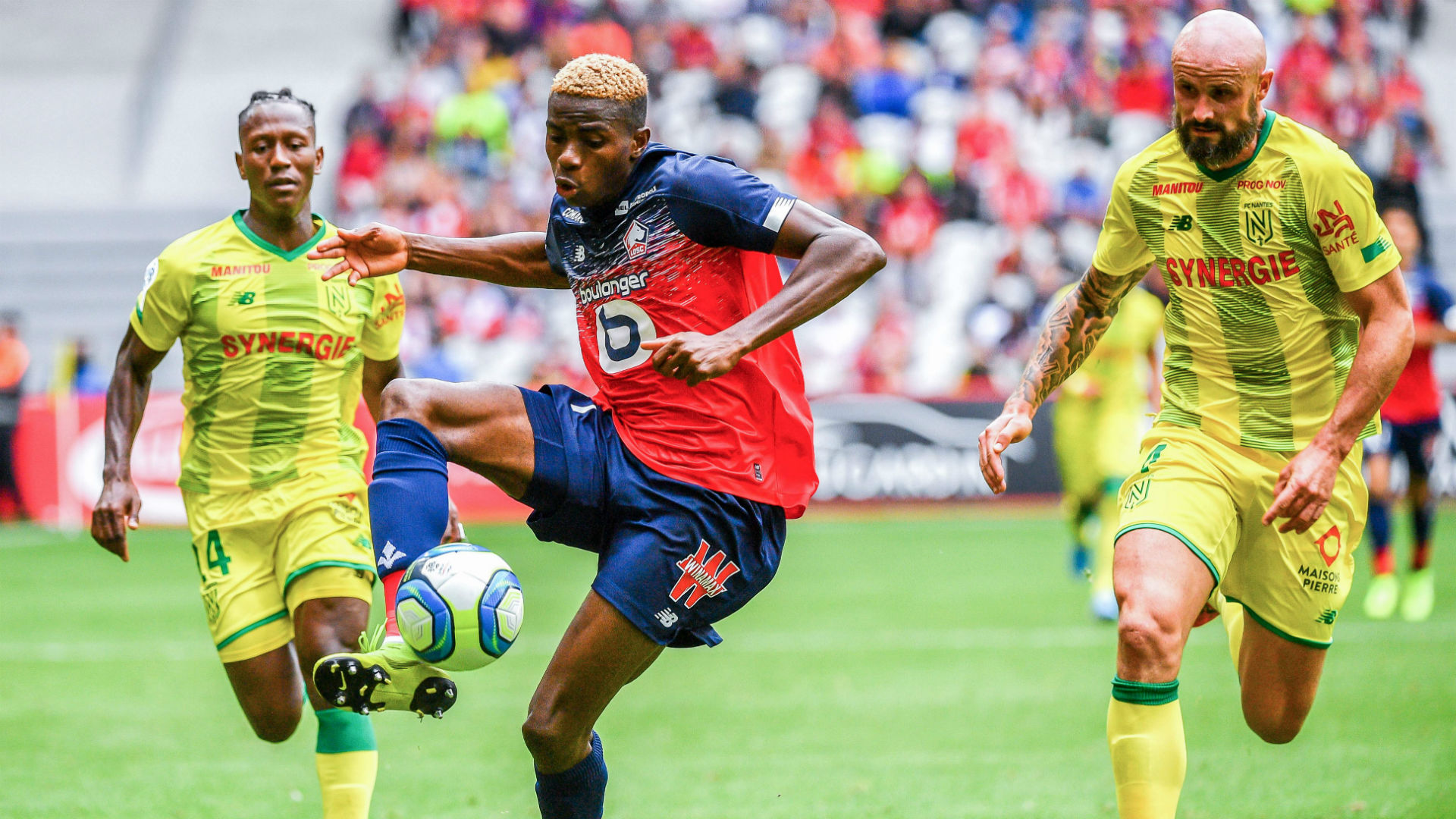
Counter-attacking has always occupied a complicated place in football. It is often framed as reactive, conservative, or even secondary to possession-based play, yet some of the most dominant teams in modern history have built their success around transitional football. From elite European champions to unlikely domestic title winners, counter-attacking systems have repeatedly proven capable of dismantling technically superior opponents by exploiting moments of imbalance.
At its core, a counter-attack is simple: winning the ball and moving it forward quickly before the opposition can reorganise. In practice, the most dangerous counter-attacking teams are anything but simple. They rely on compact defensive structures, carefully defined recovery zones, rehearsed passing patterns, and attackers trained to recognise space the instant it appears. Speed matters, but decision-making matters more. Timing matters more. Structure matters most.
As football has evolved toward higher defensive lines, aggressive pressing, and possession-heavy systems, transitional play has become even more influential. Teams now commit more players forward than ever, leaving larger spaces behind them when attacks break down. The sides that understand how to exploit those spaces consistently, rather than sporadically, are the ones that turn counter-attacks into a primary weapon rather than an occasional opportunity.
This is why certain teams stand apart in football history. They did not merely defend and break forward. They designed their entire identity around transitions, selecting players, building systems, and training patterns specifically to punish opponents during moments of defensive disorganisation. Examining these teams reveals how counter-attacking evolved from direct long-ball football into a sophisticated tactical approach that blends pressing, positioning, and rapid vertical progression.
What follows is a detailed look at the most dangerous counter-attacking teams ever assembled, and the structural, tactical, and personnel-based reasons their transitional football proved so difficult to contain.
What Makes a Counter-Attacking Team Dangerous
Before examining specific teams, it is important to understand the structural principles that underpin effective counter-attacking. Dangerous transitions emerge from organisation, spacing, and collective anticipation. The most successful sides compress space without the ball, recognise transition moments instantly, and advance in coordinated layers rather than isolated sprints.
These foundations apply across eras and tactical contexts. Whether deployed by underdogs or possession-dominant sides, the same mechanics govern elite transition play.
Compact defensive shape and structured recovery
Elite counter-attacking teams defend in compact blocks, usually mid-to-low, with minimal horizontal gaps between players. This tight spacing shortens recovery distances once possession is regained and ensures that the first forward pass immediately finds supporting runners.
Many teams deliberately force opponents wide, compressing central areas to reduce through-ball angles and encourage predictable crosses. When possession is recovered, this same narrow structure allows immediate vertical progression because attacking teammates are already positioned within passing range.
Quick transitional triggers
Counter-attacks rarely begin randomly. They are activated at specific moments: intercepted vertical passes, midfield duels, poorly weighted switches, or pressing traps near touchlines. These triggers are rehearsed extensively in training.
Pressing in this context functions less as a possession tool and more as an attacking mechanism. Winning the ball is only the starting point. The real danger lies in the first two passes afterward, usually played vertically or diagonally to bypass recovering midfield lines.
Speed (ball and player movement)
Speed in counter-attacking is collective rather than individual. The ball travels faster than any player, which is why elite transition teams prioritise early forward passing over extended dribbling.
Analyses of top European leagues consistently show that most counter-attacks conclude within roughly 14 to 17 seconds. The objective is not sustained pressure but rapid exploitation of imbalance before defensive reference points reset.
Player profiles
Successful counter-attacking systems rely on specific player types: wide attackers who accelerate immediately into space, forwards who make diagonal runs across centre-backs, and midfielders capable of delivering first-time progressive passes.
Leicester City’s title-winning side depended heavily on explosive wide outlets. José Mourinho’s best transition teams consistently featured forwards comfortable attacking open grass rather than congested penalty areas. Decision-making speed often matters as much as raw pace.
Minimal passes, maximum penetration
Effective counters reduce touch counts. Long diagonal balls into space behind defensive lines remain central to the strategy, even within modern pressing systems. Every additional pass gives opponents time to recover.
This represents controlled directness rather than randomness: vertical efficiency designed to compress reaction time.
The Most Dangerous Counter-Attacking Teams in Football
A counter-attack in football refers to a rapid offensive transition immediately after regaining possession, aimed at exploiting opponents while they are still structurally disorganised. The defining factor is not raw speed alone but timing: attacks begin before defensive lines recover their shape. Counter-attacking is often described as reactive football, but history shows it evolving alongside tactical sophistication. Each era refined the same core idea: absorb pressure, then attack structural weakness.
This tactical approach has endured because it allows teams with inferior possession to control outcomes. Dominating the ball does not guarantee dominance of space. By targeting transition moments, sides can generate higher-quality chances despite seeing less of the ball.
Historically, counter-attacking evolved from simple long passes into open space toward lone forwards. Modern systems are far more structured. Today’s transitions rely on pressing triggers, coordinated forward runs, and rehearsed passing patterns. These are not improvised reactions. They are planned attacking sequences activated the moment possession changes hands.
The teams below did not counter occasionally. They built their competitive identity around transitional dominance.
-
Real Madrid (2011–2012)
José Mourinho’s Real Madrid of 2011–12 was not merely a fast team that punished open spaces. It was a deliberately constructed transitional system in which defensive structure, player positioning, and attacking movement were integrated into a single vertical philosophy. Every tactical choice inside the side existed to shorten the time between regaining possession and creating a high-quality scoring chance.
Madrid’s primary structure was a 4-2-3-1 that flattened into a 4-4-2 during defensive phases. Cristiano Ronaldo and Ángel Di María dropped into wide midfield zones without possession, while Mesut Özil operated between the lines behind Karim Benzema. This configuration allowed Madrid to defend compactly while keeping their primary runners already positioned for forward release.
The double pivot of Xabi Alonso and Sami Khedira formed the backbone of the system. Alonso acted as the positional reference point, consistently orienting himself to receive first contact after recovery and immediately distribute vertically. He rarely carried the ball into advanced zones. His purpose was to bypass pressure through early forward passes. Khedira provided the dynamic element, attacking central space once Ronaldo or Di María pulled defenders wide. His delayed forward runs frequently arrived into unmarked areas at the edge of the box.
Benzema’s role was structurally essential. Rather than functioning as a traditional penalty-box striker, he repeatedly dropped between midfield and defence, drawing centre-backs forward and opening interior channels. This movement created space for Ronaldo’s diagonal runs from the left and for Khedira’s central surges. Özil occupied the pocket behind Benzema, receiving on the half-turn and releasing runners within one or two touches.
Madrid defended in a medium block, compressing central areas and guiding opponents toward wide zones. Sergio Ramos and Pepe maintained an aggressive defensive line, stepping forward to intercept rather than retreating deep. This reduced transition distance and ensured counters began closer to midfield.
Once possession was regained, Madrid did not recycle laterally. The first action was almost always vertical. Either Özil or Benzema received immediately, Ronaldo and Di María accelerated into depth, and Khedira advanced centrally. Five attacking lanes formed within seconds of recovery.
The output was historic. Madrid scored 121 league goals, accumulated 100 points, and averaged over three goals per match. A significant proportion of those goals arrived inside 10–15 seconds of possession recovery. This was not reactive football. It was pre-arranged spatial exploitation.
What separated this Madrid side was preparation. Players defended while already positioned to attack. The counter began before the ball was fully won.
-
Inter Milan (2009–2010)
Inter’s treble-winning team represented the opposite end of counter-attacking philosophy. Mourinho did not seek early space. He invited pressure, compressed zones, and waited for opponents to destabilise themselves.
Inter defended primarily in a narrow 4-2-3-1 that collapsed into a 4-5-1. Central compactness was prioritised over territorial control. Esteban Cambiasso and Thiago Motta anchored midfield, blocking passing lanes and delaying opposition progression. Lucio and Walter Samuel controlled aerial zones, while Júlio César organised behind them.
Rather than pressing aggressively, Inter focused on positional containment. Opponents were forced wide, where attacks slowed and crossing angles became predictable. Once possession was regained, Inter transitioned through three defined outlets. Wesley Sneijder received centrally and turned immediately. Samuel Eto’o attacked wide channels with acceleration. Diego Milito timed vertical runs behind retreating defenders.
Inter rarely committed large numbers forward. Their counters were built around three or four players, while fullbacks and midfielders maintained defensive rest structure. Sneijder’s first pass determined direction. Eto’o stretched width. Milito attacked depth.
The Champions League semi-final against Barcelona illustrated this model. Barcelona dominated possession but struggled to penetrate Inter’s central block. When the ball turned over, Inter exploited Barcelona’s advanced fullbacks through immediate diagonal releases.
Inter’s counters were not frequent. They were precise. The system prioritised control over chaos, proving that counter-attacking does not require speed-first football, but positional discipline and execution.
-
Liverpool (2017–2020)
Liverpool under Jürgen Klopp between 2017 and 2020 was a team defined by an integration of pressing triggers and rapid forward transition that turned defence into attack with purpose and pace. Klopp’s implementation of gegenpressing, the immediate attempt to win the ball back after losing it, was central to how Liverpool constructed dangerous counter-attacks. The structure was not accidental or simplistic; it was deliberately designed so that wins of possession occurred high up the pitch where opponents were most disorganised. The underlying principle was that the recovery of the ball was the first step in attack rather than a prelude to calm build-up play.
The formational base was a 4-3-3 that, in transitional moments, could resemble shapes such as 2-1-4-3 or 2-3-5 depending on how the full-backs and midfielders pushed forward. Trent Alexander-Arnold and Andy Robertson operated almost as auxiliary attackers, providing width and penetrating passes, while Salah and Mané remained the primary targets of vertical forward momentum. That structure enabled Liverpool to exploit unsettled defences with direct ball progression and numbers ahead of the ball once possession was won.
The front three of Mohamed Salah, Sadio Mané, and Roberto Firmino functioned together in a dynamic that fed counter-attacks. Salah and Mané offered high pace and diagonal runs behind lines, while Firmino occupied the space between defence and midfield, offering a pivot point for ball recovery and release. Firmino’s role was not traditional centre-forward isolation; his dropping movement invited defenders in, creating space for Salah or Mané to exploit vertical pockets of space. This interplay was a tactical recognition that transitional speed required players who could occupy different vertical zones and still contribute to attacking momentum.
Liverpool scored a notable portion of their goals from transitions, and even in their title-winning 2019–20 campaign, they registered double-digit goals from counter-attacks, a significant figure in a league increasingly dominated by possession-oriented sides. The team’s ability to shift rapidly from defence to attack, often in under ten seconds, came from patterns internalised in training and executed by players who understood space exploitation and timing.
The tactical discipline ensured that counters were not random but situationally triggered: winning the ball near midfield, immediate forward passing options, support runs from wide and central midfield, and the use of full-backs as auxiliary outlets when space opened wide. Even as Liverpool evolved to include more possession phases, the intention behind transitions remained consistent: exploit unsettled opponents and use direct vertical passes to destabilise defensive lines.
-
Manchester United (1990s–2008)
Manchester United under Sir Alex Ferguson between the early 1990s and 2008 developed a distinct counter-attacking identity that blended historical English attacking instincts with evolving tactical adaptability. During this period, United’s transitions were not incidental but the product of deliberate structural choices that enabled them to alternately dominate possession and exploit defensive imbalances when they arose.
The foundation of United’s transitional threat lay in a hybrid tactical flexibility that often shifted between 4-4-2, 4-4-1-1, and fluid 4-3-3 depending on opponent and context. What remained consistent was that, upon regaining possession, the team looked to progress the ball forward at pace into spaces vacated by an opponent’s commitment to attack. Ferguson’s United combined pace, direct passes, and positional interchange to create unpredictable attacking dynamics.
A crucial aspect of this era was the utilisation of wide players and forwards with pace and unpredictability. Ryan Giggs in the mid-1990s offered wide bursts of speed, direct dribbling, and the ability to break behind full-backs. In the late 2000s, the trio of Cristiano Ronaldo, Wayne Rooney, and Carlos Tevez exemplified the counter-attacking principle on a grand stage: Ronaldo’s acceleration down the flank, Rooney’s ability to link and release forward, and Tevez’s intensity in dribbling and finishing opened up transitional channels that allowed United to threaten teams committed to possession.
The midfield function, particularly from Paul Scholes and Michael Carrick, was also a defining feature. Scholes’s range of passing created vertical ball progression that cut through midfield lines, while Carrick’s positional discipline provided cover that allowed forward players to commit to rapid transitions without leaving the defence exposed. Ferguson’s teams often dropped into a mid-block defensive shape when necessary, but they always looked to shift the ball quickly, either through penetrating passes or long diagonal deliveries, once possession was regained.
United’s transitional play was not merely about speed; it was connected to positional intelligence. Wide midfielders tucked inside to overload central lanes, creating numerical superiority that forced opposition midfielders into decisions that United could exploit. When an opponent’s back line stepped forward, United’s forwards had the speed and timing of runs to penetrate behind. The tactical coordination extended beyond forwards, full-backs and central midfielders were also part of the progression logic, offering options that kept transitions coherent rather than chaotic.
This era of United is remembered for its pragmatic aggression in counter-attacks: the team defended compactly when necessary but always maintained an eye toward rapid forward chance creation. The balance between structural defensive shape and aggressive use of space made their transitions among the most reliable and unpredictable in top-flight football.
-
Arsenal (2003–2004 “Invincibles”)
Arsenal’s 2003–04 season under Arsène Wenger was unique in the modern era not only because the team completed a Premier League season unbeaten but because they combined possession control with incisive vertical transitions that unsettled opponents. The tactical setup deployed was technically a 4-4-2 shape in defence with the potential to resemble a 4-4-1-1 in attack, with Dennis Bergkamp often linking play between midfield and attack.
Arsenal’s transitional danger was rooted in movement and positional interchange. Thierry Henry, the team’s focal point, was deployed in a manner that constantly made runs beyond defensive lines. Henry’s ability to drift wide before penetrating centrally forced defenders to make rapid defensive decisions, which often created the tiny moments of imbalance that Arsenal exploited. Robert Pires, Freddie Ljungberg, and Ashley Cole offered overlapping runs and width that stretched defences horizontally, allowing the team to transition from solid defensive base into forward thrusts.
The left flank in particular became a positional overload mechanism. Ashley Cole’s attacking-minded full-back role, combined with Pires drifting into central pockets and Henry’s intelligent finishing, created a situation where opposition teams could not easily contain simultaneous threats across different vertical channels. Arsenal’s movement was not merely kinetic; it was aligned with spatial awareness that exploited half-spaces and channels vacated when opponents committed numbers forward.
Patrick Vieira and Gilberto Silva provided robust shielding in central midfield that allowed the forwards the freedom to commit to fast breaks without sacrificing defensive solidity. Vieira’s duel winning and ball carrying, combined with Silva’s positional discipline, ensured Arsenal could recover the ball and instantly progress it forward. This blend of structure and freedom contributed to transitions that were both technically precise and dynamically rapid.
Unlike some teams that rely purely on raw speed, Arsenal’s countering was rooted in triangular passing combinations and intelligent runs. Bergkamp frequently played short, incisive passes into the path of attacking runners, while Henry’s finishing instincts provided the clinical edge once a transitional move entered the final third. Such interplay ensured that Arsenal’s transitions were not simply bursts of speed; they were coherent tactical sequences with penetration and timing.
-
Borussia Dortmund (2010–2013)
Borussia Dortmund under Jürgen Klopp from 2010 to 2013 was a team that fused aggressive pressing with direct transitional movement, creating a style that challenged traditional defensive organisations in Europe. Klopp’s development of gegenpressing meant that regaining possession was itself a tactical trigger for attacking movement rather than just defensive reset. This was a conscious strategic choice: transitions were built around players who could move quickly and vertically once the ball was won back.
The tactical shape often started as a 4-2-3-1 formation in possession, but this could quickly resemble a more attacking unit when the wide attackers and full-backs pushed forward. The goal was not to linger in possession but to enter the final third with direct intent, frequently using forward passes that exploited space immediately after a turnover. Klopp’s insistence on verticality meant that spaces behind the opponent’s defensive line were persistently targeted by players like Marco Reus, Mario Götze, and Robert Lewandowski, who combined pace with intelligent positioning.
The centre of Klopp’s Dortmund was less about individual star power and more about collective intensity and positional harmony. Ilkay Gündogan, playing in a deeper midfield role, acted as a rotational hub, his awareness and range allowed him to distribute forward passes that kept transitions clean and penetrating. The defensive pivot of Sven Bender alongside Gündogan enabled Dortmund to maintain balance while committing attacks, ensuring that transitional forward movements were supported rather than speculative.
When Dortmund regained the ball high up the pitch, they did not stay patient; the objective was forward movement. The front players and attacking midfielders often interchanged positions to create unpredictability, while full-backs pushed higher to support width and overloads. This system of numerical support and coordinated runs meant that counter transitions were not isolated sprints but structured advances combining width, depth, and vertical penetration.
The approach paid dividends domestically and in Europe. Dortmund’s ability to force opponents into errors through pressing and then rapidly transition into attack often caught defences unprepared, leading to chances before opponents could re-organise. What Klopp achieved with Dortmund was a blueprint for modern transitional football: a style grounded in spatial awareness, pressing triggers, and immediate vertical movement following possession recovery.
-
Leicester City (2015–16)
Leicester City’s 2015–16 Premier League title was not just the story of an underdog winning against all odds. It was the story of a team whose tactical identity was meticulously structured around defensive organisation, intentional transitional mechanics, and a relentless vertical threat that exploited the specific vulnerabilities of the best teams in England.
At the heart of Leicester’s approach was Claudio Ranieri’s strategic shift to a rigid 4-4-2 formation, which he deployed in 35 of the 38 matches that season. This was not a team that experimented with fluid systems or rotated constantly; it was a side that embraced simplicity, clarity of roles, and tactical discipline. Ranieri’s decision to commit to a settled shape was foundational to how Leicester managed transitions. Many sides in the Premier League chase possession percentages and territorial dominance. Leicester consciously did not. They committed to structural compactness, collective defensive tasks, and the ability to spring forward with intent once possession was regained.
Defensively, Leicester operated with two banks of four that protected central channels and prevented opponents from penetrating through short combinations. The back four, typically anchored by Wes Morgan and Robert Huth, maintained one-on-one defensive solidity, while the midfield quartet provided horizontal pressure and vertical containment. N’Golo Kanté and Danny Drinkwater formed a pivotal midfield partnership because they combined relentless ball recovery with anticipation and quick distribution, enabling Leicester to absorb sustained periods of pressure before launching their break. Kanté in particular excelled at winning loose balls and shielding the backline, and his capacity to transition instantly from defence to attack was critical to Leicester’s pattern of play.
Leicester’s counter-attacks were not haphazard breakaways; they were structured transitional sequences that followed a clear logic: contain space deep, win possession near or just inside your own half, then exploit the opponent’s retreating defensive shape with direct forward progression. Much of the early work in a transition came from winning the ball in central zones, where Leicester’s disciplined lines and interception statistics, among the highest in the league, disrupted the build-up of not just top teams but also elite opposition.
Once Leicester regained control, their vertical threat manifested through two distinct channels. The first was direct forward passes into space for Jamie Vardy. Vardy’s role cannot be overstated: his unparalleled pace and ability to lead the line with explosive sprints behind defensive lines meant that defenders’ tendency to step high or close gaps became a liability. Instead of intricate buildup play, Leicester often looked to push the ball forward quickly, sometimes within five to nine seconds of recovery, targeting Vardy’s runs or inviting wingers to drift into attacking positions in unbalanced defensive situations.
The second attacking vector came from wide and half-space injections, often through diagonal passes to Riyad Mahrez or switches to overlapping full-backs. Mahrez, the PFA Player of the Year that season, had the technical ability to receive passes in dangerous channels, turn sharply, and either carry the ball forward or combine with Vardy in the final third. Those injections were not random but patterned responses to the way defenders were drawn out of shape by Leicester’s pressing and containment.
The statistical truth beneath Leicester’s success further illustrates how deliberate their transitional identity was. Despite finishing the season with around 42% average possession, one of the lowest in the league, Leicester outperformed many possession-dominant teams because they maximised the value of the moments when they did have the ball. Rather than chasing long spells of control, they prioritised quality over quantity, emerging with high expected-goal contributions from fewer but more direct attacking actions, often triggered by swift transitions that opponents struggled to recover from.
It was common during the campaign to see opponents push their defensive lines high or commit extra bodies forward in search of goals, unaware that doing so opened up the channels Leicester had practiced exploiting repeatedly in training. Once space opened behind a retreating back line, Leicester’s attackers were primed to attack it with aggressive running, contextual awareness, and the technical confidence to finish decisively. The legacy of that pattern was visible across match after match, as teams with greater individual talent found themselves consistently exposed by Leicester’s transitional threat.
Ranieri’s tactical choices, then, were not simply defensive reactionism or a throwback to antiquated football. They were a clear, structured implementation of counter-attacking principles designed around the specific strengths of his squad and the tactical tendencies of their opponents. Leicester did not win in spite of their strategy, they won because it was conceived, practised, and executed with consistency and precision.
Conclusion
Looking across all these teams, one thing becomes clear: great counter-attacking sides are not accidental. They are built deliberately, around specific player profiles, defensive habits, and clear ideas about where space appears when opponents commit forward.
The common mistake is to treat counter-attacking as reactive football. In reality, every team discussed here planned for these moments. Milan organised their back line to release runners quickly. Arsenal positioned Henry and Pires to exploit half-spaces the instant possession changed. Manchester United always kept pace high in wide areas for sudden switches of play. Dortmund and Liverpool formalised pressing so that winning the ball already placed attackers in advanced positions. Leicester accepted long periods without the ball because they knew exactly what to do once they regained it.
Different eras produced different mechanisms, but the underlying thinking stayed consistent. Compact defending created predictable recovery zones. Midfield structure determined whether transitions started cleanly or broke down. Forward movement decided whether counters became genuine chances or faded into possession recycling. None of this relied on improvisation. It relied on repetition, spacing, and timing.
Modern football now leans heavily toward possession dominance and high defensive lines. That shift has not reduced the importance of counter-attacking. It has made it more dangerous. As teams push higher and compress space near the opponent’s box, they leave larger distances behind them. Well-organised transitional sides understand this and design their attacks around those gaps.
What separates elite counter-attacking teams from ordinary defensive sides is clarity. They do not merely absorb pressure. They know where the next pass goes. They know who runs first. They know which zones to attack. Speed matters, but structure matters more. That is why these teams remain relevant reference points.