The announcement of a temporary ceasefire between the United States, Israel and Iran has drawn attention to the broader outcomes of the 39-day confrontation.
The development followed a statement by the president of the United States, Donald Trump, who disclosed that hostilities would pause for two weeks after weeks of sustained military exchanges.
The conflict, which Iran described as unprovoked, reportedly began in late February and quickly escalated across multiple theatres in the Middle East.
Reports indicate that the fighting led to significant casualties within Iran, including the death of the supreme leader, Ali Khamenei, alongside civilian losses in cities such as Minab.
The situation also extended beyond Iran’s borders, with attacks and counterattacks affecting several countries within the Gulf region.
Announcing the truce, the prime minister of Pakistan, Shehbaz Sharif, described the development as a step towards stability.
“Both parties have displayed remarkable wisdom and understanding and have remained constructively engaged in furthering the cause of peace and stability,” he said.
As part of diplomatic efforts, Iran presented a 10-point ceasefire proposal, outlining conditions aimed at halting further escalation.
The framework included commitments such as non-aggression, continued Iranian oversight of the Strait of Hormuz, and recognition of uranium enrichment activities.
Other elements of the proposal addressed the removal of sanctions, termination of certain international resolutions, and withdrawal of United States forces from the region.
The proposal also called for compensation to Iran and an end to hostilities involving allied groups across the Middle East.
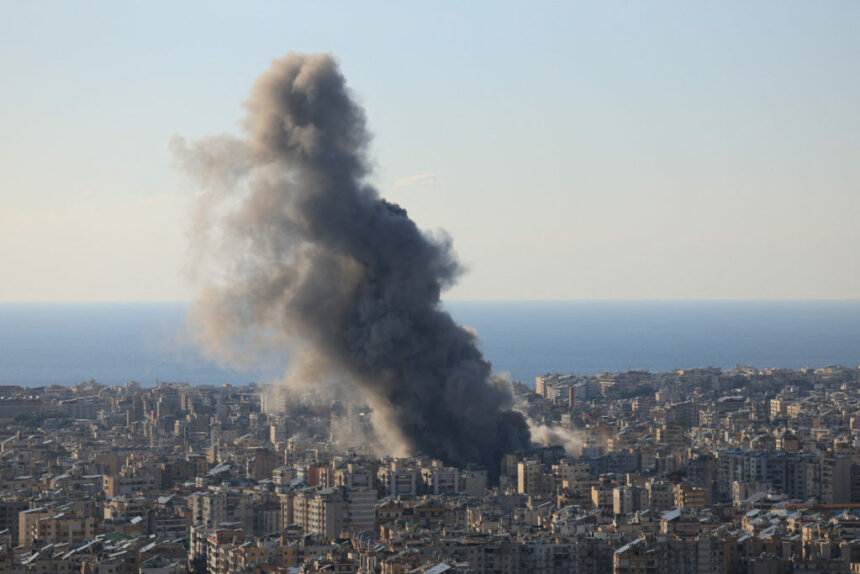
In the early stages of the conflict, military exchanges intensified rapidly, with missile and drone strikes reported across multiple locations.
Iran responded to initial attacks with large-scale barrages targeting Israeli cities and strategic installations, including areas believed to host sensitive infrastructure.
The exchanges also affected United States military assets stationed in the Gulf, with reports indicating losses of personnel and equipment.
Civilian casualties were recorded in several neighbouring countries, reflecting the regional spread of the conflict.
Despite the intensity of the fighting, verified casualty figures from Israel remained limited, partly due to reporting restrictions.
As discussions around the ceasefire continue, attention has shifted to whether the objectives of the United States and Israel were achieved.
The secretary of defence, Pete Hegseth, described the operation as successful.
“Operation Epic Fury was a historic and overwhelming victory on the battlefield. A capital V military victory,” he said.
He added that the campaign fulfilled its targets, including degrading Iran’s naval strength, air defence systems, and missile production capacity.
The stated objectives of the United States and Israel included limiting Iran’s missile capabilities and reducing its stockpile of enriched uranium.
Additional goals reportedly involved constraining Iran’s ability to advance nuclear activities and weakening allied groups operating across the region.
However, available information suggests that some of these targets may not have been fully realised.
Iran continued to launch missile and drone attacks up to the point of the ceasefire, indicating that key elements of its military capability remained operational.
There is also limited confirmation regarding the extent of damage to Iran’s nuclear infrastructure following reported airstrikes.
According to the International Atomic Energy Agency, there were no indications of radiation leaks or abnormal activity after the strikes.
This observation suggests that critical nuclear facilities may not have been significantly compromised.
Efforts to weaken Iran’s regional alliances also appear incomplete, as groups linked to Tehran have remained active during the conflict period.
Operations attributed to Hezbollah and other allied forces continued in different locations, indicating sustained operational capacity.
While high-profile figures were reportedly killed, the broader structure of Iran’s leadership has remained intact.
Analysts note that Iran’s governance and military systems are structured to ensure continuity in the event of leadership losses.
The country operates a dual military arrangement, combining conventional forces with specialised units responsible for ideological and strategic functions.
These systems are supported by multiple intelligence bodies and coordinated command structures designed to distribute authority.
Such an arrangement allows for continuity of operations even under sustained external pressure.
The ceasefire, therefore, reflects a pause in hostilities rather than a clear resolution of the underlying conflict.
While both sides have presented their positions, the available evidence points to a mixed outcome.
Some military targets may have been affected, but key capabilities within Iran’s defence and political system appear to remain functional.
As talks continue, the situation remains fluid, with further developments expected to shape the long-term implications of the conflict.
For now, the ceasefire offers a temporary halt, while broader questions about strategic outcomes remain under examination.