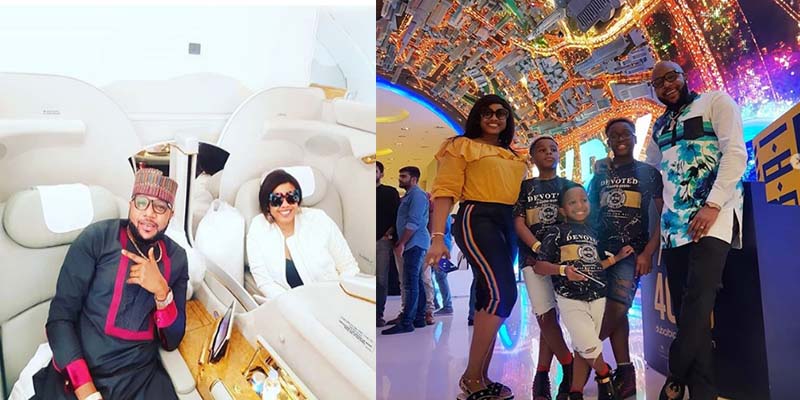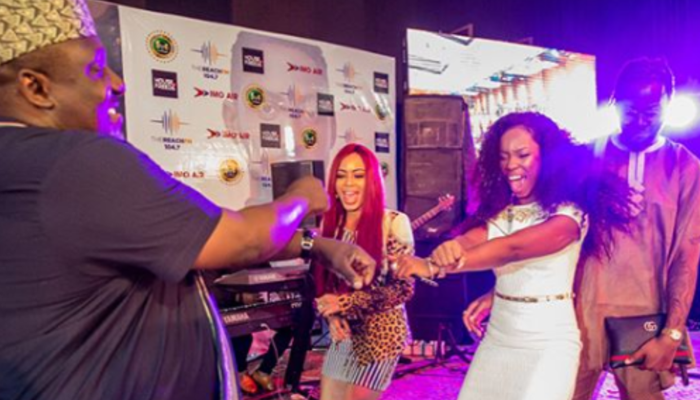
In recent months, a quiet question has followed Tobi Makinde and Funke Akindele across interviews and comment sections about when things changed.
It did not start with a public disagreement or a statement. Instead, the speculation built slowly from noticeable distance to an absence that did not go unnoticed. By the time the conversation reached social media, a narrative had already taken shape, one that suggested a relationship many had watched for years was no longer what it used to be.
Neither of them addressed it immediately. But as the speculation grew, so did the assumptions about loyalty, growth, and what happens when two careers that once moved closely together begin to take different directions. It was only in a recent interview that Makinde responded, pushing back on the idea that there was ever a fallout, and describing the story as one largely created outside of them.
His response did not answer every question. It simply shifted the focus away from what people thought they saw, and toward what was actually there and what may have simply changed.
Their History


Their story did not begin with rumours. It began on a set, years before the speculation, before the headlines, and long before their names became linked in public debate.
When Tobi Makinde first entered the world of Jenifa’s Diary, the hit series created by Funke Akindele, he was not in front of the camera. Around 2015, while completing his Master’s degree, he joined her production company, Scene One Productions, working behind the scenes as part of the technical and management team. It was an entry point that placed him inside one of Nigeria’s most successful television ecosystems, allowing him to learn the structure of filmmaking from the ground up.
His transition to acting came in 2017, when Akindele created the character “Timini” for him in Jenifa’s Diary. Cast as the personal assistant to her lead character, Makinde stepped into a role that would redefine his career. At the time, he has said, he was close to stepping away from acting after repeated unsuccessful auditions. That opportunity not only kept him in the industry but reintroduced him to audiences, establishing him as a recognisable face in Nollywood and cementing a mentor-protégé relationship between both creatives.
From there, his growth within Akindele’s creative circle was steady and layered. He did not remain solely an actor; instead, he expanded his role behind the camera, taking on responsibilities as a production manager and gradually transitioning into directing.
By 2022, that evolution reached a major milestone when he co-directed Battle on Buka Street alongside Akindele. The film went on to become one of Nollywood’s highest-grossing titles, marking a shift in their relationship from mentorship into full creative collaboration.
Their partnership remained visible into 2023. In December of that year, Makinde played Shina Judah in A Tribe Called Judah, a record-breaking production led by Akindele. By this point, he was widely regarded as part of her close professional circle, whose journey within the industry had been shaped significantly within her system.
For years, Makinde himself framed the relationship as more than strictly professional. In interviews, he described Akindele’s influence as foundational, often likening the experience of working with her to formal training and crediting her with shaping his approach to both acting and filmmaking.
That is why the shift that began to surface in late 2025 drew attention. In December 2025, when Tobi Makinde got married, Funke Akindele’s absence from the wedding and her lack of a public congratulatory message sparked speculation among fans.
The conversation intensified in February 2026, when a video from a film premiere circulated online showing both figures standing near each other without any visible interaction. Based off their earlier close relationship, it’s not shocking that their aloof behaviour caused a ruckus on social media.
Taken together, the timeline tells a story that stretches from 2015 when a young creative entered a production company, to a decade later, when that same creative had grown into a collaborator, only for their once-visible closeness to become the subject of public scrutiny.
The Rumours

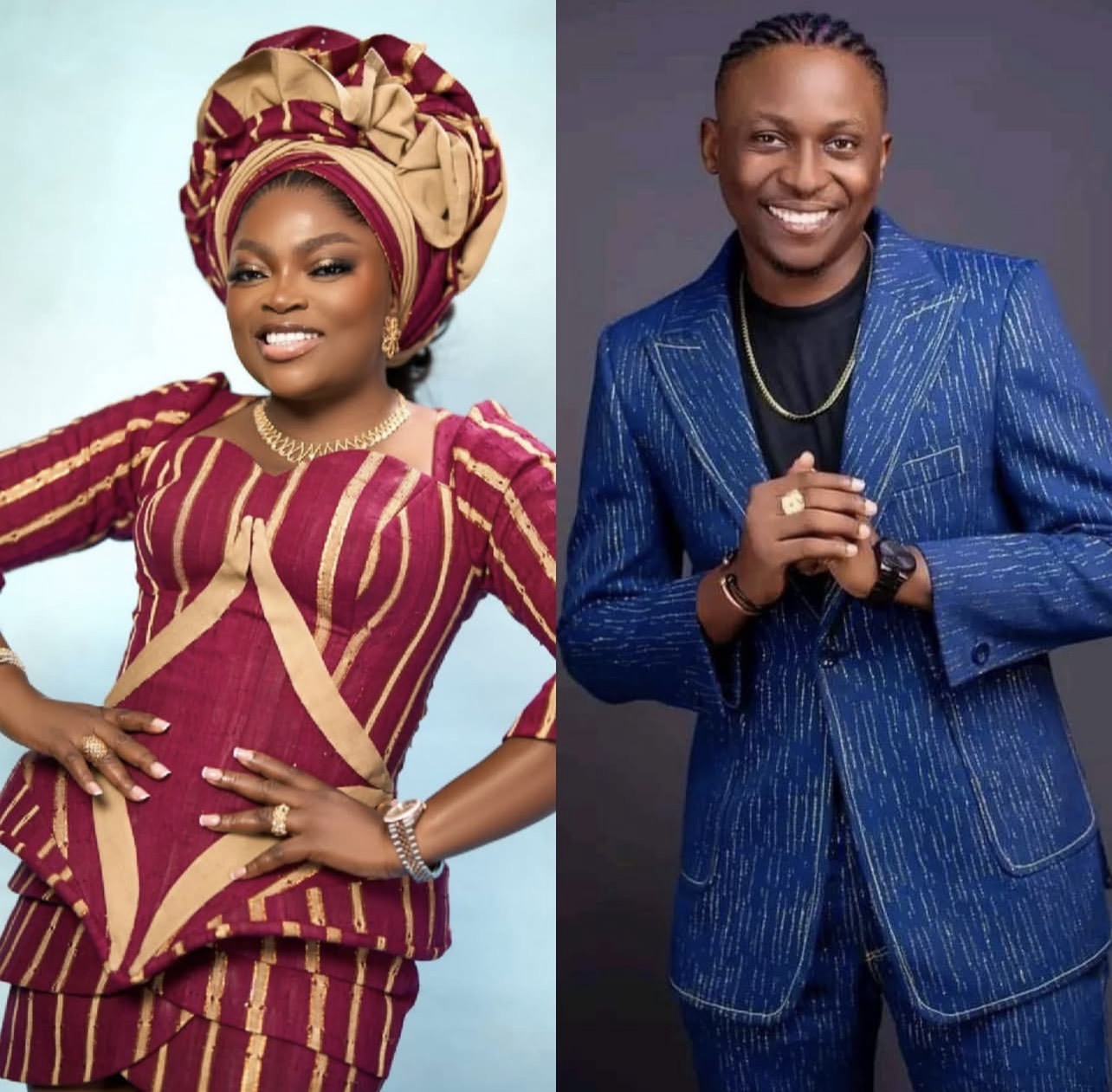
The rumours did not emerge from a single moment. They formed over time from observations, short clips, and questions that, on their own, did not offer clear proof.
For followers of Tobi Makinde and Funke Akindele, the first signs appeared as distance. By 2025, there were fewer joint appearances and limited public interaction compared to previous years when both were frequently seen together through projects linked to Jenifa’s Diary and other productions. They were always collaborating on movie promotions as well, but that stopped abruptly. The change was not explained, but it was noticeable enough to raise questions.
In December 2025, the conversation gained attention when Akindele was absent at Makinde’s wedding. There was also no public congratulatory message from her on social media. This quickly became a talking point online. While no explanation was given, the absence was widely interpreted by fans as a possible sign of a strained relationship.
By February 2026, the speculation had intensified. A video from a film premiere circulated on social media showing both individuals in close proximity without any visible interaction. The clip was widely shared, with netizens suggesting it reflected tension. The brief became one of the most cited pieces of “evidence” supporting claims of a fallout.
As these incidents combined, a narrative began to take shape. Netizens framed the situation as a rift, often presenting assumptions as established fact.
Amid the speculation, in 2025, there were reports that suggested he was restricted from working with other production houses, which must have led to their supposed rift. He however dismissed the claims as a “social media script,” indicating that some of the circulating narratives were not accurate.
At the same time, his career direction has shifted. He has moved further into independent projects, including his own productions and hosting The Tobi Makinde Show, marking a transition from being closely associated with Akindele’s production system to building his own platform.
Despite the reduced public visibility between both figures, Makinde has continued to speak respectfully about Akindele, describing her as a key influence in his career. He has also suggested that their current dynamic reflects growth and transition rather than conflict.
For now, there has been no direct confirmation from either party of a fallout.
Tobi’s Revelation
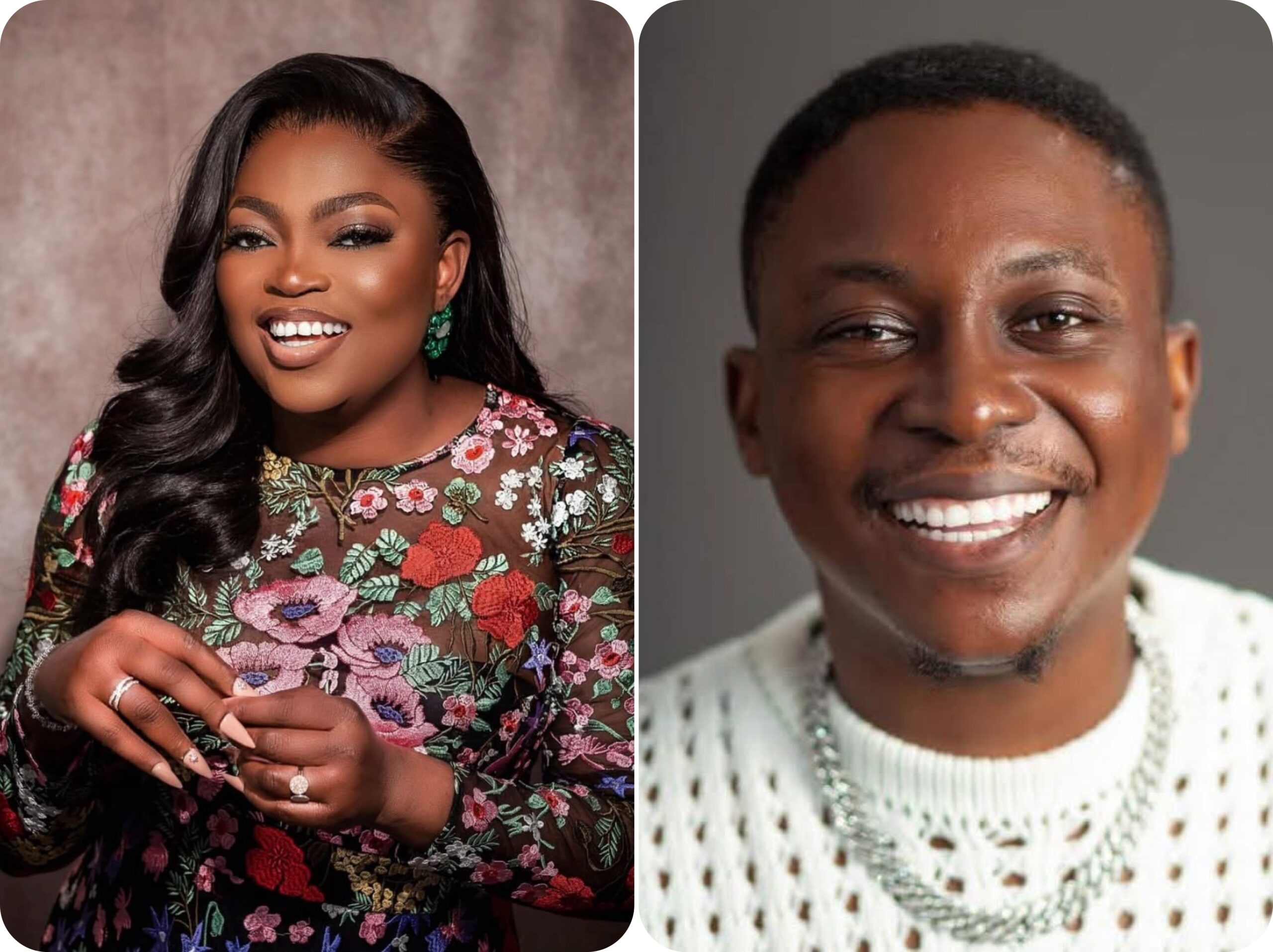
In a BBC News Pidgin interview released on April 10, 2026, Tobi Makinde officially denied any fallout, explaining that growth naturally shifts relationships.
Speaking in the interview, he said he was not aware of any fallout with Funke Akindele, adding that “nothing really happened” between them. He described the situation as one shaped largely by social media, where, in his words, people “write their own script” and then look for real-life events to fit into it.
He also pushed back against the idea that public perception reflects private reality. According to him, their relationship was never built on social media, and its current state cannot be defined by what is seen or not seen online.
Tobi Makinde pointed instead to growth and changing dynamics. As careers evolve, he suggested, relationships may appear different from the outside, even when there is no breakdown. What may look like distance, he implied, can simply be a shift in roles, responsibilities, and direction. In his words:
“Nothing really happen between me and madam Funke. I nor dey aware of any fallout. Wetin I go just talk about that matter be say, social media right, them dey like write their own script and when them don wrote their script finish, them go come dey look for people to fill in the gaps or to fill in the characters wey them wan put inside their script.
Our relationship nor start on social media so nor be for social media e go end. E get some kind growth wey be say you go grow, once you move from one position to another, some kind relationship go be like say e dey lost in transit but nor be so e be.”
He also addressed one of the key moments that fuelled the rumours, which was Funke Akindele’s absence at his wedding. He explained that she was occupied at the time with promoting a film, describing her as someone deeply committed to her work and often constrained by demanding schedules. He added:
“The time wey I been dey do my wedding na when she dey promote her film so she dey very busy, we all know say she be very busy person and somebody wey hold her craft very dear to her so e dey very understandable.”
Rather than distance himself, he acknowledged her role in his journey, naming her among the key figures who shaped his career and contributed to his growth in the industry.
Conclusion
In the end, the question is not only about what happened between Tobi Makinde and Funke Akindele, but why the assumption of conflict came so easily.
For years, their relationship was visible on screen, behind the scenes, and in the structure of the projects they built together. That visibility created a fixed idea in the public mind: that proximity would remain constant, and that any change must signal a problem. When that expectation was no longer met, the gap was quickly interpreted as something more.
Makinde’s response challenges that instinct. By rejecting the idea of a fallout and pointing instead to growth, timing, and independent direction, he reframes the situation as something that evolved.
Some netizens are still not convinced that all is indeed well with the both of them but others have hailed Tobi Makinde for his mature approach to the situation.