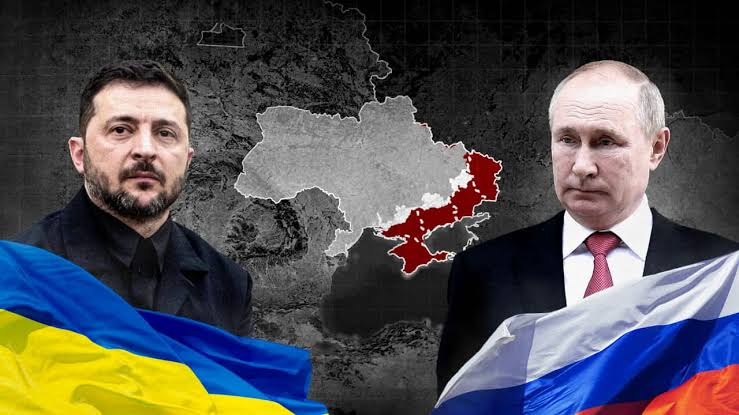
On Thursday, April 9, Russia’s President Vladimir Putin declared a 32-hour cease-fire for Orthodox Easter.
According to the Kremlin, the cease-fire will begin at 4 p.m. Moscow time (13:00GMT) on Saturday and last until midnight on Sunday, allowing both countries to celebrate Easter.
“We proceed on the basis that the Ukrainian side will follow the example of the Russian Federation,” the Kremlin stated in a statement.
It was also stated that Defense Minister Andrei Belousov had directed Chief of the General Staff Valery Gerasimov to suspend military actions during the period. However, Russian soldiers will continue to be prepared to respond to any infractions.
President Volodymyr Zelenskyy confirmed the ceasefire, saying Ukraine had earlier suggested a similar halt and would reciprocate.
“Ukraine has consistently stated that it is ready for reciprocal actions. We suggested a ceasefire during the Easter break this year and will follow through,” he stated on Telegram.
“People need an Easter without threats and a real move towards peace, and Russia has a chance not to return to attacks even after Easter.
According to sources in Nigeria, the 32-hour truce for Orthodox Easter is the first official one to be recognized by both countries. As a result, a detailed explanation of Orthodox Easter is required.
ORTHODOX EASTER
It is a Christian celebration of the resurrection of Jesus Christ, the world’s savior, that takes place on the first Sunday after the Paschal Full Moon. It represents optimism, rebirth, and fresh starts, reminding Christians of Jesus Christ’s sacrifice and resurrection.
Pascha is a prominent holiday in the Eastern Orthodox Church that commemorates Jesus Christ’s resurrection. The Julian calendar, which differs from the Gregorian calendar used by Western religions, determines the date, with Orthodox Easter frequently coming between April 4 and May 8.
HOW IT STARTED
The findings revealed that Orthodox Easter has its roots in ancient Christian traditions. It is thought to be associated with the Jewish Passover and Jesus’ resurrection. It has a different date than Western Easter since it is established by the Julian calendar.
Historically, in 325 AD, the Council of Nicaea established the formula for calculating Easter date. Orthodox Easter is observed on the first Sunday following the first full moon on or after the March equinox. The Orthodox Church utilizes the Julian calendar.
EVENTS THAT SHAPE ORTHODOX EASTER
There are five major activities or events that shaped Orthodox Easter celebrations. These include fasting, Easter eggs, lamb, midnight service, and food blessings.
FASTING: Christian believers are anticipated to begin a 40-day period of severe fasting prior to Easter, which will conclude with a feast.
EASTER EGGS: Christian faithfuls, notably those from Eastern European nations such as Greece, Russia, and Ukraine, eat hard-boiled eggs that are traditionally dyed crimson to represent Christ’s blood and resurrection. It represents the beginning of something new.
LAMB: It signifies Christ. It’s a common Easter dish. In Nigeria, it is celebrated with traditional delicacies such as Suya and grilled lamb. It represents renewal and fresh life, mimicking Jesus’ resurrection.
MIDNIGHT SERVICE: This is a unique church service that begins about midnight and commemorates Jesus Christ’s resurrection. People frequently congregate with candles, singing hymns and chanting “Christos Anesti”. It is a time of spiritual meditation and celebration.
FOOD BLESSINGS: At the end of a fast, people often come in church with baskets full of food for blessing.