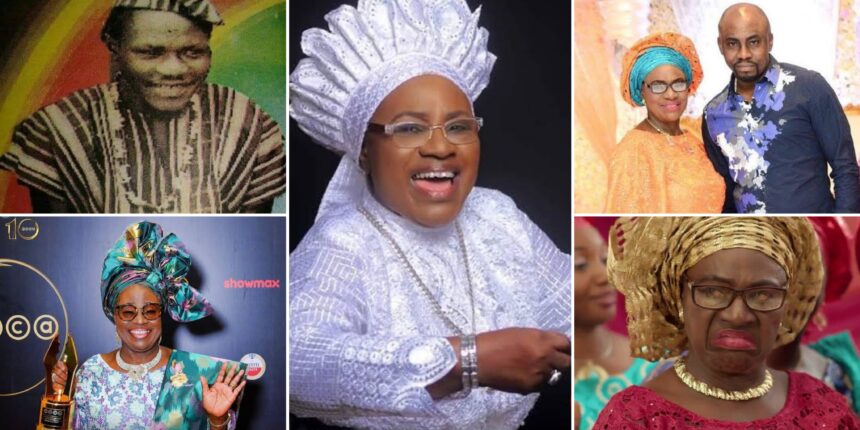
Idowu Phillips was born on October 16th 1942 at Ijebu Ode, a popular town in Ogun State, Nigeria. She is popularly known as Iya Rainbow. The name is the English translation of her late husband’s theatre group.
Early Life/Education
Madam Idowu was born to Prophet Jacob Adebanjo Ifemade and Mrs. Ifemade. She had her primary education at African Methodist School and attended Anglican Modern School. After her primary and secondary education, she attended a nursing school.
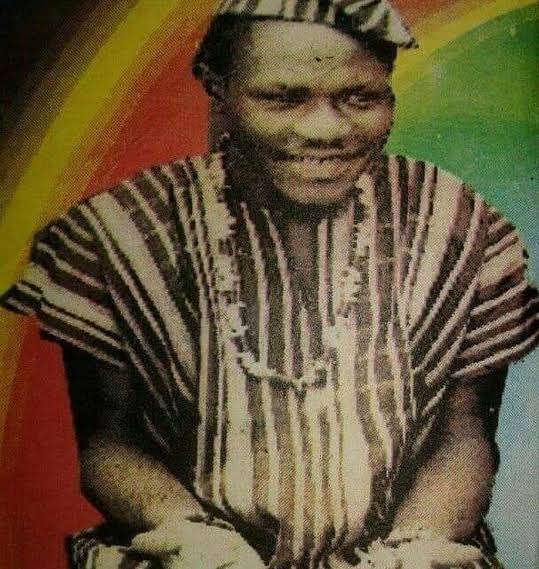
Her stage name “Iya Rainbow” originates from “Osumare” (meaning rainbow), which was the name of her late husband’s theatre group, a major influence on her entry into acting.
She grew up in a Christian household and later pursued both formal education and professional training, completing her primary and secondary education before enrolling in a nursing school, where she trained as a healthcare worker.
Before fully transitioning into acting, she worked as a nurse for about 20 years, combining her medical career with part-time participation in theatre through her husband’s stage group.
Her shift from healthcare to full-time performance came after the death of her husband, after which she became deeply involved in Yoruba travelling theatre and later Nollywood film production.
As of the 2020s, she is widely regarded as one of the most influential surviving pioneers of Yoruba theatre and Nigerian cinema, representing a bridge between traditional stage drama and modern Nollywood storytelling
Career
Upon completion of her studies at the nursing school, Madam Idowu Philips worked as a nurse for 20 years. Since her late husband was theatrically inclined and had a theatre group, she worked part-time with the group, gaining mastery of the art.
At 45, and after having worked as a nurse for 20 years, Madam Idowu Philips quit nursing. She took over the leadership of her late husband’s movie group which soon became defunct. She took part in many movies both English and Yoruba. She became known for her role in Asiri Nla and has acted more than 500 movies since she started.
Over the decades, Idowu Philips has remained one of Nollywood’s most enduring figures, with a career spanning over 60 years on stage and screen. She has featured in several notable productions including Oga Bolaji, Sugar Rush, Becoming Abi, and Madami, continuing to stay relevant across generations.
In recognition of her immense contribution to the Nigerian film industry, she received the Industry Merit Award, cementing her legacy as a pioneer and cultural icon.
Beyond acting, she has also served as a brand ambassador for major organizations, including Airtel and Majeurs Holdings, reflecting her continued influence in entertainment and business circles.
Even in her 80s, Iya Rainbow remains active in the industry, celebrated for her longevity, versatility, and role in shaping Yoruba theatre and Nollywood into what it is today.
Movies
1997- Back to Africa
2000- Lagidigba
2002- Jesu Mushin
2002- Irepodun
2002- Eyin Ogongo
2003- N150 Million
2003- Ìfé òtító
2003- Fila Daddy
2003- Arewa okunrin
2003- Omo oku òrun
2003- Okun ife
2004- Okun ife 2
2004- Okan soso
2004- Okan soso 2
2004- Ògìdán
2004- Ògìdán 2
2006- Abeni
2006- Odun baku
2006- Mewa n sele
2006- Èebúdolá tèmi
2006- Agbefo
2006- Agbefo 2
2007- Orita Ipinya
2007- Olugbare
2007- Olóri
2007- Maku
2007- Kootu olohun
2007- Kilebi olorun
2008- Taiwo Taiwo
2008- Taiwo Taiwo 2
2008- Itakun ola
2008- Ìkúnlè kèsán
2008- Ikilo agba
2008- Igba ewa
2008- Aje metta
2008- Aje metta 2
2009- Ìpèsè
2009- Ìdàmu eléwòn
2009- Elewon
2009- Akoto olokada
2009- Akoto olokada 2
After 2009, her appearances became:
- rare
- selective
- mostly return/cameo roles
Her major confirmed resurgence begins after 2017, not earlier
2018- Oga Bolaji
2019- Sugar Rush
2021- Becoming Abi (series)
2022- Madami
2023- Adire
2023- Orisa (Deity)
2024- The Beads
2024- Shina
2024- Recall


Controversy
In an interview, when asked why she has not been on screen in recent times, she claimed that the younger generation of actors now acted movies where her kind of roles are almost no longer needed.
She also mentioned that the roles available were for people with tattoos and people ready to dress irresponsibly.
In later discussions around her career longevity, Iya Rainbow clarified that her statement was not meant as an attack on younger actors, but rather a reflection of how Nollywood has evolved in style, casting trends, and audience demand.
She explained that many of the traditional motherly and moral-guardian roles she was known for in Yoruba classics have reduced in frequency as modern productions shift toward urban-driven, youth-focused storylines.
Despite the controversy, she has remained respected in the industry and continues to be celebrated as one of the longest-serving figures in Nigerian cinema, with appearances still acknowledged in modern productions and industry events as of the 2020s.
Awards
Mrs. Idowu is a recipient of the City People Life Time Achievement Award amongst other awards she’s won.
One of her most significant recognitions is the Industry Merit Award at the 2024 Africa Magic Viewers’ Choice Awards (AMVCA), which she shared with veteran actor Richard Mofe-Damijo (RMD), in recognition of their lifetime contributions to African cinema.


The award is one of the highest honorary recognitions in Nollywood, reserved for individuals whose careers have significantly shaped the film industry over decades.
She has also been widely honoured at various industry events over the years for her pioneering role in Yoruba theatre and Nollywood’s early development, with tributes often highlighting her over five decades of consistent contribution to stage and screen.
Personal Life
Madam Idowu was married to Sir Hubert Ogunde from 1960 until his death in 1990. They have 5 children including Sola Osborne, and Femi Philips. Having refused to remarry, she chose to focus on taking care of her children.
A Christian, she overtime has developed a very deep relationship with God. She says that God laid in her heart a burden to build him a church.
Idowu Philips has consistently maintained in interviews that she did not remarry after the death of her husband, choosing instead to devote her life to raising her five children and building her acting career.

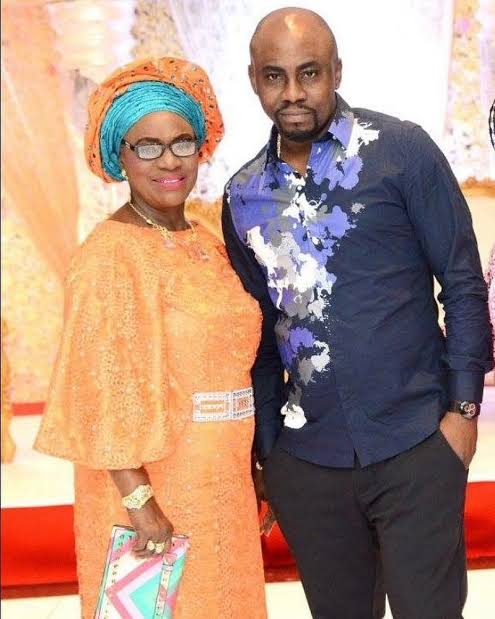
Her children, including Femi Phillips, have been publicly acknowledged as part of her support system, with at least one of them actively involved in creative and documentary work connected to her legacy.
She has also spoken openly about her faith, describing herself as a deeply committed Christian whose life decisions after widowhood were strongly influenced by spiritual conviction and discipline.
Beyond family life, she is widely regarded as a cultural matriarch in Yoruba theatre and Nollywood, representing one of the longest-surviving links between the early travelling theatre era and modern Nigerian cinema.
As of the 2020s, she remains active in public appearances and industry recognition events, reinforcing her status as a respected elder stateswoman of Nigerian entertainment rather than a retired figure.
Challenges and Struggles
Idowu Philips, popularly known as Iya Rainbow, began her career in a period when Yoruba travelling theatre had little financial stability, requiring actors to combine stage performance with other jobs to survive.
Before fame, she worked for about two decades as a healthcare assistant/nurse, balancing hospital duties with occasional stage performances in her husband’s theatre group.
After the death of her husband, she faced a major personal and professional transition, taking responsibility for both her family and her acting career. This period also marked her full entry into acting, where she had to rebuild her identity in a male-dominated industry.
In later years, she has spoken about industry changes, especially how modern Nollywood has shifted away from traditional storytelling roles, which affected the type of characters available to veteran actors.
Despite age-related limitations and reduced screen frequency in certain years, she has remained active and relevant in selected film and brand appearances into her 80s.
Philanthropy and Social Impact
While not heavily publicized as a formal philanthropist with foundations, Iya Rainbow’s social impact is strongly rooted in:
- Mentorship of younger Yoruba/Nollywood actors
- Cultural preservation of Yoruba travelling theatre traditions
- Public advocacy for discipline and professionalism in acting
She has consistently used interviews and public appearances to advise younger actors on modesty, financial responsibility, and professionalism in the industry.
Her influence also extends through symbolic cultural representation, she is widely regarded as a living link between traditional Yoruba stage theatre and modern Nollywood cinema.
Current Life and Recent Updates (as of 2026)
As of the mid-2020s, Iya Rainbow remains active in public life at age 83+, celebrated for over 60 years on stage and screen.
Recent verified updates include:
- Celebrations of her 83rd birthday and 60 years in entertainment (2025 milestone)
- Continued public recognition at industry events and award ceremonies
- AMVCA Industry Merit Award recognition in 2024 for lifetime contribution to Nollywood
- Brand ambassador roles, including luxury and cultural brands in Nigeria
- Idowu Philips is a devout Christian
- She has publicly spoken about her faith and spiritual discipline
- She has been involved in Christian ministry activities in general
- She remains closely connected to her family, especially her son and manager, who supports her career and public engagements.

Legacy and Influence
Iya Rainbow is widely regarded as one of the foundational figures of Yoruba theatre and Nollywood cinema.
Her legacy includes:
- Over six decades of continuous contribution to Nigerian entertainment
- Bridge between Yoruba travelling theatre era and modern film industry
- Influence on maternal, moral, and cultural character roles in Nollywood
- Inspiration for generations of younger actors across Yoruba and English-language cinema
- She is often described as a cultural matriarch of Nigerian film, representing resilience, discipline, and artistic longevity.
Her career longevity, spanning stage, television, and film, has made her one of the most respected living legends in African cinema history.