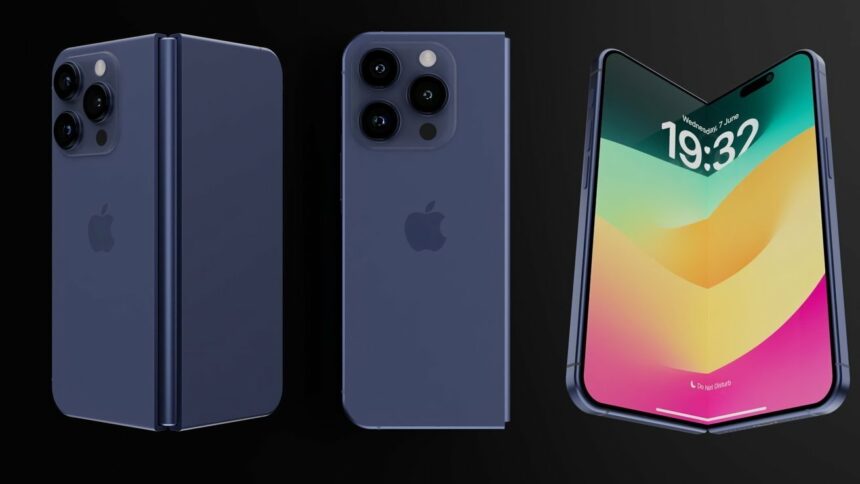
Apple is finally building a foldable phone. After years of “it’s coming soon” reports that never materialised, stretching back to at least 2018, the evidence has piled up to the point where the supply chain has essentially confirmed it for you. As of April 2026, the device is in trial production at Foxconn; Samsung has started mass-producing its displays; and Bloomberg’s Mark Gurman has reported that it’s on track for a fall launch. Apple has said nothing officially. That’s very on-brand.
- What Will Apple’s Foldable iPhone Be Called?
- Apple iPhone Foldable: Expected Release Date
- Apple iPhone Foldable: Expected Specs
- Apple iPhone Foldable: Expected Price
- Apple iPhone Foldable vs Samsung Galaxy Z Fold 7
- Should You Buy Now or Wait?
- Quick Specs Summary: Apple iPhone Foldable vs Samsung Galaxy Z Fold 7
Here’s everything we know right now: the expected price, the rumoured specs, the confirmed trade-offs, and how it stacks up against the Samsung Galaxy Z Fold 7, which has been on sale since July 2025 and currently holds the foldable benchmark that Apple is chasing.
What Will Apple’s Foldable iPhone Be Called?
Nobody’s entirely sure. The device has been floating around tech circles as the “iPhone Fold” for so long that the name stuck, but more recent leaks suggest Apple may go a different direction entirely. Mark Gurman reported in March 2026 that the foldable will sit among Apple’s “Ultra” products this year, and a Weibo account called Digital Chat Station, hit-or-miss but frequently accurate on Apple hardware, claimed the official name will be iPhone Ultra.
For this article, we’ll refer to it as the iPhone Foldable or iPhone Fold, since that’s what most people have been searching for. Just know that whatever appears on the box in September may surprise you.


Apple iPhone Foldable: Expected Release Date
The current target is September 2026, timed to coincide with the release of the iPhone 18 Pro and iPhone 18 Pro Max. Apple is reportedly not launching the standard iPhone 18 at the same event, that model may arrive in early 2027, so the foldable will be positioned squarely as a premium device, sitting at the top of the lineup.
There’s a wrinkle, though. Nikkei Asia reported engineering setbacks in early April 2026, with suppliers warned of potential delays. Gurman pushed back within 48 hours, saying the device is still on track. Both reports are unretracted. The honest read is that September remains the target, but it’s a tighter window than it looked a few months ago.
Even if Apple announces in September, Barclays analyst Tim Long suggested the phone may not reach customers until December 2026. With analyst Ming-Chi Kuo estimating only 3 to 5 million units shipping in 2026, for context, Apple moves 50 to 80 million iPhones in a strong quarter, and a waitlist at launch is essentially guaranteed. A second-generation model is widely expected for 2027.
Apple iPhone Foldable: Expected Specs
Apple hasn’t confirmed a single spec. Everything below comes from supply chain leaks, analyst reports, and dummy models that have circulated online. That caveat matters, but at this stage of production, the rumours have been remarkably consistent.
Display
The inner display is expected to measure 7.76 inches, with a resolution of 2,713 x 1,920 and a 4:3 aspect ratio when open. The outer (cover) display measures 5.49 inches with a resolution of 2,088 x 1,422. That makes it noticeably smaller than the Galaxy Z Fold 7’s 8-inch inner panel, though Apple’s approach to display quality has historically made raw size differences less meaningful in practice.
The headline claim is that the crease, the persistent wrinkle down the centre of every foldable screen that has annoyed users since the category launched, may be nearly invisible or gone entirely. Apple is reportedly using a laser-drilled metal support plate beneath the flexible OLED panel (supplied by Samsung Display) to disperse bending stress rather than concentrate it at the fold. Gurman described the crease as “nearly invisible.” Kuo said Apple pursued crease elimination “regardless of cost.” That framing either means it worked or it explains the price.
Processor
The device will run Apple’s A20 chip, which is the same processor expected in the iPhone 18 Pro. If the current trajectory holds, this will be the fastest mobile chip available at launch. The Galaxy Z Fold 7 runs Qualcomm’s Snapdragon 8 Elite for Galaxy, a 3nm overclocked variant that performs very well, but Apple’s silicon has outpaced Qualcomm on CPU benchmarks for several generations now.
Camera
This is where the iPhone Foldable makes an uncomfortable compromise. The chassis, at approximately 4.5mm thin when unfolded, leaves no physical room for a telephoto lens module. The expected setup is dual 48MP cameras with no zoom beyond the wide and ultrawide—Samsung’s Galaxy Z Fold 7 ships with a 200MP triple-camera system, including 8K video recording. On paper, that’s not close.
Apple bets that computational photography closes more of the gap than the hardware numbers suggest. That may well be true for everyday shots, but Apple’s image processing is excellent; for anyone who uses a zoom lens regularly, this is a genuine trade-off to think about.
Authentication
Face ID is out. Multiple credible sources, including Kuo and Gurman, have independently confirmed this. The space constraints of a book-style foldable make the Face ID sensor system impractical, so Apple is reverting to Touch ID in the power button. That’s not necessarily a downgrade; it works reliably, in the dark, and while wearing a mask. But it’s a change from what iPhone users have had since 2017.
Battery
Rumoured at 5,000 to 5,500 mAh, with one leaker (Jon Prosser) claiming as high as 5,800 mAh. Apple is reportedly using silicon-carbon anode technology to fit that capacity into a thin chassis. The Galaxy Z Fold 7 carries a 4,400 mAh battery. If the leaked numbers are accurate, the iPhone Foldable’s battery life should be meaningfully better than that of Samsung’s current flagship foldable.
Software
The device runs iOS 27, not iPadOS. That’s a deliberate call from Apple, no Stage Manager, no windowed app system. What it will have: iPad-style app layouts with sidebars, split-screen for two apps simultaneously, and smooth transitions between the outer and inner displays. Developers will get tools to adapt existing iPhone apps for the larger 4:3 canvas.
This is version 1.0 of Apple’s foldable software. The Galaxy Z Fold 7 has seven years of foldable software refinement behind it. Some apps will feel unfinished on the larger display at launch; that’s just how Apple’s first iterations work. The second generation always handles these rough edges better.
Design and Build

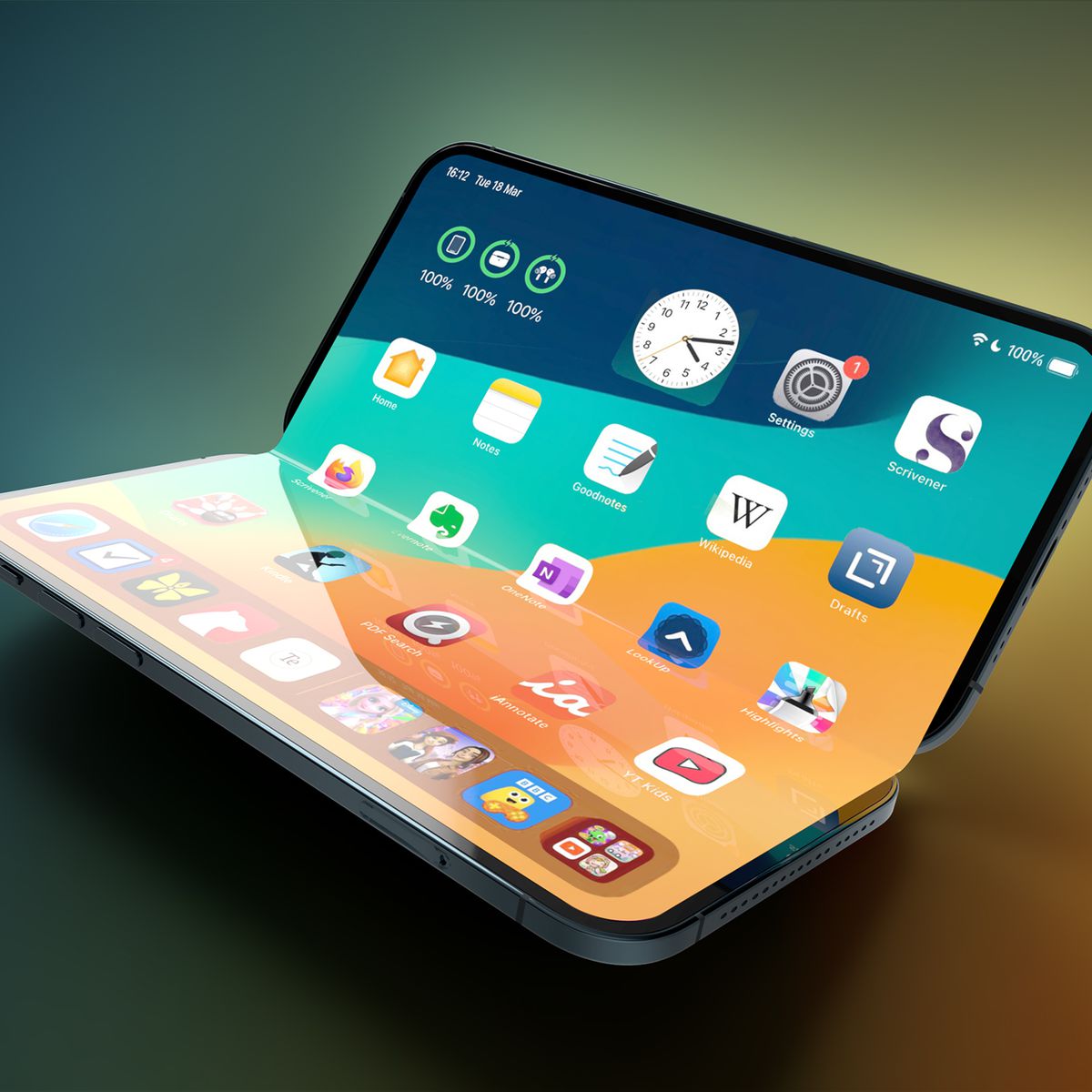
Book-style fold, vertical crease, titanium and aluminium frame, Liquidmetal alloy hinge. The Liquidmetal is reportedly twice as strong as titanium and more resistant to deformation, a meaningful material choice for a component that will be opened and closed hundreds of thousands of times over the phone’s life. Volume buttons sit on the top edge. Two cameras on the back are mounted on a narrow plateau similar to the iPhone Air design, but in black rather than colour-matched.
Folded thickness is estimated at 9.5mm; unfolded, approximately 4.5mm.
Apple iPhone Foldable: Expected Price
Analyst consensus puts the base model above $1,999, with some estimates reaching $2,399 for higher storage configurations. The most recent reports lean toward $1,999 as the entry point.
To frame that: the iPhone 17 Pro Max starts at $1,199. The Galaxy Z Fold 7 launched at $1,899 in the US. Apple is coming in above Samsung’s current flagship foldable, positioning this as something closer to a category of one.
Whether that premium is justified depends entirely on whether the crease-free display claim holds up in real-world use, how the cameras actually perform, and whether iOS 27’s foldable software feels finished at launch or like a beta.
Apple iPhone Foldable vs Samsung Galaxy Z Fold 7
The Galaxy Z Fold 7 is the phone the iPhone Foldable will be measured against. It launched in July 2025, it’s the thinnest foldable Samsung has ever shipped (4.2mm unfolded, 8.9mm folded), and the reviews have been strong. Here’s where the two stand:
Display size: Samsung wins on raw size, 8 inches vs Apple’s rumoured 7.76 inches. Apple may win on clear visibility if the leaked technology delivers.
Processor: Apple’s A20 will likely be faster. The Snapdragon 8 Elite is excellent, but Apple’s chip lead has been consistent.
Cameras: Samsung leads clearly. A 200MP triple-camera system with 8K video, compared to Apple’s dual 48MP setup with no telephoto, is a meaningful hardware gap. Whether Apple’s image processing closes it in practice is the open question.
Battery: Apple leads in capacity at 5,000+ mAh vs Samsung’s 4,400 mAh, assuming the leaks are right.
Software maturity: Samsung leads on day one. Seven generations of foldable software versus Apple’s first attempt. This gap will close, but not immediately.
Price: Apple starts higher ($1,999+) than the Galaxy Z Fold 7 ($1,899 at launch).
Ecosystem: This is where personal context matters more than specs. If your laptop is a MacBook, your tablet is an iPad, and your earbuds are AirPods, the iPhone Foldable’s tight integration with all of those will be difficult to replicate on Android. If you’re already in Samsung’s ecosystem, the calculus flips.
Should You Buy Now or Wait?
That depends on what you’re actually trying to solve.
The Galaxy Z Fold 7 is a genuinely excellent device. It’s available today, it’s well-supported, and foldable Android software has matured considerably since the Z Fold 3. If you want a foldable phone right now, it’s the one to get.
If you’re an iPhone user who has been waiting for Apple to enter this space, waiting until fall 2026, or honestly until the second-generation model in 2027, is worth the patience. The first version of anything Apple ships tends to iron out the kinks by year two: thinner, faster, better cameras, more mature software. The iPhone X made way for the iPhone XS. The first M1 MacBook Air made way for the M2. The pattern holds.
For most people, waiting is probably the smarter call. But if you want to be first in, the foldable iPhone is shaping up to be one of the more interesting Apple releases in a long time, assuming September actually happens.
Quick Specs Summary: Apple iPhone Foldable vs Samsung Galaxy Z Fold 7

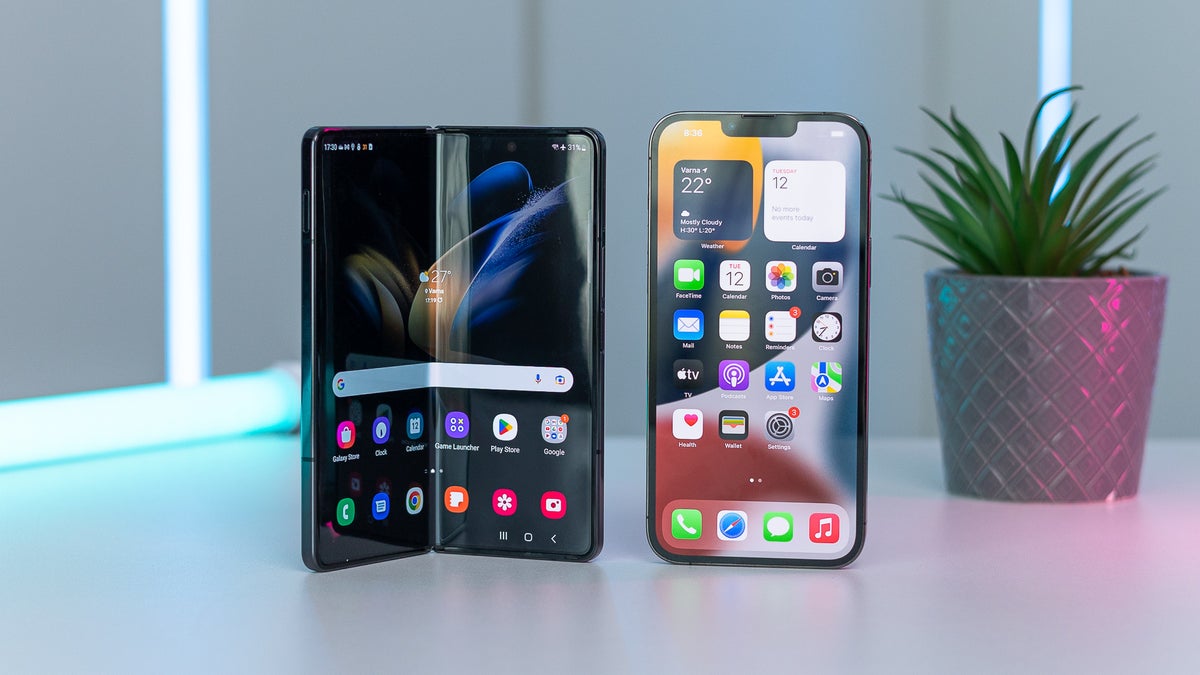
| Feature | Apple iPhone Foldable (Rumoured) | Samsung Galaxy Z Fold 7 |
|---|---|---|
| Inner Display | ~7.76 inches | 8 inches |
| Outer Display | 5.49 inches | 6.5 inches |
| Processor | Apple A20 | Snapdragon 8 Elite |
| RAM | TBC | 12GB |
| Main Camera | Dual 48MP | 200MP triple camera |
| Battery | ~5,000–5,500 mAh | 4,400 mAh |
| Authentication | Touch ID (power button) | Fingerprint (power button) |
| Hinge Material | Liquidmetal alloy | Armor FlexHinge |
| OS | iOS 27 | One UI 8 (Android 16) |
| Folded Thickness | ~9.5mm | 8.9mm |
| Starting Price | ~$1,999 | $1,899 |
| Availability | Fall/Winter 2026 | Available now |
All Apple iPhone Foldable details above are based on leaks and analyst reports as of April 2026. Apple has not officially confirmed any specifications, pricing, or release date.