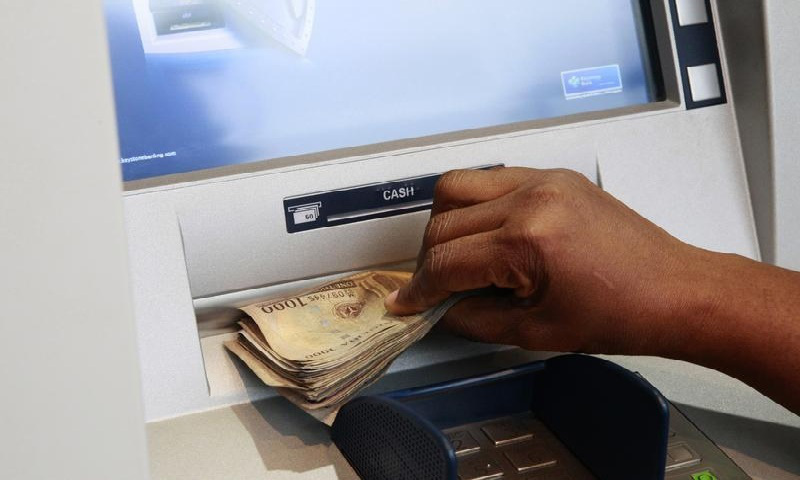
If you bank in Nigeria, you need to read this. The Central Bank of Nigeria (CBN) has just released a revised guide to bank charges, and while the headline number, a new ₦1,500 fee on ATM card issuance, has grabbed the most attention, the full picture is more interesting than that.
- The CBN ATM Card Fee Increase: What Changed
- The Good News Hidden in the Announcement
- Effective Date: When Do These Changes Kick In?
- ATM Withdrawal Fees: The Charges That Caused the Most Controversy
- POS Transactions: Customers No Longer Pay
- Electronic Transfer Fees: No Change
- SMS Alerts and Account Reactivation
- What the CBN Says About the Purpose of the Review
- What This Means for You as a Bank Customer
- The Broader Context
- Quick Reference: Key Charges at a Glance
- Final Word
Some charges are going up. Others are being scrapped entirely. And depending on how you use your bank, this update could actually save you money over time.
Here is a clear breakdown of every change, what it means in practice, and how to position yourself as a customer.
The CBN ATM Card Fee Increase: What Changed
The CBN’s new Guide to Charges by Banks and Other Financial Institutions, released in a circular signed by Dr. Rita Sike, Director of the Financial Policy and Regulation Department, raises the cost of issuing or replacing a standard naira debit or credit card from ₦1,000 to ₦1,500. That is a 50 percent increase.
This fee applies the next time you request a card, whether because your current one has expired, been lost, been stolen, or stopped working. It applies to all commercial banks, microfinance banks, payment service banks, and mobile money operators regulated by the CBN.
Premium debit, credit, and hybrid cards are different. Those fees remain negotiable between you and your bank. And virtual cards, the kind you create inside a mobile banking app for online shopping, are still free of charge.
The Good News Hidden in the Announcement
Here is what much of the online outrage has missed: the CBN did not just raise fees. It also removed one.
The ₦50 monthly maintenance charge on naira-denominated debit and credit cards — which previously included 7.5 percent VAT, has been abolished. If you have been paying that quietly every month, ₦600 a year is gone from your account just for holding a card. It stops now.
Foreign currency cardholders are not as lucky. If you hold a dollar-denominated debit or credit card, the $10 annual maintenance fee remains in effect.
The math for most ordinary naira cardholders actually works out in their favour over time. Yes, the one-time issuance fee is now ₦500 higher. But if you keep a card for even two years, the removal of the monthly maintenance charge saves you ₦1,200, more than covering the higher issuance cost.
Effective Date: When Do These Changes Kick In?
The new charges take effect from May 1, 2025.
Banks are expected to apply the revised framework from that date. The new guide replaces the previous version issued in January 2020, which means this is the first comprehensive overhaul of bank charges in five years.
ATM Withdrawal Fees: The Charges That Caused the Most Controversy
Earlier in 2025, the CBN had already stirred controversy with a February circular that raised ATM withdrawal fees. Those changes — which drew a sharp rebuke from civil society group SERAP — remain part of the picture.
Under the current framework:
- On-site ATM withdrawals (ATMs attached to a bank branch): ₦100 per ₦20,000 withdrawn at another bank’s ATM.
- Off-site ATM withdrawals (standalone cash points, ATMs at shopping centres, airports, fuel stations): up to an additional ₦500 surcharge per transaction.
The ₦500 off-site surcharge is the one that hurt. For someone withdrawing ₦20,000 at an off-site ATM, that is ₦600 in total charges on a single transaction, and for lower-income earners who depend on cash, that is not trivial.
The CBN’s position is that customers must be informed of any surcharge before completing the transaction, so you can decide whether to proceed. In practice, that disclosure depends on ATM operators actually displaying the information clearly.
SERAP argued in February that the charges disproportionately hurt lower-income Nigerians and called on the CBN to reverse them, citing the Federal Competition and Consumer Protection Act’s prohibition on “manifestly unfair, unreasonable or unjust” pricing. The CBN has not reversed them.
POS Transactions: Customers No Longer Pay
One of the clearest wins for everyday consumers in this revised guide is the POS rule.
All card transactions done at merchant Point of Sale (PoS) terminals are free of charge to the cardholder. The cost, a Merchant Service Charge of 0.5 percent of the transaction value, capped at ₦10,000, falls on the merchant, not you.
This is not new policy. The CBN has held this position for some time. But the revised guide reiterates it explicitly, and the cap at ₦10,000 means large transactions at supermarkets or electronics stores will not generate runaway charges for businesses either.
If a PoS operator tells you they are adding a charge for card payments, they are not supposed to. Whether or not that translates to reality on the ground is a different matter, informal charges at PoS terminals have been a persistent complaint, but the regulatory backing for a customer to push back is clear.
Electronic Transfer Fees: No Change
The fees on mobile and internet transfers stay the same:
| Transfer Amount | Fee |
|---|---|
| ₦5,000 and below | Free |
| ₦5,001 – ₦50,000 | ₦10 |
| Above ₦50,000 | ₦50 |
If you do most of your banking through transfers rather than cash withdrawals, this part of the guide does not affect your pocket at all.
SMS Alerts and Account Reactivation
On transaction notifications, the CBN draws a distinction between SMS and email. Banks can still charge for mandatory SMS alerts, but only on a cost-recovery basis, meaning they cannot profit from the fee. Email alerts must be provided at no cost.
Account reactivation, what happens when a dormant or inactive account needs to be brought back to life, is also free under the revised framework.
What the CBN Says About the Purpose of the Review
In the circular, Dr. Rita Sike described the updated guide as part of the CBN’s mandate to “promote a safe and sound financial system in Nigeria” and to “accelerate the adoption of innovative financial services, financial inclusion and micropayments/transactions.”
The document specifically states that it “encourages development of innovative products, strengthens responsibility for oversight and accountability and promotes financial inclusion through lower tariffs for micropayments/transactions.”
It also notes that the revised framework accommodates new industry participants, fintechs, agent banking networks, mobile money operators that did not exist at scale when the 2020 guide was written.
What This Means for You as a Bank Customer
- If you use your naira card regularly and rarely request replacements: You likely come out ahead. The monthly maintenance fee removal saves ₦600 a year. Most people do not replace their cards annually.
- If you frequently withdraw cash at off-site ATMs: The ₦500 surcharge is real and it adds up. Consider switching to your bank’s own ATMs when possible, or use transfers instead of cash where you can.
- If you are ordering a new card soon: Plan for ₦1,500 instead of ₦1,000. The ₦500 difference is not going to break anyone, but it is worth knowing before you walk up to a bank counter.
- If you use a foreign currency card: The $10 annual maintenance fee remains. Nothing changes for you on that front.
- If you pay mostly by PoS: Nothing changes for the worse. You should still not be paying transaction fees at the point of sale.
The Broader Context
Nigeria’s banking charges have been a flashpoint for years. Banks earn enormous profits, several declared trillion-naira profits in recent years, while customers absorb a growing list of fees on accounts, transfers, and cards.
The CBN’s response has been a mixed record. Some changes genuinely reduce the burden on ordinary customers, like eliminating maintenance fees and keeping POS charges merchant-side. Others, like the off-site ATM surcharge, have attracted legitimate criticism that the costs are being passed down to the wrong people.
The revised 2025/2026 guide is not a complete overhaul of how banking charges work in Nigeria. But it does several things at once: standardises fees across a broader range of institutions, explicitly protects customers from overcharges on PoS and account maintenance, and adjusts the cost structure toward single-event fees (card issuance) rather than recurring ones (monthly maintenance).
Whether the banks apply these rules faithfully, particularly the PoS merchant charge and the ATM surcharge disclosure requirement, is a separate question entirely.
Quick Reference: Key Charges at a Glance
| Service | Old Fee | New Fee (from May 1, 2025) |
|---|---|---|
| ATM card issuance/replacement (standard) | ₦1,000 | ₦1,500 |
| Monthly naira card maintenance | ₦50 + VAT | Free |
| Virtual card issuance | Free | Free |
| Foreign currency card annual maintenance | $10 | $10 |
| POS transaction (customer) | Free | Free |
| Merchant Service Charge (MSC) | Varies | 0.5%, capped at ₦10,000 |
| Off-site ATM withdrawal surcharge | Varies | Up to ₦500 per transaction |
| On-site ATM (other bank) | Varies | ₦100 per ₦20,000 |
| Transfer ≤ ₦5,000 | Free | Free |
| Transfer ₦5,001 – ₦50,000 | ₦10 | ₦10 |
| Transfer > ₦50,000 | ₦50 | ₦50 |
| Account reactivation | Varies | Free |
| Email alerts | Free | Free |
Final Word
The CBN ATM card fee increase to ₦1,500 is real, and it takes effect May 1, 2025. But the announcement is not all bad news for customers. The scrapping of the monthly maintenance fee is a tangible relief for tens of millions of naira cardholders. The PoS protection is solid. The transfer fees are unchanged.
The part worth watching, and pushing back on, is the off-site ATM surcharge. For Nigerians in areas with limited banking infrastructure who have no choice but to use off-site ATMs, ₦500 per transaction is a high cost for basic financial access.
Stay informed. Check your bank statements. And if you are being charged for something the CBN says should be free, you have grounds to complain, first to your bank, and then to the CBN Consumer Protection Department if nothing changes.