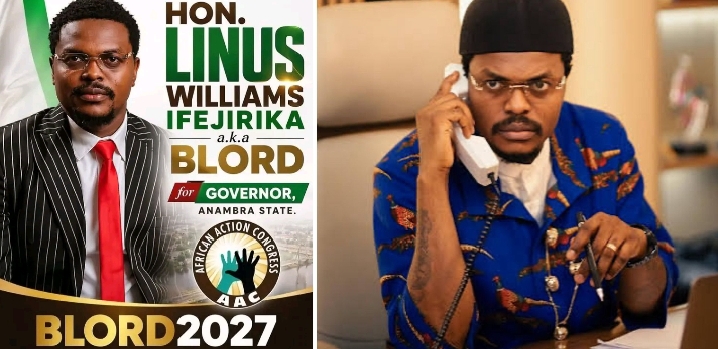
The conversation around Linus Williams Ifejika, widely known as Blord, stepping into Anambra State governorship race has grown from casual social media chatter into a loud public debate that now sits at the center of online political speculation. The story did not begin from any formal political space or structured announcement, yet it quickly gained momentum across platforms where Nigerian political narratives often take shape long before official confirmations emerge. What makes this particular case more intriguing is how fast a business figure with strong tech visibility became linked to one of the most competitive political offices in southeastern Nigeria, even without a declared intention.
The early days of the rumor trace back to a viral campaign style flyer that circulated across social media platforms around April 2026, showing Blord’s image with political messaging suggesting a possible governorship ambition. The flyer was not tied to any verified party structure, nor did it carry official electoral identifiers, yet it was shared widely across X, Facebook, and WhatsApp groups. Within hours, interpretations began to shift from curiosity to assumption, and the idea of Blord entering politics began to feel real to many who had not checked its authenticity. That moment marked the beginning of a narrative that has since refused to fade quietly.
As the rumor spread, it began to absorb other unrelated conversations around youth participation in governance, digital economy leadership, and frustration with traditional political actors.
Origin Point Of The Governorship Speculation
The origin of the Blord governorship speculation sits clearly in the digital space rather than any political institution. Reports circulating around April 2026 suggest that a single flyer acted as the ignition point, presenting him as a potential candidate for Anambra State governorship under varying political party labels depending on who reposted it. Some versions mentioned AAC while others referenced ADC, creating immediate confusion about authenticity and source credibility.
There was no accompanying press release, no statement from any political party, and no indication from electoral bodies confirming any form of candidacy. The Independent National Electoral Commission had no record linked to such a claim, which placed the flyer firmly in the category of social media generated content rather than official political communication. Despite this, the visual impact of the flyer played a major role in shaping perception, especially among users who engage with political content primarily through reposts rather than primary sources.

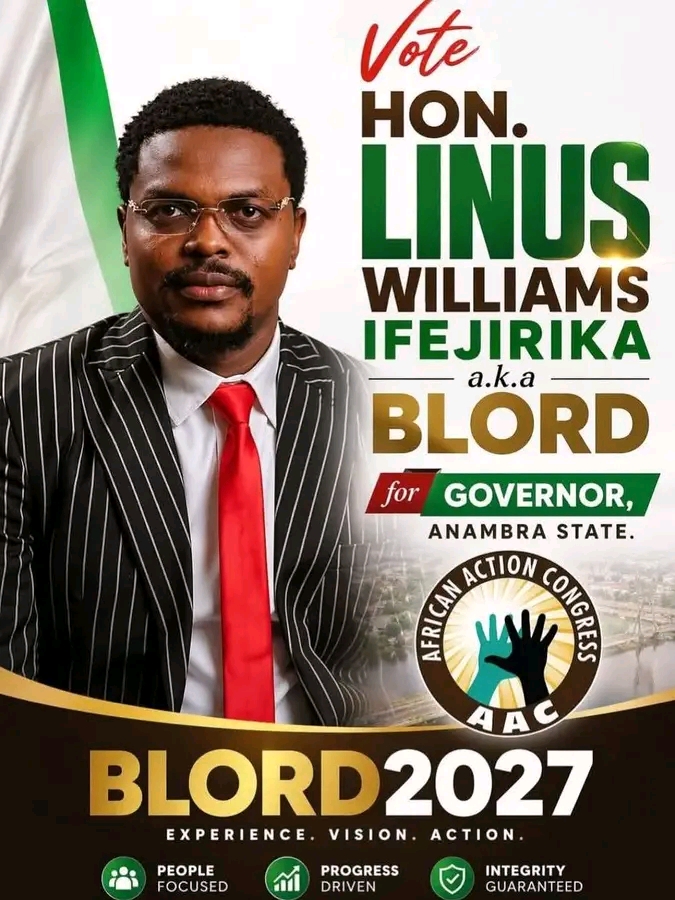
The speed at which the image traveled created a sense of inevitability around the narrative, even though no formal structures supported it. Within a short time frame, blogs began referencing the flyer indirectly, framing it as a developing story rather than an unverified post. That shift from rumor to perceived possibility is one of the strongest reasons the story continues to circulate.
Blord’s Public Reaction To The Rumor
Blord eventually addressed the speculation in a manner that reflected awareness without commitment. His response appeared on social media where he acknowledged seeing the flyer circulating online, treating it with a light tone rather than a political declaration. He did not confirm any ambition toward public office, nor did he deny the idea in a strongly dismissive way, leaving room for interpretation among audiences who were already invested in the narrative.
Here is Blord’s exact reaction, pulled directly from verified reports of his post:
“SAW THIS ON TWITTER YOUTH O’ CLOCK !!! MAKE I THINK ABOUT AM FIRST.”
What stands out in his reaction is the absence of formal language associated with political entry. There was no announcement of intention, no articulation of vision for governance, and no mention of party alignment. Instead, the response leaned toward casual acknowledgment, which is often common when public figures encounter viral content about themselves that lacks grounding in reality. This ambiguity contributed further to public debate, as audiences began reading meaning into what was not explicitly stated.
A key detail that remains consistent across his responses is the lack of structural political engagement. No campaign team has been identified, no manifesto has been introduced, and no formal political meetings have been linked to his name. This positions his involvement at the level of public curiosity rather than political participation.
Why The Story Escalated Rapidly
The speed at which the Blord governorship rumor escalated can be traced to three major social dynamics that often shape political conversations in Nigeria. The first is his visibility as a young entrepreneur who has experienced both admiration and controversy in equal measure. His public profile ensures that any mention of his name already attracts attention, regardless of context.
The second factor is the growing national conversation around youth participation in politics. Many Nigerians have increasingly expressed desire for younger leadership in governance, especially from non traditional political backgrounds. Blord’s identity as a tech entrepreneur placed him within that imagined category of potential change agents, even without political preparation or intention.
The third factor is the viral nature of misinformation cycles online. A single flyer can transform into multiple narratives once it passes through different layers of reposting, commentary, and interpretation. Each stage adds emotional or political framing that was not present in the original content. By the time it reaches wider audiences, the original context is often replaced by assumed meaning.
Political Environment Surrounding The Rumor
Anambra State remains one of the most politically active states in southeastern Nigeria, with established party structures and experienced political actors shaping governance outcomes. As of 2026, the political leadership structure is already defined under Governor Charles Soludo, who continues to occupy the office following his electoral cycle. Any credible governorship ambition must therefore align with formal party processes, internal primaries, and electoral guidelines issued by the Independent National Electoral Commission.
No evidence suggests that Blord has entered any of these formal structures. There is no record of party membership declaration, no participation in political primaries, and no registration linked to governorship ambition. These missing elements are critical in understanding the gap between online speculation and real political movement.
Political entry at that level also requires sustained groundwork, including grassroots engagement, policy articulation, and structured campaign financing. None of these components have been associated with Blord in any verified capacity. This further reinforces the position that the rumor exists outside institutional reality.
Public Interpretation Versus Verified Reality
The difference between public interpretation and verified political reality is central to this entire conversation. On one side is a viral narrative fueled by imagery, assumptions, and social media engagement. On the other side is a lack of institutional evidence supporting any candidacy or political preparation.
Public interpretation often fills gaps left by absence of official communication. When people see a familiar public figure attached to a political image, they naturally begin to construct meaning around it. This is especially true in environments where political communication is heavily influenced by online content rather than structured announcements.
Verified reality, however, requires documentation, formal declarations, and institutional acknowledgment. Without these elements, any political claim remains speculative regardless of how widely it is shared. In Blord’s case, the verified space remains empty of political registration or declaration.
Role Of Legal Background In Public Perception
Another layer influencing this narrative is Blord’s recent exposure to legal controversies and public scrutiny prior to the emergence of the governorship rumor. Public attention often magnifies individuals already within news cycles, making them more susceptible to political speculation. Around early 2026, reports of legal challenges and detention related discussions placed him in the public spotlight, increasing his visibility significantly.
Following his release, public discourse shifted quickly toward his next possible direction, with some online users linking him to activist conversations and youth political movements. His brief association with public discussions involving figures like Omoyele Sowore contributed to further speculation about political alignment, even though no formal political declaration emerged from those interactions.
This environment created conditions where any additional viral content involving his name was likely to be interpreted through a political lens.
Structure Required For Political Candidacy
Understanding the requirements for governorship candidacy provides clarity on the gap between rumor and reality. A legitimate governorship ambition requires formal party alignment, internal nomination processes, clearance by electoral bodies, and sustained public engagement over time. These steps are not symbolic but procedural, forming the foundation of electoral legitimacy.
As of the latest available public information in April 2026, none of these structural steps have been linked to Blord. There is no indication of participation in party primaries, no official nomination forms, and no campaign infrastructure visible in the political space.
This absence is important because political candidacy cannot exist purely within social media narratives. It must transition into formal recognition before it becomes actionable within an electoral system.
Social Media Influence On Political Narratives
Social media remains one of the strongest drivers of modern political perception in Nigeria. Platforms such as X, Facebook, and WhatsApp often act as unofficial distribution channels for political ideas long before they reach institutional confirmation. In Blord’s case, a single flyer became the foundation of a narrative that expanded through repost culture and commentary cycles.
Each share added emotional framing, sometimes suggesting possibility where none had been confirmed. Blogs and content pages further amplified the narrative by presenting it as developing news rather than unverified speculation. This layering effect created a perception gap between what was actually known and what was assumed.
The result is a story that feels real to many audiences even in the absence of supporting evidence.
Final Position On The Governorship Rumor
The full evaluation of available information leads to a clear position that Blord is not currently running for Anambra State governorship in any official capacity. There is no verified declaration, no political party confirmation, no electoral registration, and no campaign structure supporting the claim. What exists is a combination of viral content, public interpretation, and social media amplification.
While public curiosity continues to grow, the gap between speculation and reality remains significant. Until formal political steps are taken and publicly confirmed through institutional channels, the narrative remains within the space of online rumor rather than electoral fact.
The story continues to attract attention not because of political activity, but because of how quickly digital narratives can evolve when they involve familiar public figures. In this case, Blord’s name became a focal point for broader conversations about youth leadership and political transition, even without a declared path into governance.