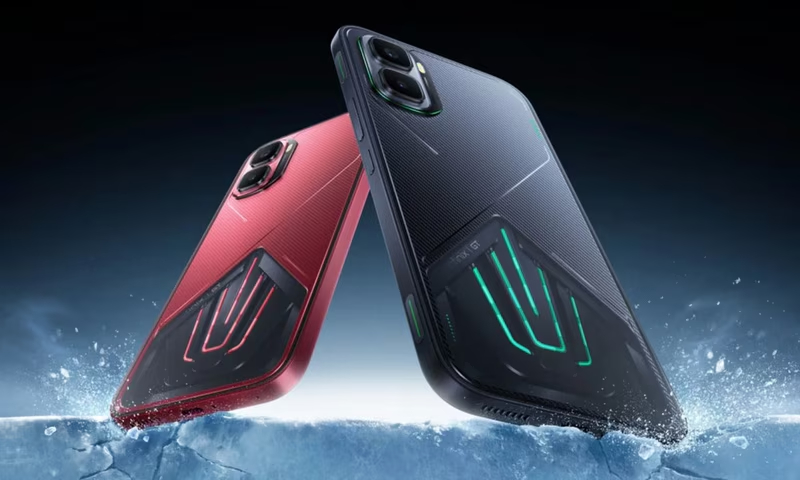
Infinix just skipped a generation. After the GT 30 Pro launched in May 2025, the brand jumped straight to the GT 50 Pro, with no GT 40 in between. That kind of naming confidence usually signals something different is coming. In this case, it does.
- Infinix GT 50 Pro Release Date and Availability
- Infinix GT 50 Pro Price in Nigeria
- Infinix GT 50 Pro Specs: Full Specifications Sheet
- Infinix Gaming Phone 2025–2026: What Makes the GT 50 Pro Different
- Display and Design
- Infinix GT 50 Pro Camera Samples and Photography Performance
- Battery Life and Charging
- Infinix GT 50 Pro Review: Software and Gaming Experience
- Infinix GT 50 Pro vs Tecno Pova 6 Pro vs Redmi Note 14 Pro: Comparison Table
- Is the Infinix GT 50 Pro Worth Buying?
- FAQ: Infinix GT 50 Pro
The GT 50 Pro launched globally on April 24, 2026, and it’s the most aggressive gaming phone Infinix has put out. Physical shoulder triggers, a liquid cooling system with a pump, a Dimensity 8400 Ultimate chip, all in a body that’s aiming squarely at the ₦200,000–₦300,000 bracket in Nigeria. If you play PUBG Mobile, Call of Duty Mobile, or any title where frame rate actually matters, this phone deserves a serious look.
Here’s everything you need to know.
Infinix GT 50 Pro Release Date and Availability
Infinix confirmed the GT 50 Pro’s global launch for April 24, 2026, through its official channel. It’s the follow-up to the GT 30 Pro, and Infinix skipped the “GT 40” name entirely. The phone carries model number X6891 and has started rolling out to markets including Indonesia, with other regions, including Nigeria and India, expected to follow within weeks.
For Nigeria specifically, no official retail date has been announced yet as of late April 2026, but given Infinix’s footprint in the country, expect it to appear on Slot, Pointek, and authorised online retailers like Jumia within the first month of global availability.

Infinix GT 50 Pro Price in Nigeria
This is the question everyone in Lagos, Abuja, and Port Harcourt is searching. The short answer: Infinix has not released an official Nigerian naira price yet.
Some aggregators have been circulating figures of ₦233,520 to ₦266,880, but these come from a single source that’s mixing up specs from the older GT 20 Pro, not the GT 50 Pro. Those numbers shouldn’t be trusted.
Based on global pricing trends for Infinix gaming phones and the two confirmed storage variants (12GB/256GB and 12GB/512GB), a realistic estimate for Nigeria puts the base variant at ₦280,000-₦350,000 once duties, import costs, and retailer margins are factored in. That’s an estimate; wait for the official announcement before you pay anyone.
Infinix GT 50 Pro Specs: Full Specifications Sheet
| Feature | Specification |
|---|---|
| Display | 6.78-inch AMOLED, 1.5K (1224 × 2720), 144Hz |
| Chipset | MediaTek Dimensity 8400 Ultimate (4nm) |
| GPU | Mali-G720 MC6 |
| RAM | 12GB LPDDR5X |
| Storage | 256GB / 512GB UFS 4.1 (no card slot) |
| OS | Android 16, XOS 16 |
| Software Support | 3 years OS updates, 5 years security patches |
| Rear Camera 1 | 50MP, OIS + EIS |
| Rear Camera 2 | 8MP Ultrawide |
| Front Camera | 13MP |
| Video Recording | Up to 4K 60fps (front and rear) |
| Battery | 6,500mAh (single-cell; EU variant gets 6,150mAh dual-cell) |
| Charging | 45W wired fast charging |
| Gaming Triggers | Dual pressure-sensitive shoulder buttons, 20ms latency, 10 pressure levels, 8 mapping points |
| Cooling | Micro-Pump HydroFlow liquid cooling, 6,437mm² diaphragm |
| Network Chip | Infinix N1 chip for latency stabilisation |
| Display Brightness | 700 nits typical / 1,600 nits HBM / 4,500 nits peak |
| Touch Sampling | 330Hz standard / 2,800Hz instant |
| PWM Dimming | 2,304Hz |
| Display Protection | Corning Gorilla Glass 7i |
| Fingerprint | In-display optical |
| Connectivity | 5G, Wi-Fi 6, Bluetooth 5.4, USB-C |
| Audio | Stereo speakers, Dolby Atmos |
| LED Strip | Mech Light Waves reactive RGB on rear |
| Colors | Black Abyss, Red Blaze, Silver Glacier |
| Weight | 198g |
| Thickness | 8.2mm |
Infinix Gaming Phone 2025–2026: What Makes the GT 50 Pro Different
Most gaming phones in this price range give you a fast chip and call it a day. The GT 50 Pro goes a few steps further with hardware that’s actually built into the phone rather than bolted on through a software mode.
At its core is the MediaTek Dimensity 8400 Ultimate, built on a 4nm process and clocked up to 3.25GHz, paired with Mali-G720 MC6 GPU, 12GB LPDDR5X RAM, and up to 512GB UFS 4.1 storage. Infinix has also added its own N1 network chip to stabilise connections and reduce lag during online gameplay.
The trigger system is the most interesting part. These pressure-sensitive buttons support light and heavy presses, as well as sliding gestures. Each trigger can be mapped to one of four controls, and sensitivity can be adjusted across 10 levels. That’s not a gimmick; if you play shooters, having dedicated physical inputs for aiming and firing changes how the phone feels entirely.
Thermal performance matters more than benchmarks for gaming, and Infinix knows it. The Micro-Pump HydroFlow liquid cooling uses a 6,437mm² diaphragm, the largest Infinix has ever used, covering 100% of the core heat zones. Whether that holds up through a two-hour BGMI session is something we’ll need hands-on time to confirm, but the engineering is more serious than the vapour chamber setups on most sub-₦300,000 phones.
The GT 50 Pro targets competitive mobile gamers, and Infinix is positioning it as the centrepiece of a wider GT Ecosystem that includes gaming accessories. One of those accessories, the MagCharge Cooler 2.0, adds wireless charging and additional TEC cooling. It’s optional, but its existence says something about how Infinix sees this phone’s user.
Display and Design

The 6.78-inch flat AMOLED panel is genuinely good for a phone at this price. The screen runs at 1.5K resolution with a 144Hz refresh rate, supports 10-bit colour, has 2,304Hz PWM dimming, hits 1,600 nits in high brightness mode, and peaks at 4,500 nits in direct sunlight. That’s a brightness number you’d expect from phones twice the price.
Touch response is another area where gaming phones have to do real work. The panel supports 330Hz touch sampling and 2,800Hz instant touch sampling. In practice, that means inputs register before most displays even poll for them.
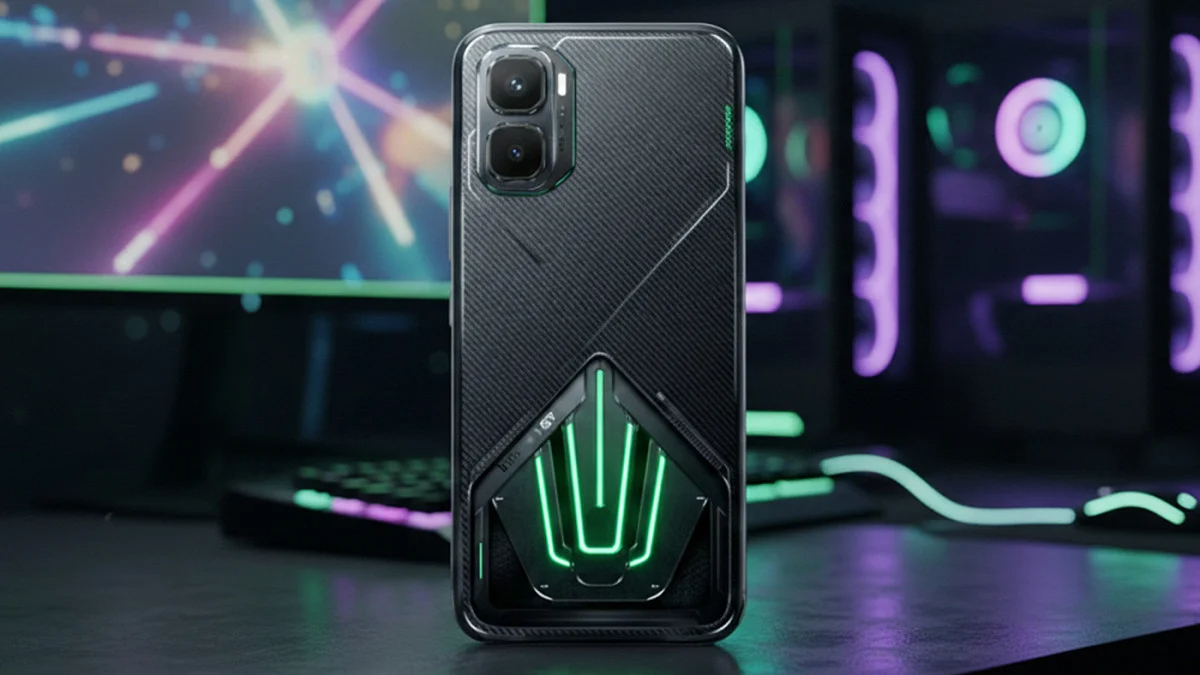
Design-wise, this isn’t a phone trying to look understated. The back uses a cyber-mecha design with a semi-transparent “Pipeline Window” panel, and the Mech Light Waves LED strip on the rear reacts during gameplay. It’s loud. If that’s not your aesthetic, the Silver Glacier option is the most muted of the three colourways. Red Blaze and Black Abyss are the ones built to turn heads.
Infinix GT 50 Pro Camera Samples and Photography Performance
The camera setup on the GT 50 Pro is practical, not a showstopper. There’s a 50MP primary rear camera with OIS and EIS support, a secondary 8MP ultrawide sensor, and a 13MP front camera capable of recording up to 4K 60fps video.

That 50MP main sensor with optical image stabilisation will handle daytime shots decently. OIS on a phone in this range still isn’t a given, and it matters for anything involving motion or low light. The ultrawide at 8MP is there for coverage, not quality; don’t expect it to compete with flagship ultrawide setups.
For gaming phone buyers, this is probably fine. The camera isn’t why anyone is buying this phone. Infinix GT 50 Pro camera samples from early users in Indonesia show solid daylight performance and acceptable portrait mode results from the 13MP front camera. Low-light is where the single-sensor rear setup will start to show limits, especially compared to phones with night mode algorithms trained on larger datasets.
If camera quality is your top priority, the Infinix Note 60 Ultra, which shares the same chip but carries a 200MP system, is the better pick. If gaming is the goal, the GT 50 Pro is where the money went.
Battery Life and Charging
The GT 50 Pro carries a 6,500mAh battery with around 45W fast charging. That’s a big cell. For reference, most competitors at this price point are in the 5,000–5,500mAh range. The extra capacity gives you real margin for extended gaming sessions, we’re talking 6+ hours of active screen-on gaming before you’re hunting for a cable.
45W charging isn’t the fastest on the market, but it gets the job done. From flat to 50% should take around 30 minutes.
Worth flagging: the European market variant ships with a 6,150mAh dual-cell battery instead of the 6,500mAh single-cell unit available everywhere else. If you’re buying from a grey market source, confirm which variant you’re getting.
The optional MagCharge Cooler 2.0 accessory adds wireless charging capability to the base phone and introduces bypass charging, a feature that powers the SoC directly during gaming so the battery doesn’t cycle while you’re plugged in. That’s a useful addition if you game with the phone on the table.
Infinix GT 50 Pro Review: Software and Gaming Experience
The device runs Android 16 with XOS 16, with three years of OS updates and five years of security support. That’s actually competitive with Xiaomi’s promise on the Redmi Note 14 series and better than what Tecno offers on the Pova 6 Pro.
The software side of gaming is handled through an AI gaming suite that handles frame rate stabilisation, network prioritisation, and touch input tuning. The N1 network chip works alongside this to keep packet loss low during online matches.
One honest caveat: XOS has historically been heavier on bloatware than MIUI. If you’re the type to spend an afternoon debloating your phone, budget time for that after unboxing.
Infinix GT 50 Pro vs Tecno Pova 6 Pro vs Redmi Note 14 Pro: Comparison Table
| Feature | Infinix GT 50 Pro | Tecno Pova 6 Pro | Redmi Note 14 Pro 5G |
|---|---|---|---|
| Chipset | Dimensity 8400 Ultimate | Dimensity 6300 | Snapdragon 7s Gen 3 |
| Display | 6.78″ AMOLED 144Hz 1.5K | 6.78″ AMOLED 120Hz FHD+ | 6.67″ AMOLED 120Hz 1.5K |
| RAM | 12GB LPDDR5X | 8/12GB | 8/12GB |
| Storage | 256GB/512GB UFS 4.1 | 256GB UFS 2.2 | 256GB/512GB UFS 2.2 |
| Rear Camera | 50MP OIS + 8MP UW | 108MP + 2MP | 200MP OIS + 8MP UW + 2MP |
| Front Camera | 13MP | 32MP | 20MP |
| Battery | 6,500mAh | 6,000mAh | 5,500mAh |
| Charging | 45W | 70W | 45W |
| 5G | Yes | Yes | Yes |
| Gaming Triggers | Yes (dual pressure-sensitive) | No | No |
| Liquid Cooling | Yes (Micro-Pump HydroFlow) | Basic vapour | Basic vapour |
| OS | Android 16 / XOS 16 | Android 14 / HiOS | Android 15 / MIUI |
| Software Updates | 3 years OS | 2 years OS | 3 years OS |
| Fingerprint | In-display optical | Side-mounted | In-display optical |
| Approx. Price (NGN) | ~₦280,000–₦350,000* | ~₦200,000–₦240,000 | ~₦260,000–₦300,000 |
*GT 50 Pro Nigeria price is estimated. Official price pending.
The Redmi Note 14 Pro wins on camera hardware; 200MP is genuinely useful for detail and cropping flexibility. The Pova 6 Pro charges faster at 70W and comes in cheaper. But neither has physical gaming triggers, and neither has a chip that sits as close to upper-midrange territory as the Dimensity 8400 Ultimate. For pure gaming performance, the GT 50 Pro is in a different class from its two main rivals.
Is the Infinix GT 50 Pro Worth Buying?
For mobile gamers in Nigeria, the GT 50 Pro is probably the most complete gaming phone under ₦350,000 right now. The combination of Dimensity 8400 Ultimate performance, physical triggers, a serious cooling system, and a large battery makes it hard to argue with at its likely price point.
The things it trades away for all of that are real, though. The camera won’t compete with the Redmi Note 14 Pro’s 200MP setup. 45W charging is adequate but not fast by 2026 standards. And the design language is aggressive enough that it won’t be for everyone.
If gaming is what you do on your phone, and you want a device that’s engineered for it rather than just marketed toward it, the GT 50 Pro earns its ask. If you take a lot of photos or want something more discreet-looking, the Redmi Note 14 Pro is worth a serious look at a similar price.
FAQ: Infinix GT 50 Pro
What is the price of Infinix GT 50 Pro in Nigeria?
No official naira price has been announced yet. Estimates based on global pricing and import costs put it in the ₦280,000–₦350,000 range. Aggregator prices circulating online (around ₦233,520–₦266,880) appear to be inaccurate, they’re sourced from a single site that attached the wrong spec sheet to the listing. Wait for Infinix Nigeria’s official announcement.
When is the Infinix GT 50 Pro coming out?
It launched globally on April 24, 2026. Indonesia was among the first markets to receive units. Nigeria availability is expected within weeks of the global launch, check Slot, Pointek, and Jumia for local stock updates.
What processor does the Infinix GT 50 Pro use?
The MediaTek Dimensity 8400 Ultimate, built on a 4nm process and clocked up to 3.25GHz. It’s the same chip used in the Infinix Note 60 Ultra, which launched at MWC 2026.
Does the Infinix GT 50 Pro support 5G?
Yes. The GT 50 Pro is a 5G phone. It also includes Infinix’s own N1 network chip, which is designed to stabilise connections and reduce latency during online gaming.
How does the Infinix GT 50 Pro compare to the Tecno Pova 6 Pro?
The GT 50 Pro has a faster chipset (Dimensity 8400 Ultimate vs Dimensity 6300), physical gaming triggers, more advanced liquid cooling, and a larger 6,500mAh battery. The Pova 6 Pro charges faster at 70W vs 45W and generally comes in cheaper. For gaming performance specifically, the GT 50 Pro has the clear advantage.
Is the Infinix GT 50 Pro good for gaming?
That’s the whole point of the phone. It has dual pressure-sensitive shoulder triggers with 20ms latency, a Micro-Pump HydroFlow cooling system, a 144Hz AMOLED display with 2,800Hz instant touch sampling, and the Dimensity 8400 Ultimate chip capable of 144FPS in supported titles. For the price, nothing in Nigeria’s market is engineered for gaming as specifically as this.
What is the battery capacity of the Infinix GT 50 Pro?
6,500mAh with 45W fast charging. Note: the European variant ships with a 6,150mAh dual-cell battery instead of the standard 6,500mAh single-cell unit available in Nigeria, India, and other markets.