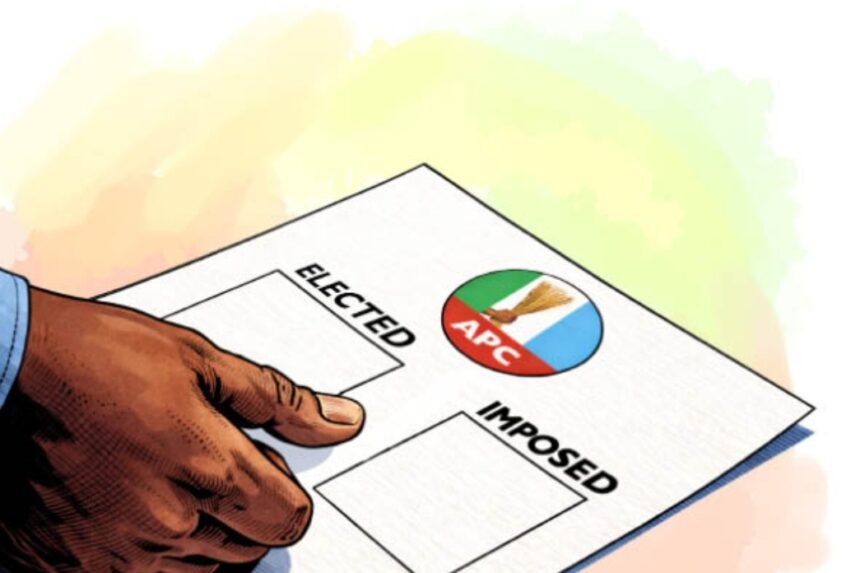
As preparations intensify ahead of the 2027 electoral cycle, the candidate selection process within the All Progressives Congress has drawn attention over its increasing reliance on consensus arrangements.
The timetable released by the Independent National Electoral Commission indicates that party primaries are scheduled to take place between April 23 and May 30, 2026.
However, observations across several states suggest that consensus is emerging as the dominant method within the ruling party, raising questions among stakeholders about inclusiveness and transparency.
In both Ekiti and Osun states, where off-cycle governorship elections have been concluded, the procedures leading to the emergence of candidates have been subjects of public discussion.
In Osun, the former chairman of the Nigeria Inland Waterways Authority, Bola Oyebamiji, emerged as candidate following the disqualification of several aspirants, including Senator Iyiola Omisore, who later challenged the outcome in court.
In Ekiti, the incumbent governor, Abiodun Oyebanji, secured the party’s ticket through a consensus approach after one of the aspirants stepped down from the race.
Across multiple states, reports indicate that influential figures within the party have played key roles in persuading or encouraging other aspirants to withdraw in favour of preferred candidates.
EMERGING PATTERN IN CANDIDATE SELECTION
In the weeks leading up to the primaries, indications have surfaced that certain candidates have been identified either directly or indirectly by party leaders in at least three states.
Additionally, arrangements involving governors who recently defected to the APC have contributed to the evolving dynamics of candidate selection.
Among those who joined the ruling party are governors from Delta, Plateau, Akwa Ibom, Enugu, Kano, Zamfara, Taraba, and Rivers states.
Sources within party structures suggest that understandings reached during their defection may include assurances related to second-term tickets.
These developments have reportedly generated concerns among aspirants who had earlier indicated interest in contesting before such arrangements were introduced.
LEGAL FRAMEWORK AND INTERNAL RESPONSES
The Electoral Act 2026 provides for both direct primaries and consensus as acceptable methods for selecting candidates.
Despite this provision, some party members have expressed preference for direct primaries, citing concerns about potential manipulation in consensus arrangements.
A former chairman of Kajuru Local Government Area in Kaduna State, Cafra Caino, noted that broader application of consensus across all positions could create challenges for the party.
He said, “If the APC wants to avoid trouble going into 2027, it needs to be careful about how candidates emerge at the lower levels. Direct primaries, for all its challenges, tends to produce better outcomes.
“People feel involved. When members can actually vote in primaries, they are more likely to stay committed to the party and its candidates.”
He added, “Consensus often leaves people unhappy, even if they don’t say it openly. That kind of dissatisfaction usually shows up later during campaigns or even on election day.”
STATE-LEVEL DEVELOPMENTS
In Nasarawa State, endorsement of Senator Ahmed Aliyu Wadada by Governor Abdullahi Sule has led to varied reactions among aspirants, some of whom have expressed reservations.
While certain stakeholders have supported the decision, others have maintained that the selection process should remain open and competitive.
In Lagos State, political consultations have intensified, with the deputy governor, Obafemi Hamzat, engaging key stakeholders, although no official endorsement has been confirmed.
The re-emergence of former governor Akinwunmi Ambode has also added a new dimension to the contest, as alignments continue to evolve.
In Yobe State, observers note a longstanding tradition of consensus, with expectations that the next candidate may emerge through similar arrangements involving party leadership.
Developments in Borno State indicate parallel interests between key political figures, with discussions ongoing regarding potential successors.
In Gombe State, a group of aspirants has signalled willingness to adopt consensus, agreeing to support whoever emerges as candidate.
Meanwhile, in Adamawa State, evolving political alignments have introduced new variables into the governorship race, influencing the internal dynamics of the party.
In Oyo State, where the APC is in opposition, multiple aspirants have expressed interest, making the process more competitive and less predictable.
In Ogun State, party leaders have adopted a consensus candidate, with several aspirants stepping down following consultations among stakeholders.
Similarly, in Kwara State, early indications suggest that discussions around consensus are gaining traction, although no formal decision has been announced.
BALANCING UNITY AND PARTICIPATION
As the primaries approach, the debate within the APC reflects broader considerations about balancing party unity with member participation.
While consensus is recognised as a legitimate method under the law, its application across different contexts continues to generate varied reactions among party stakeholders.
Observers note that how these processes are managed may influence internal cohesion and electoral outcomes as the 2027 elections draw closer.