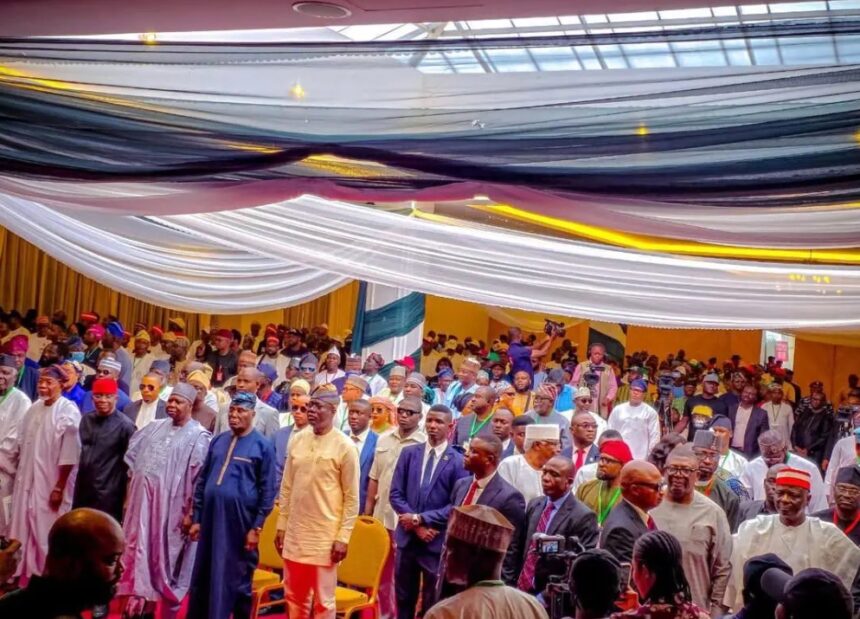
Nigeria’s opposition parties have outlined a joint political direction ahead of the 2027 general elections following deliberations held in Ibadan, the Oyo State capital.
The resolutions were contained in a communiqué issued after a national summit attended by political leaders drawn from various opposition platforms across the country.
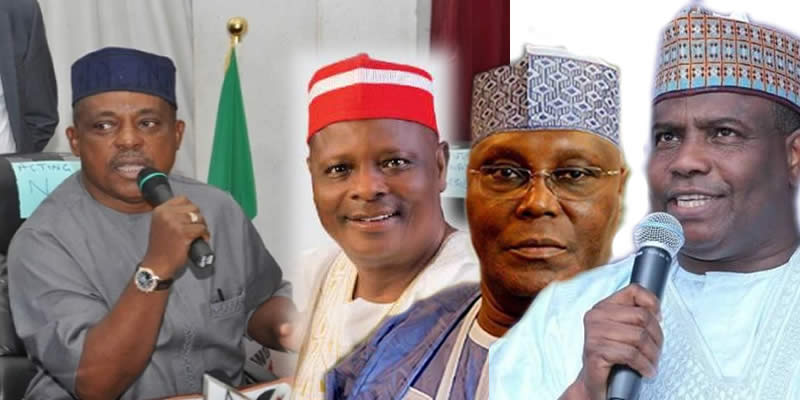
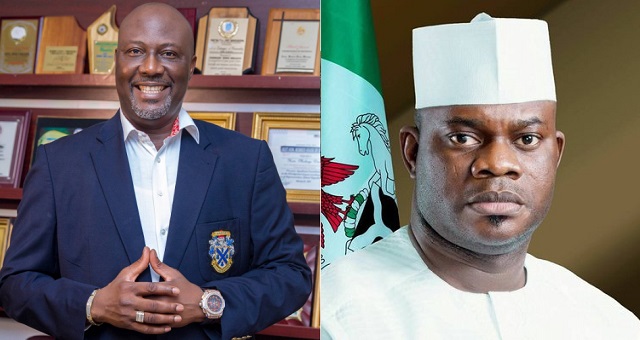
The meeting brought together prominent figures, including former vice president, Atiku Abubakar; former Anambra State governor, Peter Obi; former Rivers State governor, Rotimi Amaechi; and the Oyo State governor, Seyi Makinde, who hosted the gathering.
Participants at the summit discussed emerging political developments and examined areas of collaboration among opposition groups ahead of the next electoral cycle.
The communiqué stated that parties at the meeting had agreed to present a unified front in the presidential contest scheduled for 2027.
“That we shall work towards fielding one Presidential Candidate for the 2027 elections, which shall be agreed and supported by all participating opposition parties to rescue our nation and her long suffering masses,” the communiqué reads.
The document also indicated that the parties resolved to participate actively in all elections, including the presidential poll, despite concerns raised about the political environment.
Participants further agreed on the need to preserve Nigeria’s multi-party system amid ongoing political realignments within the country.
In the communiqué, the opposition groups expressed their position on the current structure of the electoral management body, particularly the leadership of the commission.
The parties stated that they no longer have confidence in the chairman of the Independent National Electoral Commission, Prof. Joash Ojo Amupitan.
They argued that concerns about neutrality and fairness must be addressed ahead of the 2027 general elections to ensure public trust in the electoral process.
The communiqué also called on the National Assembly to undertake a review of the Electoral Act, 2026, with the aim of strengthening the integrity of elections.
According to the document, certain provisions of the law require reconsideration to align with constitutional expectations and democratic standards.
The opposition parties further raised concerns about recent guidelines issued by the electoral commission, describing them as restrictive.
They requested an extension of the timeline for party primaries, proposing that the deadline be shifted to the end of July 2026.
The communiqué also addressed issues relating to political participation, particularly the status of individuals facing legal or administrative actions.
The parties called for the release of politicians detained on bailable offences, stating that such individuals should be allowed to participate in the political process.
In addition, the document acknowledged the role of citizens in sustaining democratic engagement across the country.
“The Summit commends Nigerians for their resilience and readiness to work with Opposition Parties to free our nation from State capture,” the communiqué stated.
The gathering also recognised the contribution of the Oyo State Government in hosting the event, describing it as a significant moment for opposition collaboration.
The communiqué concluded with an expression of appreciation to stakeholders who attended the summit and contributed to the discussions.
Observers note that the Ibadan meeting reflects ongoing efforts by opposition parties to coordinate strategies ahead of the 2027 elections.
The emphasis on a single presidential candidate highlights a shift towards coalition politics among parties seeking broader electoral influence.
Political analysts say such alliances have been part of Nigeria’s evolving democratic process, particularly during periods of intense competition.
They also note that agreements reached at political summits often require further negotiations before implementation.
The outcome of the Ibadan summit adds to a series of engagements among political actors seeking to redefine alignments within the country’s party system.
While the communiqué outlines key resolutions, the practical execution of the decisions will depend on continued dialogue among participating groups.
As preparations for the 2027 elections gradually gather pace, stakeholders are expected to monitor how these agreements shape future political developments.
The Ibadan resolutions, therefore, form part of the broader discourse on electoral competition, party cooperation, and democratic governance in Nigeria.