An interesting event unfolded in Abuja on May 9, 2026 that looked on the surface like another routine political reception, yet the atmosphere inside the room carried a different weight that quickly escaped the usual boundaries of party politics. Conversations shifted, cameras lingered longer than expected, and attention drifted away from formal speeches toward the unexpected presence of familiar public figures seated among political actors.
What began as an internal party gathering slowly transformed into a moment that blended influence, identity, loyalty, and visibility in ways that sparked questions across political circles and entertainment spaces at the same time. By the time details began circulating, the story had already grown beyond the walls of the venue into something larger than a simple defection event, drawing curiosity from those trying to understand what truly happened and why it mattered.
Abuja Political Atmosphere
Abuja carried a familiar rhythm on May 9 2026, a day already marked on the political calendar of the Nigeria Democratic Congress as part of its national realignment process ahead of its convention activities. Party insiders had been preparing for weeks, aligning stakeholders, consolidating new entrants, and setting the tone for what was expected to be a structured expansion phase. The gathering took place at the residence of Senator Seriake Dickson, who holds a central leadership position within the party and has been instrumental in shaping its national direction. Security presence was calm but firm, while invited guests moved through designated reception areas where registration and verification processes were handled quietly but deliberately.
The event was framed internally as a reception for new members who had chosen to align with the party ahead of its national convention scheduled for May 9 2026. Political operatives present described the atmosphere as both ceremonial and strategic, with speeches carefully designed to emphasize unity, discipline, and internal restructuring. Yet beyond the formal structure, there was a noticeable sense of anticipation in how attendees engaged with one another, as conversations frequently shifted between policy alignment and the broader implications of political movement within Edo State and other participating regions. Observers noted that this was not just about membership expansion but also about signaling strength ahead of the 2027 electoral cycle.
Venue At Senator Residence
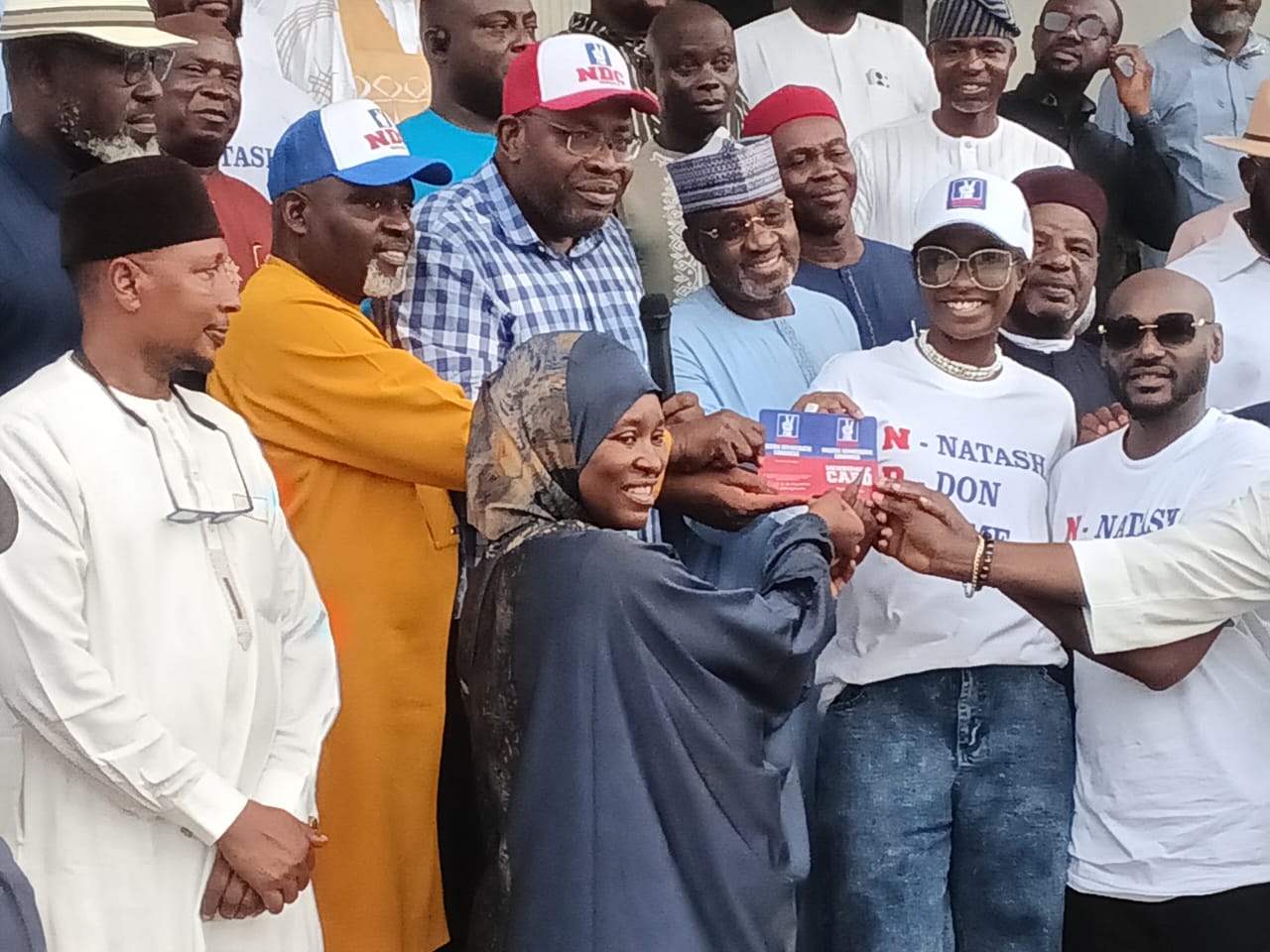
The residence of Senator Seriake Dickson became the focal point of activity as guests arrived in coordinated waves, each group undergoing formal identification before entry into the main reception hall. Staff members guided attendees through seating arrangements while party officials ensured that documentation for new members was properly processed. Membership cards were distributed in structured batches, reflecting a methodical approach to onboarding individuals who had recently aligned with the party. The environment carried a blend of official order and informal networking, as political figures exchanged greetings and engaged in low tone discussions that hinted at broader strategic calculations.
Inside the main hall, seating was arranged to reflect hierarchy and recognition, with senior party officials positioned centrally while new entrants were distributed across designated sections. Speeches were delivered in rotation, each focusing on themes of inclusion, political discipline, and the need for internal cohesion as the party prepared for its national convention phase. The tone remained consistent, emphasizing growth and stability while subtly acknowledging the competitive political environment outside the party structure. Even with the formal agenda in motion, attention occasionally shifted toward notable individuals whose presence was not originally expected to dominate the narrative of the day.
Natasha Political Transition
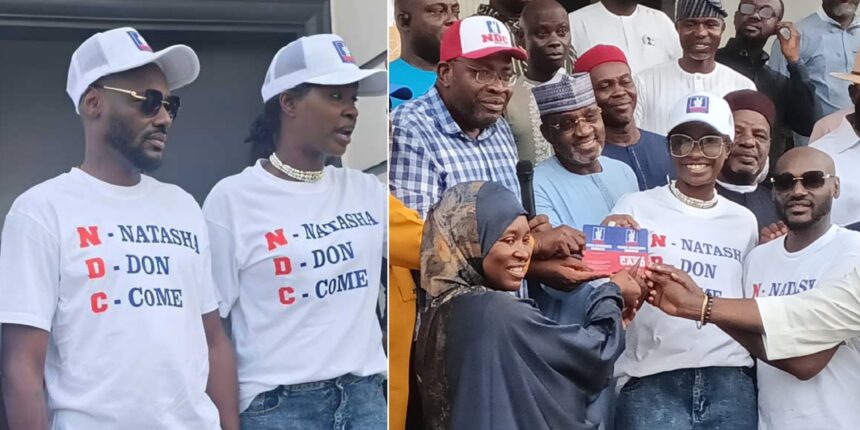
Attention began to consolidate around Natasha Osawaru Idibia, a serving member of the Edo State House of Assembly whose political decision carried both institutional and public interest weight. Her formal alignment with the Nigeria Democratic Congress marked a significant shift from her previous affiliation with the Peoples Democratic Party, a move that was confirmed during the reception gathering in Abuja on May 9 2026. The transition was not presented as abrupt but rather as part of a broader political recalibration that has been unfolding across multiple state actors ahead of national convention realignments. Party officials welcomed her alongside other defectors, framing her entry as part of a wider expansion strategy.
Natasha’s political identity already carried visibility due to her legislative role in Edo State, but her presence at the Abuja gathering introduced an additional layer of public attention. Her statements during the event emphasized confidence in the direction of her new political platform, while also reflecting optimism about the party’s long term positioning ahead of future electoral cycles. The reception of her defection was structured, with formal acknowledgment from party leadership and symbolic inclusion through membership documentation. While political defection is not unusual in Nigeria’s evolving party system, the combination of her profile and timing contributed to the heightened attention surrounding the event.
Membership Formalization Process
Procedures for integrating new members into the party were carried out with deliberate structure, reflecting the importance attached to the event. Individuals who had recently aligned with the party were formally registered, their details recorded, and membership cards issued as part of official recognition. Party officials used the opportunity to emphasize internal unity and strategic preparation for the upcoming national convention scheduled for May 9 2026. Speeches delivered during this phase focused on organizational discipline, inclusiveness, and the need to strengthen internal democratic processes as the party expands its national reach.
The process also included brief introductions of key defectors, among whom Natasha Osawaru Idibia stood out due to her dual identity as a legislator and public figure connected to Nigeria’s entertainment industry through her marriage. While the ceremony remained politically structured, the presence of recognizable personalities influenced audience engagement and media interest. Attendees listened attentively as leadership reiterated the importance of cohesion, while new members were encouraged to align with the party’s long term vision. The formalization stage concluded with symbolic acknowledgments that reinforced the party’s expansion narrative.
2baba’s Presence At Event
Attention shifted significantly when Innocent Idibia, widely known as 2Baba, was observed at the venue alongside Natasha Osawaru Idibia. His presence immediately introduced a different dimension to the gathering, blending entertainment visibility with political ceremony in a way that altered the public interpretation of the event. While he was not participating as a political delegate or registered party member, his attendance drew considerable attention from both guests and observers. Reports indicated that he was present in support of his wife, whose political transition was the central focus of the gathering.
During the event, 2Baba reportedly contributed to the atmosphere through a brief performance segment that aligned more with entertainment engagement than political involvement. This moment further amplified public interest, as it symbolized the intersection of celebrity culture and political activity within the same space. Party officials maintained the formal structure of proceedings, but the presence of a widely recognized musician inevitably shifted conversational focus among attendees. Observers noted that while the political agenda remained intact, the optics of the event expanded beyond its original scope due to his appearance.
Natasha’s Public Statement
Natasha Osawaru Idibia used her platform during the reception to express alignment with the political direction of the Nigeria Democratic Congress. Her remarks centered on confidence in the party’s internal structure and belief in its capacity for expansion ahead of the next electoral cycle. She emphasized her decision as part of a broader political realignment rather than a sudden shift, framing it within the context of ongoing changes in Nigeria’s political landscape. Her tone reflected assurance in the party’s direction while acknowledging the responsibilities that come with legislative and party engagement.
Her statement also touched on the importance of inclusion, particularly for women and younger political actors within party structures. Party leadership echoed similar themes during their own speeches, reinforcing the idea that the Nigeria Democratic Congress was positioning itself as a platform for broader participation. The reception of her remarks within the hall was measured but positive, reflecting procedural acceptance rather than emotional reaction. Outside the venue, however, interpretations varied widely as social media platforms began to amplify different aspects of the same event, particularly her connection to a high profile public figure.
Public Reaction
Reactions across digital platforms began to develop shortly after images and short clips from the Abuja gathering surfaced online. Discussions quickly divided into political interpretation and celebrity focus, with many users emphasizing the presence of 2Baba while others concentrated on Natasha’s defection to the Nigeria Democratic Congress. The combination of politics and entertainment created a layered narrative that spread rapidly across social channels. Some users framed the event as a strategic political move, while others treated it as a cultural moment shaped by celebrity visibility.
Online discourse also reflected curiosity about the boundaries between political participation and symbolic attendance. Questions emerged about whether the presence of a high profile entertainer implied political endorsement or merely personal support. Political commentators clarified that attendance does not automatically translate to party affiliation, especially when no formal declaration is made. Despite these clarifications, the public conversation continued to expand, driven largely by visual content and fragmented interpretations of the gathering.
Political Interpretation Within Circles

Within political analysis circles, the event was largely interpreted through the lens of party expansion strategy and visibility management. Natasha’s defection was viewed as part of a broader pattern of political realignment ahead of the Nigeria Democratic Congress national convention scheduled for May 9 2026. Analysts noted that her movement from the Peoples Democratic Party to the NDC reflects ongoing shifts within Nigeria’s state level political structures. The inclusion of multiple political figures at the same reception reinforced the perception of coordinated expansion rather than isolated defection.
The presence of a public entertainment figure introduced an additional layer of analysis regarding political communication strategies. Some observers suggested that such appearances increase visibility for political events, while others maintained that it remains incidental unless formally structured. Party officials maintained that the focus of the gathering remained internal restructuring and membership consolidation. Nevertheless, the intersection of politics and celebrity presence created a narrative complexity that extended beyond the original intent of the event.
Clarification: What Did Not Occur
Amid widespread discussion, several clarifications became necessary to separate interpretation from fact. The gathering was not an official political endorsement event by 2Baba, nor was it a declaration of his involvement in party politics. His presence was not recorded as participation in decision making processes or party leadership engagement. Natasha’s defection stood as the central political development of the day, formally acknowledged within party structures and documented through membership procedures.
The event also did not function as a national convention appearance for 2Baba, nor was it structured around his professional career as a musician. Instead, his attendance was connected to personal association with one of the political participants. The Nigeria Democratic Congress continued its scheduled preparation activities for its national convention independently of entertainment involvement. These clarifications helped refine public understanding of the event, distinguishing symbolic presence from formal political alignment.
Closing Narrative Reflection
What unfolded in Abuja on May 9 2026 ultimately sits at the intersection of political transition and public visibility, where personal relationships and institutional movements briefly converged within a single space.
Natasha Osawaru Idibia’s defection to the Nigeria Democratic Congress represents a clear political shift within Edo State legislative representation, while the presence of 2Baba introduced an unexpected layer of public attention that expanded the reach of the event beyond its intended political scope. The gathering itself remained structured around party expansion, membership formalization, and preparation for upcoming convention activities, yet its interpretation was shaped heavily by external perception.
The combination of political movement and celebrity visibility ensured that the event would not remain confined to internal party records alone. Instead, it evolved into a widely discussed moment that reflected how modern political events are consumed through multiple lenses at once. While the formal narrative remains anchored in Natasha’s political transition and the party’s expansion agenda, the public conversation continues to orbit around the symbolic presence of a widely recognized cultural figure within a political environment.