
A quiet intrigue hung in the air long before the first pledge was announced at the Abuja gathering for the presentation of My Life of Duty and Allegiance, the autobiography of former Nigerian Head of State, Yakubu Gowon. The event, held at a high profile venue in the Federal Capital Territory in recent reporting, did not present itself as an ordinary book launch but rather as a convergence of history, influence, memory, and power. Conversations in the hall moved between admiration for a man whose legacy stretches across decades and curiosity about the scale of financial commitments that would soon unfold before cameras and guests.
What followed was not just a ceremonial unveiling of pages bound in hard cover but a structured wave of pledges that reflected Nigeria’s unique blend of politics, philanthropy, and elite cultural fundraising. Figures representing business empires, political influence, and institutional authority stepped forward with contributions that quickly transformed the atmosphere from literary celebration into a national financial statement of recognition. The most striking aspect was not simply the amounts announced but the layered meaning behind them, where book purchases, legacy projects, and institutional distribution quietly merged into figures that reached into the billions.
By the time the final pledge was recorded, observers were left piecing together a financial mosaic that revealed both the influence of the individuals present and the symbolic weight attached to Gowon’s legacy. The breakdown that follows traces each contribution, the structure behind it, and the broader implications of what appeared on the surface as a book launch but functioned in reality as a gathering of Nigeria’s most powerful circles.
Historical Setting Of The Abuja Gathering
The Abuja event unfolded within a context that combined national remembrance with elite social engagement. The autobiography of Yakubu Gowon carries decades of political memory, including his role as Nigeria’s military head of state from 1966 to 1975, a period that continues to shape national discourse. This historical weight gave the ceremony a tone that extended beyond literature into national identity.
Attendance reflected that seriousness. Political leaders, retired military figures, diplomats, and industrial giants filled the hall. The presence of senior government representation, including Vice Presidential delegation coverage widely reported, reinforced the symbolic standing of the event. Conversations were not casual; they carried the tone of institutional reflection, where past governance, present influence, and future legacy intersected.

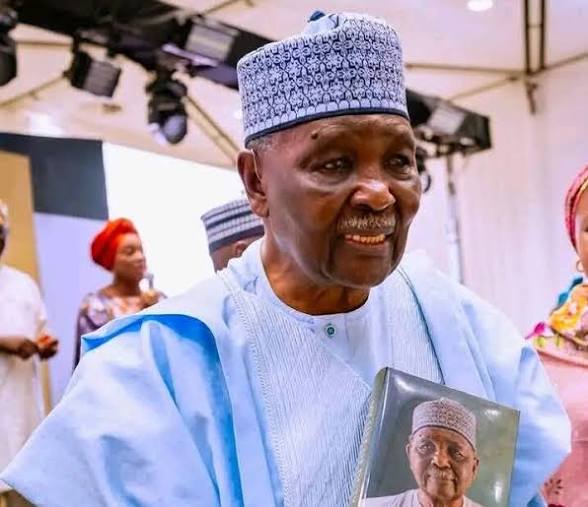
The setting itself mirrored this blend of authority and memory. Seating arrangements, media positioning, and stage design reflected a deliberate attempt to elevate the moment beyond a standard book presentation. Guests understood that what was about to unfold would not follow typical literary launch patterns but would instead reflect a long standing Nigerian tradition where memoirs of national figures become platforms for structured contributions and institutional recognition.
Major Donation: Danjuma Contribution
The most significant financial declaration of the day came from TY Danjuma, whose pledge of ₦3 billion immediately set the tone for the entire event. The announcement was not framed as a simple donation but structured around large scale institutional book purchases and distribution support. According to the breakdown, the contribution was directed toward acquiring substantial volumes of the autobiography, with a focus on ensuring circulation across educational institutions.
A key component of this allocation involved distribution to 20 universities that had previously conferred honorary degrees on Gowon. This added an academic and archival dimension to the contribution, positioning it not merely as financial support but as historical preservation. The structure indicated that books would be purchased in bulk at institutional pricing, then deployed as part of educational libraries and national documentation efforts.

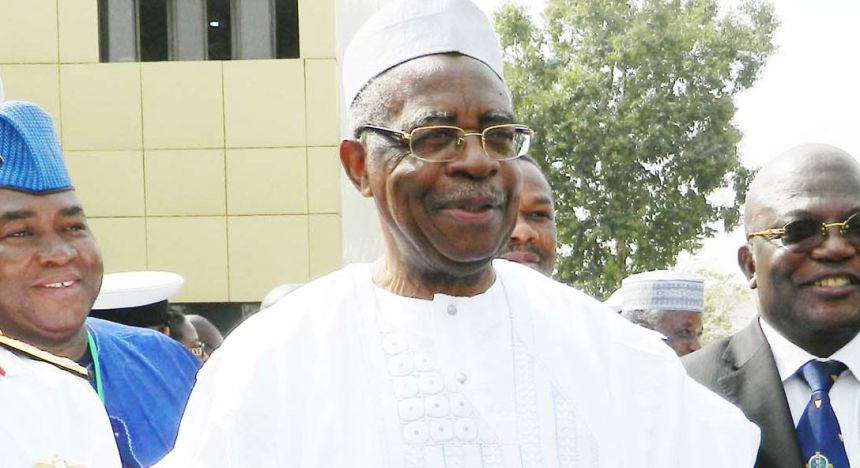
Observers noted that the scale of ₦3 billion represented more than eighty percent of the headline contributions reported from the event. The weight of this single pledge shaped the financial narrative of the entire gathering, placing TY Danjuma at the center of the economic expression of legacy recognition that defined the day.
Dangote Participation Layer
The second major financial figure came from Dangote Group founder Aliko Dangote, whose contribution of ₦500 million added a strong private sector dimension to the event. Unlike the institutional distribution model attached to the largest pledge, this contribution followed a familiar pattern associated with elite Nigerian ceremonial engagements, where high volume book purchases form the core structure of support.
The allocation was directed toward acquisition of copies of the autobiography, alongside sponsorship elements tied to the event presentation itself. The framing suggested a dual purpose, combining literary support with ceremonial backing. Within the ecosystem of Nigerian high level memoir launches, this approach reflects a recurring model where industrial leaders participate through structured purchasing arrangements that reinforce both legacy promotion and cultural preservation.


The presence of Aliko Dangote at the gathering reinforced the intersection between private capital and national historical recognition. His contribution, while significantly lower than the largest pledge, remained one of the most prominent private sector commitments of the day and contributed to the overall financial architecture that defined the event.
Rabiu Contribution Structure
A further pledge of ₦25 million was recorded from Abdul Samad Rabiu representing BUA Group. This contribution followed a more direct and simplified structure, primarily focused on book purchase distribution. While smaller in scale compared to the headline figures, it remained consistent with the broader pattern of institutional acquisition that characterized the event.
The allocation was designated for copies of the autobiography intended for circulation among selected institutions and stakeholders. This approach maintained the established framework where financial contributions are not merely cash transfers but structured purchases tied to legacy dissemination. The participation of Abdul Samad Rabiu added another layer of industrial representation to the gathering, reinforcing the cross sector nature of the support base.
Secondary Pledges
Beyond the three headline contributions, additional pledges were recorded from various political figures, senators, and private stakeholders present at the event. These ranged between ₦10 million and ₦100 million, forming a collective layer of support that contributed to the overall financial picture. Although not individually highlighted in all reports, their presence was consistently acknowledged across coverage of the gathering.
These contributions followed the same structural pattern seen at similar high profile memoir launches in Nigeria, where participation often takes the form of book purchases rather than direct donations. Guests typically commit to acquiring copies at premium institutional rates, with distribution often tied to political offices, educational institutions, or cultural archives.
The cumulative effect of these smaller pledges contributed to a financial ecosystem that extended beyond headline figures. While individually modest compared to the major contributions, together they formed a meaningful support base that reinforced the scale of engagement around the autobiography.
Book Purchase Framework
A defining feature of the entire financial structure was the book purchase model that underpinned almost every contribution. Rather than traditional donations, the event operated through institutional acquisition of copies of My Life of Duty and Allegiance. This model transformed financial pledges into tangible literary distribution channels, ensuring that contributions were tied directly to physical copies of the autobiography.
The pricing structure for such memoirs often reflects premium institutional valuation, particularly when associated with national figures such as Yakubu Gowon. Institutions, universities, and private stakeholders typically absorb large quantities for archival, educational, or symbolic purposes. This creates a system where financial totals represent both cultural investment and legacy documentation.
Within this framework, the ₦3 billion pledge from TY Danjuma stands as a combined reflection of both purchase volume and distribution logistics, particularly the commitment to 20 universities. Similarly, the ₦500 million contribution from Aliko Dangote reflects high volume acquisition within the same structural model.
Political Networking Layer
The Abuja gathering also functioned as a convergence point for political and institutional networking. Attendance by senior government representatives, military figures, and business leaders created an environment where financial pledges intersected with relationship building and historical recognition. The autobiography launch became a platform for reaffirming connections between Nigeria’s governing past and its current elite structure.
The presence of figures such as Yakubu Gowon at the center of this network reinforced the symbolic weight of the event. Conversations extended beyond literature into governance memory, national stability, and institutional legacy. Each pledge therefore carried both financial and relational significance, reflecting alignment with a figure whose historical role remains deeply embedded in Nigeria’s national narrative.
Total Estimate Breakdown
Based on compiled reported figures, the estimated financial total from the event ranges between ₦3.6 billion and ₦3.8 billion. The breakdown is anchored by the ₦3 billion contribution from TY Danjuma, followed by ₦500 million from Aliko Dangote, ₦25 million from Abdul Samad Rabiu, and additional pledges between ₦10 million and ₦100 million from various stakeholders.
This distribution illustrates a heavily weighted structure where one dominant contribution defines the majority share while secondary and tertiary contributions fill the remaining financial landscape. The overall figure reflects both the symbolic importance of the autobiography and the established cultural practice of structured book purchase funding within elite Nigerian events.
Leaving With This
The Abuja launch of ‘My Life of Duty and Allegiance’ ultimately revealed more than a literary milestone. It exposed a carefully layered system of recognition, where history, influence, and financial expression converge in a single setting. The autobiography of Yakubu Gowon became the focal point of a gathering that transformed personal memoir into national financial acknowledgment.
What unfolded was not simply a record of contributions but a demonstration of how legacy is financed, preserved, and circulated within elite structures. The figures attached to TY Danjuma, Aliko Dangote, and Abdul Samad Rabiu reflect a system where history is supported through institutional acquisition and symbolic investment.

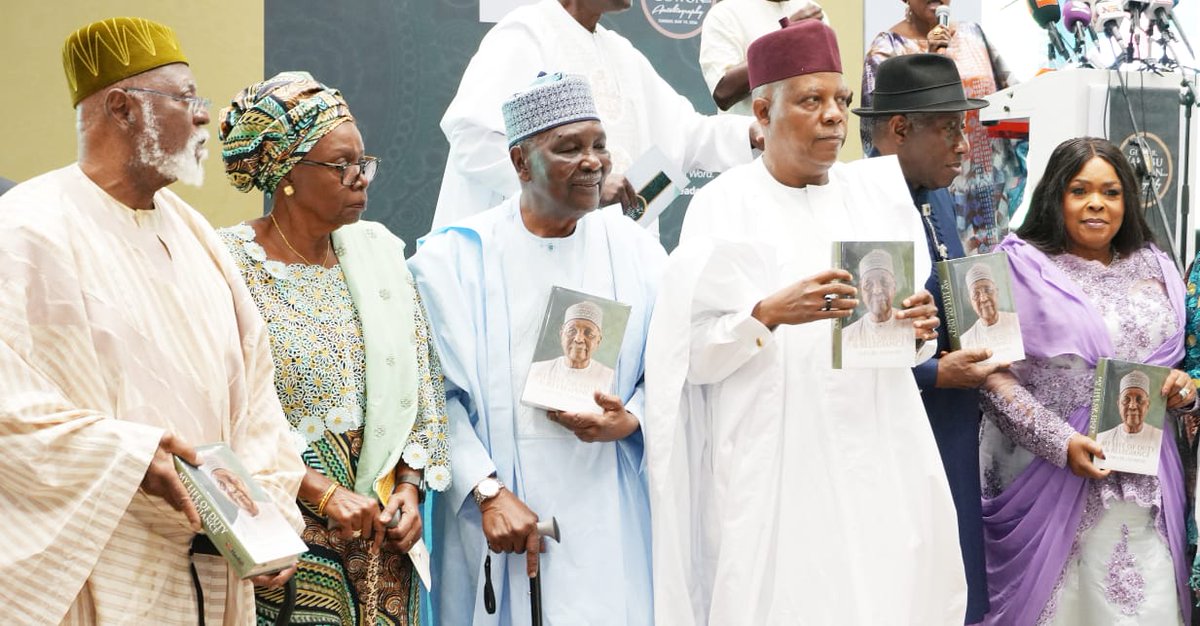
By the end of the ceremony, the numbers told one story, but the atmosphere told another. It was a story of memory meeting influence, where a book launch became a financial reflection of national legacy, carefully structured, quietly competitive, and deeply rooted in Nigeria’s political and cultural architecture.