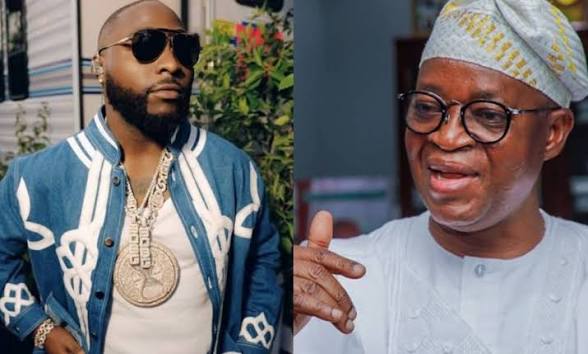
Osun State politics operates like a returning cycle of tension, where each election does not close the conversation but resets it into a new phase filled with memory, rivalry, and renewed interpretation of past events. Between 2022 and 2026, one of the most visible non political voices inside this cycle is Davido, whose involvement in Osun political discourse has moved from family aligned support to repeated public call outs that continue to shape online and offline political reactions. On the opposing side stands Gboyega Oyetola, a former governor whose electoral journey and political presence remain central to one of the most contested political narratives in recent Osun history.
What makes this timeline important is not just the election outcome of 2022, but the way that outcome refused to settle into silence, instead evolving into repeated resurfacing moments where past campaign emotions reappear in new political cycles. From campaign intensity in 2022 to renewed confrontation in 2026, the story forms a continuous loop of influence, reaction, and political memory that reflects how modern Nigerian politics now operates across both governance structures and digital influence networks.
2022 Election Atmosphere Political Pressure Build Up
The governorship election held on July 16 2022 became one of the most closely watched political battles in Osun State history, featuring APC candidate Gboyega Oyetola and PDP candidate Ademola Adeleke in a contest that exposed deep political division across communities, voting blocs, and party structures. The result announced after collation showed Adeleke securing approximately 403000 votes while Oyetola recorded around 375000 votes, a narrow margin that immediately triggered political interpretation and emotional reactions across both camps.
The campaign environment leading into this election was already highly charged, with strong mobilization efforts across local governments and increasing use of digital platforms to shape voter perception. Political messaging became more aggressive and more personalized, with supporters actively defending candidates across physical rallies and online platforms.
During this period, Davido’s involvement became publicly visible due to his alignment with his uncle’s campaign structure. His presence was not limited to symbolic support but extended into active participation in the emotional and digital amplification of campaign narratives. This positioned him within a politically sensitive environment where cultural influence began intersecting directly with electoral competition.
Following the announcement of Adeleke’s victory, Davido’s reaction became one of the most widely circulated political celebrity responses of the cycle. He posted the statement:
“Defeat is painful see you in 2026 o”
This statement was interpreted across political divides as both celebration and provocation, depending on party alignment. He also questioned why Oyetola had not publicly congratulated his uncle after the election outcome, further intensifying online political reactions and establishing an early point of visible tension between both sides.
Post Election Transition – Political Emotion Carryover
After the official declaration of Ademola Adeleke as winner on July 17 2022, Osun State entered a politically emotional transition phase where celebration, legal discussions, and political reflection occurred simultaneously. The election did not end political tension, it redirected it into governance transition discussions and public interpretation of legitimacy.
The inauguration of Adeleke in November 2022 became a symbolic political moment where Davido’s public presence reinforced the emotional weight of the transition. His appearance was widely discussed as a representation of cultural support entering formal political space, while the absence of Gboyega Oyetola from the ceremony highlighted the separation between outgoing and incoming political structures.
During this phase, Davido’s communication focus shifted away from direct electoral commentary, but the earlier statements and reactions continued circulating online, keeping the political atmosphere active even after formal transition had taken place.
2023 to 2025: Political Quiet Phase With Underlying Tension
Between 2023 and 2025, Osun political space entered a period of reduced public confrontation, though underlying political memory remained active beneath surface level governance discussions. Gboyega Oyetola transitioned into a federal ministerial position in Marine and Blue Economy, maintaining influence within APC political structure and national governance networks.
Davido during this period significantly reduced direct political engagement, focusing on his music career while occasionally making broader public commentary on national issues. However, his association with Osun political identity remained present due to his visible role in the 2022 election cycle, ensuring his name continued to surface in political discussions whenever Osun governance was referenced.
This phase functioned as a political cooling period, but not a resolution period, because the core emotional and political memory of 2022 remained intact within both supporter bases.
2026 Political Reawakening Cycle
By early 2026, Osun State reentered full electoral preparation mode, with political actors repositioning across party lines and campaign structures gradually becoming more visible. It was within this environment that Davido’s political presence reemerged in a more direct form through public statements referencing Gboyega Oyetola.
On May 2026, Davido made statements on X that quickly circulated across social and political spaces, reigniting debate and political interpretation. His comments included a direct characterization of Oyetola as:
“The most desperate politician in the world”
He further stated:
“Your plan will not work”
He also referenced an alleged political scheme connected to Oyetola, though no additional details were publicly provided, which increased speculation and intensified online political engagement.
These statements immediately became part of broader Osun political discourse, especially within APC and PDP aligned communities where interpretation of political messaging is strongly shaped by existing party loyalty.
Reaction Wave: Political Division Expansion
Following Davido’s 2026 statements, reactions emerged rapidly from political supporters aligned with Gboyega Oyetola. His aides and supporters described the comments as disrespectful and inappropriate, emphasizing concerns around public conduct, political decorum, and cultural expectations regarding respect for elders and former leaders.
On the opposing side, supporters aligned with Ademola Adeleke’s political structure defended Davido’s statements as legitimate political expression and continuation of his longstanding alignment with his uncle’s political journey. This reaction split reinforced the already existing polarization within Osun political discourse, where interpretation of events often depends heavily on political identity.
The situation expanded beyond individual statements into a broader reflection of how political communication now operates in a digital environment where influence spreads rapidly and narratives form instantly.
Youth Mobilization Role Expansion
One of the defining developments of the 2026 cycle is Davido’s transition into a structured youth mobilization role within Adeleke’s campaign framework. This position represents a strategic shift in how political campaigns engage younger voters, particularly through digital influence, cultural reach, and online engagement strategies.
His responsibilities focus on strengthening youth participation, expanding campaign visibility among younger demographics, and enhancing digital communication efforts across Osun State. This role positions him within formal political structure rather than external commentary, marking a shift from supporter identity to active campaign participation.
Political Memory Cycle Continuation
The interaction between Davido and Gboyega Oyetola between 2022 and 2026 reflects a continuous political memory loop where elections do not conclude political narratives but extend them across time. Each new cycle reactivates previous tensions, bringing past events back into current political interpretation.
Davido’s repeated visibility in this narrative reflects the growing role of cultural influence in political communication, while Oyetola’s continued relevance ensures that APC aligned political memory remains structurally present in Osun State politics.
Concluding Lens
From 2022 to 2026, the repeated call outs involving Davido and Gboyega Oyetola illustrate a sustained political timeline shaped by elections, family connections, party rivalry, and evolving digital communication systems.
The statements made across this period continue to circulate within political memory, ensuring that Osun State remains one of Nigeria’s most continuously reactive political environments where past and present remain tightly connected within ongoing electoral cycles.