For many Nigerians, Dammy Twitch is now synonymous with high-profile music videos, striking visual storytelling and, most recently, a successful transition into filmmaking.
But long before the awards, industry recognition and box-office success, he was a young graduate juggling photography jobs, earning modest fees from burial ceremonies and trying to convince his parents that a career behind the camera was worth pursuing.
In a revealing June interview with Chude Jideonwo, the photographer and video director reflected on his humble beginnings, the family tensions that came with abandoning a conventional career path, the devastating loss of his father in 2020, and the support he received from Davido during one of the darkest moments of his life.
Why Recognition Took Longer at Home


The conversation began with Dammy Twitch reflecting on the recognition he has received in recent years.
While he acknowledged being celebrated through awards and accolades, he suggested that appreciation for his work often arrived from outside Nigeria before it was fully acknowledged at home. He shared:
“I think it’s just always a thing where you get appreciated more outside and then people start paying attention.
“Like it has happened to me a lot where you see artists and companies of big calibres reach out to me and just appreciate my work, and then you don’t get the same thing here.”
Although he spoke about the trend with humour, his comments reflected a reality many Nigerian creatives often say about gaining international validation before receiving widespread local recognition.
The Years He Spent Photographing Burials
One of the most surprising revelations from the interview was how Dammy Twitch’s professional journey began.
Before becoming one of the country’s most sought-after video directors, he spent much of his early career photographing burial ceremonies. According to him, the opportunities came through an event planner who frequently hired him for jobs. He recalled:
“It was easy then. They’ll pay you like ₦30,000 to come and shoot a burial. You collect the money.”
At the time, he accepted jobs without fully understanding his value or what other photographers were charging. The arrangement often required him to cover multiple expenses himself, including photo books, transportation and equipment rentals. He added:
“The offer is ₦50,000, but out of that ₦50,000 I still have to do photo book. So you do photo book for another ₦20,000. Then you rent cameras and all that.”
Looking back, he admitted that the economics of those jobs were far from ideal.
“Thinking about everything now, yeah, there’s no way,” he said while laughing about how little he was ultimately earning. Yet he refuses to view the experience negatively. Dammy Twitch continued:
“I wouldn’t even say cheated. She offered me, I said yes…So there was no trouble with her.”
Instead, he credits those difficult assignments with helping shape his work ethic and exposing him to the realities of the profession.
“It really shaped me. I really enjoyed working with her because the job wasn’t easy.”
The Battle With His Parents Over Photography

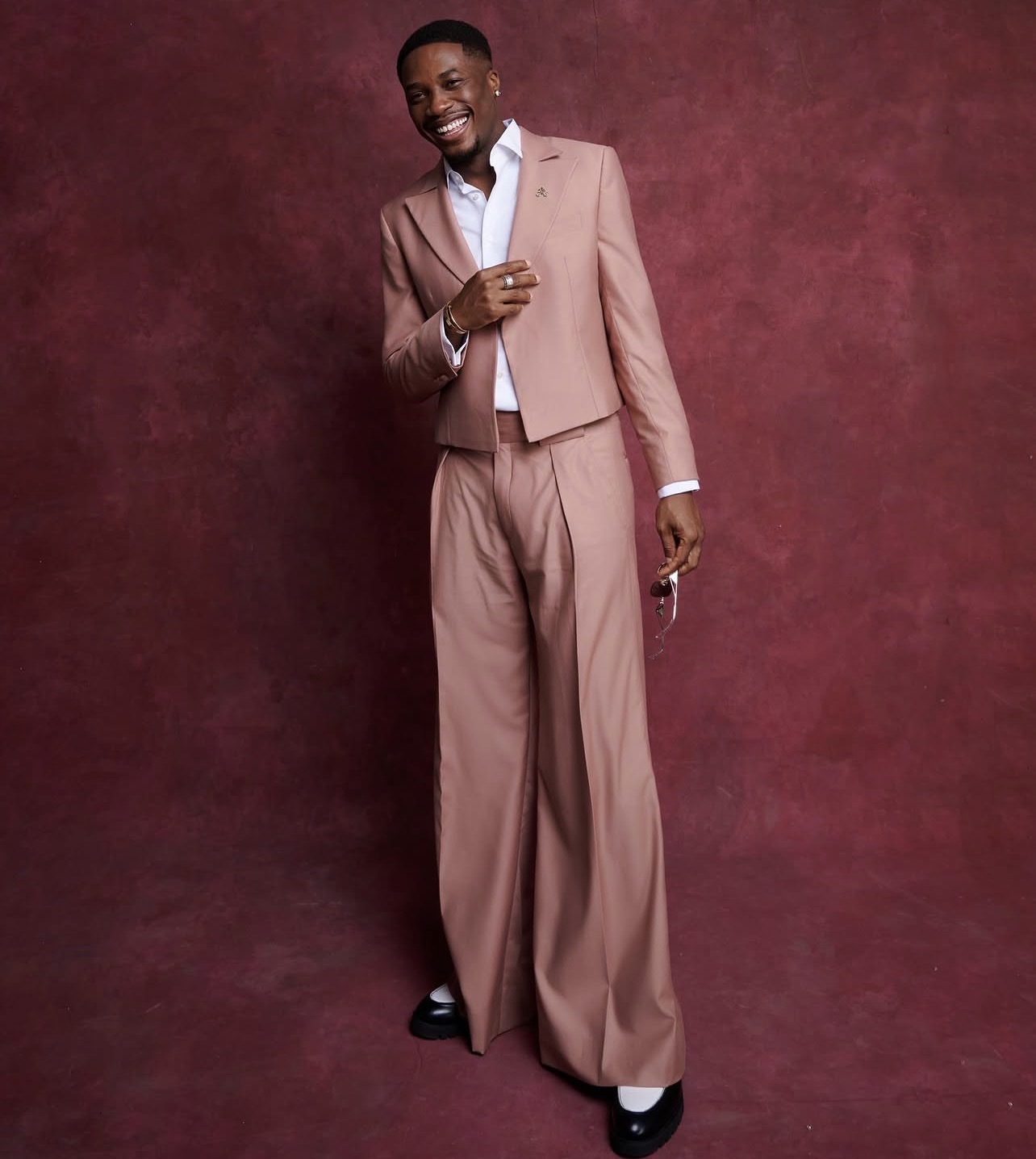
At the time, photography was never intended to be his long-term career. Dammy Twitch studied Economics at Redeemer’s University and, like many graduates, expected to eventually secure a conventional job. His mother certainly expected that outcome.
According to him, she spent considerable time sending his CV to relatives and contacts in hopes of finding employment opportunities.
“So she was always sending my CV to everybody. She was like, ‘Don’t worry, the job is coming.’”
As the months passed and responses failed to materialise, he began to realise that his future might lie elsewhere. The more he photographed, the more convinced he became that visual storytelling was what he truly wanted to do.
“I started realising that this economics and what I studied might not be it because these people are not getting back to my mom. They’re just asking for CV here and there and we are not hearing back.”
The decision to pursue photography full-time was not immediately welcomed. He recalled emotional moments during the period of disagreement with his parents.
“I’ll just be crying. I’ll be in my friend’s place. I would be like, ‘Why is my mom doing this, doing that?’ I’ll just start crying and all that. I didn’t really understand why she was saying all these things.”
Years later, however, he sees the situation differently.
“I really get that worry because imagine paying for four years of university for your kid and then your kid comes and says that four years should go.”
As his photography career became financially viable, his parents’ concerns gradually eased.
“There’s no African parent that will receive that first alert and be like, ‘Ah, don’t do it.’”
Things changed even further when his career brought him into the orbit of some of Africa’s biggest stars.
“I started working for Davido and then I got her on a video call with Davido. There’s no parent that will see Davido on a video call and not believe your career more.”
The Phone Call That Changed Everything
The most emotional section of the interview centred on the death of his father in 2020. Dammy Twitch revealed that he received the devastating news while directing a music video for Patoranking.
His father had been hospitalised, and although the situation was serious, the family still held hope that he would recover. The filmmaker had even seen him shortly before leaving for the shoot.
“I saw him in the hospital a day before and I was like, ‘I’ll see him when I come back.’”
That opportunity never came. During the production, he received the call informing him that his father had passed away.
“It wasn’t like they just called me out of the blue. I knew he was in hospital. I saw him once already and they had checked him in. So I was going to see him the next day after the shoot.”
The loss hit him hard. Yet despite the shock and grief, he stayed and completed the production. He explained the reason was rooted in the responsibility and preparation that had already gone into the project.
Davido’s Gesture During His Darkest Moment

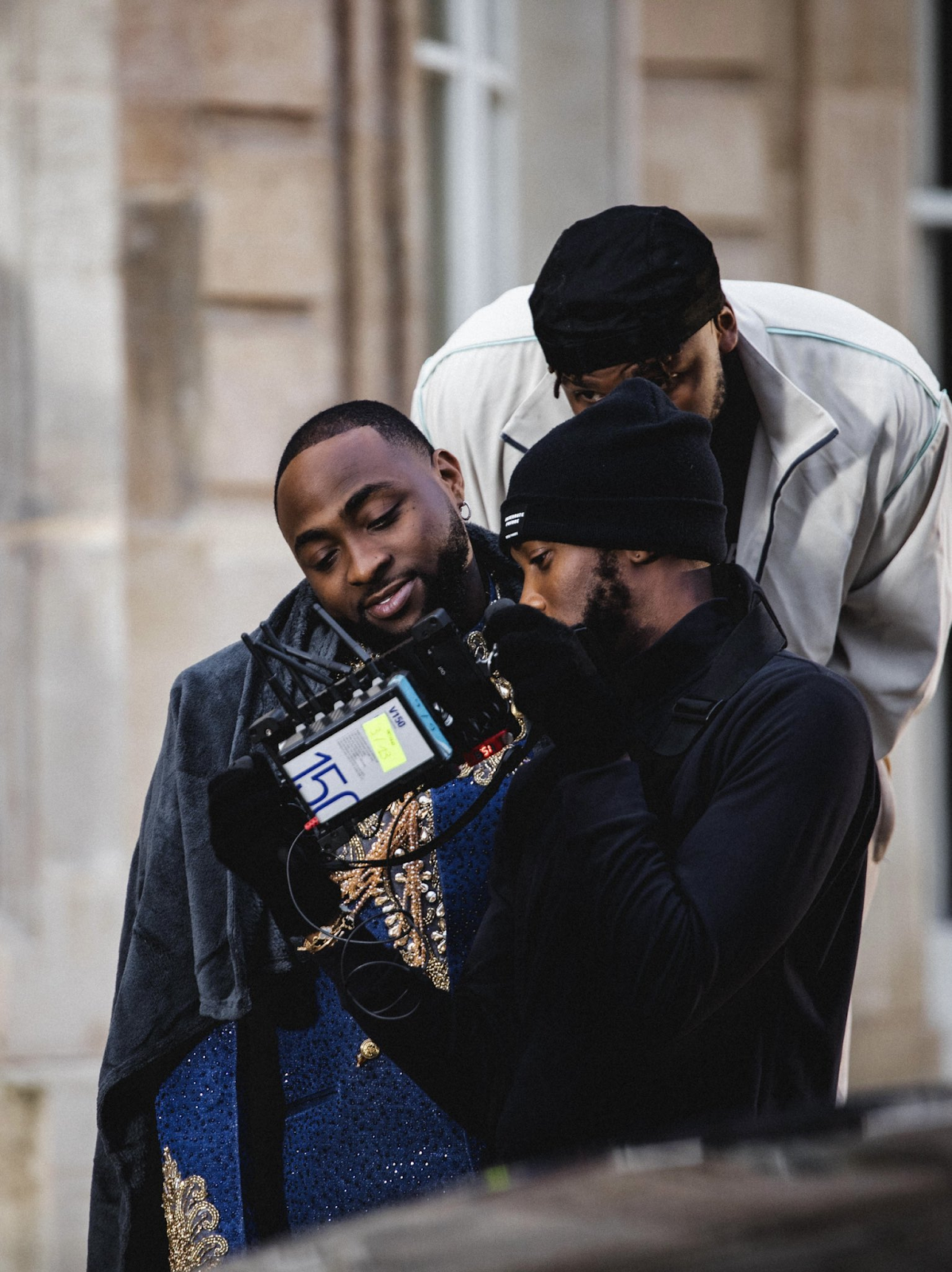
As Dammy Twitch grappled with the reality of losing his father, Davido stepped in with a gesture that left a lasting impact.
The filmmaker explained that they had become close after spending time together during an African tour. When Davido learned about the tragedy, he immediately tried to help. According to Dammy Twitch, the logistics surrounding the shoot made it difficult to leave immediately. There were around 100 models on set, and the production was taking place in a location that was not easily accessible.
“There were about 100 models on set and we were not even on land. So there’s a whole logistics to even leave.”
Davido nevertheless offered his support, revealing he would refund the production costs so Dammy Twitch could immediately return home.
“Even David had to take his own boat and come and meet me there because at the time we had gotten really close.”
“He had already even offered to pay for the video.”
Reflecting on that day years later, he admitted the emotional burden was overwhelming. Although he managed to finish the shoot, the impact of the loss caught up with him afterwards.
“That day was heavy.”
“I couldn’t shoot for a while. Like two, three months. It hit me. At the end of the day, it’s still my dad.”
Why He Believes He Was Born to Direct
Today, Dammy Twitch is entering a new phase of his career with the success of his debut feature film, Call of My Life. The film has drawn praise from viewers, with many noting that it does not feel like the work of a first-time feature director.
When Chude pointed out that reviewers consistently highlighted his confidence behind the camera, Dammy Twitch did not shy away from the compliment.
“It just really showed I was born for it.”
He acknowledged that filmmaking was significantly more demanding than many people realise.
“Features are insane. From the long days on set to long days in post-production, this is like a year-plus out of your life just gone.”
Interestingly, Call of My Life was never supposed to be his first feature. According to him, he had originally planned to debut with an action film and had already written it. Instead, he switched to a story that offered hope and healing. He said:
“It was meant to be action. We had written it…
It felt perfect. It felt like the world needed healing. It felt like people needed light.
People don’t want to go through heavy things all the time. Obviously there’s a market for that, but I felt like this is the period where people need light.”
The decision appears to have paid off. Within its first week, the film reportedly generated ₦128 million at the box office, reinforcing his belief that audiences will embrace emotionally resonant stories when they are given a compelling reason to visit the cinema.
Conclusion
Dammy Twitch’s story is often told through the lens of success—the awards, the celebrity collaborations, the Forbes recognition and now a successful feature-film debut. But his conversation with Chude revealed the less visible chapters behind those achievements.
It is a story that includes photographing burials to survive, enduring family doubts while pursuing an unconventional career, losing a father in the middle of a major production and leaning on the support of friends during moments of profound grief.
Years after those difficult seasons, he appears to have emerged with a clearer sense of purpose.