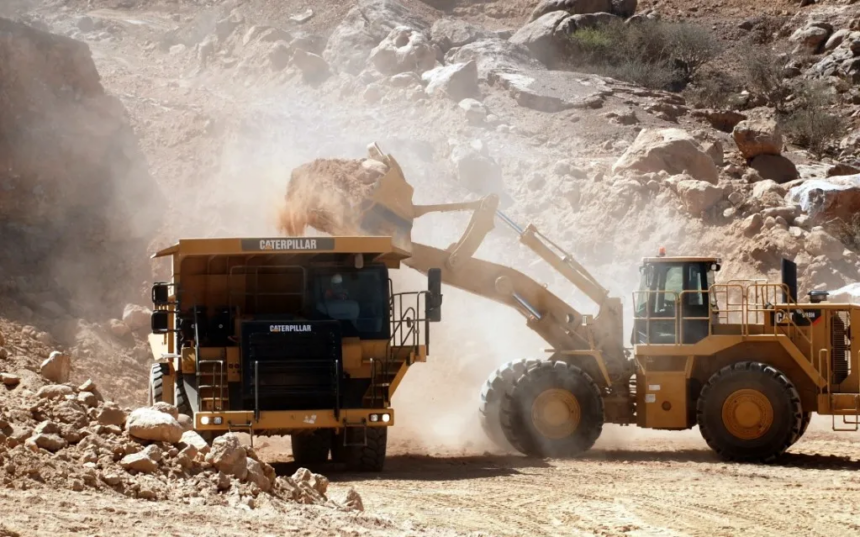
Nigeria has been an oil economy for decades. The same land that drips with crude also holds gold in its schist belts, lithium in its pegmatite formations, and some of the world’s most environmentally clean coal reserves. For most of that time, those minerals sat largely untouched. That is changing fast. A combination of government reform, surging global demand for battery materials, and rising gold prices has turned solid minerals into one of the more credible investment opportunities in Nigeria’s non-oil economy.
- Why Solid Minerals Are Getting Serious Attention Now
- Gold: The Accessible Entry Point for Nigerian Investors
- Lithium: The High-Stakes, High-Reward Opportunity
- Coal: A Overlooked Sector With Real Industrial Demand
- The Regulatory Pathway: Licences and How to Apply
- Real Risks That Deserve Honest Assessment
- How to Start: A Practical Entry Framework
- Conclusion: An Early-Mover Window With Structural Tailwinds
The numbers reflect the shift. Sector revenue climbed from roughly 6 billion naira in 2023 to over 38 billion naira in 2024. Licensing income alone jumped 107 percent in the same period. More than 1.2 billion dollars in lithium processing investments have been secured or commissioned since 2024. This is no longer a niche conversation for geologists.
How to Invest in Solid Minerals Nigeria: Gold, Lithium and Coal Mining


Investing in solid minerals in Nigeria requires understanding three things: where the deposits are, how the regulatory framework works, and which mineral class matches your capital capacity and risk appetite. This article covers all three, with specific attention to gold, lithium, and coal, the three minerals drawing the most investor attention right now.
Why Solid Minerals Are Getting Serious Attention Now
Nigeria holds over 44 commercially viable minerals spread across more than 500 locations in all 36 states. Despite that, the sector’s contribution to GDP has remained well below 1 percent for most of the last two decades. That gap between resource endowment and economic output is precisely what investors are now moving to close.
The Tinubu administration has made solid minerals one of its stated economic diversification priorities. The Ministry of Solid Minerals Development under Dr. Dele Alake has enforced stricter licensing, cracked down on raw ore exports without value addition, and secured over 800 million dollars in processing plant investments in 2024 alone. The government also allocated 1 trillion naira toward mineral exploration in 2025, a sharp departure from the country’s historically low exploration spend.
Internationally, demand for critical minerals, particularly lithium and rare earths needed for electric vehicle batteries and solar technology, has made Nigeria’s deposits strategically attractive to the US, UK, Saudi Arabia, the UAE, and China. Nigeria now chairs the African Mineral Strategy Group, which gives it a seat at the table in shaping how the continent positions its mineral wealth in global supply chains.
Gold: The Accessible Entry Point for Nigerian Investors
Gold is perhaps the most accessible solid mineral for Nigerian investors who want exposure to the sector without the scale required for industrial mining. Nigeria has both alluvial and primary gold deposits, concentrated in the schist belt running through states like Zamfara, Kebbi, Niger, Kaduna, and Osun.
Artisanal and small-scale mining already accounts for the bulk of current production, though most of it remains informal. The Presidential Artisanal Gold Mining Development Initiative (PAGMI), managed in part through the Nigeria Sovereign Investment Authority (NSIA), was designed to aggregate gold from small-scale miners under a national gold purchase programme, bringing structure to a historically unregulated space.


From an investment perspective, gold in Nigeria can be approached in several ways. Direct entry through a small-scale mining lease gives an investor extraction rights over an area up to 3 square kilometres for a five-year renewable term. You need to be a Nigerian citizen or a Nigeria-incorporated company, demonstrate proof of capital and technical competence, and submit a pre-feasibility study. The Mining Cadastre Office, operating under the Federal Ministry of Solid Minerals Development, handles all license applications through its online portal.
A lighter-touch option is setting up a Mineral Buying Centre, which allows you to purchase gold legally from licensed miners and trade it locally or internationally. This requires a Mineral Buying Centre Licence from the Mining Cadastre Office, registration with the Nigerian Export Promotion Council for export activities, and a Mineral Export Permit. This route suits investors who want supply chain exposure without the operational complexity of running a mine.
Gold prices globally have remained elevated, and Nigeria’s deposits are widely described as underexplored. Many of the gold belts in the country have only been worked at the surface by artisanal operators with limited equipment. That creates a real first-mover gap for licensed investors with better technology and access to capital.
Lithium: The High-Stakes, High-Reward Opportunity
Nigeria’s lithium deposits are primarily hosted in pegmatite rock formations concentrated in Nasarawa, Ekiti, Kwara, Kogi, and Plateau states. These reserves have been valued at over 34 billion dollars, making them one of the more significant discoveries in sub-Saharan Africa in recent years.
The government’s approach to lithium has been deliberately aggressive on value addition. After rejecting Tesla’s bid to mine the deposits in 2022, the Minerals Ministry made it policy that no lithium could be exported as raw ore without local processing. That stance has since attracted major Chinese investment. Avatar New Energy Materials commissioned Nigeria’s first integrated lithium processing plant in Nasarawa in May 2024, with a capacity of 4,000 tons daily and an expected 4,000 jobs. A 600 million dollar plant near the Kaduna-Niger border and a 200 million dollar refinery on the outskirts of Abuja were in advanced development stages as of mid-2025. Additionally, two Chinese-backed facilities from Jiuling Lithium Mining Company and Canmax Technologies, worth over 800 million dollars combined, were expected to open before end of 2025.
For private investors, entering Nigeria’s lithium space directly at the extraction level requires serious capital. A full Mining Lease, which covers areas up to 50 square kilometres and runs for 25 years with possible renewal, is the appropriate instrument for large-scale operations. Foreign investors are permitted under Nigerian law and are protected from nationalization of mining titles, with compensation provisions in place if public interest acquisition ever occurs.
The more realistic entry for most Nigerian investors is supply chain participation: logistics, processing support, equipment leasing, or providing services to the growing number of licensed lithium operations. The sector is expanding fast enough that demand for adjacent services is real. Investors with capital in the range of tens of millions of naira can find structured entry points through cooperative arrangements or joint ventures with existing licensees.
One note of caution: lithium is a globally competitive market and prices have fluctuated significantly. While the long-term outlook tied to electric vehicle adoption remains strong, short-term lithium carbonate and hydroxide prices can swing based on supply decisions by major producers in Australia and Chile. Investors should stress-test projections against price variability rather than using any single price assumption.
Coal: A Overlooked Sector With Real Industrial Demand
Coal is the mineral that most people think has no future, and in some respects they are right about the global trend. But Nigeria’s situation is more nuanced. The country has an electricity problem, a cement industry that consumes enormous energy, and industrial operations across sectors that regularly run on expensive diesel. Domestic Nigerian coal, if properly developed, has a ready market inside the country.
Nigeria holds approximately 3 billion tonnes of indicated coal reserves across 17 identified coalfields, with over 600 million tonnes of proven reserves. The major producing states are Enugu, Kogi, Benue, Nasarawa, and Plateau. Nigerian coal is predominantly bituminous grade with notably low sulphur and ash content, making it cleaner than many global alternatives and valued for blending by international buyers.
Enugu historically dominated the sector. The Enugu coalfield alone covers roughly 600 square kilometres with an estimated 350 million tonnes of proven reserves. The Ankpa field in Kogi state is potentially Nigeria’s largest untapped deposit, with geological surveys suggesting reserves exceeding 1 billion tonnes. The Lafia-Obi field spanning Benue and Nasarawa states is estimated at around 500 million tonnes and is known for high-quality coking coal suitable for steel production.
Current demand comes from cement manufacturers, brick kilns, bakeries, foundries, and industrial laundries across the country. None of these buyers want to import coal when domestic supply exists. The challenge has always been the infrastructure gap between the mines and the buyers. There are no functional coal rail networks, road infrastructure in mining areas is poor, and large-scale mechanized coal operations require investment well beyond what most local investors have attempted.
That said, small-scale coal operations serving local industrial buyers are viable with much lower capital requirements. Coal fetches a price tied to its calorific value and quality; pricing varies by location, season, and buyer category, so investors should obtain quotes directly from cement plants and industrial buyers in target states before committing capital. The government lists coal as one of seven priority minerals in its sector roadmap, which means licensing and infrastructure support, in principle, should be more accessible for coal investors than for lower-priority minerals.
The Regulatory Pathway: Licences and How to Apply
All solid mineral investment in Nigeria is governed by the Minerals and Mining Act of 2007 and its 2011 regulations. The Ministry of Solid Minerals Development and the Mining Cadastre Office are the two primary regulatory bodies investors interact with.
There are several licence types depending on your investment stage. A reconnaissance permit is the starting point for those who want to assess an area’s potential through surface-level sampling. It grants non-exclusive access and does not permit subsurface drilling. An exploration license grants the right to do detailed geological survey work over a defined area for up to three years with renewal options. Once you have confirmed commercial deposits, a small-scale mining lease covers areas up to 3 square kilometres for five years, while a full mining lease covers up to 50 square kilometres for 25 years.
All applications go through the Mining Cadastre Office portal at portal.minesandsteel.gov.ng. Applicants must be Nigerian citizens or Nigeria-incorporated companies. Foreign investors must therefore establish a Nigerian entity before applying. Successful applicants must also file annual compliance reports, pay prescribed royalties and fees, and rehabilitate mined land. Mineral traders and exporters additionally need a Mineral Buying Centre Licence and a Mineral Export Permit issued in coordination with the Nigerian Export Promotion Council and Nigeria Customs.
The government also offers a set of investment incentives. These include a 75 percent capital allowance on verified capital expenditure in the first year, 50 percent in subsequent years, exemption from import duties on approved mining equipment and machinery, and a 5 percent investment allowance. Approved expatriate personnel are exempt from expat quota restrictions, which matters for operations that require foreign technical specialists.
Real Risks That Deserve Honest Assessment
The opportunity is genuine. So are the risks. Any investor approaching this sector needs to account for them directly rather than around them.
Infrastructure is the most persistent challenge. Many of Nigeria’s mineral-rich areas, particularly coal and gold zones, are in regions with poor road networks and unreliable power supply. This drives up operational costs significantly, and those costs are not always reflected in projections built on headline mineral prices.
Security is a real consideration in parts of north-central Nigeria, including areas with significant mineral deposits. Parts of Zamfara state, a key gold belt, have had serious security challenges in recent years that disrupted mining activities and made enforcement of illegal mining difficult. Investors must assess each location independently rather than treating the sector as uniform.
Policy consistency remains a concern. The current reform trajectory is positive, but Nigeria’s regulatory environment has historically been vulnerable to shifts with changes in administration or ministerial priorities. Frequent policy changes and disputes between federal and state governments over resource control create uncertainty. This is not unique to mining, but it is a structural reality that investors in long-cycle assets like mines must plan around.
Finally, illegal mining persists despite the government deploying over 2,000 mining marshals and arresting hundreds of unlicensed operators. Artisanal illegal activity competes with licensed operators, creates price distortions in local markets, and complicates due diligence on mineral supply chains.
How to Start: A Practical Entry Framework
If you are a Nigerian investor exploring this space for the first time, the most practical starting point is not a mine. It is market research: identify which mineral in which state has a reliable local buyer, check whether that zone has active licensed miners already, and understand what the going rate is for that mineral from mine gate to end buyer.
From there, options open up. Mineral buying and trading requires far less capital than mining itself and gives you direct exposure to commodity price dynamics and supply chain realities before committing to a licence. If you want to move into extraction, start with the Mining Cadastre Office portal, verify the cadastral status of any target area (whether it is already under licence), and engage a licensed geologist before committing to an exploration licence. The Nigerian Institute of Mining and Geosciences can point you toward registered professionals.
Joint ventures with existing licence holders are another route, particularly in lithium where Chinese-backed operations have active sites but may need local logistics, labour, and administrative partners. Formalising such arrangements through a Nigerian company structure gives you regulatory standing and protects your interests under the Act.
Conclusion: An Early-Mover Window With Structural Tailwinds
Nigeria’s solid minerals sector is not a finished opportunity. It is an emerging one, which means the risk-reward profile still leans toward those willing to do the groundwork rather than those looking for a quick trade. The government’s reform momentum is the most consistent it has been in years. The global demand for lithium and gold is real. The domestic market for coal has never gone away.
The investors who will benefit most from this window are those who move with proper due diligence, legal compliance, and a realistic understanding of the operational environment. The licensing pathway exists. The geology is documented. What Nigeria’s solid minerals sector has needed, and is now beginning to attract, is structured capital with a long enough horizon to see it through.