Every year, Nigeria’s biggest music stars fill arenas on multiple continents, pocket six- and seven-figure sums per night, and return home with more money than most of their songs will ever generate on any streaming platform. The gap between what a concert pays and what Spotify deposits is not marginal. According to a 2024/2025 report produced jointly by RegalStone Capital and the National Council for Arts and Culture, live performances and touring account for between 65.7% and 74% of total artist earnings in the Nigerian music industry. Streaming, for all its scale, accounts for roughly 30%. Understanding why that gap exists reveals something important about how the global music economy works and how Nigeria fits into it.
- The Numbers That Define the Divide
- What Streaming Actually Pays in Nigeria
- What a Single Concert Pays
- The Role of International Audiences in Streaming Income
- Why Live Performance Scales Differently
- The Naira Factor and Why Tours Are Often Priced in Dollars
- What Streaming Does Do for Nigerian Artists
- Emerging Artists and the Touring Gap
- The Stage Pays What the Stream Cannot
Why Nigerian Musicians Make More Money from Tours Than Streaming Services

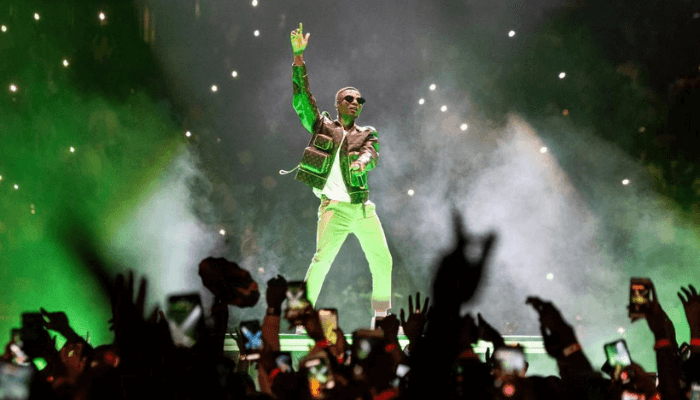
The business logic is straightforward once you follow the money. A single night on stage in London or New York can pay a top Nigerian musician more than an entire year of domestic streaming royalties. The reasons behind this have nothing to do with the artists’ reach or talent, and everything to do with the structural economics of streaming, the geography of paying subscribers, and the irreplaceable value of a live performance.
The Numbers That Define the Divide
Nigeria’s music industry was valued at approximately N901 billion (about $600 million) in 2024, according to the Basslines to Billions report. Within that figure, live events generated an estimated $395 million for artists. Digital streaming and virtual platforms produced roughly $181 million. Those two numbers, sitting side by side, tell the story better than any editorial argument could.
What makes the gap particularly striking is that streaming numbers for Nigerian artists have been growing aggressively. In 2024, Spotify reported that Nigerian artists earned over N58 billion in royalties, more than double the figure from 2023 and five times what it was in 2022. The platform recorded that Nigerian music consumption grew by 146% during the period. That growth is real. The problem is what each stream actually pays.
What Streaming Actually Pays in Nigeria
Spotify does not pay a flat global rate per stream. It operates on a territorial model, meaning payouts are tied directly to the subscription revenue generated in each country. Nigeria’s Spotify Premium plan costs approximately N1,300 per month, which converted to roughly $0.82 at mid-2025 exchange rates. In the United States, the same subscription costs $11.99.
The result of that pricing gap is stark. According to an analysis published by Business Day citing the manager of Grammy-winning artist Tems, one million streams in Nigeria generate approximately $300 in royalties. The same one million streams originating from Sweden are worth up to $10,000. That is a difference of more than 3,200%. Nigerian artists collected around $0.0003 per stream from domestic listeners, compared to rates of $0.008 to $0.01 per stream in high-income European markets.
The core problem is not that Nigerians are streaming less. In 2025, local consumption of Nigerian music on Spotify jumped 170% year-on-year. More Nigerians than ever are listening to more Nigerian music. But because those streams originate from a market with a low-cost subscription tier, the royalty pool they generate remains small. A TechCabal analysis noted that in 2025, despite 30.3 billion streams, Nigerian artists collectively earned N60 billion from Spotify, translating to roughly N1.98 per stream.
The broader currency context compounds the issue. In 2021, a N900 Spotify subscription was worth about $2.50. By 2025, N1,300 converted to only $0.82. The naira’s depreciation has progressively reduced the dollar value of every domestic stream, even as listener numbers climb. Nigerian fans are technically paying more in naira; the artists are earning less in dollars.
What a Single Concert Pays
Compare those streaming figures against what the same artists earn for a single live performance. According to Adeshola Adefuwa-Cole, CEO of Cole Management Services, speaking to Vanguard in 2023, Burna Boy charges $1 million or more per show for international bookings. Wizkid’s fee falls between $800,000 and $1 million. Davido’s rate sits at around $500,000 per performance. Those figures have been corroborated by multiple industry sources and widely cited across Nigerian entertainment media.
Even mid-tier artists command figures that would require extraordinary streaming volumes to match. Rema is reported to charge around $200,000 per international booking. Kizz Daniel commands approximately $200,000. Asake, following his global touring success, is said to charge between $100,000 and $150,000 per international show.
To put that in perspective using verified streaming data: at Nigeria’s domestic per-stream rate of $0.0003, an artist would need approximately 333 million streams from Nigerian listeners just to match a single $100,000 performance fee. At Burna Boy’s reported rate of $1 million per show, the equivalent in Nigerian domestic streams would be over 3 billion plays, which is more than 10% of every stream all Nigerian artists collectively generated on Spotify in all of 2025.
The Role of International Audiences in Streaming Income
It would be misleading to frame this purely as a domestic streaming problem, because the streaming conversation gets more complex once international listeners are factored in. Nigerian artists are not only popular at home. Spotify reported that Wizkid’s catalogue was streamed in 175 countries on a weekly basis. Afrobeats songs feature on more than 250 million playlists worldwide, according to platform data.
When fans in the United States, United Kingdom, or Germany stream a Nigerian artist, that artist earns at the higher territorial rate applicable to those markets. This is why global crossover success matters as much commercially as it does culturally. The artists who have built substantial international audiences, Burna Boy, Wizkid, Davido, Tems, Ayra Starr, are the same artists commanding the highest performance fees. Their streaming geography and their touring demand are connected.
But even for those artists, live performance remains the dominant income engine. Wizkid’s international Spotify streams generate meaningful royalties, but his More Love, Less Ego international tour reportedly grossed $42 million across 38 cities, per industry estimates. For that same revenue from streaming alone, at the global average Spotify rate of roughly $0.003 to $0.005 per stream, he would need to accumulate somewhere between 8 billion and 14 billion streams.
Why Live Performance Scales Differently
There is a structural reason tours produce income at a rate streaming cannot match, and it comes down to how each revenue model prices access.
A streaming platform charges subscribers a fixed monthly fee, then divides royalties across millions of artists based on stream share. An artist with 10 million fans in Nigeria competes for a slice of a relatively small national royalty pool. The payout per individual listener is tiny, and it stays tiny regardless of how devoted those listeners are.

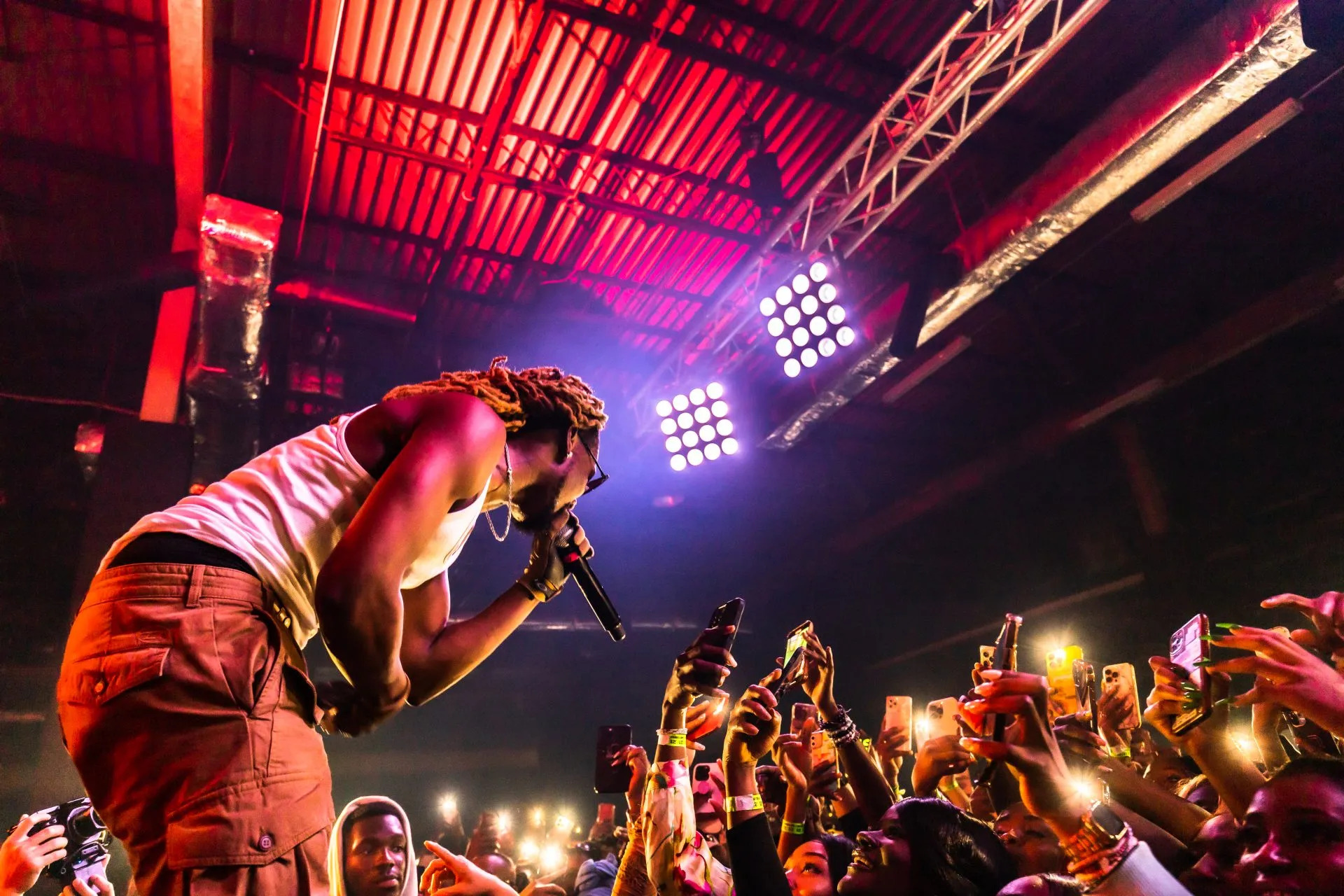
A concert ticket does the opposite. It prices full, direct access to the artist. A fan willing to pay N250,000 for a VIP ticket at Flytime Fest, or $424 for a seat at Davido’s U.S. arena tour, is paying an amount that reflects their personal valuation of that experience. There is no platform taking 70% of the transaction and redistributing it among thousands of other rights holders. The revenue flows more directly to the artist and their team.
Corporate event bookings operate similarly. Private shows for financial institutions, weddings, and state government events in Nigeria routinely attract fees in the hundreds of millions of naira for established acts. These bookings exist entirely outside the streaming economy.
The Naira Factor and Why Tours Are Often Priced in Dollars
One element of the touring economy that rarely gets discussed openly is the currency in which top Nigerian artists price their performances. According to Adefuwa-Cole of Cole Management Services, top Nigerian acts price their fees in dollars both domestically and internationally, citing the need to stay aligned with global market forces.
This is a rational hedge against currency risk. The naira has depreciated significantly over the past several years. An artist who locked in naira-denominated fees five years ago would be earning a fraction of the dollar equivalent today. By pricing in dollars, artists insulate their income from exchange rate volatility. Streaming platforms cannot offer that protection. Royalties are calculated in the local currency and converted at whatever rate the naira happens to be when the payout is processed.
Concert ticket prices in Nigeria have reflected this pressure. For Flytime Fest 2025, VIP standing tickets were priced at N250,000 for Davido’s show and N300,000 for Asake. In 2024, the equivalent category sold for N120,000 to N180,000. The increases track a combination of higher artist fees, rising production costs, and the naira’s declining value. The audience paying those prices includes high-income Nigerians, diaspora visitors, and corporate buyers, not the average domestic streaming listener.
What Streaming Does Do for Nigerian Artists
None of this means streaming is irrelevant to Nigerian musicians. It serves functions that have real commercial value, even when the direct royalty income is limited.
Streaming builds discoverability at scale. An Afrobeats song placed on a popular playlist in London or Toronto can introduce an artist to a market they have never physically reached. That exposure drives demand for live tickets in those same markets. Burna Boy’s European and North American touring circuit was built in part on the back of streaming popularity that preceded his physical presence in those cities.
Streaming data also functions as leverage in commercial negotiations. Record label deals, brand endorsements, and sync licensing agreements all reference streaming numbers as proof of audience size and engagement. An artist with 500 million annual streams commands a different rate card from advertisers and label partners than one with 50 million.
Publishing and neighbouring rights royalties, which are separate from the per-stream platform payouts, provide another layer of income for artists who own or have registered their compositions. These rights generate income from radio airplay, public performance, TV use, and sync deals. While Nigeria’s radio royalty framework has been criticised for lacking transparency, the international side of publishing income is increasingly meaningful for artists with global radio reach.
Emerging Artists and the Touring Gap
The touring premium is most accessible to artists who have already built large enough profiles to command international bookings. For emerging and mid-level Nigerian musicians, the streaming-versus-touring equation looks different.
A new artist earning N1.98 per Spotify stream in Nigeria needs millions of streams before streaming becomes a meaningful income source. They may not yet be at the level where promoters are booking them for international shows at five or six figures. For that tier of artist, the economics are harder. Corporate bookings and private events at lower fee levels form the bread and butter of their live income, while streaming functions primarily as promotional infrastructure rather than a revenue engine.
This is why industry observers consistently advise Nigerian artists to diversify early. The Basslines to Billions report highlights a music economy where live performance dominates for established acts, but the path to that stage requires sustained streaming visibility to generate the audience that makes touring viable.
The Stage Pays What the Stream Cannot
The income gap between touring and streaming in Nigerian music is not a mystery. It is the predictable outcome of a global streaming system that prices access according to local purchasing power, and a live performance market that prices access according to what audiences will pay for a singular, unrepeatable experience. In Nigeria, those two valuations diverge sharply.
For the country’s biggest artists, the solution has been to build audiences at home and revenue abroad, touring markets where concert tickets and streaming royalties both reflect wealthier economies. For the industry as a whole, the challenge is more structural: how to ensure that the enormous domestic appetite for Nigerian music, demonstrated by billions of streams, translates into proportionate financial returns for the artists who produce it. That question has no quick answer, but the live stage, for now, remains the most direct path to the kind of income Nigeria’s music has genuinely earned.