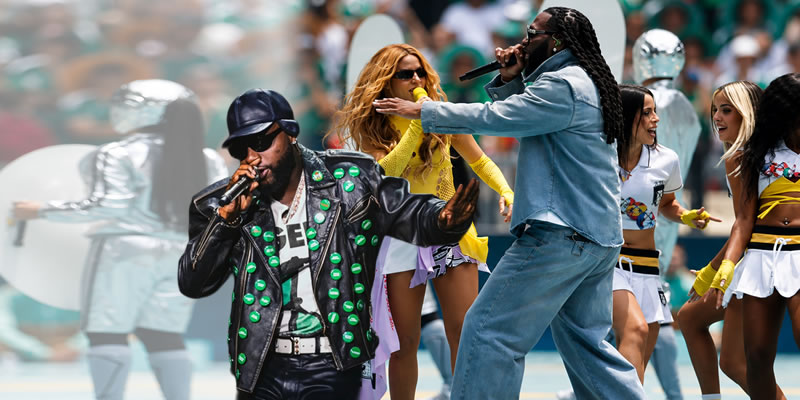
The road to the 2026 FIFA World Cup has produced memorable football stories across continents, but music has quietly carved out its own place in the global conversation. Long before every ball is kicked, the tournament’s entertainment programs have already created moments that have stretched far beyond stadium walls. From Mexico to the United States, artists have been handed platforms capable of reaching millions, turning performances into memories that often outlive the competition itself.
Among the names that captured attention during the early World Cup festivities were Nigeria’s two biggest Afrobeats exports, Davido and Burna Boy. Both artists found themselves attached to one of the world’s biggest sporting events, yet their appearances unfolded in completely different settings and for entirely different reasons. Their names dominated conversations, headlines, and social media discussions, leaving many eager to understand how each star became part of the World Cup experience.
While one performance became tied to the official identity of the tournament itself, another drew attention for reasons that went beyond music. One moment celebrated the sound chosen to accompany football’s grandest event, while another transformed a concert appearance into a message with deeper meaning. Those contrasting appearances eventually created two distinct narratives that highlighted the expanding influence of Nigerian music on the world stage.
June 2026 delivered separate chapters for both stars, with each event carrying its own significance. From the atmosphere inside Mexico City’s iconic football cathedral to the energy of Los Angeles’ entertainment scene, their paths crossed under the umbrella of FIFA’s celebrations without ever sharing the same stage. By the time audiences around the world absorbed the images and performances, it had become clear that the stories attached to both artists deserved a closer look.
Here is how Davido’s powerful statement in Los Angeles unfolded, how Burna Boy found himself at the center of the official World Cup opening ceremony, and why both moments represented different sides of Nigeria’s growing influence in global entertainment.
FIFA’s Global Entertainment Vision
FIFA approached the 2026 World Cup with ambitions that extended beyond football. Rather than limiting festivities to a single host nation, organizers designed an entertainment structure capable of reflecting the tournament’s unique status as the first World Cup jointly hosted by the United States, Mexico, and Canada. Music was positioned as a central element of that vision, creating opportunities for artists from various parts of the world to contribute to the spectacle.
Several events were planned to accompany the tournament’s buildup, ranging from concerts to official ceremonies. Each occasion carried a separate purpose, with some designed to generate excitement before the opening match while others formed part of the tournament’s main presentation. That strategy allowed FIFA to reach audiences across multiple cities while showcasing performers with global appeal.
For African music, particularly Afrobeats, the expanded structure opened doors for greater representation. Nigerian stars had spent years building audiences around the world, and the World Cup provided another stage capable of displaying that influence. By June 2026, both Davido and Burna Boy had become integral figures in the genre’s international growth, making their involvement unsurprising.
Their appearances, however, emerged through separate events with different levels of visibility and significance. Understanding that distinction became essential to appreciating why each moment resonated in its own way.
June 10, 2026 Brings Los Angeles Into Focus
Attention first turned toward Los Angeles on June 10, 2026, when the FIFA World Cup Countdown Concert took place at the Crypto.com Arena. The event served as a major celebration ahead of the tournament, bringing together international performers for a show intended to build anticipation before football officially took center stage.
Davido featured among the artists selected for the occasion. Already established as one of Africa’s most recognizable entertainers, the Nigerian singer entered the concert with a catalog of hits that had earned him fans across continents. His inclusion reflected FIFA’s desire to embrace sounds with global appeal while acknowledging Afrobeats’ growing prominence.
The atmosphere inside the arena reflected that ambition. Spectators gathered expecting a blend of music, excitement, and celebration tied to the upcoming tournament. Major international acts also participated, reinforcing the event’s status as one of the most prominent pre tournament activities associated with the World Cup.
Davido’s appearance quickly became one of the most discussed aspects of the concert. Yet the attention that followed would eventually extend beyond the songs he performed, creating one of the most memorable moments connected to the evening.
Davido Takes The Stage
Davido’s performance attracted considerable anticipation even before he appeared. Years of chart success and sold out shows had established him as one of the leading faces of Afrobeats, making his presence a major attraction for audiences in attendance and viewers following the event from around the world.
Energy inside the venue rose as the Nigerian star delivered his set. His stage presence and connection with audiences had become trademarks of his career, and the Los Angeles concert provided another opportunity to display those qualities before a global audience. Cameras captured the atmosphere while clips rapidly spread across social media platforms.
Music remained the central focus during the performance, but observers soon noticed an element that carried a message far beyond entertainment. Attention gradually moved toward what Davido had chosen to wear, transforming the evening into a moment that generated discussions outside football and music circles.
What initially appeared to be an ordinary wardrobe choice soon emerged as one of the most talked about details connected to the entire event.
The Message Written On The Jacket


Davido stepped onto the stage wearing a jacket carrying the words “Bring Them Home.” Rather than serving as a fashion statement, the message represented a call for attention toward kidnapped schoolchildren and teachers from Oyo State. Their names were reportedly included on the clothing, adding emotional weight to the statement.
Through that gesture, Davido used the visibility provided by FIFA’s platform to highlight a humanitarian concern affecting lives back home in Nigeria. The decision transformed what might have remained another performance into a moment with deeper meaning.
Images from the concert spread rapidly across digital platforms. Many who initially focused on the music soon found themselves discussing the message attached to the jacket. Coverage surrounding the performance gradually expanded beyond entertainment, with attention shifting toward the issue Davido sought to spotlight.
June 10, 2026 therefore became memorable for reasons that extended beyond songs and applause. A concert appearance evolved into an awareness campaign that connected a global audience to a Nigerian reality.
A Performance Beyond Music
Artists have frequently used major stages to express concerns about social issues, and Davido’s appearance joined that tradition. The World Cup countdown event offered enormous visibility, providing him with an opportunity to communicate a message that might otherwise struggle to reach such a wide audience.
Rather than limiting his role to entertainment, he attached a humanitarian dimension to the occasion. That decision distinguished his appearance from many previous concert performances associated with sporting events. Music remained important, but the symbolism attached to his wardrobe ensured that conversations extended far beyond melodies and choreography.
Coverage of the concert eventually reflected that transformation. Reports discussing Davido’s set often referenced the jacket alongside his performance, illustrating how strongly the message resonated. Audiences found themselves discussing not only the music but also the circumstances that inspired the statement.
By the conclusion of the evening, Davido had created one of the most widely discussed non football moments connected to FIFA’s pre tournament celebrations.
June 11, 2026 Opens Another Chapter
Just one day later, attention shifted from Los Angeles to Mexico City. June 11, 2026 marked the official opening ceremony of the FIFA World Cup, held at the historic Estadio Azteca before the tournament’s opening match between Mexico and South Africa.
Opening ceremonies traditionally occupy a special place in World Cup history. They introduce the competition to audiences around the world while setting the tone for the weeks ahead. Every performance attached to that stage becomes part of football’s collective memory, making participation a prestigious honor.
Burna Boy emerged as one of the headline performers selected for the occasion. His involvement reflected years of international success that had transformed him into one of Africa’s most influential artists. By the time he arrived in Mexico City, expectations surrounding his appearance were immense.
Unlike the countdown concert held in Los Angeles, this ceremony represented FIFA’s principal stage. Millions around the world tuned in as the tournament officially began.
Estadio Azteca’s Historic Stage
Estadio Azteca has long occupied a special place in football history. Located in Mexico City, the venue has hosted some of the sport’s most unforgettable moments, making it a fitting location for the opening ceremony of the 2026 tournament.
The stadium provided a grand setting capable of matching the scale of the World Cup itself. Spectators inside the arena joined millions watching around the globe as festivities unfolded before kickoff. Every segment carried symbolic importance, introducing the competition with color, music, and celebration.
Burna Boy’s appearance placed him at the center of that spectacle. His participation represented another milestone for African music’s presence on international stages. Years earlier, such visibility might have seemed unimaginable for Afrobeats artists. By June 2026, however, the genre had become impossible to ignore.
Performing at the opening ceremony meant becoming part of a tradition remembered long after trophies are lifted and champions are crowned.
Burna Boy’s “Dai Dai” Performance

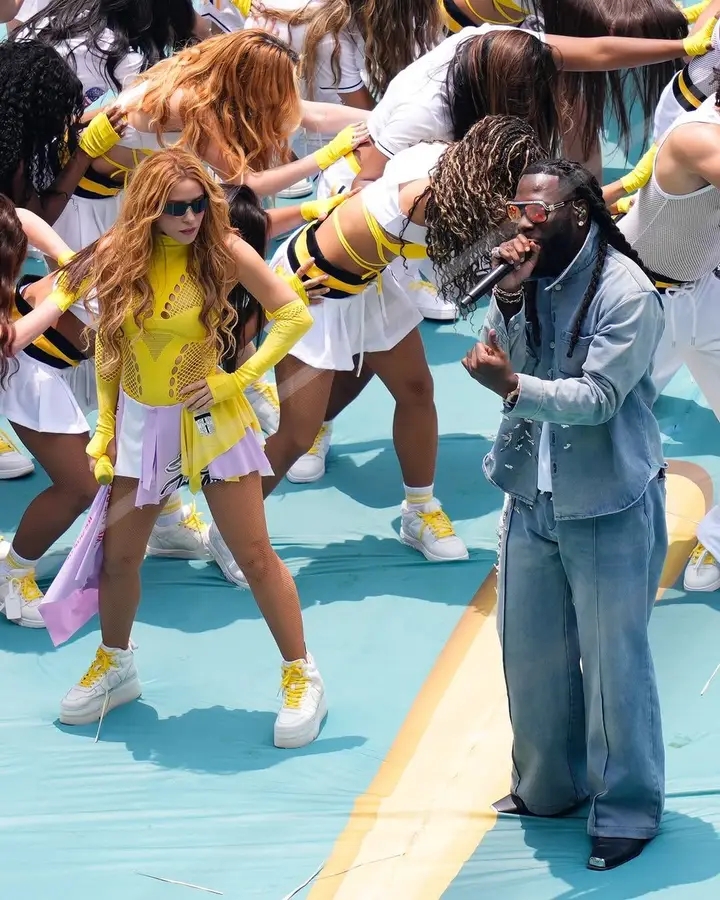
One of the highlights of the ceremony came through Burna Boy’s performance of the official World Cup anthem, “Dai Dai,” alongside Shakira. Their collaboration formed part of FIFA’s effort to create a soundtrack capable of representing the tournament’s global identity.
The performance unfolded before the opening match between Mexico and South Africa, ensuring maximum visibility. Audiences around the world watched as the ceremony introduced the competition with music designed to accompany the event throughout its duration.
Participating in the official anthem carried significance beyond a regular concert appearance. It connected Burna Boy directly to the World Cup’s identity, placing his voice alongside one of the tournament’s defining songs. Such opportunities remain rare and often become lasting chapters in artists’ careers.
June 11, 2026 therefore represented a landmark moment for Burna Boy, whose presence on the main stage highlighted the continuing rise of African music across the globe.
Different Stages, Different Stories
Although both artists became associated with FIFA’s celebrations, their appearances belonged to separate chapters within the broader entertainment rollout. Burna Boy occupied the tournament’s official opening ceremony, while Davido participated in the countdown concert that preceded the competition.
Those differences mattered because each event served a unique purpose. The opening ceremony functioned as the World Cup’s principal stage, while the Los Angeles concert acted as a global buildup event designed to generate excitement ahead of kickoff.
Their roles also reflected contrasting narratives. Burna Boy’s appearance centered on music itself, particularly through his involvement with the official anthem. Davido’s moment combined entertainment with humanitarian awareness, ensuring that discussions surrounding his performance extended beyond songs.
Neither story diminished the significance of the other. Rather, each highlighted different ways artists can leave impressions on audiences through major international platforms.
Nigerian Music’s Expanding Reach
The presence of Davido and Burna Boy within FIFA’s entertainment plans underscored how far Nigerian music has traveled. Afrobeats has steadily evolved from a regional genre into a worldwide cultural force, attracting audiences across Europe, North America, Asia, and Latin America.
Their involvement illustrated that evolution. Global sporting events increasingly recognize the power of music to unite audiences, and Nigerian artists now stand among those capable of delivering that connection. Years of dedication, collaborations, and international tours helped create the conditions that made such appearances possible.
For younger artists watching from home, those moments represented evidence that African sounds can occupy spaces once dominated by Western performers. The World Cup provided another example of how cultural boundaries continue to expand.
June 2026 therefore became more than a story about two superstars. It became another chapter in the broader story of African music’s global journey.
Closing Reflection
Two dates, two cities, two stages, yet one undeniable reality emerged from the early celebrations surrounding the 2026 FIFA World Cup. Nigerian music stood prominently within FIFA’s global entertainment plans, with Davido and Burna Boy each contributing moments that would attract worldwide attention.
Davido’s appearance at the Los Angeles countdown concert transformed a musical performance into a humanitarian statement through the message carried on his “Bring Them Home” jacket. Burna Boy’s presence inside Estadio Azteca placed him at the center of the tournament’s official opening ceremony, where “Dai Dai” introduced football’s biggest competition to audiences around the globe.
Their journeys unfolded differently, their purposes varied, and their stages carried separate levels of visibility. Yet both moments reflected the extraordinary reach of Afrobeats in 2026. From Los Angeles to Mexico City, Nigerian voices became part of the World Cup story, proving once again that music often finds powerful ways to leave its mark long before the final whistle sounds.