
Courtrooms often carry a silence that feels heavier than words, especially when a case involves serious allegations that touch on trust, authority, and the expectations placed on public figures. In Abuja, attention has remained fixed on the ongoing proceedings involving Amos Isah, a church leader standing trial before the FCT High Court over allegations connected to a 14 year old church member. The matter has moved through multiple stages, different court divisions, and several procedural turns that have kept it in public discussion while the legal process continues to unfold within strict judicial boundaries.
As the case progressed from its early filings in 2025 into a more complex courtroom structure in 2026, developments around arraignment, bail conditions, charge amendments, and judicial reassignment created a layered legal record that continues to shape how the trial is being examined. With a new judge taking over proceedings at the Gwarinpa Division of the FCT High Court, attention has shifted toward how the court is reviewing earlier filings, procedural decisions, and the expanded charges now standing against the defendant.
What emerges from the record is not a concluded judgment but a continuing judicial process marked by adjournments, evidential review, and strict adherence to due process. Each stage adds to a timeline that reflects how the Nigerian legal system manages sensitive criminal allegations involving minors, while maintaining the presumption of innocence until the court reaches a final decision.
Early Allegation Phase (May 2025)
The case file begins with events alleged to have occurred in May 2025 involving a minor connected to the church ministry led by Amos Isah, founder and General Overseer of the Prophetic Victory Voice of Fire Ministry International, in Gwagwalada, Federal Capital Territory. According to prosecution narrative presented during proceedings, the incident is said to have taken place inside a church facility, with claims that access was restricted within a room where the alleged offence occurred.
It was further stated within court submissions that after the alleged incident, financial assistance was provided for medication, a detail that formed part of the broader prosecution account. Additional claims referenced concerns around threats, which were included as part of the initial investigative framework presented before the court.
At this stage, the matter remained strictly within allegation territory, with no judicial determination made regarding the accuracy of any claim. The legal principle guiding proceedings remains clear, that every charge must be tested through evidence presented before a competent court.
Arrest And Initial Police Investigation – June 2025
Following a formal complaint lodged by the family of the minor, police authorities in Abuja initiated an investigation that led to the arrest of Amos Isah in June 2025. The arrest marked the beginning of formal criminal proceedings and triggered structured investigative steps by law enforcement agencies operating within the Federal Capital Territory.
During this phase, statements were recorded, preliminary evidence was gathered, and the matter was prepared for judicial presentation. The investigation stage is a critical part of criminal procedure, as it determines whether sufficient grounds exist for prosecution to proceed before a court of law.
By the end of June 2025, the case had moved from police custody processes into formal legal filing, setting the stage for arraignment in the High Court.
First Arraignment (July 2025)
In July 2025, the case was filed at the FCT High Court, Maitama Division, where Amos Isah was formally arraigned on an initial four count charge. During this court appearance, he entered a plea of not guilty to all counts presented against him.
The not guilty plea placed the burden of proof on the prosecution, requiring that evidence be presented and tested through cross examination and judicial review. The court subsequently granted bail, allowing the defendant temporary release under specified conditions while the trial process continued.
This stage marked the transition from investigation to full judicial proceedings, where both prosecution and defence began preparing structured arguments for trial.
Bail Period And Public Ministry Activity – August To September 2025
Following bail approval, Amos Isah was released after meeting court imposed conditions. Reports presented during proceedings indicated that health related considerations were referenced during bail application, which formed part of the defence argument for temporary release.
During this period, the defendant resumed public religious activities while the case remained active within the judicial system. The coexistence of ongoing ministry engagement and active court proceedings added visibility to the case, although legal restrictions required that the matter remain within courtroom jurisdiction for determination.
The bail phase continued under monitoring conditions set by the court, ensuring compliance with legal requirements while the trial awaited further hearings.
Trial Delays And Adjournments (Late 2025)
As the case progressed into late 2025, multiple adjournments were recorded. Court schedules, procedural considerations, and administrative timelines contributed to delays in hearing progression.
Adjournments are not uncommon within complex criminal trials, particularly where multiple witnesses, evidential reviews, and legal motions are involved. However, repeated delays contributed to extended public attention as the matter remained unresolved within the judicial system.
By the end of 2025, the case had slowed significantly in pace, awaiting further judicial direction and administrative adjustments within the court structure.
Case Transfer To New Division – March 2026
A significant procedural development occurred in March 2026 when the prosecution applied for reassignment of the case. The matter was subsequently transferred from the Maitama Division of the FCT High Court to the Gwarinpa Division.


Following this transfer, Justice Modupe Osho Adebiyi was assigned as the presiding judge. Judicial reassignment often occurs for administrative balance, case management efficiency, or procedural restructuring within court systems.
This transition marked a new phase in the proceedings, as the new court began reviewing the case file, prior rulings, and existing procedural records.
Case Reactivation And Court Appearance (April 2026)
By April 2026, the case was formally reactivated with a new hearing schedule set by the court. During one of the sittings, the defendant was noted absent, which led to further procedural adjustments and renewed scheduling.
The court subsequently directed steps toward re arraignment in line with updated procedural requirements. At this stage, the court’s focus remained on ensuring that the case structure aligned with the amended legal framework and charge updates.
The reactivation phase signaled that the trial was moving into a more defined judicial structure under the new court division.
Re Arraignment And Expanded Charges – May 2026
In May 2026, Amos Isah reappeared before the court and entered another plea of not guilty. At this stage, the charge sheet was expanded from an initial four counts to eight counts, reflecting additional allegations introduced within the prosecution framework.
The court ordered temporary remand pending further bail review, marking a more stringent phase in judicial oversight. The expansion of charges introduced a broader legal scope for examination, requiring more detailed evidential presentation during trial.
The eight charges presented included allegations such as defilement of a minor, sexual exploitation, coercion, intimidation, emotional abuse claims, gross indecency, child welfare exploitation, and abduction related accusations. One of the charges carries a potential life imprisonment penalty if proven within the legal process.
Bail Review And Stricter Conditions (May 2026)
Following the expanded charges, the court reviewed earlier bail conditions and imposed stricter requirements. These included a 50 million naira bail bond, two sureties with specific professional standing, tax clearance documentation, address verification of sureties, and surrender of international travel documents.
During part of this process, the defendant was briefly held at Kuje Correctional Centre before revised bail conditions were approved. The court later granted bail under tightened supervision terms, reflecting the seriousness of the amended charges and considerations around flight risk.
This stage highlighted the court’s effort to balance presumption of innocence with procedural safeguards in a sensitive criminal matter.
June 2026 Continuation And Judicial Review
By June 2026, the case had entered another scheduled continuation phase, with proceedings set for June 30 2026. At this point, the court indicated that further witness progression and evidential review would continue.
With the new judge now fully engaged in the case file, attention has focused on procedural continuity, charge structure review, and preparation for substantive hearing stages. The court’s role at this stage remains strictly procedural, ensuring that both prosecution and defence are given fair opportunity to present their cases.
Current Judicial Status
The case remains active within the FCT High Court system under the Gwarinpa Division. The defendant maintains a not guilty plea, and no conviction has been entered. Bail remains granted under strict conditions, and the amended eight count charge sheet continues to define the scope of proceedings.
The trial is still ongoing, with evidential examination yet to reach conclusion. The court has maintained structured oversight while ensuring compliance with legal process and procedural fairness.
Closing Overview

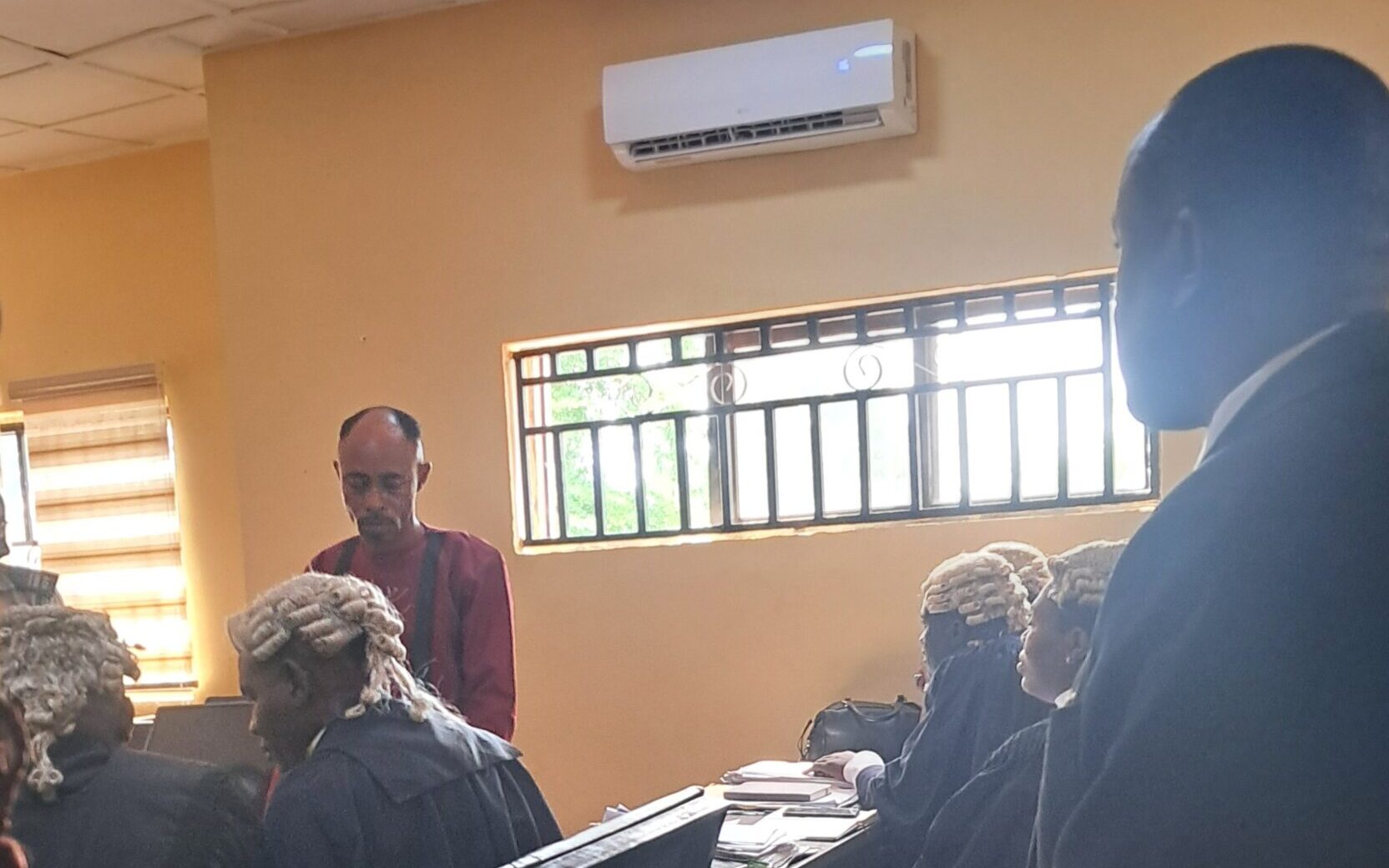
The proceedings involving Amos Isah remain within active judicial consideration, shaped by multiple procedural stages including arrest, arraignment, bail adjustments, charge expansion, and judicial reassignment. Each development reflects the structured nature of criminal trials within the Nigerian court system, where allegations are tested through evidence and legal argument before any conclusion is reached.
As the case continues under the supervision of the FCT High Court, attention remains focused on upcoming hearing dates and the next phase of evidential presentation scheduled for June 30, 2026.