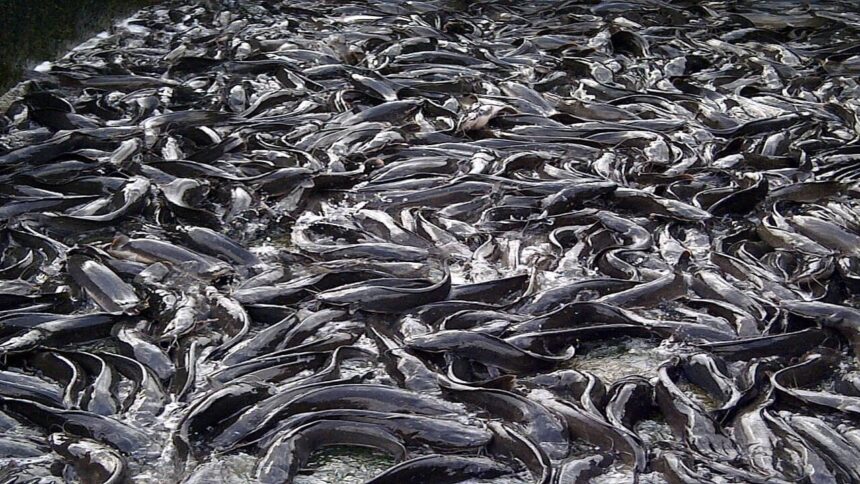
Nigeria produces just about 1.2 million metric tons of fish per year. The country needs 3.6 million. That gap of roughly 2.4 million metric tons gets filled, expensively, through imports worth over one billion US dollars annually. It is a structural problem the government has been talking about for years, and yet aquaculture, the most obvious fix, still runs on catfish almost exclusively. More than 80 percent of fish farmers in the country raise catfish. Tilapia, despite being one of the most farmed fish on the planet, barely registers in most production tallies.
- Why Fish Farming Still Makes Sense in 2026
- What Catfish Has That Tilapia Does Not
- The True Cost of Raising Catfish in Nigeria
- Tilapia’s Case: Cheaper to Raise, Harder to Sell
- The GIFT Tilapia Programme and What It Changes
- Feed Costs Are the Real Competition
- Which Fish Suits Your Farm Scale and Location
- Making the Final Call
This concentration is not entirely irrational. Catfish is embedded in Nigerian food culture in a way that tilapia simply is not. Point-and-kill spots, pepper soup joints, market women selling smoked fish to women cooking at home, restaurants across Lagos and Port Harcourt all of them trade in catfish. The demand is real, the supply chain is established, and farmers know the species well. But that familiarity has also produced a sector under sustained pressure. Feed costs have tripled in some cases over the past decade. Production costs now frequently exceed selling prices on smaller farms. Some catfish farmers in Abuja were, as recently as 2023, selling fish at a loss before stakeholders negotiated a price adjustment.
So the question of which species to raise in 2026 is not just about preference. It is a practical financial decision that turns on feed costs, market access, capital, location, and what kind of farm a person is actually running. Catfish and tilapia are not equally suited to every farmer, and neither is a clear winner in every context.
Best Fish to Farm in Nigeria: Catfish vs Tilapia

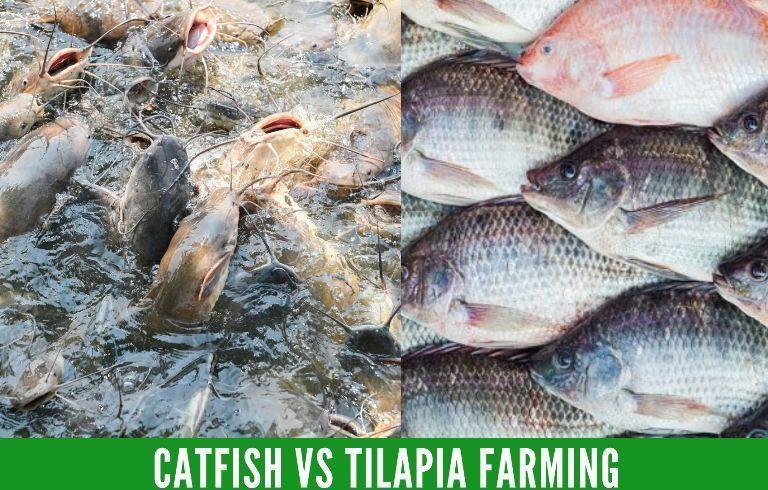
Choosing the best fish to farm in Nigeria right now requires looking at more than just which species is more popular. Production economics have shifted significantly. A new generation of genetically improved tilapia has entered the market. And catfish farming, for all its dominance, is showing cracks that experienced farmers cannot ignore. This comparison covers both species honestly, factoring in current market prices, feed costs, growth cycles, regional demand, and the structural changes coming through international aquaculture programmes already operating in the country.
Why Fish Farming Still Makes Sense in 2026
Fish accounts for roughly 40 percent of Nigeria’s protein intake. That figure alone tells you everything about the size of the market. The country’s population is growing, incomes in urban areas have pushed demand for affordable animal protein higher, and capture fisheries, the traditional fishing of natural water bodies, are already at maximum sustainable capacity. The only scalable path forward is aquaculture. The federal government has formally acknowledged this through the National Fisheries and Aquaculture Policy 2025-2029, which targets an increase in aquaculture production to 1.3 million metric tons and aims to reduce post-harvest losses by 50 percent over the policy period.
What this means for an individual farmer is straightforward: the market is not going to shrink. Nigeria will need more farmed fish, not less. The question is not whether to farm fish but which species fits the specific circumstances of a given farm, location, and budget. The government’s own policy acknowledges that the country’s heavy reliance on catfish farming alone is insufficient to close the supply gap. That is the honest starting point for any serious comparison between catfish and tilapia.
At the November 2024 Validation Workshop on Fisheries and Aquaculture Policy held in Abuja, Nigeria’s Minister of Marine and Blue Economy, Adegboyega Oyetola, stressed the government’s commitment to bridging fish supply gaps, noting that collaborative work with international bodies like WorldFish was aimed at positioning Nigeria’s aquaculture sector as a leading agricultural value chain. The investment signals are pointed in one direction, and small to medium-scale farmers who understand the changing landscape will be better positioned to take advantage of them.
What Catfish Has That Tilapia Does Not
The dominance of catfish in Nigerian aquaculture is not accidental. African catfish, specifically Clarias gariepinus and its hybrids, has properties that make it genuinely well-suited to local farming conditions. It tolerates dense stocking, handles variations in water quality that would kill other species, and grows fast. A well-managed catfish pond can produce market-ready fish averaging 1 to 1.5 kilograms within five to six months. The species is also hardy enough to survive in the basic concrete or tarpaulin pond setups that most small-scale farmers in Nigeria operate.
Beyond the biological advantages, catfish has a market that practically runs itself. Restaurant owners, roadside pepper soup vendors, market women, and households across southern Nigeria and in major urban centres have a consistent, year-round demand for it. The fish moves in multiple forms, live at point-and-kill establishments, fresh at markets, smoked for use in soups and stews, which gives farmers different price points and off-take channels to work with. A catfish farmer who builds relationships with a few anchor buyers rarely struggles to find who to sell to.
Research from Kaduna and Enugu states shows that catfish production has been profitable across different scales. A study covering catfish farmers in Enugu found that for every 1,000 fish raised to maturity, farmers averaged a gross margin of N652,700 with a return of N1.25 for every N1 invested under conditions at the time of the study. Those figures pre-date the inflation surge that has reshaped input costs since 2022, but they illustrate the underlying profitability potential of the species when managed competently. The core strength of catfish farming is that the demand side is almost never the problem. When a Nigerian catfish farmer struggles, it is almost always about costs, not about finding buyers.
There are three main catfish types Nigerian farmers work with. Clarias, the most common, tolerates poor water conditions and requires less fatty feed but is susceptible to disease if management slips. Hybrid catfish is more disease-resistant and better suited to environments with constant water flow, but takes longer, sometimes eight months or more, before it reaches harvestable size. Heterobranchus follows a similar pattern to hybrid. The choice between them affects the production cycle and the capital tied up in any given batch.
The True Cost of Raising Catfish in Nigeria
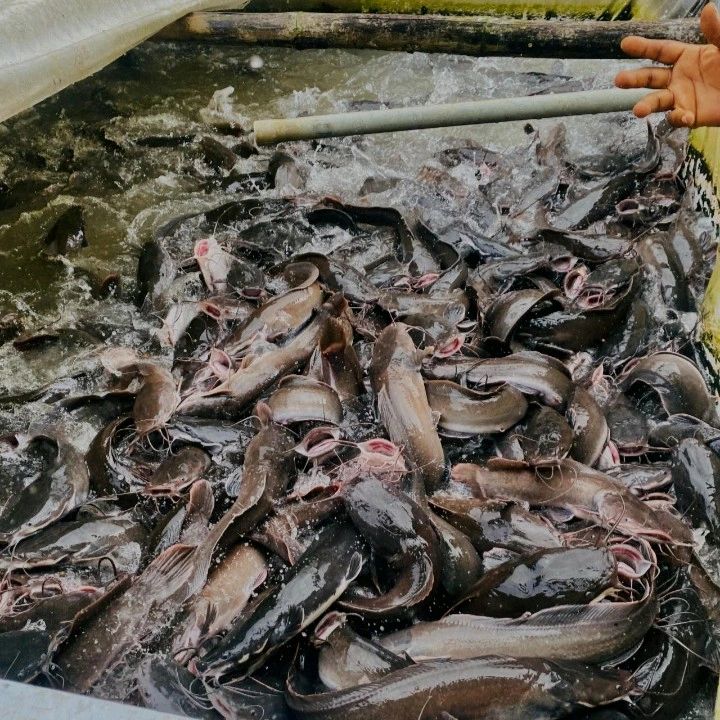

Feed is the central financial reality of catfish farming in Nigeria. It consumes between 60 and 70 percent of total production costs on a well-run farm. A 15-kilogram bag of local floating catfish feed was priced at approximately N9,000 as of early 2026, while imported feeds were running from N11,000 and above. Remi Ahmed, National President of the Tilapia and Aquaculture Developers Association of Nigeria (TADAN), captured the squeeze clearly in a 2022 interview with The Guardian Nigeria, noting that bags of fish feed that farmers were already finding expensive at N3,500 to N4,000 had risen to between N11,000 and N13,000, leading many farmers to exit the business entirely.
Catfish has a higher protein requirement than tilapia. It is a carnivorous species, and the feed formulations it needs to grow efficiently carry a higher cost than the plant-based feeds tilapia can thrive on. The Feed Conversion Ratio (FCR) for catfish, the amount of feed needed to produce one kilogram of fish weight, sits at around 1.2 to 1.3 in realistic Nigerian farm conditions, meaning a farmer needs roughly 1.3 kilograms of feed to produce 1 kilogram of fish. At current input prices, that arithmetic is tight. A farmer producing 1,000 catfish to a target weight of 1.5 kilograms per fish is looking at a substantial feed bill before any other cost is counted.
The positive side of the cost equation is on the selling price. Catfish retail in Lagos and Abuja currently in the range of NGN 2,647 to NGN 4,412 per kilogram, with larger, better-quality fish commanding prices toward the top of that range. Live catfish at point-and-kill spots sells at a premium. Smoked catfish carries additional processing value. For a farmer who manages feed costs carefully, sells direct rather than through middlemen, and produces consistently good-sized fish, catfish can still generate strong returns. The margin has narrowed since 2022, but it has not disappeared.
Akin Showemimo, known in Nigerian aquaculture circles as Akinfish and Director of Asher Royal Produce Limited in Ibadan, has documented one approach to reducing the feed cost burden. His farm uses black soldier fly as a supplementary feed for carnivorous fish. According to his published accounts, this supplementary use of insect-based protein reduced overall feed costs and increased farm profitability by 11 percent. It is not a solution for every farmer, but it points toward the kind of cost management innovation that catfish farming now requires to stay viable.
Tilapia’s Case: Cheaper to Raise, Harder to Sell
Tilapia is genuinely cheaper to raise than catfish in Nigeria. The species is omnivorous, meaning it can derive nutrition from plant-based sources, algae, and lower-protein feeds that cost significantly less than the high-protein formulations catfish requires. Its FCR of around 1:1.4, per WorldFish data, is better than catfish under comparable conditions, meaning less feed input per kilogram of fish produced. Tilapia is also more resistant to certain diseases, hardier in varying water conditions, and reproduces easily, which reduces dependence on fingerling suppliers.
Tilapia’s market sell price is lower than catfish across most of Nigeria. The retail range in Lagos and Abuja runs from approximately NGN 1,770 to NGN 2,656 per kilogram, roughly 30 to 40 percent less than catfish at comparable points. That price gap directly eats into the production cost advantage. A farmer whose feed bill is lower but whose selling price is also substantially lower has to do more with scale or operational efficiency to match catfish margins.
The demand pattern for tilapia in Nigeria is geographically uneven. It has a solid following in some northern and middle-belt states and among health-conscious urban consumers who view it as a leaner alternative. But in the southern states, where most of the country’s commercial fish farming is concentrated, catfish is culturally entrenched in ways that tilapia has not been able to displace. This does not mean tilapia cannot be sold in Lagos or Onitsha. It means a tilapia farmer there has to work harder to build market relationships and cannot simply rely on the ambient demand that catfish farmers enjoy.
For farmers who are cost-constrained, operating on limited capital, or starting out, tilapia’s lower entry requirements make it the more accessible option. The shorter production cycle of some tilapia strains also means capital turns over faster, which matters for farmers who cannot afford to have money tied up for six to eight months at a stretch. The challenge is less about the fish and more about whether the farmer has identified buyers before stocking.
The GIFT Tilapia Programme and What It Changes
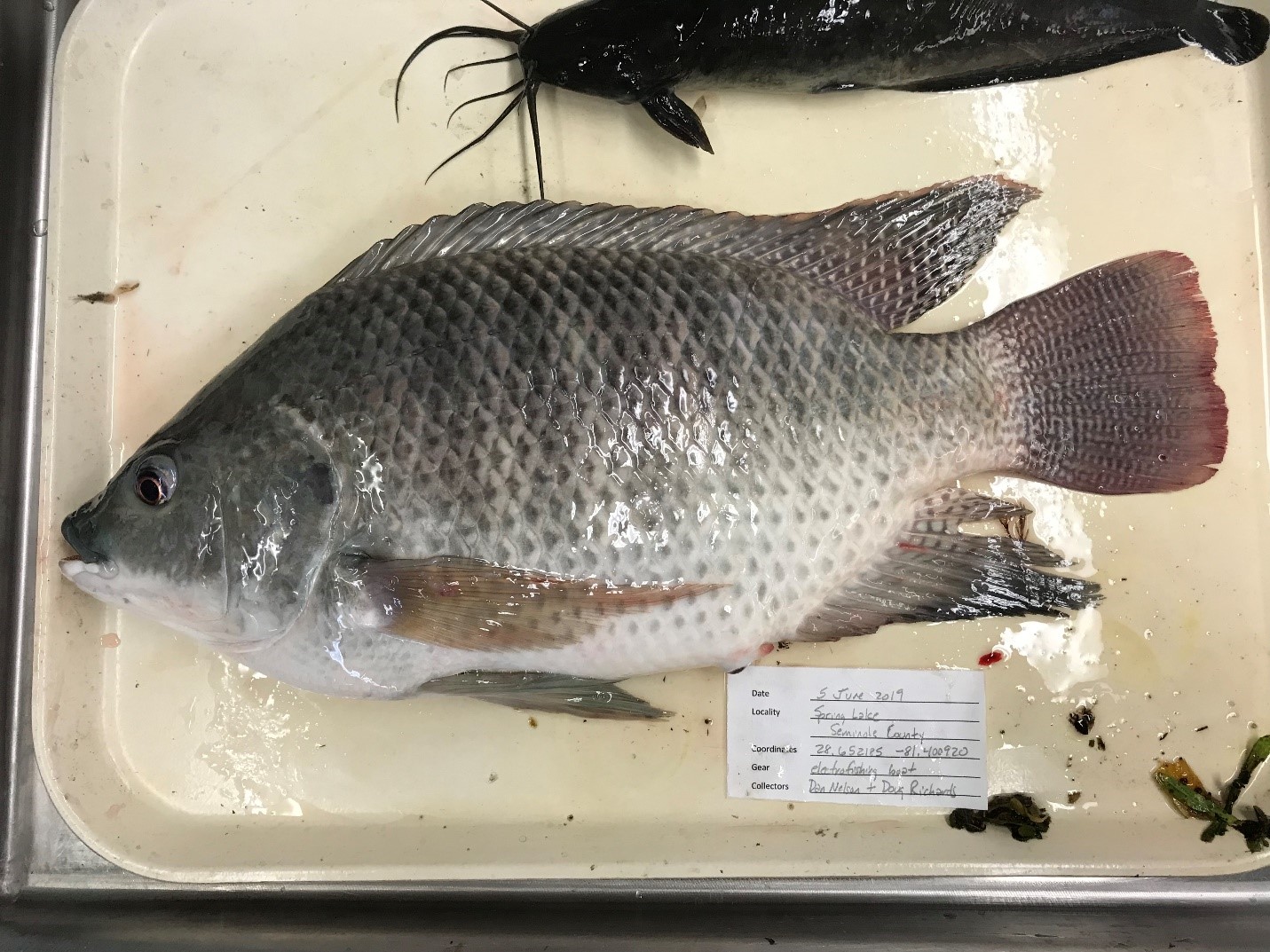

The most significant development in Nigerian tilapia farming over the past two years is the introduction of Genetically Improved Farmed Tilapia, known by its acronym GIFT. WorldFish, in partnership with Premium Aquaculture Limited (PAL), a subsidiary of Stallion Group and the largest tilapia producer in Nigeria, transferred the 17th generation of GIFT fry from WorldFish’s headquarters in Malaysia to Nigeria beginning in 2022. PAL has since established a central breeding population with satellite hatcheries now operating across Delta, Ogun, and Nasarawa states, and the programme has expanded further into Bayelsa and Kwara states.
GIFT is a selectively bred strain of Nile tilapia developed by WorldFish and partners in 1988. It has now been disseminated to 16 countries. Its key advantages over conventionally bred tilapia are a faster growth rate, better disease resistance, and greater adaptability to varying farm conditions. In Nigerian pilot programmes, farmers growing GIFT tilapia reported fish reaching an average weight of 600 grams within six months. One farmer in the Asaba cluster documented an average weight of 1.3 kilograms at five months with hotel and barbecue spot buyers purchasing 30-kilogram batches of table-sized tilapia with clear interest.
Sunil Siriwardena, Officer-in-Charge of WorldFish Nigeria, stated that at hatcheries where GIFT was being raised, the fish was doing what the strain was bred to do, resisting disease and reaching harvestable size quickly, and that farmer response had been overwhelmingly positive. The programme uses a traceable decentralisation model that maintains broodstock quality and genetic lineage from the central breeding centre down to satellite hatcheries, which matters because one of the long-standing problems with Nigerian tilapia production has been access to quality fingerlings.
The GIFT programme does not immediately resolve tilapia’s market demand problem in Nigeria. But it addresses the supply-side weaknesses that have historically made tilapia farming a risky bet. If fingerling quality improves and growth performance becomes more consistent, the economics of tilapia farming shift. The open question for 2026 is whether demand will follow supply as more high-quality tilapia enters the market, particularly if pricing remains below catfish and hotel buyers in urban centres start incorporating it more deliberately into their purchasing.
Feed Costs Are the Real Competition
Whether a farmer is raising catfish or tilapia, feed is the primary variable that determines whether the business is profitable. Fish feed prices in Nigeria have risen over 1,000 percent since around 2010, according to reporting by SeafoodSource citing aquaculture industry data. That is not a typo. A sector where the dominant input cost has multiplied tenfold in a little over a decade is structurally difficult, regardless of what species is in the pond.
Catfish requires high-protein feed, meaning 35 to 45 percent crude protein content depending on the growth stage, which translates to higher feed costs per kilogram of weight gain. Tilapia’s lower protein requirement, typically 27 to 35 percent for grow-out phases, means it works well with cheaper formulations. This difference becomes meaningful at scale. A farmer running 3,000 tilapia through a production cycle will spend significantly less on feed than a farmer running 3,000 catfish, even if the growth periods are similar.
For catfish farmers trying to manage costs, the practical options are: producing or sourcing lower-cost local feeds while monitoring growth performance carefully, supplementing with alternative protein sources like black soldier fly where feasible, reducing mortality through better water quality management to improve the effective FCR, and stocking at densities that the farm infrastructure can genuinely support without stress-induced disease outbreaks. For tilapia farmers, the lower baseline feed cost creates more room for error, but the lower selling price means volume matters more than it does with catfish.
One figure worth holding onto: at a year-round average selling price of around N3,000 per kilogram for catfish (a working estimate from Nigerian practitioners in early 2026), a farmer whose all-in cost of producing a kilogram of fish exceeds that figure is losing money with every harvest. Feed efficiency, not stocking numbers, is what separates profitable farms from unprofitable ones.
Which Fish Suits Your Farm Scale and Location
Geography matters more in this comparison than most guides acknowledge. A farmer in Delta State now has access to GIFT tilapia fingerlings from the satellite hatcheries operating there and a small but growing local market that the Asaba cluster has started developing. A farmer in Lagos, Ogun, or Oyo is operating in a catfish-dominated commercial environment where the off-take infrastructure for catfish is deeply established. A farmer in Kano or Kaduna is working in a market where tilapia historically has stronger regional demand and where catfish supply chains from the south are less entrenched.
Scale also cuts differently for each species. Catfish is better suited to larger-scale production where the per-unit feed cost can be managed through bulk purchasing, the farmer has the capital to absorb a production cycle of five to six months without income, and has established buyers who take volume. The return on investment is higher when catfish farming is done well, but the capital and management demands are also higher. Small farmers with limited working capital and limited market relationships are the ones most likely to struggle with catfish when feed prices spike.
Tilapia is a better fit for farmers who are entering fish farming for the first time, have limited capital, are operating in northern or middle-belt states where tilapia demand is higher, or are specifically targeting health-conscious urban consumer segments where tilapia’s leaner profile is a selling point. It is also worth considering for farmers who want shorter production cycles and faster capital turnover. The GIFT programme in particular has lowered the risk of tilapia farming by improving fingerling quality, one of the variables that used to make Nigerian tilapia results inconsistent.
Polyculture, raising both species in separate ponds on the same farm, is another path. Akin Showemimo’s operation in Ibadan does exactly this, running earthen ponds for both catfish and tilapia while also raising heterotis and common carp. That model spreads market risk and creates operational flexibility, but it demands more management capacity than a single-species farm.
Making the Final Call
There is no single correct answer here, but there is a framework for reaching one. Catfish remains the stronger choice for farmers with established capital, proximity to the demand centres of Lagos, Abuja, and Port Harcourt, and the management skills to control feed costs without letting the production economics slide. The market depth for catfish in Nigeria is real and the premium it commands per kilogram over tilapia is substantial enough that a well-run catfish farm can absorb more input cost pressure than a comparable tilapia operation.
Tilapia is the smarter entry point for first-time farmers, for those with tighter capital, and for farmers in northern and middle-belt states where the demand pattern fits. The introduction of GIFT tilapia through the WorldFish-PAL programme has materially improved the growth performance and fingerling quality that Nigerian tilapia farmers can access, particularly in Delta, Ogun, Nasarawa, Bayelsa, and Kwara states where the satellite hatcheries are now operating. Farmers in those states who can access certified GIFT fingerlings are working with a different product than what Nigerian tilapia farming historically produced.
What neither species can save a farmer from is poor planning on the sell side. Feed costs have become brutal for both. Any farmer who stocks fish before confirming who will buy them, at what price, and in what volume is farming for someone else’s benefit. The supply gap in Nigeria is real, the demand is there, but so is competition. Building buyer relationships before the first fingerling enters the pond is no longer optional; it is what separates farmers who scale from those who exit after their first or second cycle.
Nigeria’s aquaculture sector is at a genuine inflection point. The government has a policy framework, international organisations are investing in improved genetics and hatchery infrastructure, and the supply deficit is not going away. The farmer who understands both catfish and tilapia clearly, matches the right species to their specific context, and manages feed costs with discipline will find that fish farming in 2026 still makes very good business sense.