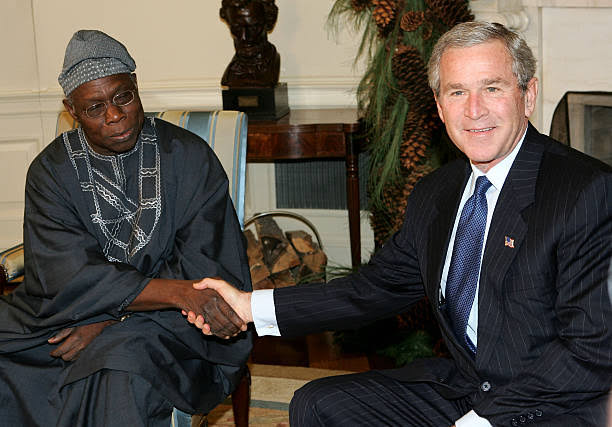
On July 12, 2003, United States President George W. Bush and Nigerian President Olusegun Obasanjo agreed on an exile pathway for Liberian leader, Charles Taylor.
It was learned that the closed-door meeting, held in the Nigerian capital, focused heavily on stabilizing the war-torn West African region.
According to reports, Taylor was asked to step down from power and be transited into political asylum on Nigerian soil—a move widely seen as crucial to halting the brutal civil war in Liberia.
While specific technicalities of the asylum agreement remain closely guarded, President Obasanjo has previously insisted that taking in the indicted Liberian leader is a necessary burden for regional peace, provided Taylor completely detaches himself from Liberia’s internal politics.
Addressing reporters following his session with Obasanjo, Bush pivotally linked African regional stability to global security.
“We will not allow terrorists to find a home in Africa,” Bush declared, striking a firm tone at the conclusion of his tour. “It will not be permitted for terrorists to use this continent as a base from which to threaten the world.”
While Washington has repeatedly demanded that Taylor face war crimes charges at the UN-backed tribunal in Sierra Leone, President Bush signaled tentative support for Nigeria’s diplomatic intervention, viewing it as a necessary evil to ensure a peaceful transition of power.
“We recognize the critical role Nigeria is playing to bring stability to Liberia,” Bush told reporters at a joint press conference.