Every dry season, Nigeria braces. Between November and April, when the harmattan dries out the land and rodents are driven from scorched bush into compounds and kitchens, Lassa fever returns. It has done so, with increasing ferocity, for decades. But the 2026 outbreak has raised the alarm in ways that even veteran public health officials find difficult to dismiss. By the end of the ninth epidemiological week of 2026, the Nigeria Centre for Disease Control and Prevention (NCDC) had recorded 109 confirmed deaths and a case fatality rate of 23.2 percent, significantly higher than the 18.7 percent recorded during the same period in 2025.
- How Lassa Fever Spreads: The Rat, the Kitchen, and the Gap Between
- What the Body Goes Through: Symptoms From the Mild to the Fatal
- The Numbers Behind the 2026 Outbreak of Lassa Fever in Nigeria
- Why Nigerians Die from a Treatable Disease
- The Healthcare Worker Problem
- How Doctors Diagnose and Treat Lassa Fever in Nigeria
- What Every Nigerian Household Can Do Right Now
- The Season Is Still Active: Why This Is Not the Time to Look Away
By late March 2026, that death toll had climbed to 146, with the outbreak spreading across 21 states and 82 local government areas. Thirty-eight healthcare workers had been infected. Doctors and nurses were falling ill inside the very facilities that were supposed to be treating the sick. The NCDC’s toll-free line, 6232, was ringing. The emergency operations centre was activated. But the disease kept spreading, not because treatment is unavailable or the pathogen is new, but because the gaps between knowledge, action, and access remain stubbornly wide.
Understanding Lassa fever, what causes it, how it moves through communities, what the symptoms look like, and what a Nigerian family can do to protect itself, is no longer an academic exercise. In 2026, it is a matter of life and death.
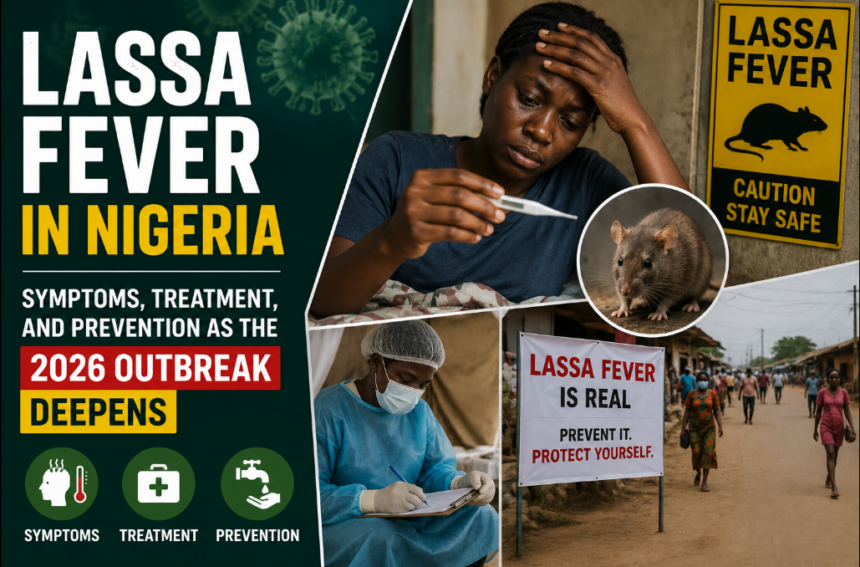
Lassa Fever in Nigeria: Symptoms, Treatment, and Prevention

Lassa fever in Nigeria is both a familiar and underestimated crisis: a disease that follows predictable seasonal patterns in well-documented states, yet continues to kill at alarming rates because late diagnosis, inadequate state-level response funding, and deeply embedded domestic habits keep working in its favour. This article draws on verified NCDC situation reports, expert advisories, and epidemiological data to explain how the virus spreads, what it does to the body, why the 2026 season has been particularly dangerous, and what every Nigerian household needs to know right now.
How Lassa Fever Spreads: The Rat, the Kitchen, and the Gap Between
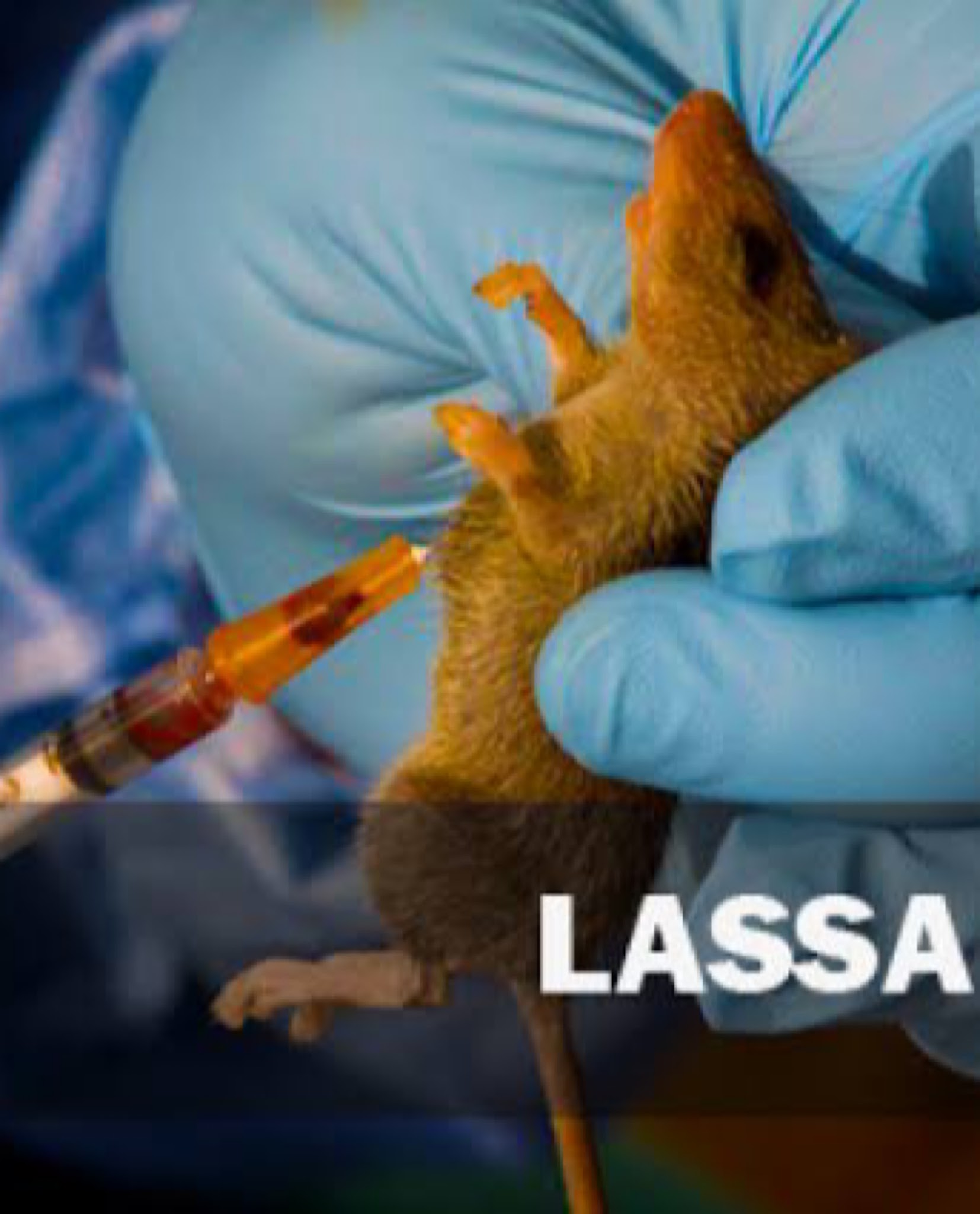
Lassa fever is a zoonotic illness, meaning it originates in animals and crosses into humans. The primary carrier is the Mastomys natalensis, commonly known as the multimammate rat, one of the most abundant rodents in sub-Saharan Africa. Unlike many animals that become visibly ill when infected, Mastomys rats carry the Lassa virus without developing any symptoms. They shed it continuously through their urine, faeces, and saliva, contaminating surfaces, food, and water sources wherever they nest.
In rural Nigeria, and in the densely populated compounds and unfinished buildings of peri-urban areas, these rats are not strangers. They live in fields, grain stores, food markets, and household walls. The NCDC has consistently pointed out that staple foods stored in open containers or dried on bare ground are prime vehicles for contamination. Garri left uncovered overnight, rice poured into open sacks, maize spread on roadside tarps to dry in the sun: each of these common practices creates an entry point for the virus.
Transmission to humans occurs primarily when a person comes into contact with food or household items contaminated with rat excreta, by eating contaminated food, touching a contaminated surface and then touching the mouth, nose, or eyes, or inhaling fine aerosol particles carrying the virus. The World Health Organisation confirms that inhalation, while less common than direct contact, is a documented route. Humans can also transmit the virus to other humans through direct contact with blood, urine, or other bodily fluids of an infected person, which is precisely why healthcare settings with weak infection prevention practices have become amplification zones during outbreaks.
The incubation period, the time between exposure and the first symptoms, ranges from six to twenty-one days. This window creates a particular problem: a person can feel well and go about normal life, visit relatives, sit in crowded buses, attend markets, all while the virus silently establishes itself. By the time symptoms emerge, contact chains can already be long. Bush burning and deforestation, both common in the affected northern, south-western, and south-eastern states, push Mastomys colonies out of their natural habitats and directly into human spaces, compounding the baseline risk.
What the Body Goes Through: Symptoms From the Mild to the Fatal
One of the most dangerous features of Lassa fever is how ordinary it begins. About eighty percent of those infected develop no symptoms or only mild ones that are easily dismissed: low-grade fever, general weakness, a headache, maybe a sore throat or slight cough. In a country where malaria is so prevalent that most Nigerians associate fever with it automatically, these early symptoms rarely trigger alarm. Many patients reach for paracetamol, chloroquine, or artemisinin combinations and wait for improvement that, in the case of Lassa fever, will not come.
In the twenty percent of cases that progress to severe illness, the clinical picture changes dramatically within a week. Persistent high fever that does not respond to antimalarial treatment is a critical warning sign. This may be accompanied by vomiting, diarrhoea, severe headache, abdominal pain, chest pain, and significant muscle weakness. As the virus attacks the liver, spleen, and kidneys, more alarming complications appear: facial swelling, fluid accumulation in the lung cavity, bleeding from the mouth, nose, eyes, or gastrointestinal tract. Encephalopathy, swelling and dysfunction of the brain, can cause confusion, tremors, and seizures. In fatal cases, death typically occurs within fourteen days of symptom onset, often from multi-organ failure or haemorrhagic shock.
Pregnant women face a particularly severe risk. Studies have found that fetal loss occurs in roughly ninety percent of Lassa fever cases in pregnant women, especially those in their third trimester. The virus appears to attack the placenta directly, and the physiological demands of pregnancy significantly reduce the body’s ability to fight back. Maternal death rates are also substantially elevated in this group, making Lassa fever one of the most dangerous infectious threats to pregnant women in the endemic belt.
Survivors are not always free of consequences. Sensorineural deafness, hearing loss caused by damage to the inner ear, is one of the most well-documented long-term effects of Lassa fever, affecting roughly one in four survivors. In about half of those cases, the hearing loss improves over several months. For the other half, it is permanent. This sequela rarely features prominently in public communication about the disease, but for communities where multiple family members have recovered from Lassa fever over the years, cumulative hearing loss has become a quiet, ongoing cost.
The Numbers Behind the 2026 Outbreak of Lassa Fever in Nigeria
The 2026 transmission season began in January with case counts that, while lower in total volume than the same period in 2025, quickly became alarming for a different reason: the proportion of those infected who were dying. By Epidemiological Week 6, running from 2 to 8 February 2026, the NCDC recorded 74 newly confirmed cases in a single week, up sharply from 44 the previous week, with a case fatality rate of 20.3 percent for that week alone. By Week 9, cumulative deaths had reached 109, with the CFR at 23.2 percent, compared to 18.7 percent for the same period in 2025.
The geography of the outbreak is concentrated but not contained. Five states, Bauchi, Ondo, Taraba, Benue, and Edo, account for 85 to 86 percent of all confirmed cases. Within those states, Bauchi alone drives 28 percent of the national total, followed by Ondo at 21 percent, Taraba at 19 percent, Benue at 9 percent, and Edo at 8 percent. The remaining 14 to 15 percent of cases are spread across 15 other states. As of Epidemiological Week 10 (covering 2 to 8 March 2026), 20 states and 78 local government areas had reported at least one confirmed case. By late March, that figure had expanded to 21 states and 82 LGAs.
The demographic profile is specific. The age group most affected in the 2026 season is 21 to 30 years, with cases recorded across an age range of one to seventy-four years. The median age of confirmed cases is 29 years. The NCDC recorded a male-to-female ratio of roughly 1 to 0.7 among confirmed cases, meaning more men than women are being confirmed, though the gap is not dramatic. What these numbers suggest is that the disease is hitting people in their economically active years, not the very young or the elderly, but working-age Nigerians whose illness and death have compounding effects on households and communities.
For context against the broader historical picture: in 2019, Nigeria recorded 810 confirmed cases with 167 deaths, representing a CFR of 23.3 percent. The 2018 outbreak was the largest recorded to that point, with 423 confirmed cases and 106 deaths. What distinguishes 2026 from some of those years is not the raw volume of confirmed cases, which remains lower than 2025 figures for the same period, but the elevated fatality rate, the growing footprint across states, and the rising infection toll among healthcare workers, which signals that the disease is now exploiting the very infrastructure built to contain it.
Why Nigerians Die from a Treatable Disease
Lassa fever is not untreatable. This is a point the NCDC has made repeatedly, and it is medically accurate. When ribavirin, the antiviral drug that constitutes the primary pharmacological response to confirmed Lassa fever, is administered within the first six days of illness onset, it significantly improves the patient’s chances of survival. The NCDC’s national guidelines specify an intravenous ribavirin protocol administered over a ten-day period for confirmed cases. The problem is not the existence of a treatment. The problem is the distance, physical and economic, between sick Nigerians and that treatment.
A ribavirin course for Lassa fever costs between $500 and $800 internationally, a figure that, when converted into naira at current rates, places it decisively out of reach for most Nigerian households. While the federal government has at various points ensured free ribavirin distribution through the NCDC’s emergency stockpile system, that supply is not always consistent at the state and facility level. The NCDC’s own situation reports cite late presentation of cases and poor health-seeking behaviour due to the high cost of treatment and clinical management as primary drivers of the high 2026 case fatality rate. When patients cannot afford care, they delay. When they delay, they worsen. By the time they arrive at a treatment centre, often after the critical six-day window has closed, ribavirin’s ability to alter the course of their illness has substantially diminished.
Misdiagnosis is a compounding problem. The early presentation of Lassa fever, low-grade fever, malaise, headache, mild sore throat, is clinically indistinguishable from malaria, typhoid, and other common febrile illnesses in Nigeria. Clinicians without a high index of suspicion, particularly in non-endemic states where Lassa fever is a less familiar possibility, will treat the more common diagnosis first. The patient receives antimalarials for several days, does not improve, and only then begins the journey toward a referral. Days are lost. The NCDC has noted that this pattern is a recurring factor behind preventable deaths.
Stigma is a less-discussed but real barrier. Among the infected healthcare workers who delayed seeking care in 2026, the NCDC found that fear of isolation and the social stigma attached to a Lassa fever diagnosis contributed to an average six-day delay between symptom onset and care-seeking. If that delay is occurring among medically trained professionals who know exactly what the disease is, it is almost certainly occurring in broader communities at even greater rates. Contact tracing, essential for breaking transmission chains, also suffers when community members are reluctant to disclose potential exposures.
The Healthcare Worker Problem
One of the most troubling patterns of the 2026 season has been the accelerating rate of healthcare worker infections. By Epidemiological Week 7 of 2026, fifteen healthcare workers had contracted Lassa fever, with two deaths. By Week 8, that figure had risen to 28 infections and three deaths. By Week 10, covering early March 2026, the NCDC confirmed that 38 healthcare workers had been infected in the season to date. A significant portion of those infected were doctors and nurses, the very frontline professionals who evaluate febrile patients first.
The NCDC and the Nigerian Medical Association issued a joint national advisory addressing this pattern, signed by NCDC Director-General Dr. Jide Idris. The advisory identified the core drivers of healthcare worker exposure as a low index of clinical suspicion in outpatient and general ward settings, irregular and inadequate personal protective equipment supply, improper use of available protective gear, and a mistaken assumption that only designated isolation units carry significant risk. The last point is particularly important: many healthcare workers believed that unless they were stationed in a Lassa ward, they were safe. Field investigations in 2026 found that infections were occurring in general outpatient departments and maternity units, settings where no one expected to encounter the virus.
Dr. Jide Idris, in the NCDC advisory issued in February 2026, stated: “Strict adherence to IPC practices, early detection, and coordinated state-level action will save lives and prevent further transmission.” The NCDC also found, from its field investigations, that when healthcare workers did become ill, they tended to delay seeking care themselves. The same agency data showed an average six-day delay between symptom onset and care-seeking among infected healthcare workers, driven by stigma, fear of being placed in isolation, and resort to self-medication, a deeply paradoxical situation in which people trained to recognise disease urgency were applying the same avoidance mechanisms as the general public.
Non-clinical staff, hospital cleaners, ward attendants, administrative officers, have also been highlighted as a vulnerable group that receives inadequate training in infection prevention. These staff members share physical spaces with patients, handle waste, and clean contaminated surfaces, often without the same access to protective equipment or the same level of awareness as clinical personnel. The NCDC’s 30-day national infection prevention and control action plan, launched in early 2026 in response to the escalating healthcare worker infections, specifically targets this gap by mandating facility-wide IPC training that extends beyond the wards.
How Doctors Diagnose and Treat Lassa Fever in Nigeria
Confirming a Lassa fever diagnosis requires laboratory testing. Clinical symptoms alone cannot definitively distinguish the disease from the range of other febrile illnesses that present similarly in Nigerian facilities. The standard diagnostic tools include enzyme-linked immunosorbent assays (ELISA) for Lassa virus antigens and IgM antibodies, and reverse transcriptase polymerase chain reaction (RT-PCR), which is the most sensitive and specific method available. RT-PCR is considered the gold standard, but it requires specialised equipment and trained personnel that are not uniformly available across Nigeria’s 36 states and the FCT. In practice, laboratory confirmation is concentrated in a handful of reference facilities.
Nigeria operates designated Lassa fever treatment centres, the principal ones being the Irrua Specialist Teaching Hospital in Edo State, the Federal Medical Centre Owo in Ondo State, and the Federal Teaching Hospital Abakaliki in Ebonyi State. These facilities have established isolation wards, trained clinical teams, and standardised case management protocols. Additional isolation units exist in tertiary care centres across affected states. The NCDC has distributed ribavirin, both injectable and tablet formulations, alongside personal protective equipment, hypochlorite, and other essential commodities to these centres during the 2026 season, with WHO support supplementing supplies at facilities including the Benue State University Teaching Hospital.
Treatment is primarily supportive alongside antiviral therapy. Patients require fluid replacement to maintain haemodynamic stability, and those with kidney complications may need dialysis. The ribavirin protocol specified in Nigeria’s national guidelines calls for intravenous administration over ten days, with the loading dose and subsequent daily doses calculated by body weight. The guidelines acknowledge that ribavirin is most effective when started within six days of illness onset, and clinical evidence suggests a marked decline in efficacy once that window passes. For patients in advanced illness, ribavirin alone cannot reverse the damage to organs that the virus has already caused.
There is ongoing scientific debate about ribavirin’s true efficacy. The primary clinical study that established ribavirin as the standard of care was conducted in Sierra Leone in the late 1970s and early 1980s and has since faced serious methodological scrutiny, including concerns about non-randomised comparisons and the inclusion of pregnant women in control groups but not in treatment groups. Systematic reviews published after 2019 have concluded that the evidence base for ribavirin in Lassa fever carries a critical risk of bias. Nigeria continues to use ribavirin as first-line treatment because no superior alternative currently exists and no licensed Lassa fever vaccine has yet been approved for human use, though multiple candidate vaccines are in development. The federal government’s health ministry had, as of late 2024, inaugurated a national task force chaired by the NCDC to lead vaccine development initiatives, a long-overdue recognition that ribavirin cannot remain the only arrow in the quiver indefinitely.
What Every Nigerian Household Can Do Right Now
The NCDC’s prevention messaging is consistent, evidence-based, and, in the context of the 2026 outbreak, urgently relevant. Every piece of guidance it issues traces back to a single underlying logic: reduce the opportunity for Mastomys rats to contaminate your food, your water, and your living space. This begins with food storage. Storing rice, garri, beans, and maize in tightly sealed, rodent-proof containers removes the most common pathway by which the virus reaches humans. Food should not be dried on bare ground or on roadsides where rats can reach it overnight.
Beyond storage, households should seal holes and gaps in walls, floors, and ceilings that allow rats to enter. Nigeria’s mix of unfinished buildings, open compound stores, and shared market structures creates abundant entry points that many families have stopped noticing precisely because they have always been there. Traps and other safe rodent control methods reduce the local Mastomys population without driving the rats deeper into buildings. Bush burning and deforestation, both widely practised for land clearing, should be avoided where possible, as they destroy the natural habitats that keep rodent colonies at a distance from human settlements.
Refuse disposal matters significantly. Garbage that accumulates near homes attracts rodents. Community dump sites established at a distance from residential clusters remove that attraction. The NCDC has urged local governments to enforce waste collection and disposal systems in high-risk LGAs, but in the interim, households can make immediate changes to how and where waste is stored before collection.
On the medical side, the most important behavioural change the NCDC is asking for is this: if a fever does not respond to antimalarial treatment within forty-eight hours, do not continue self-medicating, go to a health facility and mention the possibility of Lassa fever. This is a specific, actionable instruction, not a vague call to wellness. Early presentation saves lives. The NCDC emergency line 6232 is toll-free and can be used to report suspected cases, seek information, or request guidance. For anyone caring for a family member with unexplained severe illness, minimising direct contact with bodily fluids, using gloves, maintaining hand hygiene, disinfecting shared surfaces, reduces the risk of household transmission.
The Season Is Still Active: Why This Is Not the Time to Look Away
Lassa fever does not make the front pages of Nigerian newspapers in the way a bombing or a political crisis does. It kills in hospitals, in rural homes, in market compounds, its deaths spread out enough that each one can be absorbed without triggering the kind of public reckoning the scale of this crisis deserves. But the 2026 figures tell a clear story. A disease that Nigeria knows well, that follows a predictable seasonal pattern in states that have been endemic for decades, is killing a higher proportion of the people it infects than it has in recent years. The infrastructure for response exists. The treatments, imperfect as they are, exist. The knowledge of where the virus concentrates and how it spreads exists. What is missing, consistently, is the translation of all of that knowledge into behaviour: at the state government level, at the health facility level, and at the household level.
The 38 healthcare workers infected in the first ten weeks of 2026 are not a footnote. They are a warning about what happens when institutional vigilance slips, when medical professionals assume the virus only enters through designated isolation wards, when protective equipment runs out and no one reorders it, when a feverish doctor pushes through a week of symptoms rather than face the social consequences of testing positive. The same logic that keeps individual patients from presenting early is keeping healthcare workers from disclosing their own symptoms. That loop has to be broken.
Dr. Jide Idris, in his February 2026 national press briefing, put the structural problem plainly: “State ownership is still a major challenge for us. What we are seeing is that cases are not being properly traced by states, and contacts are not reported. That is what is driving the high case fatality rate.” Until states consistently fund contact tracing, enforce infection prevention protocols, and maintain ribavirin stockpiles at the facility level rather than waiting for NCDC emergency distributions, the annual cycle of outbreak-response-outbreak will continue.
For Nigerians who do not live in Bauchi, Ondo, Taraba, Benue, or Edo, the temptation is to treat Lassa fever as someone else’s problem. The geographic concentration of confirmed cases can reinforce that sense of distance. But the disease has been confirmed in 21 states in 2026 alone, and every year that footprint either holds or expands. The window for personal and community action is open during the dry season. It closes slowly in April and May as the rains begin and rat populations shift. Use it.