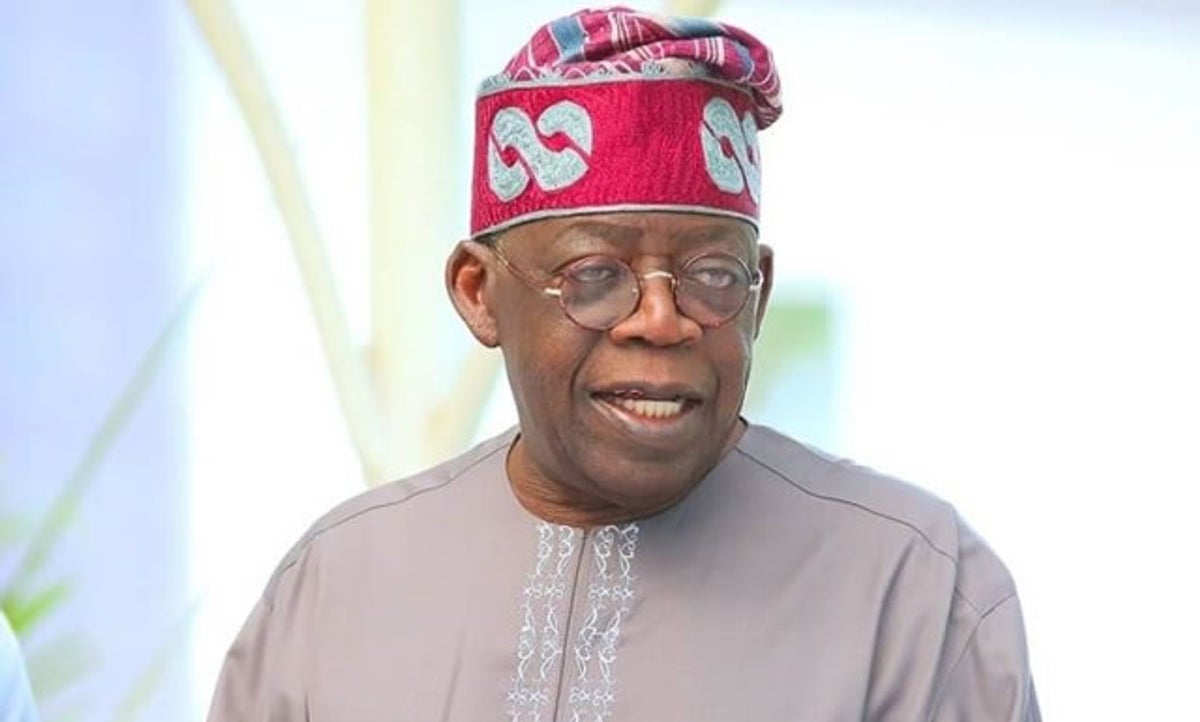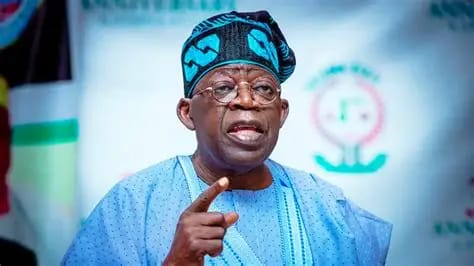
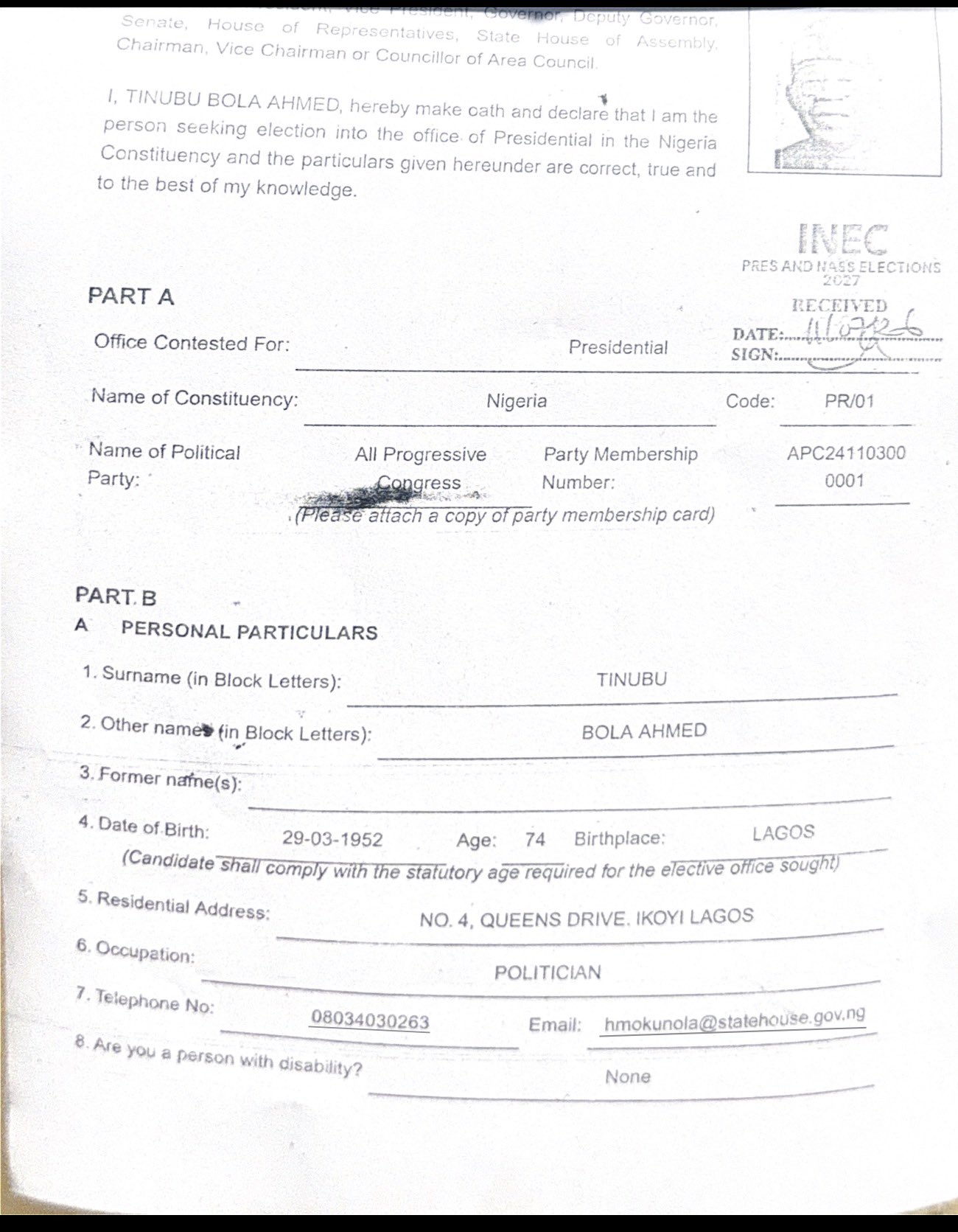
On Saturday, Nigeria’s electoral body, the Independent National Electoral Commission (INEC), published the nomination forms of President Bola Tinubu and other presidential candidates, including former Anambra State Governor Peter Obi and former Vice President Atiku Abubakar. However, the documents submitted by President Tinubu have attracted attention from the public, sparking fresh debate that is unmistakably reminiscent of the controversy that characterised his candidacy in 2023.
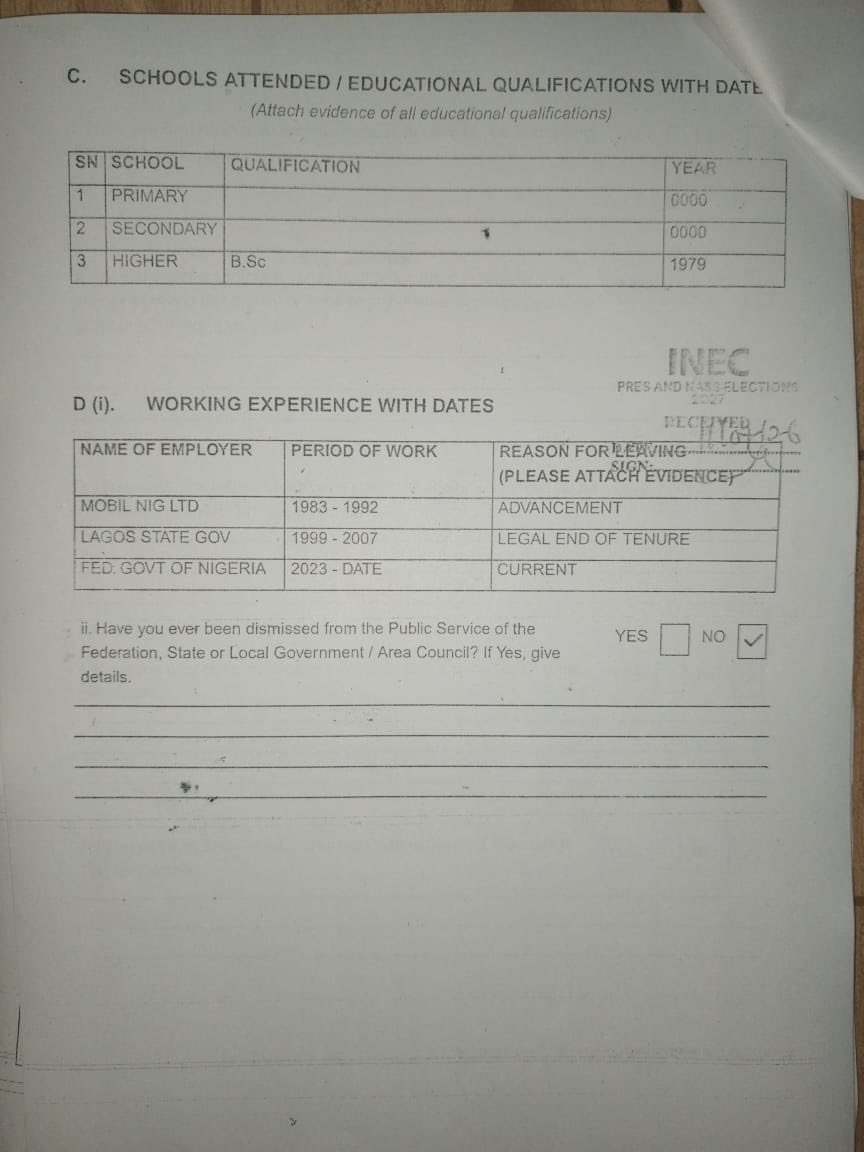
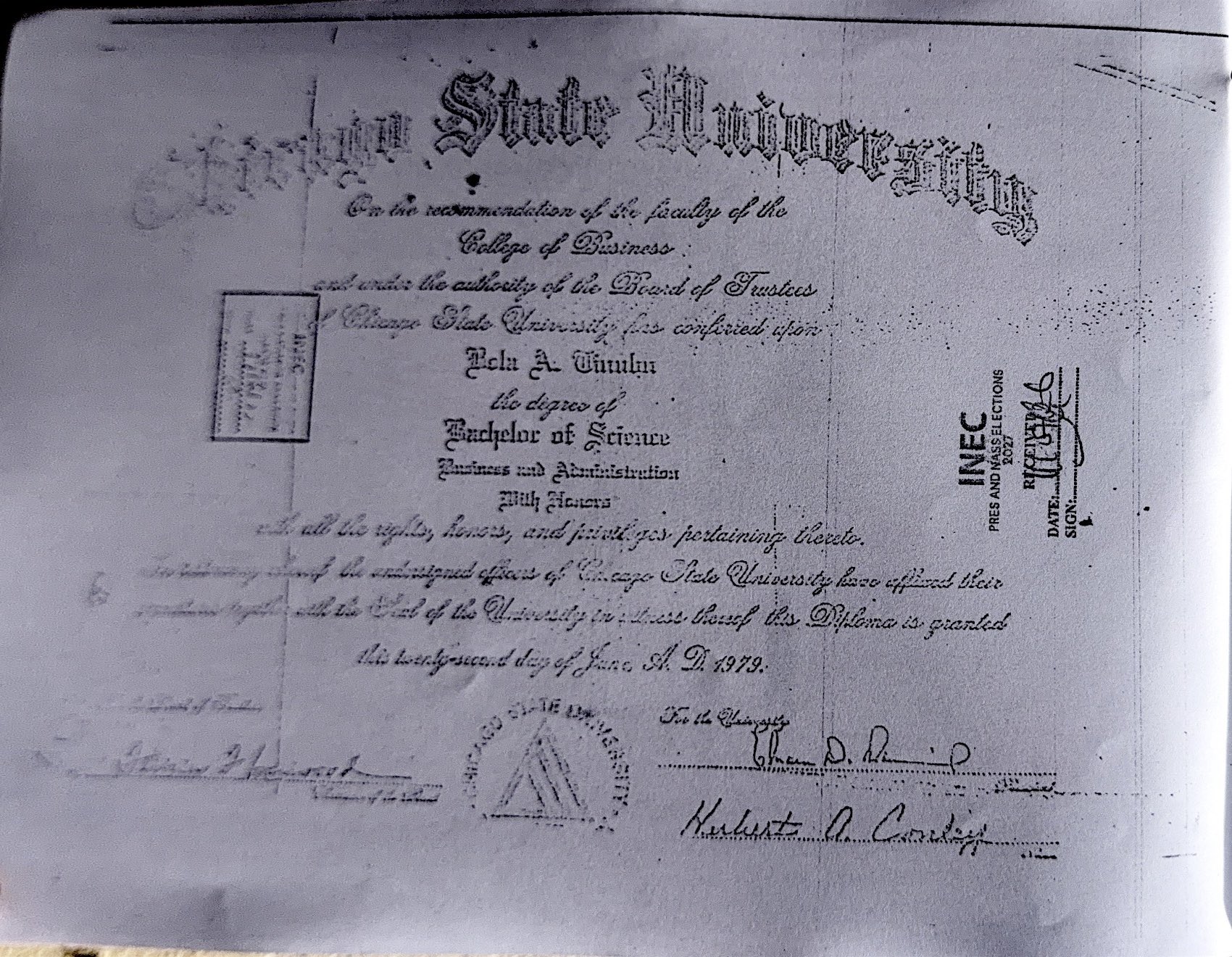
According to the INEC publication, which included the education records and academic qualifications of the presidential candidates, Tinubu’s documents do not contain any information about his primary and secondary education; in fact, that part of his form was left blank. The academic credential INEC listed for Tinubu is his Bachelor of Science in Business Administration from Chicago State University (CSU) in 1979, which was also heavily disputed and later challenged in court by the opposition in 2023.


The presidential candidate of the African Democratic Congress (ADC), Atiku Abubakar, listed his own qualifications as First School Leaving Certificate (FSLC) obtained in 1954 and West Africa School Certificate (WASC) obtained in 1961 without naming the schools. He also indicated that he obtained a Master of Arts in International Relations in 2020 from Anglia Ruskin University.
The education record of the presidential candidate of the Nigeria Democratic Congress (NDC), Peter Obi, published by INEC showed that he attended St. Augustine’s Primary School, Anambra (1973), Christ the King College (WASC, 1978) and the University of Nigeria, Nsukka, for his BA in Philosophy in 1984.
The exclusion of Tinubu’s primary and secondary school qualifications from his academic credentials has reignited fierce debate, once again bringing to the fore the contestations and legal battle that exemplified the 2023 presidential election. At the time, Atiku, who was the then presidential candidate of the Peoples Democratic Party (PDP), accused Tinubu of submitting a forged diploma from CSU to INEC.
Although CSU confirmed that Tinubu graduated from the institution in 1979, the clarification was not enough to dispel the allegations of forgery and quell public concerns over the authenticity of his certificates, as disputes over the diploma allegedly submitted to INEC became one of the key issues in the post-election litigation. Both the Presidential Election Petition Court and the Supreme Court dismissed the challenges and upheld Tinubu’s election.
INEC explained that it is not empowered by law to verify and authenticate the documents submitted to it by candidates. Citing the Electoral Act 2026, the electoral body stated that its responsibility is to publish candidates’ personal information and supporting documents for public scrutiny, while any challenge to the authenticity or adequacy of those documents is a matter for the courts.
“It’s not the responsibility of the commission to verify the authenticity of credentials of candidates,” INEC’s Deputy Director of Voter Education and Publicity, Wilfred Osilama Ifogah, stated while responding to questions on publication of candidates’ credentials for the 2027 general elections.
The omission of the president’s academic qualification in his forms has elicited intense fresh debates among Nigerians. While many believe the development is disturbing and will set a dangerous precedent that could undermine the integrity of our electoral process and allow unworthy and unscrupulous characters to aspire to public offices and take power, others believe it is a non-issue, and the submission of primary and secondary school certificates is inconsequential to vying for public office, hence the president does not need them.
President hiding something – ADC, NDC
The exclusion of Tinubu’s primary and secondary school education in the INEC form only lends credence to the assertion in some quarters that the president is hiding certain things about his past, the African Democratic Congress (ADC) alleges
Its National Publicity Secretary, Mallam Bolaji Abdullahi, said it is disturbing that Tinubu has such a level of secrecy around him.
He said: “By omitting these levels of education, he (Tinubu) seems to be giving credence to the rumour that he has something to hide in relation to his claims. For us as a party, the president of Nigeria should not have that kind of secrecy around him.
“ADC is worried as to why the president is refusing to list his primary and secondary school certificates, because by doing that, he appears to be giving credence to the speculations that he did not really attend those schools that he claimed to have attended in the past. There has been widespread suspicion that the president claimed to have attended some schools in the past.”
Also reacting, the National Publicity Secretary of the Nigeria Democratic Congress (NDC), Osa Director, described the non-inclusion of primary and secondary school qualifications of Tinubu in the INEC form as strange and surprising.
“It is surprising because we all know that you cannot get a university certificate without primary and secondary school certificates, which are prerequisites,” he told Daily Trust.
He added that it is time for the president’s media aides to clarify the whereabouts of their principals’ credentials.
For its part, the Labour Party stated that the issue of the president’s academic qualification should not be a matter of intense public scrutiny and debate. According to the party’s National Publicity Secretary, Ken Asogwa, Tinubu has not committed any electoral infraction or broken any law by not releasing information about his primary and secondary education.
He said, “So long as the Electoral Act does not make the submission of the primary and secondary school certificates mandatory, I do not see any legal infraction.”
“It is also worth recalling that the president’s qualification to contest the last presidential election was extensively litigated before the Presidential Election Petition Tribunal and, ultimately, before the Supreme Court, which affirmed his eligibility to stand for the election,” Asogwa said.
He wondered why Nigerians are fixated on the issue, noting that their focus should be on credible alternatives and policy options ahead of the next general election.
Speaking on the issue, public relations consultant, Saka Deyemi, said there was nothing wrong in the president submitting only his university credentials to INEC.
In an interview on Arise News, he said, “I don’t see a big deal in what the president has done. I took my time to study what was obtainable in the United States in the 70s; I now realised that you don’t need a secondary school certificate to contest for elections. I think we should move on from the issue of the president’s certificate. There are better issues and subjects to take the president on than the issue of his certificate; we’ve been through it before, we swam through the murky water and came out on the other side of the river”