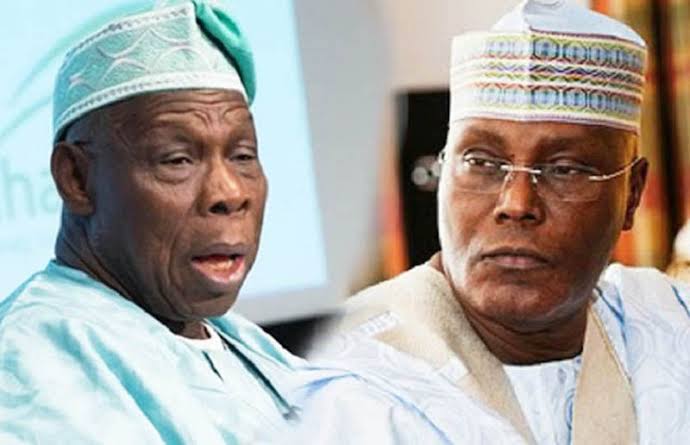
The feud between Olusegun Obasanjo and Atiku Abubakar is widely regarded as Nigeria’s longest-running political rivalry between a president and vice president. It began in 1999 as a partnership to restore democracy after nearly 30 years of military rule. Running on a joint ticket, Obasanjo and Atiku won the presidency and served together for eight years.
By 2003 the alliance had fractured. The re-election campaign was marked by public attacks, heavy allegations, court cases, and damaging leaks.
Prominent Nigerians repeatedly tried to broker truces, and the two men would cool things down for a time. But the peace never held. Personalities, political events, and shifting alliances kept pulling the conflict back into the open.
During Obasanjo’s first term, Atiku Abubakar and some PDP governors allegedly promoted the “Mandela Option.” The proposal was that President Obasanjo should serve only one term to allow Atiku to succeed him.
According to the report, Obasanjo set aside personal reservations and appealed to the governors to persuade Atiku to support his bid for a second term.
On March 30, 2014, a delegation of the Northern Youth Leaders Forum visited Obasanjo at his Abeokuta residence. The group urged him to “forgive your former vice-president.”
Obasanjo responded: “As a leader and father, I bear no grudge against anybody and if there is, I have forgiven them all.”
In late 2018, Obasanjo and Atiku met in Abuja alongside PDP National Chairman Uche Secondus to strategize ahead of the general election.
The meeting also served to reconcile other internal PDP disputes. Obasanjo mediated to resolve rifts between Atiku and former Adamawa Governor Murtala Nyako, and between Atiku and his former aide, Dr. Umar Ardo.
Here are six (6) major Atiku’s sins against Obasanjo
1. Atiku Abubakar’s grip of PDP Governors in 2003
In the run-up to the 2003 PDP primaries, Atiku’s grip on state governors gave him real power inside the party. Obasanjo claimed Atiku used it to pressure him for concessions, and that the pressure came close to blocking his re-nomination. Obasanjo said he ended up going on his knees to secure Atiku’s backing, and he viewed the whole episode as a deliberate act of betrayal.
2. “Third Term” Agenda
The 2006 bid to amend the 1999 Constitution for a third term was the breaking point. Atiku openly opposed Obasanjo. He worked the National Assembly, pulled northern blocs together, and told the country flatly that Nigeria was “not Libya or Egypt” where presidents rule for life. Civil society hailed him as a defender of democracy. To Obasanjo, it was a betrayal, driven by selfish ambition and impossible to forgive.
3. The PTDF Scandal
In 2006, Obasanjo submitted anti-corruption reports to the Senate alleging abuse of office by Atiku. The central allegation involved the Petroleum Technology Development Fund. According to the reports, over $100 million in public funds were deposited in designated commercial banks to provide collateral for private businesses associated with Atiku’s associates. An executive committee panel established by Obasanjo subsequently found Atiku culpable of official misconduct.
4. The iGATE / William Jefferson Bribery Scandal
Obasanjo consistently cited Atiku’s connection to the U.S. corruption investigation involving former Congressman William Jefferson. The FBI alleged Jefferson received bribes to facilitate telecommunications contracts in Nigeria via iGATE. While Atiku was not indicted by U.S. authorities, the association tarnished his international image for years and provided Obasanjo with evidence to question Atiku’s credibility on the global stage.
5. Privatization of State Assets
As Vice President, Atiku chaired the National Council on Privatisation, NCP, and oversaw the sale of hundreds of state-owned enterprises. Obasanjo alleged that Atiku used the position to benefit allies, acquire equity stakes for himself, and sell valuable state assets at discounted prices to favored buyers. He said this put personal gain ahead of the national interest.
6. Defection to the Opposition (Action Congress)
In late 2006, with his relationship with Obasanjo beyond repair, Atiku defected from the PDP to contest the presidency on the platform of the Action Congress. Obasanjo framed the move as treason against the party. He revoked Atiku’s vice-presidential privileges, declared the position vacant, and initiated litigation to disqualify Atiku from the 2007 election. The Supreme Court ultimately ruled in Atiku’s favor.