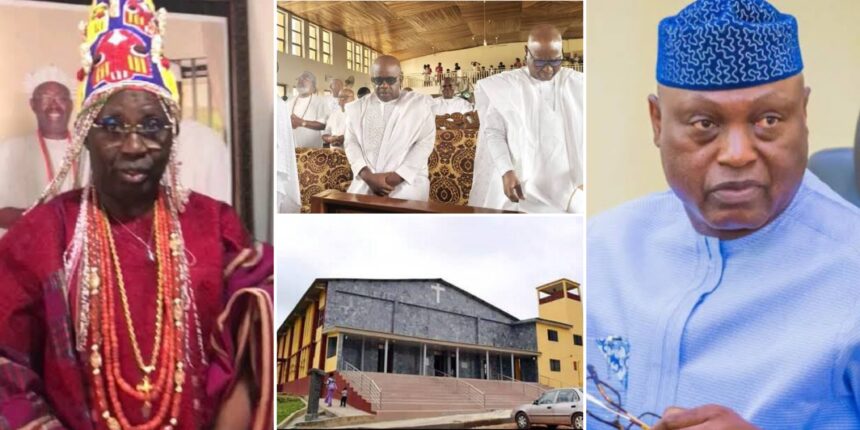
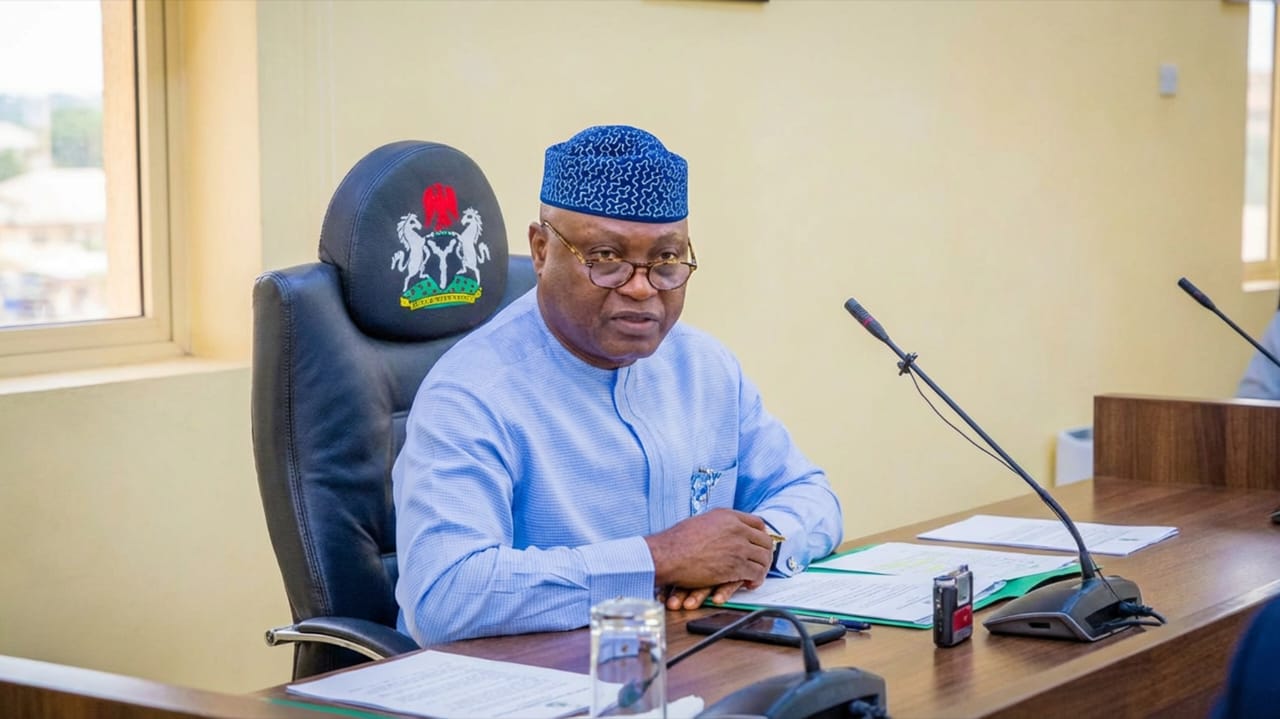
Governor Biodun Oyebanji attended a thanksgiving service at Babamuboni Memorial Anglican Church in Iyin Ekiti on May 31, 2026, joined other dignitaries and took his seat during the ceremony, but what followed weeks later would turn that ordinary moment into an unusual dispute involving the church, the palace of the Oluyin and eventually the Department of State Services, DSS.
At first glance, the story appears to be about a chair, but the correspondence that later emerged tells a much more intriguing sequence, with the Oluyin in Council making a formal request concerning the particular chair used by the governor and the church responding with its own position over what could happen to it.
The matter did not become public all at once, and the details unfolded gradually through letters exchanged after the May 31 service, with each development adding another piece to a story that would eventually move far beyond the walls of the Anglican church.
By August 18, 2026, the name of the Oluyin of Iyin Ekiti, Oba Adeniyi Adeola Ajakaiye, had entered the latest chapter of the controversy after reports emerged that the monarch was invited by the DSS for questioning.
But to understand why a chair from a church service ended up at the centre of such an unusual chain of events, the story has to be traced back to that Sunday in Iyin Ekiti, before the palace made its request and before the matter attracted wider attention.
May 31, 2026, Oyebanji’s visit to Iyin Ekiti
The story began on May 31, 2026, when Governor Biodun Oyebanji attended a 60th birthday thanksgiving service for Omolade Foluso Bamidele, the younger brother of Senate Leader Opeyemi Bamidele, at Babamuboni Memorial Anglican Church in Iyin Ekiti.
The occasion brought together several political figures and other dignitaries, with Opeyemi Bamidele’s connection to Iyin Ekiti adding significance to the gathering, while Oyebanji attended the service as governor of Ekiti State and took a seat inside the church during the proceedings.

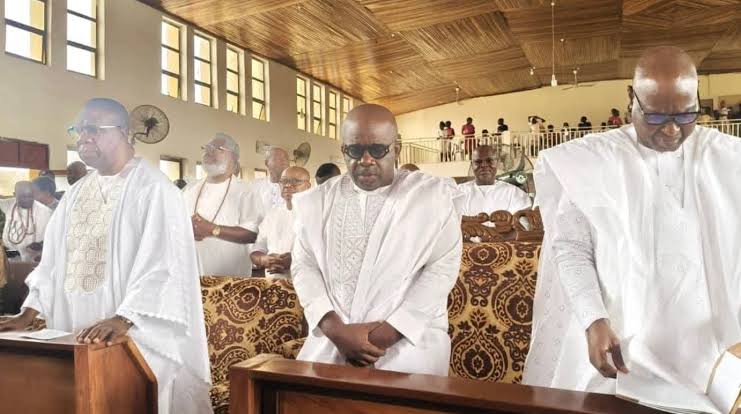
That particular chair would later become important to the events that followed, although there was nothing publicly unusual about the governor sitting on it at the time and no established evidence that Oyebanji personally initiated or participated in the dispute that later developed around the furniture.
The significance of the chair only became apparent after the service, when communication between the church and the Oluyin in Council began concerning an incident associated with the governor’s visit, eventually leading to the palace making a formal demand for the specific chair.
June 4, 2026, the church sends an apology
By June 4, 2026, the matter had already moved beyond the church service, with reports indicating that the church sent an apology to the Oluyin following the incident connected to the governor’s visit.
The available correspondence later referenced this apology, showing that the palace was aware of it before making its formal request for the chair, meaning the June 4 communication formed an important link between the May 31 service and the June 17 palace letter.
The exact content of the apology has not been fully disclosed in the reports available, just as the precise nature of the incident that prompted it has not been clearly established, leaving that part of the story incomplete.
What is established is the sequence, Oyebanji attended the service on May 31, an incident followed, the church sent an apology on June 4 and the Oluyin in Council subsequently wrote to the church concerning the chair.
June 17, 2026, the palace demands the chair
The most important development came on June 17, 2026, when the Secretary of the Oluyin in Council, Chief Elejide Omobulejo, wrote to the vicar of Babamuboni Memorial Anglican Church.
The palace requested that the specific chair used by Governor Oyebanji be taken to the palace for “royal custody and appropriate Traditional rites”, making clear that the request concerned the chair itself rather than another piece of furniture from the church.
The letter also requested that the replacement chair be placed under strict and adequate guard to prevent another occurrence, while the palace referred to the matter as involving the “sanctity of the stool”.
Those words are important because they are contained in the reported correspondence itself, but the letter does not publicly explain what the traditional rites would involve, meaning there is no factual basis for assigning a particular ritual, sacrifice, cleansing ceremony or other act to the palace’s request.

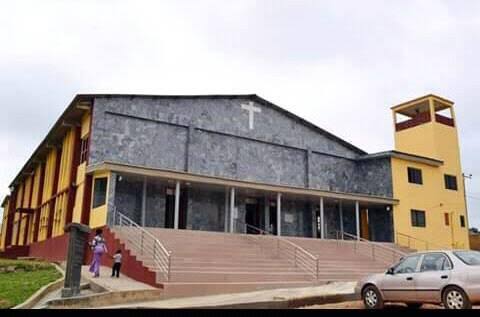
The palace’s position was therefore clear in the correspondence, it wanted the chair taken into royal custody and subjected to appropriate Traditional rites because of the incident it had referred to, but the exact nature of those rites was not publicly detailed.
June 18, 2026, the Anglican Church rejects the request
The Anglican Church responded on June 18, 2026, rejecting the palace’s request and setting out its position on the status of the chair as church property.
The response was signed by Ven. Dr. Samuel Sunday Agunbiade, Vicar and Archdeacon, Adebayo Busayo Abiodun, People’s Warden, and Falodun Taiwo, Parish Church Council Secretary.
The church said it could not “surrender, transfer, or remove” dedicated church property for external purposes outside established ecclesiastical procedures, placing the dispute within the church’s established system of authority over its property.
The response therefore did not treat the palace’s request as an ordinary request for an item of furniture, but as a matter requiring consideration under the procedures governing dedicated church property.
That position became one of the central points in the dispute because the palace was requesting custody of the chair for traditional purposes while the church maintained that it could not simply remove dedicated property from the church for an external purpose.
The chair was no longer standing alone
The church had another reason for refusing the request, and it concerned the physical condition of the chair itself.
According to the church’s response, Babamuboni Memorial Anglican Church was undergoing refurbishment and restructuring, during which old pews and related furniture had been removed from their previous arrangement.
Some of the furniture had reportedly been distributed to other churches, while the specific chair connected to the palace’s request had undergone reconstruction and resizing.
The church said the chair had subsequently been integrated into the altar furnishing, meaning it was no longer an independent chair that could simply be removed from the church and transported to the palace.
This gave the church both an institutional reason and a practical reason for rejecting the request, because it maintained that dedicated church property could not be removed outside established procedures and also stated that the specific chair had already been incorporated into another part of the church’s furnishing.
The palace’s request did not end with the church’s refusal
The June 18 response did not immediately end the matter, as subsequent reports indicated that the palace maintained its position concerning the chair.
At that point, the disagreement involved 2 formal institutions, with the Oluyin in Council seeking custody of the chair for traditional rites and the Anglican Church maintaining control over its dedicated property.
The original incident remained central because the palace’s request had been linked to what it described as an unfortunate and grievous incident, yet the public reports still did not provide a detailed account of what exactly happened during the May 31 service.
That missing information has remained one of the clearest gaps in the story, because the palace’s demand cannot be fully understood without knowing the event that led to the request in the first place.
The vicar’s reported transfer
Another development later became connected to the controversy when reports emerged that Ven. Dr. Samuel Sunday Agunbiade had been transferred from the church.
Agunbiade was one of the people who signed the June 18 response rejecting the palace’s request, which made his reported transfer relevant to the timeline of the dispute.
However, the available reports do not independently establish that the transfer was caused by the chair controversy or that it was a consequence of the church’s refusal to surrender the chair.
That distinction remains important, because a reported transfer is one fact while the reason for the transfer is another, and the available evidence does not establish the latter.
The official Diocese of Ekiti website has also been reported as still listing Agunbiade as Vicar in Charge of Babamuboni Memorial Anglican Church and Archdeacon in Charge of Babamuboni Archdeaconry in its indexed information, leaving his current status another point requiring official clarification.
August 17, 2026, the dispute becomes widely known
The chair controversy gained much wider attention around August 17, 2026, when reports began circulating details of the palace’s letter and the church’s response.
The documents provided a clearer timeline of the dispute than the shorter versions of the story circulating publicly, showing that the palace’s request followed earlier communication with the church and that the church had formally rejected the demand the following day.
The wording of the June 17 letter also became central to the reports, particularly the references to “royal custody”, “appropriate Traditional rites” and the “sanctity of the stool”.
Those phrases provided the clearest evidence of how the palace had formally presented the matter, while the church’s response established how the Anglican side had responded to the request.
August 18, 2026, DSS enters the story
The latest development came on August 18, 2026, when reports stated that the Department of State Services invited the Oluyin of Iyin Ekiti, Oba Adeniyi Adeola Ajakaiye, for questioning over the palace’s demand for the chair.

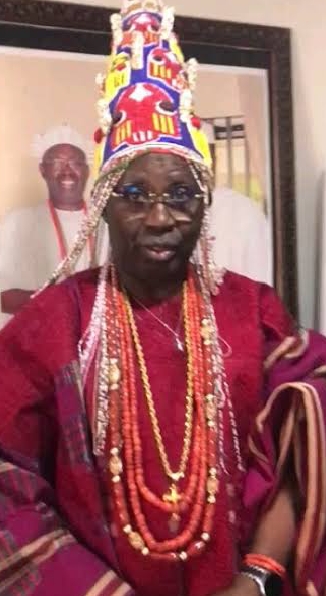
The report of an invitation is different from a report of detention, and although some secondary accounts used stronger descriptions, the available stronger reporting described the development as an invitation for questioning.
The DSS has not publicly explained in the reports available why the monarch was invited, what specific issue was being examined or what allegation, if any, the questioning concerned.
That means the DSS development can be established as the latest reported stage of the controversy, but the reason for the questioning remains undisclosed in sufficient detail to support a more specific conclusion.
The monarch at the centre of the dispute
Oba Adeniyi Adeola Ajakaiye is the Oluyin of Iyin Ekiti and the traditional ruler whose palace issued the correspondence concerning the chair.
Available background information identifies him as the reigning Oluyin and places his ascension to the throne in 2020, meaning the correspondence came from an established traditional institution rather than from an individual acting without a recognised palace structure.
The June 17 letter was issued by the Secretary of the Oluyin in Council, Chief Elejide Omobulejo, further establishing that the request was formally communicated through the palace structure.
The reference to the “sanctity of the stool” also appeared in that correspondence, but the available documents do not explain beyond that wording why the stool was considered relevant to the chair or what specific traditional procedure the palace intended to undertake.
Oyebanji’s role in the controversy
Governor Biodun Oyebanji’s connection to the matter is established through his presence at the May 31 thanksgiving service and his use of the chair that later became the subject of the palace’s request.
The service took place only days before the 2026 Ekiti governorship election and was attended by political figures, including people connected to the Bamidele family, but there is no established evidence that the governor personally initiated the subsequent dispute.
There is also no established evidence in the available account that Oyebanji demanded that the chair be taken to the palace or that he participated in the correspondence between the Oluyin in Council and the church.
His role in the documented sequence is therefore clear, he attended the service, sat on the chair and later became connected to the controversy because the palace specifically identified that chair in its request.
The unanswered incident
The central unanswered question remains what exactly happened during the governor’s visit on May 31, 2026.
The palace’s correspondence referred to an unfortunate incident and later a grievous incident, while the church reportedly issued an apology on June 4, showing that the matter was considered serious enough to generate formal communication.
The June 17 letter then connected that incident to the request for the chair, with the palace seeking royal custody and appropriate Traditional rites and requesting that the replacement chair be adequately guarded to prevent another occurrence.
Yet the available reports do not clearly state what happened during the service, who was directly involved or precisely why the chair became connected to the incident.
That missing detail is important because it sits directly between the governor’s visit and the palace’s demand, making it the part of the story that would most clearly explain why the dispute developed the way it did.
What the correspondence establishes
The available correspondence establishes that Governor Oyebanji sat on the chair during the May 31, 2026 thanksgiving service, that the church later communicated with the Oluyin concerning an incident, and that the palace subsequently requested the specific chair.
It establishes that the June 17 palace letter requested “royal custody and appropriate Traditional rites”, referred to a grievous incident and mentioned the sanctity of the stool.
It establishes that the church rejected the request on June 18, citing ecclesiastical procedures governing dedicated church property and explaining that the chair had already been reconstructed, resized and integrated into the altar furnishing.
It also establishes the latest reported development, which is that DSS invited Oba Adeniyi Adeola Ajakaiye for questioning on August 18, 2026, although the reason for that questioning has not been publicly explained in enough detail to establish a specific allegation.
What has not been established
The exact nature of the incident at the May 31 service has not been publicly established in the available reports.
The exact traditional rites intended by the palace have also not been disclosed, meaning specific claims about what the palace planned to do with the chair cannot be presented as fact.
There is no established evidence that the chair was intended for a harmful or occult purpose, and there is no established evidence that Governor Oyebanji personally participated in the later dispute.
The reported transfer of Ven. Dr. Samuel Sunday Agunbiade has also not been independently linked to his refusal to surrender the chair, while the stronger available reporting describes the DSS development as an invitation for questioning rather than confirmed detention.
The timeline from May 31 to August 18
May 31, 2026, Governor Biodun Oyebanji attends the 60th birthday thanksgiving service for Omolade Foluso Bamidele at Babamuboni Memorial Anglican Church in Iyin Ekiti and sits on the chair that later becomes central to the dispute.
June 4, 2026, the church reportedly sends an apology to the Oluyin concerning the incident associated with the governor’s visit.
June 17, 2026, Chief Elejide Omobulejo, Secretary of the Oluyin in Council, writes to the church requesting the chair for “royal custody and appropriate Traditional rites” and refers to the sanctity of the stool.
June 18, 2026, the Anglican Church rejects the request, citing ecclesiastical procedures and stating that the chair had been reconstructed and incorporated into the altar furnishing.
After June 18, reports emerge concerning the reported transfer of Ven. Dr. Samuel Sunday Agunbiade, although the reason for the transfer is not independently established.
August 17, 2026, the chair controversy gains wider public attention through reports detailing the palace’s demand and the church’s response.
August 18, 2026, reports state that DSS invited Oba Adeniyi Adeola Ajakaiye, the Oluyin of Iyin Ekiti, for questioning concerning the palace’s demand for the chair.
Where the story stands
The Iyin Ekiti chair controversy now has a clear documented sequence but still lacks one major explanation, the exact nature of the incident that occurred around Governor Oyebanji’s visit on May 31, 2026.

Everything that followed can be traced through the correspondence, the church’s June 4 apology, the Oluyin in Council’s June 17 demand, the Anglican Church’s June 18 rejection, the subsequent reports concerning the vicar and the August 18 report of the DSS invitation involving the Oluyin.
The palace’s position is contained in its letter, including its request for royal custody and appropriate Traditional rites, while the church’s position is contained in its response, including its objection based on ecclesiastical procedures and its explanation that the chair had already been reconstructed and integrated into the altar furnishing.
The latest development has now taken the matter beyond the original church and palace exchange, but the reason for the DSS questioning has not been publicly established in sufficient detail, leaving the original incident and the circumstances surrounding it as the central unresolved parts of a story that began with a governor taking a seat at a church service on May 31 and continued through a series of formal developments into August 18, 2026.