Nigeria’s higher education sector just got a new rulebook, and this time, nobody gets to sit it out.
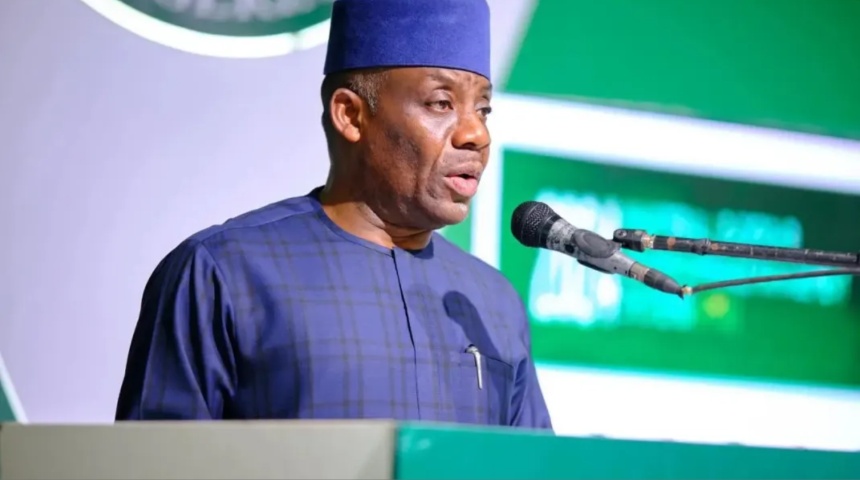
The Federal Government has directed that participation in the country’s national tertiary education ranking exercise is now compulsory, not just for universities, but for polytechnics and colleges of education as well. The announcement came from the Minister of Education, Dr Tunji Alausa, on Tuesday, September 1, in Abuja, during a meeting with what used to be called the Nigerian Universities Ranking Advisory Committee (NURAC).
That committee doesn’t go by that name anymore. With its mandate widened to cover the entire tertiary education landscape, it has been renamed the Nigerian Tertiary Education Ranking Advisory Committee (NTERAC), and it will now be the body responsible for assessing institutions well beyond the university system Nigerians are used to seeing ranked every year.
Why This Is Happening Now
For years, ranking conversations in Nigeria have centred almost entirely on universities, who made the Times Higher Education list, which school topped the Webometrics table, whether a federal or private university came out on top. Polytechnics and colleges of education were largely left out of that picture, even though they train a huge share of the country’s technical and teaching workforce.
Alausa said the expanded framework is meant to tighten quality, accountability, institutional performance and global competitiveness across the entire tertiary system, not just the university subsector. According to him, the exercise will give institutions clear benchmarks to measure themselves against, help them spot the areas where they’re falling short, and track whether they’re actually improving from one cycle to the next.
There’s also a competitive angle to it. Officials believe that once schools are formally and publicly ranked against one another, it creates pressure, the good kind, that pushes management teams to lift their game rather than coast.
What “Compulsory” Actually Means Here
This isn’t a polite request. Under the new arrangement, the government says it will develop formal guidelines to institutionalise the exercise and will communicate directly to vice-chancellors, rectors and provosts that taking part is now mandatory. Both public and private institutions fall under this net, so a privately owned polytechnic in Lagos is expected to comply just as much as a federal university in Sokoto.
Funding for the whole exercise is expected to come through the Tertiary Education Trust Fund (TETFund), which suggests the government is treating this as a properly resourced, long-term programme rather than a one-off audit.
For universities specifically, Alausa disclosed that the 2026/2027 ranking exercise is scheduled to commence this September. Polytechnics and colleges of education won’t be left waiting too long either — the newly reconstituted NTERAC has been tasked with working out exactly when their own assessments will begin.
The Man Steering the Process
Chairing NTERAC is Emeritus Professor Peter Okebukola, a familiar face in Nigerian higher education circles and a former Executive Secretary of the National Universities Commission. Okebukola noted that while the committee had originally pushed for increased investment in university education, the minister went a step further by pulling polytechnics and colleges of education into the same ranking net, a move he welcomed.
He also pointed to something bigger sitting behind this policy: sustained investment and stronger institutional capacity, paired with a credible national ranking system, could help more Nigerian institutions climb higher on the international stage rather than just the domestic one.
The Backdrop: Nigeria’s Growing Presence in Global Rankings
This policy isn’t coming out of nowhere. It follows a year in which Nigerian universities posted their best-ever showing in the Times Higher Education (THE) World University Rankings. The 2026 THE rankings placed 24 Nigerian universities on its global list, the highest number the country has ever recorded and enough to make Nigeria the most represented nation in Sub-Saharan Africa for that cycle, up from 21 institutions in each of the two previous years.
Leading the pack was the University of Ibadan, which reclaimed the number-one spot nationally after finishing fourth the year before, landing in THE’s 801–1000 global band. UNILAG followed closely in second place, with Bayero University, Kano climbing into third, its first appearance in Nigeria’s top tier since 2024, and Covenant University rounding out the top four after being dethroned as the country’s leading university.
Out of the 51 Nigerian universities assessed, only UI and UNILAG made it into the global top 1,000 band. Institutions such as Ahmadu Bello University, the Federal University of Technology Minna, the University of Ilorin, the University of Jos and the University of Nigeria, Nsukka filled out much of the rest of the country’s top-ranked list. A breakdown of Nigeria’s 24 globally ranked universities showed 17 federal, four state-owned and three private institutions, proof that the improvement wasn’t confined to one type of ownership structure.
It’s against this backdrop that the government appears to be making its move: if universities can be pushed to compete and improve through ranking pressure, why not extend the same logic to polytechnics and colleges of education, institutions that arguably need the scrutiny just as much, if not more?
What It Means for Schools on the Ground
For institutions themselves, this changes the calculus quite a bit. A polytechnic or college of education that has never had to think seriously about research output, staff qualifications, infrastructure benchmarks or graduate outcomes will now be measured against a national standard, one with real visibility attached to it.
Provosts and rectors are being called on to cooperate with the process, and NTERAC’s role won’t stop at simply producing a list. Part of its job, according to the government, is helping institutions and their leadership actually understand the data, the methodology and the standards that credible rankings demand, because a ranking exercise that schools don’t understand tends to produce resentment rather than improvement.
There’s also a practical worry hovering in the background that hasn’t been fully addressed yet: many polytechnics and colleges of education operate with far thinner resources than the country’s better-funded universities. Whether the compulsory ranking exercise comes paired with meaningful support, funding, training, capacity-building, will likely determine whether this policy strengthens the sector or simply exposes gaps that institutions were never equipped to close in the first place.
The immediate next step is the 2026/2027 university ranking cycle, due to kick off this September. Beyond that, all eyes will be on NTERAC to see when and how it brings polytechnics and colleges of education into the fold, and what shape the guidelines governing “compulsory participation” will actually take once they’re published.
For now, one thing is clear: Nigeria’s tertiary education sector is moving toward a single, unified ranking framework, and every public and private institution — from federal universities to state-owned colleges of education — is expected to be part of it.