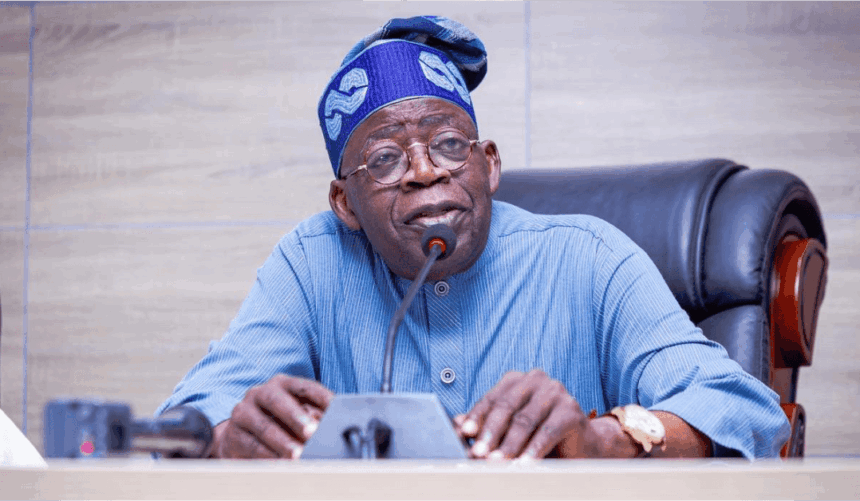
For the third year running, President Bola Tinubu will not be walking into the General Assembly Hall in New York to address the world’s leaders. Vice President Kashim Shettima is on the ground instead, and the explanations coming out of Abuja have shifted more than once in the space of a few weeks.
From “Confirmed” to Cancelled
As recently as July, the story out of the State House sounded settled. Nigeria’s Permanent Representative to the United Nations, Ambassador Jimoh Ibrahim, told reporters after a meeting with the president that Tinubu had “generously agreed” to attend the 81st UN General Assembly, and that arrangements had even been made for him to sit close to US President Donald Trump during the session. It looked, for a moment, like Nigeria’s leader would break a two-year streak of sending his deputy in his place.
That plan quietly fell apart. On Sunday, September 20, 2026, Stanley Nkwocha, spokesperson to Vice President Shettima, announced that Tinubu had directed the VP to lead Nigeria’s delegation to the 81st session instead. Shettima has since travelled to New York, where the General Assembly’s high-level week runs from September 22 to 28. Minister of Information and National Orientation, Mohammed Idris, told journalists on Monday that the switch should not be read as Nigeria’s diplomatic presence being watered down.
The president’s Senior Special Assistant on Foreign Affairs and Protocol, Ademola Osodi, put the decision down to Tinubu’s focus on “domestic priorities and other international engagements,” rather than any single dramatic reason.
The Pattern Nobody Can Ignore Anymore
Strip away the back-and-forth and one fact stands out: Tinubu has now missed three UN General Assemblies in a row since he attended in person for the first time in September 2023, months after taking office. Shettima delivered Nigeria’s national statement at the 79th session in 2024, again at the 80th in 2025, and will do so once more at the 81st this week.
It’s worth noting that Tinubu has been out of Nigeria for much of the run-up to this year’s assembly anyway. He left Abuja on August 30 for what the presidency described as a three-week “working vacation” in Europe, starting in London before moving on to France, where he was hosted to a private dinner by President Emmanuel Macron at the Élysée Palace. Tinubu later said the meeting reaffirmed the friendship between Nigeria and France.
“The Constitution Doesn’t Require Physical Presence”
This isn’t the first time the presidency has had to defend a Tinubu absence, and the government has developed something close to a standard script for it. Special Adviser on Information and Strategy Bayo Onanuga has repeatedly argued that Nigeria’s 1999 Constitution “does not explicitly require the physical presence of either the President or the Vice President in the country at all times to fulfil his duties,” describing modern conferencing technology and electronic signatures as proof the country has adapted to “the virtual age.”
Onanuga has pointed to precedent to back the claim, citing 2022, when former President Muhammadu Buhari attended the UN General Assembly while then-Vice President Yemi Osinbajo was in London for the burial of Queen Elizabeth II, leaving both men out of Nigeria simultaneously. He has also referenced this administration’s own history: between late April and early May 2026, Tinubu was in London after stops in the Netherlands and Saudi Arabia for the World Economic Forum, while Shettima was away too, first in Nairobi for the IDA21 Heads of State Summit and then in Dallas for the US-Africa Business Summit. According to Onanuga, “the government’s machinery did not halt” during that stretch, and the same logic, the presidency argues, applies now.
The Opposition Isn’t Buying It
Not everyone is satisfied with that answer. Former Vice President Atiku Abubakar, the African Democratic Congress’s 2027 presidential candidate, issued a statement through his Senior Special Assistant on Public Communication, Phrank Shaibu, demanding a fuller explanation. Atiku argued that a Nigerian president skipping the Assembly three years running can no longer be waved off as routine delegation, calling the UN gathering “one of the world’s most important diplomatic gatherings” and one of the few places where a Nigerian leader can defend the country’s interests, negotiate partnerships and shape global decisions on trade and security directly with other heads of state.
Activist Omoyele Sowore went further, suggesting the absence has more to do with unresolved issues in the United States than scheduling, a claim the presidency has not directly addressed. On social media, reactions have ranged from mockery to genuine concern about what Nigeria loses when its president isn’t in the room, with several users recalling earlier assurances that Tinubu would be seated near Trump this year.
Officials insist Shettima is fully equipped to carry Nigeria’s message. He’s expected to deliver the national statement, attend sideline events and hold bilateral meetings on issues like debt relief, energy and reform of multilateral institutions. What he can’t replicate is the symbolism of a sitting president standing at the podium during the General Debate, and the informal access that comes with being a head of state among fellow heads of state rather than a deputy.
With 2027 elections approaching and Atiku already turning the issue into a campaign talking point, the bigger question now isn’t really about this year. It’s whether Tinubu shows up in person for the 82nd session next September, or whether three absences quietly become four.