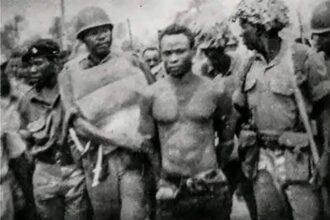
On September 25, 1967, the Biafran military government executed four of its senior Army officers by firing squad at a military compound outside Enugu, the then capital of the secessionist Republic of Biafra.
The officers — Major Emmanuel Ifeajuna, 33, Lieutenant-Colonel Victor Banjo, 34, Major Phillip Alale, 31, and Captain Sam Agbam, 29 — were executed at about 1:30 p.m. following a court-martial for treason, Biafran authorities announced.
According to the High Command, the four men were found guilty of engaging in secret talks with the Federal Government through British intermediaries, with the aim of overthrowing the Biafran leader, Lt. Col. Chukwuemeka Odumegwu Ojukwu, and negotiating a ceasefire with advancing Nigerian troops.
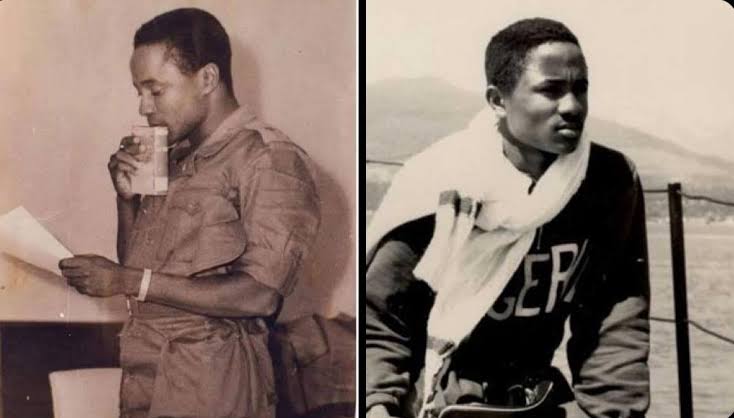
Among the four was Ifeajuna, a name once celebrated across the Commonwealth.
In 1954, the then 19-year-old made history in Vancouver, Canada, when he became the first Black African to win a gold medal at the British Empire and Commonwealth Games. Competing with only one shoe, he cleared 6ft 8in in the high jump to defeat athletes from Canada and Britain.
The feat made him a household name. He later gained admission to University College, Ibadan, before joining the Nigerian Army in 1960.
Ifeajuna would later become a central figure in Nigeria’s first military coup on January 15, 1966, which toppled the First Republic.
After the coup collapsed, he escaped into exile in Dahomey, now Benin Republic, and later to Ghana, with the help of his friend and celebrated poet, Christopher Okigbo. He was welcomed by Ghanaian leader Kwame Nkrumah.
He returned to Nigeria months later after assurances from Ojukwu that his life would not be at risk, and enlisted in the Biafran Army at the outbreak of the civil war.
At the tribunal, Ifeajuna told the court that his negotiation with the Federal side was not a power grab, but an attempt to preserve civilian lives in Enugu from an imminent federal assault.
Witness accounts from the execution ground, as reported by Vanguard, said Ifeajuna, with his head bowed to his chest as though already dead, kept mumbling that his death would not stop what he feared most — that federal troops would soon enter Enugu, and that the only way to prevent it was to seek a ceasefire.
The four men were tied to stakes, blindfolded and shot. Their trial and execution were hastily conducted, largely because federal forces were already closing in on Enugu.
Reacting to the executions, Biafran Head of State, Lt. Col. Ojukwu, in a statement on Monday evening, September 25, warned against internal sabotage.
“There can be no room for betrayal when the future of Biafra is at stake. We will defend our Republic against all enemies, external and internal,” Ojukwu declared.
The execution came at a critical moment in the war. Two days after the firing squad, on September 27, 1967, federal troops captured Enugu, forcing the Biafran government to relocate to Umuahia.
Today, Ifeajuna’s story remains one of the most tragic paradoxes in Nigeria’s history — a sports hero who gave Nigeria its first international gold, a soldier who plotted Nigeria’s first coup, and a Biafran officer who died before a firing squad raised by his own people.