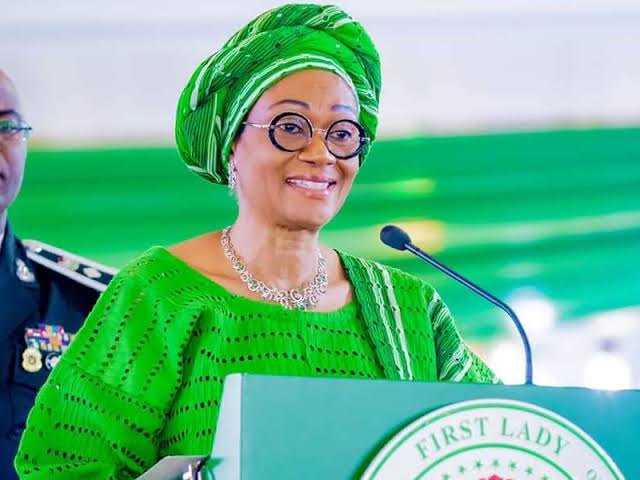
For families struggling to keep their children in school, financial assistance can make a meaningful difference, particularly when school expenses compete with the cost of food, transportation, accommodation and other household needs. A new education support initiative announced by Nigeria’s First Lady, Senator Oluremi Tinubu, has brought fresh attention to the financial challenges facing learners from disadvantaged backgrounds, with 100,000 beneficiaries targeted under its first phase.
The programme comes at a time when many parents are looking for practical ways to reduce the cost of their children’s education and prevent financial difficulties from interrupting their schooling. Although the announced figures have attracted attention, prospective beneficiaries need to understand how the initiative is expected to work, which learners may qualify, and where official instructions will be published. The details surrounding beneficiary selection are particularly important for parents who want to avoid missing an opportunity or falling victim to fraudulent registration offers.
The ₦20,000 Support Programme Announced by Oluremi Tinubu
Nigeria’s First Lady, Senator Oluremi Tinubu, announced the Learners’ Retention Support Programme on Monday, October 12, 2026, during an event at the State House in Abuja. The initiative is designed to support learners facing financial difficulties that could prevent them from attending school regularly or completing their education. Under the first phase, the programme targets 100,000 beneficiaries, with each selected learner expected to receive ₦20,000.
The announced allocation stands at ₦2 billion, reflecting the planned scale of the initiative and its focus on helping families overcome some of the financial barriers associated with basic education. The Universal Basic Education Commission (UBEC), operating under the Federal Ministry of Education, is identified as the implementing agency. However, the public announcement of a programme does not automatically mean that applications are open, so parents and guardians need to distinguish between the confirmed launch details and any registration instructions that may be released later.
How the ₦2 Billion Allocation Is Expected to Reach Learners
The figures announced for the initiative provide a straightforward picture of its intended first phase. With 100,000 learners targeted to receive ₦20,000 each, the total allocation comes to ₦2 billion, making the individual support amount and the overall programme budget consistent with one another. The funding is intended to help selected learners remain in education rather than abandon their studies because their families cannot meet certain essential expenses.
The programme’s focus on learner retention is significant because school attendance can be affected by more than the formal cost of tuition or school fees. Families may struggle to provide uniforms, exercise books, writing materials, transportation or other necessities that allow children to participate fully in their education. The announced ₦20,000 support could help eligible households meet some of these costs, although the government has not yet provided a complete public breakdown of permitted expenses or explained whether beneficiaries will receive the money directly or through another arrangement.
Who May Benefit From the Programme?
The announcement identifies learners as the intended beneficiaries, with the programme designed to address financial barriers to education. This means the initiative should not be treated as a general cash distribution scheme for every Nigerian citizen, job seeker, trader or adult seeking financial assistance. Its stated purpose is connected to keeping children in school, and prospective beneficiaries should assess any future registration instructions against that objective.
However, the complete eligibility conditions remain important. The information available in the announcement reviewed does not establish a definitive age limit, household income threshold, class level or list of qualifying schools. It also does not conclusively explain whether applications will be submitted by parents, guardians, school administrators or education authorities. Until these requirements are published, families should avoid relying on unofficial claims that a particular category of learner has already been guaranteed access to the money.
How to Find Out Whether Your Child Qualifies
Parents and guardians can begin by contacting the school attended by the learner they hope to nominate. The headteacher or school administrator may be able to explain whether the school has received an official circular or instructions concerning the Learners’ Retention Support Programme. Families should ask specifically about the programme announced on October 12, 2026, rather than assuming that information about another education support initiative applies to this one.
The next step is to contact the relevant State Universal Basic Education Board, commonly known as SUBEB, to ask whether the state has received implementation guidelines from UBEC. State education authorities may be able to clarify whether beneficiary identification will be conducted through schools, local education offices or another officially approved process. Parents should request the name of the responsible office and any published guidance, while remembering that an enquiry does not itself constitute registration or guarantee selection.
How to Benefit From the ₦20,000 Support
The most important action at this stage is to follow the official information channels and prepare to respond when the registration or selection process is formally explained. No verified public application portal or complete registration procedure has been established in the programme information reviewed. Consequently, anyone searching for an application link should avoid treating a random website, social media form or WhatsApp message as an official route to the money.
Parents can take several practical steps while waiting for further details. They can confirm their child’s school information, keep relevant education records available and ask the school whether any official beneficiary identification exercise has begun. These are sensible preparations, not published eligibility requirements, and families should submit documents only when an authorised institution explains what is required and how the information will be handled.
Step 1, Contact the Learner’s School
The learner’s school is a useful starting point because the programme concerns school retention and basic education. Parents should speak with the headteacher, principal or designated school administrator to ask whether any communication has been received from the relevant education authorities. They should provide the name of the programme and its announcement date so that the school can distinguish it from other government interventions targeting pupils or students.
Where the school has received official instructions, parents should ask for the details of the responsible education office, the beneficiary identification process and any documents that may be required. If the school has not received guidance, families should not conclude that their children are automatically excluded, since implementation instructions may not have reached every institution at the same time. They can proceed to the relevant state education authority for clarification and continue monitoring official announcements.
Step 2, Contact Your State SUBEB
The State Universal Basic Education Board is another relevant institution to contact when seeking information about an initiative being implemented through UBEC. Parents can enquire whether the board has received guidelines for the Learners’ Retention Support Programme and whether a formal process for identifying the 100,000 intended beneficiaries has been announced. They should also ask whether enquiries should be directed to a state office, local education authority or participating school.
When contacting the board, families should request clear instructions rather than relying on assumptions about how similar programmes operated in the past. A previous education initiative may have used school nominations, online applications or direct identification by education officials, but that does not establish the procedure for this programme. Until the government publishes the applicable rules, parents should treat any suggested registration process as unconfirmed unless it can be verified through an authorised source.
Step 3, Monitor UBEC’s Official Website
UBEC is a central source to monitor because it has been identified as the implementing agency for the programme. Parents and guardians can visit the commission’s official website at [https://ubec.gov.ng/](https://ubec.gov.ng/) to look for announcements, implementation guidance, eligibility information and any official registration instructions. If a dedicated application portal is introduced, families should check whether the commission itself identifies or links to that portal.
It is also important to pay attention to the wording of any announcement. A notice stating that a programme has been launched may not mean that individual applications have opened, while an implementation update may explain how schools or state authorities will identify beneficiaries. Parents should look for explicit instructions concerning who can participate, where applications or nominations must be submitted, the documents required and any deadline. These details will help families make informed decisions instead of acting on incomplete social media reports.
Step 4, Follow the Federal Ministry of Information
The Federal Ministry of Information and National Orientation is another official source for updates concerning the announcement. Its website, [https://fmino.gov.ng/](https://fmino.gov.ng/), can be checked for statements explaining the programme, its funding, its implementation arrangements and any subsequent clarification from the Federal Government. The ministry’s announcement concerning the distribution of sanitary towel packs and learning materials also provides context for the wider education support activities introduced on October 12, 2026.
Parents should read the specific announcement carefully rather than assuming that every education initiative mentioned at the same event follows the same application procedure. Where a statement covers multiple interventions, the requirements for one programme may differ from those of another. Keeping the Learners’ Retention Support Programme separate from the sanitary towel distribution initiative will help families avoid confusion over eligibility, registration and the form of assistance being offered.
Step 5, Prepare Relevant Education Records
While waiting for formal instructions, parents can ensure that their child’s basic school information is accurate and readily available. Depending on the eventual requirements, relevant records might include the learner’s name, school details, class information and the contact details of a parent or guardian. These are examples of information that education programmes may request, not a confirmed list of documents required under this particular initiative.
Families should not send sensitive documents to an individual or website simply because it claims to be collecting names for the ₦20,000 support. They should first establish that the request comes from an authorised institution and that the information is necessary for the stated purpose. If official guidelines eventually require documentary evidence, parents can follow those instructions and ask the responsible office how the information should be submitted securely.
Step 6, Confirm the Selection Process Before Applying
A clear selection process will be essential because the first phase targets 100,000 learners rather than every child in Nigeria. The government still needs to communicate the applicable criteria and explain how eligible learners will be identified or selected. Depending on the final arrangements, schools, state education authorities or another authorised body may have a role, but the exact method should not be presented as settled before official guidance confirms it.
Parents should therefore look for a formal notice explaining whether they must apply individually, submit information through their children’s schools or wait for education officials to conduct a beneficiary identification exercise. They should also check whether the process includes a verification stage and how selected families will be notified. A registration receipt, message or informal promise from an intermediary should not be mistaken for proof that a learner has been approved to receive the money.
Is the ₦20,000 Support Open to Every Nigerian?
The programme is not a general payment scheme for all Nigerians. Its announced first phase targets 100,000 learners, with the stated objective of reducing financial barriers to education. Adults who are not applying on behalf of an eligible learner should not assume they can receive the payment simply by submitting their personal details.
The exact definition of an eligible learner still requires official clarification. The available announcement does not conclusively establish whether the programme covers only public primary schools, includes junior secondary schools or extends to additional categories of learners. It also does not provide a confirmed answer on whether children attending private schools can participate. Families should therefore wait for the published criteria before deciding that a learner qualifies or is excluded.
Will Learners in All 36 States Benefit?
The programme has been announced as a national education support initiative, but the full distribution arrangements for the ₦20,000 payments need to be confirmed. The announcement of a national target does not, by itself, establish how many beneficiaries will be selected from each state or whether every local government area will have a fixed allocation. Such details would depend on the implementation guidelines issued by the responsible authorities.
Parents living outside Abuja should not assume that they must travel to the Federal Capital Territory to make enquiries or register. Their first point of contact can be the learner’s school and the relevant state education authority, followed by the official UBEC and federal ministry channels. If a state specific process is introduced, families should follow the instructions published for their location rather than relying on a general registration claim circulating online.
When Will Registration Open?
A confirmed public registration opening date has not been established in the programme information reviewed. The announcement was made on October 12, 2026, but the announcement date should not be confused with the date applications open. The government may issue additional implementation details after the launch, and parents should look for an explicit statement confirming when and how prospective beneficiaries can participate.
The same caution applies to registration deadlines. No confirmed closing date has been established in the information reviewed, so claims that applications must be completed within a particular number of days should be treated carefully unless they are supported by an official notice. Parents can monitor the relevant websites and contact their schools or state education boards periodically to find out whether new instructions have been issued.
When Will the ₦20,000 Be Paid?
The confirmed payment date and distribution method have not been established in the announcement reviewed. Although each selected beneficiary is expected to receive ₦20,000 under the first phase, further information is needed to explain when the money will be disbursed and how recipients will receive it. The final arrangement may be outlined in implementation guidelines or a subsequent announcement by the responsible authorities.
Families should be cautious about anyone claiming to know a guaranteed payment date before the government publishes one. They should also avoid assuming that every learner identified by a school will automatically receive the money, since the final eligibility and selection procedures remain important. Once an official payment timetable is released, parents should verify the details through the relevant institution and keep any legitimate confirmation they receive.
The support is intended to address financial pressures that can interfere with a child’s education. For households managing limited income, even relatively modest education expenses can become difficult when they arise alongside food costs, rent, transport and other family responsibilities. An intervention that helps cover some school related necessities could therefore provide relief to families whose children are at risk of missing classes or discontinuing their studies.
The amount should nevertheless be understood within the limits of the announced programme. ₦20,000 may help a household purchase exercise books, writing materials, uniforms or other basic necessities, depending on its circumstances and the expenses permitted under the final guidelines. It is not a guarantee that all education costs will be covered, nor has the government announcement established a detailed spending schedule for each beneficiary. Parents should await any instructions explaining how the support is intended to be used.
How the Programme Differs From Flow With Confidence 2.0
The Learners’ Retention Support Programme should not be confused with Flow with Confidence 2.0, another education related initiative associated with the First Lady’s activities. The two interventions were discussed in the context of efforts to reduce barriers that prevent girls from attending school, but they involve different forms of assistance. Understanding this distinction is important for parents trying to identify the programme relevant to their children.
Flow with Confidence 2.0 involves the distribution of 2 million packs of sanitary towels and back to school learning materials to girls in public basic education schools across Nigeria’s 36 states and the Federal Capital Territory. The distribution was officially flagged off on October 12, 2026. The Learners’ Retention Support Programme, by comparison, has a separate announced allocation of ₦2 billion and targets 100,000 learners for support of ₦20,000 each in its first phase.
Background to the First Lady’s School Support Initiative
The wider Flow with Confidence initiative began on October 2, 2025, through the Renewed Hope Initiative led by the First Lady. According to government reporting and Voice of Nigeria, the earlier programme provided a year’s supply of sanitary pads to 370,000 schoolgirls in rural communities. The initiative addresses menstrual health barriers that can affect girls’ attendance, participation and continuity in education.
The October 12, 2026, activities brought attention to both the distribution of learning materials and the separate learner retention support programme. While the sanitary towel initiative focuses on menstrual health needs and access to school materials, the ₦20,000 programme is intended to provide financial support to selected learners facing barriers to remaining in education. Families should rely on the official instructions for each programme because their distribution methods and beneficiary requirements may differ.
How to Avoid Fraudulent Registration Offers
Whenever a government programme attracts public attention, people may circulate unofficial registration links or claim they can secure access to the money for a fee. Parents should be particularly careful with messages promising guaranteed selection, early payment or special treatment in exchange for money. The fact that a message includes the First Lady’s name, a government logo or a programme photograph does not establish that it is genuine.
Do not pay an individual who claims that a registration fee is compulsory unless an official source clearly establishes a legitimate charge, and do not share your bank PIN, password or one time password with anyone offering assistance. Verify website addresses carefully and avoid entering personal information into forms shared by unknown accounts. Where a suspicious message claims to come from UBEC, a school or a state education board, contact the institution through its independently verified official channel before taking action.
Official Sources to Monitor
Parents and guardians can use the following sources to check for programme updates and implementation instructions. These websites are provided for verification purposes and should not be interpreted as confirmed application portals for the ₦20,000 support.
Universal Basic Education Commission
UBEC is the identified implementing agency for the Learners’ Retention Support Programme. Its official website is an important place to look for further information on implementation, eligibility and any published instructions for identifying beneficiaries.
Federal Ministry of Information and National Orientation
The ministry’s website can be monitored for official government announcements and clarifications concerning the initiative. The relevant announcement about the distribution of 2 million sanitary towel packs and learning materials also provides background on the education support activities flagged off on October 12, 2026.
Confirmed Details About the ₦20,000 Support
The programme announced on October 12, 2026, targets 100,000 learners in its first phase, with an expected payment of ₦20,000 per selected beneficiary and an announced allocation of ₦2 billion. UBEC has been identified as the implementing agency, and the initiative is intended to help reduce financial barriers that prevent children from attending school or completing their education.
Several practical details remain unconfirmed in the programme information reviewed. These include the public application portal, registration opening date, closing date, complete eligibility conditions, beneficiary selection process and confirmed payment timetable. The final method of disbursement also requires clarification, so families should avoid treating unofficial claims about bank transfers, payment agents or registration procedures as established facts.
What Parents Should Do Next
Parents who want their children to benefit should begin by asking the school whether it has received an official circular concerning the programme. They can then contact the relevant State Universal Basic Education Board and monitor UBEC’s website for published instructions. Keeping school information accurate and readily available may help families respond when the authorised selection procedure is announced, but it does not guarantee that a learner will be selected.
The key is to distinguish between the announced support and the steps required to receive it. The ₦20,000 amount, the target of 100,000 learners and the ₦2 billion allocation have been stated in connection with the programme, while the detailed application and payment arrangements still need confirmation. Parents who verify information through official channels will be better placed to understand the requirements, avoid fraudulent offers and act when a legitimate registration or selection process becomes available.