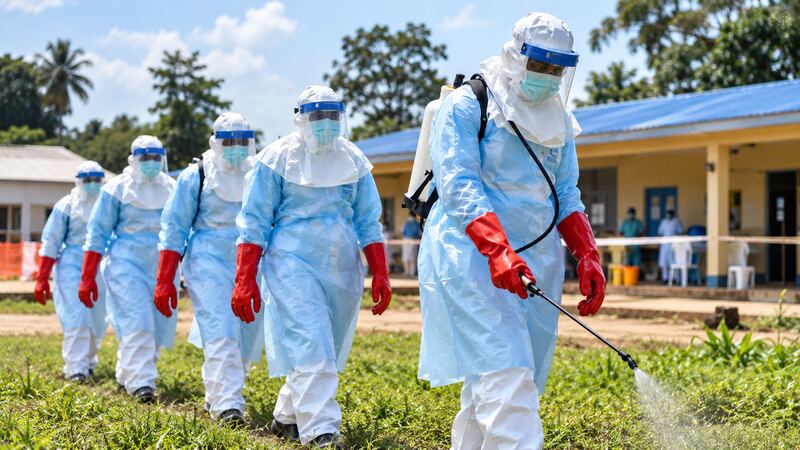
The Nigeria Centre for Disease Control and Prevention (NCDC) has identified two additional suspected cases of Ebola virus disease and 53 primary contacts, raising the need for continued disease surveillance.
The Director-General of the NCDC, Jide Idris, disclosed this at a press briefing in Abuja on Sunday.
The latest development comes amid efforts to monitor suspected cases and identify people who may have been exposed to the virus.
Idris explained that the 53 contacts comprise healthcare workers, members of the confirmed patient’s household and other individuals who had contact with her during treatment and sample collection.
“As of now, we have 53 primary contacts. These comprise 44 people from the health facility where the patient was treated and nine additional contacts,” he said.
“Of the nine additional contacts, three are household members of the patient, her driver, chef and husband. Three others attended to her at Julius Berger Clinic before she got to the other facility, while the remaining three are members of the team who went to collect samples.”
The NCDC director-general said the identified contacts had been documented and classified according to their level of exposure, while public health officials continued to monitor their health status.
He added that none of the 53 contacts had tested positive for Ebola or developed symptoms as of the time of the briefing.
Idris also disclosed that the agency had investigated two cases, including the confirmed infection in the Federal Capital Territory and a suspected case in Rivers State, which returned a negative result.
Nigeria confirmed its first case of Ebola Bundibugyo virus disease on October 20, 2026, after a woman who had travelled to the country was diagnosed at a private hospital in Abuja.
According to the NCDC, the patient tested positive in three samples, while a sample collected from her husband tested negative.
The identification of the contacts forms part of efforts to track potential exposure, monitor the health of affected individuals and limit the possible spread of the virus.