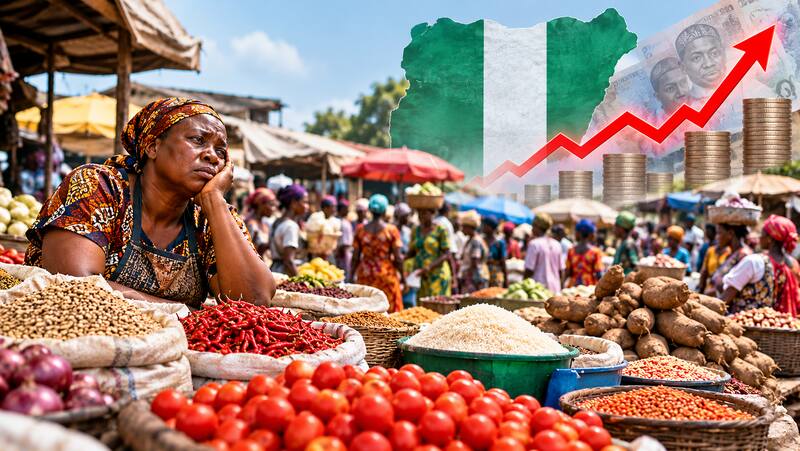
Nigeria’s finance minister, Taiwo Oyedele, has disclosed that the average Nigerian income can no longer feed families. He stated that Nigerians now spend 120% of their income on food. The situation is not unexpected. It is the ramifications of the aggressive neoliberal economic policies implemented by the current administration. But inflation, especially galloping food inflation that Nigerians are grappling with, is not something that any government should treat with levity.
Inflation is not just an economic index or a yardstick to measure government performance. It is a phenomenon that shapes the trajectory and direction of the lives of people. It determines the social status of a people. It can elevate and hasten the success of an individual or a group of people and can brutally kill the dream and dash the hope of a better and prosperous life. Low single-digit inflation affords people the opportunity to grow, live a decent, comfortable life filled with the trappings of modernity. Low inflation means a buoyant middle class and a critical mass of upwardly mobile youths, which then translates to a thriving economy.
High double- or even triple-digit inflation is a recipe for economic downturn and social upheaval. It impedes growth and stifles aspiration. High, crippling inflation means a cost-of-living crisis. The middle class is wiped out, pushing the majority of the people who were hitherto middle class into poverty. High inflation kills dreams and ambition. It sabotages growth. It breeds indignity. It fuels self-hate and sows doubt. It’s an albatross to financial freedom and prosperity and ultimately tanks and destroys the economy. And this has been the reality of Nigerians in the last two years.

In the last two years, runaway inflation has eroded the purchasing power of Nigerians, decimated their disposable income and rendered their savings useless. This has plunged many into poverty, with many previously well-to-do citizens now living from hand to mouth, and many lower-middle-class citizens now grappling with abject poverty. As the citizens continue to experience deeply unsavoury and damaging changes in fortune, politicians are living extravagantly and flamboyantly, refusing to heed their own admonition of austerity, frugality and sacrifices for the good of the nation.
Even though the government now wants us to believe that inflation has dropped to 15% after the rebasing of inflation measurement methodology, the figure does not reflect the socio-economic reality of the majority of Nigerians, as there are no significant material improvements in their lives despite the sharp drop in inflation, as many struggle to make ends meet. The remarks of Oyedele underscore the gravity of Nigeria’s jarring food inflation situation.
“In fact, there was a survey we did that shows that up to 120 per cent of household income is spent on food. Like, how do you spend 120 per cent of your income? You borrow food before the end of the month,” he said while speaking at Chatham House in London.
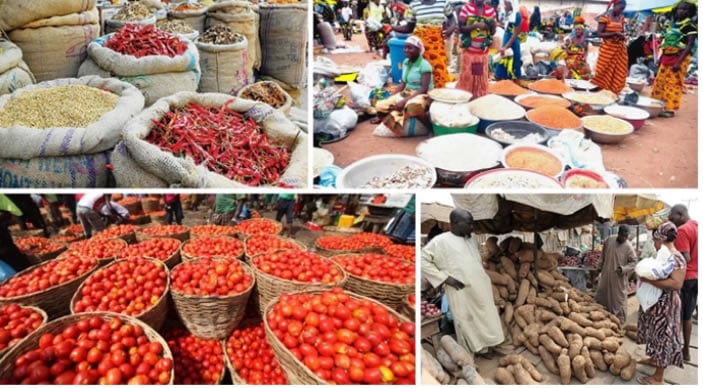
“Headline inflation is falling faster than the price of a basket of tomatoes, gari, and beans. And this widens inequality. Macroeconomic stability means little to a mother who still cannot afford food,” he added.
The Central Bank of Nigeria may be using all the monetary instruments in its policy kit to tackle inflation, but if nothing is being done by the government on the fiscal side to augment the effort of the apex Bank, then what you get is people spending all their income and more on food.
The minister highlighted what should be done to check the galloping food inflation and raise household consumption, but identifying the problem is not the issue; what is clearly lacking on the part of the government is the political will to address the challenges mitigating against food affordability.
He cited low agricultural yields, seasonal farming, post-harvest losses, poor storage and logistics, high transport costs and insecurity in farming communities as major factors driving food prices.
More than half of the problems the minister identified as the reason for the astronomical rise in food prices are either as a result of the current government policies or sheer incompetence on its part. For instance, Nigeria needs between ₦3 and ₦4 trillion to address the perennial issue of post-harvest losses, poor storage and logistics, but the government, after three years in power, has not announced a fiscal commitment or a comprehensive and actionable plan to fix these issues. To address this issue, the government must prioritise food security and channel capital towards achieving it.
One of the major reasons for skyrocketing food prices is the high cost of transport, which is a direct consequence of subsidy removal on petrol. So the minister knows what is to be done if he is genuinely concerned about the high cost of transporting agricultural produce from the farm to the market. He cannot, in one breath, wax lyrical about why the government needed to abolish the petrol subsidy and, in the next breath, bemoan food inflation largely caused by high transport occasioned by the removal of the subsidy on petrol he vigorously champions.
The Minister also attributed the negative impact of food inflation on Nigerians’ income to high insecurity. It is almost as if the minister had forgotten that it is the duty of the president to ensure the security of the lives and property of Nigerians. But the government has at best been indifferent to the nefarious activities of armed non-state actors terrorising agrarian communities and at worst condones their actions. When we allow criminal elements to run amok and dispossess our farmers of their farmland, we should not expect a thriving and well-structured system of food production.
These problems are what can be tackled in a relatively short period of time by a focused, people-oriented, visionary and serious-minded government and not one that pays lip service to critical matters of governance and nation-building. Minister Oyedele knows what the problems are, but does he have the courage to persuade his principal to give them the kind of fiscal attention they need and solve them once and for all so that Nigerians do more than just spend their entire income on food?