
Nigeria’s electricity crisis has become increasingly difficult for households to ignore, particularly as rising temperatures make the absence of reliable power more uncomfortable. Across Lagos, residents are struggling to sleep, businesses are losing productive hours and families are spending additional money on alternative sources of electricity, while complaints about the situation continue to spread across social media. The frustration has also reached the entertainment industry, where celebrities and content creators have begun speaking publicly about the conditions they are experiencing, drawing attention to a problem that extends beyond ordinary power supply complaints.
The situation has become particularly concerning in November 2026, following public appeals from comedian Cute Abiola and social media personality Raye, alongside demonstrations by residents of Lagos Island and Somolu. Their complaints have brought different aspects of the crisis into focus, from the failure of alternative electricity systems to restrictions preventing some residents from using generators or installing solar panels. While some households are struggling to find ways to cool their homes, others are questioning how they are expected to continue working and running businesses without dependable electricity.
Cute Abiola Appeals to Tinubu as Solar Power Fails


Nigerian comedian and content creator Abdulgafar Ahmad, popularly known as The Cute Abiola, joined the growing number of Nigerians expressing frustration over electricity shortages on November 6, 2026, when he publicly appealed to President Bola Tinubu to address the situation. The comedian shared a video in which he complained about the absence of electricity and explained that even his solar power system had stopped providing the relief he expected. His appeal came amid rising temperatures and widespread complaints from residents who have been struggling to cope with the combination of excessive heat and prolonged blackouts.
Addressing the President directly, Cute Abiola said, “President Tinubu, my solar is off. Please, for God’s sake, help us. My solar is off right now. Please, everywhere is hot. The suffering is too much. Please, there’s no light. Abeg.” His complaint attracted attention because solar electricity has increasingly become an alternative for Nigerians who can afford to install independent power systems in their homes. However, his experience highlighted the frustration that can arise when even privately installed electricity solutions fail to provide the expected comfort during periods of unreliable public supply.
The comedian also made a sarcastic remark about the frequent advice given to Nigerians to invest in solar equipment whenever they complain about electricity. Reacting to the situation, he said, “Buy solar, buy solar. Solar sef dey off.” Beyond the immediate complaint, Cute Abiola criticised what he portrayed as the government’s attention to President Tinubu’s re election ambitions while citizens continued to struggle with electricity and economic difficulties. His appeal added another prominent entertainment personality to the growing public conversation about the country’s power challenges.
Raye Complains About More Than 2 Weeks Without Electricity in Lagos
Social media personality Raye also attracted attention after disclosing that her Lagos apartment had been without electricity for more than 2 weeks. Her complaint, shared on November 5, 2026, went beyond the discomfort of living without fans and other household appliances, as she explained that the situation was affecting her ability to work and earn money. According to her account, electricity was essential to her daily activities, making the prolonged outage particularly difficult because every hour spent away from work translated into lost income.
Expressing her frustration, Raye wrote, “I’m losing money not working; every hour I don’t turn into work it’s my money going. No light, no work.” She also explained that residents of her estate were not permitted to install solar panels or operate generators, leaving her with limited alternatives while the electricity supply remained unavailable. The restrictions became an important part of her complaint because households experiencing blackouts often depend on generators, rechargeable equipment or solar installations to maintain some level of comfort and continue their daily activities.
Raye further insisted that electricity should not be treated as a luxury, particularly when consumers are expected to pay for the service. She declared, “Electricity is not a privilege!! It’s a citizen’s right!” Her remarks reflected the frustration of residents who believe that paying electricity bills should come with a dependable service, rather than leaving them to spend additional money searching for alternatives. Her experience also drew attention to the difficulties faced by people whose jobs depend on computers, internet access, lighting and other electrical equipment, especially when residential rules prevent them from independently addressing power shortages.
Lagos Island Residents Protest Over Prolonged Blackouts

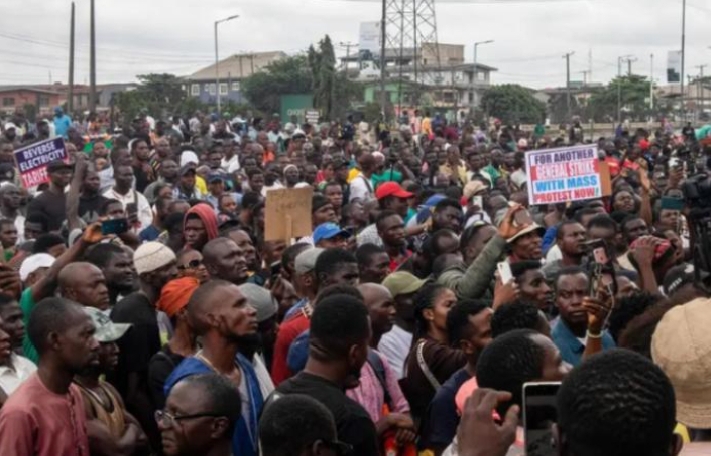
The growing frustration among celebrities has coincided with demonstrations in different parts of Lagos, where residents have taken to the streets to demand improved electricity supply. One of the demonstrations occurred on Tuesday, November 3, 2026, when residents of several Lagos Island communities protested against prolonged outages and the uncomfortable conditions created by the excessive heat. The affected streets included Lewis, Okesuna, Beecroft, Simpson and Sandgrouse, where residents reportedly marched through their neighbourhoods to draw attention to their electricity problems.
Videos circulating online showed protesters demanding the restoration of power while chanting in Yoruba, “E fun wa ina o, orun pa wa.” The expression means, “Give us electricity, the heat is killing us.” The demonstration captured the frustration of residents who said the absence of electricity had made it difficult to sleep comfortably, particularly at night when households depend on fans and air conditioners to manage indoor temperatures. The situation also raised concerns about the additional expenses associated with alternative electricity sources, especially for families already struggling with rising living costs.
The affected communities were reported to be served by Excel Electricity, although the complaints also reflected broader dissatisfaction with electricity distribution across Lagos. For residents who spend much of their day working or running businesses, prolonged blackouts create difficulties that extend beyond household comfort. Food preservation, business operations, electronic equipment and other everyday activities can become more expensive when electricity is unavailable for extended periods.
Somolu Residents Stage Another Protest on November 5

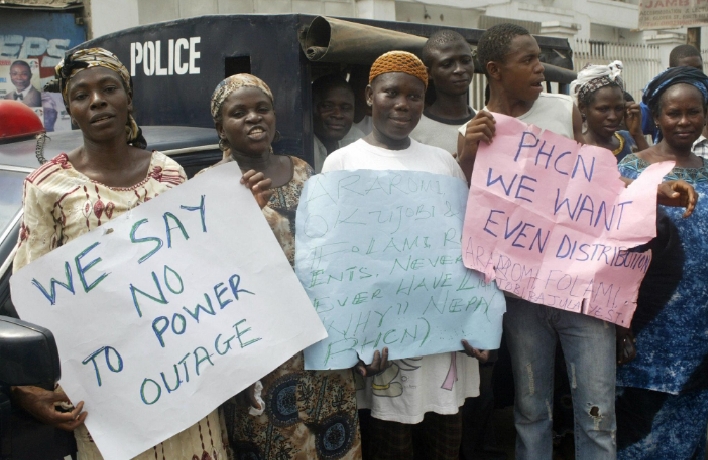
Another demonstration occurred in Somolu on Thursday, November 5, 2026, when hundreds of residents reportedly marched through their community to demand improved electricity supply. The protesters carried placards displaying messages such as “Give us light,” “Our businesses are dying” and “They want to kill us with heat; we will not allow heat to kill us.” Their demonstration came amid complaints that the electricity situation had continued for an extended period, leaving households and business owners struggling to maintain normal activities.
One resident identified as Ahmed said the electricity problem had persisted for more than 3 months, expressing concern about the consequences for families, particularly children and other vulnerable residents. The complaints highlighted the difficulties of spending several nights without dependable electricity during a period when temperatures are already uncomfortable. For households without solar installations or generators, the absence of power means relying on natural ventilation, open windows and other limited measures to cope with the heat.
The Somolu demonstration also brought attention to the economic consequences of unreliable electricity. Small businesses that depend on refrigeration, electronic equipment, lighting and other appliances face additional expenses when they have to purchase fuel or seek alternative arrangements. Residents who cannot afford these options are left with fewer choices, while business owners risk losing customers and productive hours during prolonged outages.
Berger, Alagbado, AIT Residents Report Difficult Conditions
The complaints have extended beyond Lagos Island and Somolu, with residents of other neighbourhoods also describing deteriorating electricity supply. Reports from Berger, Alagbado and the AIT area have highlighted the difficulties experienced by consumers who say their electricity hours have reduced considerably. Some residents have complained about uncomfortable nights, while others have expressed frustration over receiving only brief periods of electricity despite depending on the service for their household activities.
A factory worker living in Berger, Tolani Adewunmi, said electricity supply had deteriorated after residents previously enjoyed approximately 20 hours of power daily. She explained that the excessive heat had affected her sleep, causing her to wake up sweating and struggle to remain comfortable in bed. Her complaint also raised questions about the experience of customers paying Band A electricity tariffs but receiving significantly fewer hours of supply than expected.
Another resident in Alagbado, Anuoluwapo Olurunshuye, reportedly said her neighbourhood had received approximately 30 minutes of electricity at night for more than 2 weeks because of a fault affecting the area. The situation eventually forced her to purchase a solar system to power her fan and charge electronic devices after the problem remained unresolved. Her experience reflects the financial pressure placed on households that have to invest in alternative electricity equipment simply to maintain basic comfort and continue their daily activities.
Gas Shortages Reduce Electricity Generation
The electricity difficulties have also drawn attention to the problems affecting Nigeria’s power generation system. On Thursday, November 5, 2026, the Nigerian Independent System Operator explained that inadequate gas supply to thermal power stations and reduced water inflows into hydroelectric reservoirs were among the factors responsible for the decline in electricity generation. The operator said insufficient gas had prevented some thermal plants from operating at their available capacity, while reduced water inflows had affected the output of hydroelectric facilities.
Nigeria depends heavily on gas fired power stations, making the availability of natural gas important to the amount of electricity generated for consumers. When gas supply becomes inadequate, thermal power stations cannot operate at their expected capacity, reducing the electricity available for transmission and distribution. The current difficulties have therefore placed additional pressure on electricity operators already dealing with operational and infrastructure challenges.
Figures reported from the Nigerian Midstream and Downstream Petroleum Regulatory Authority’s September 2026 sector fact sheet showed that average daily gas utilisation by power plants declined by 4 per cent to 518 million standard cubic feet per day in September, compared with August. The reduction provides an indication of the pressure affecting gas availability within the electricity sector, although the country’s generation difficulties also involve other operational factors.
Reduced Water Inflows Affect Hydroelectric Stations
Hydroelectric power stations also contribute to Nigeria’s electricity generation, but their operations depend on sufficient water flowing into reservoirs. The Nigerian Independent System Operator identified reduced water inflows as another factor affecting the country’s available generation capacity in November 2026. When water levels and inflows are insufficient, hydroelectric facilities may experience limitations in the amount of electricity they can produce.
The combination of reduced hydroelectric output and inadequate gas supply has created additional pressure on the electricity system, limiting the amount of power available for distribution companies. These generation constraints have contributed to the reduced supply hours reported by consumers in different parts of the country. The situation has also made it more difficult for electricity distributors to maintain the service levels expected by customers, including those paying higher tariffs under the service based arrangement.
Distribution Companies Receive 2,926 Megawatts
Figures reported for Thursday, November 5, 2026, showed that Nigeria’s 11 electricity distribution companies received a combined allocation of 2,926 megawatts at 4:41 pm. Abuja Electricity Distribution Company received the largest allocation with 633 megawatts, followed by Ibadan Disco with 391 megawatts and Port Harcourt Disco with 320 megawatts. Benin Disco received 264 megawatts, while Eko Disco received 256 megawatts.
Enugu Disco received 253 megawatts, Ikeja Disco received 249 megawatts, Kano Disco received 173 megawatts and Kaduna Disco received 167 megawatts. Jos Disco received 146 megawatts, while Yola Disco received the smallest allocation of 74 megawatts. The figures provide an indication of the electricity available to distribution companies at the stated time, although they do not establish the precise number of hours individual households received power.
Ikeja Electric Apologises to Band A Customers
The electricity difficulties have also affected customers who pay higher tariffs under Band A service arrangements. Ikeja Electric apologised to customers on some of its Band A feeders after failing to meet the minimum daily supply requirement of 20 hours on November 3 and 4, 2026. The company disclosed the development in a notice published on its official X account on Thursday, November 5.
Band A customers are expected to receive at least 20 hours of electricity daily under the service based tariff arrangement. Customers in this category pay higher electricity tariffs because of the expected supply duration, making disruptions particularly frustrating when the promised hours are not delivered. The latest apology followed another complaint issued by the company on October 27, 2026, after several Band A feeders failed to meet the required supply hours on October 25 and 26.
Some affected feeders reportedly recorded zero hours of electricity on both days. The company had previously attributed disruptions to network faults, grid instability, transformer limitations and maintenance activities. The developments have renewed attention to the gap between the electricity service consumers pay for and the supply they actually receive.
Federal Government Identifies Operational Challenges
The Federal Government has acknowledged the electricity difficulties affecting Lagos, Abuja, Ogun, Kwara and Oyo, with Power Minister Joseph Tegbe identifying maintenance activities, operational challenges, gas supply constraints and reduced hydroelectric output among the factors contributing to the disruptions. The minister said the government was engaging relevant agencies, including the Transmission Company of Nigeria, the Nigerian Independent System Operator and electricity distribution companies, to address the problems.
He also directed the relevant agencies to resolve operational constraints, accelerate ongoing maintenance and keep electricity consumers informed about restoration efforts. The ministry acknowledged the difficulties faced by households, businesses and public institutions, while maintaining that preliminary assessments did not indicate a major or systemic failure of the national grid. The distinction is important because electricity generation and distribution can decline considerably without necessarily indicating that the entire national grid has collapsed.
Another development involved the Federal Government’s plan to recover abandoned power equipment, beginning with the clearance of 44 containers from Apapa ports in Lagos. The initiative forms part of efforts to recover equipment that could support electricity infrastructure development, although the clearance of the containers should not be mistaken for an immediate resolution of the generation shortages currently affecting consumers.
Lagos Government Schedules Energy Summit
The Lagos State Government is also preparing to bring electricity sector stakeholders together to discuss the challenges affecting power supply across the state. The 2026 Lagos Energy Summit is scheduled to hold from November 10 to 12, with discussions expected to focus on electricity sector reforms, renewable energy, energy efficiency, metering and alternative energy sources.
Commissioner for Energy and Mineral Resources Biodun Ogunleye said the summit would examine structural problems affecting electricity supply and develop practical solutions. The Permanent Secretary of the ministry, Ibilola Kasumu, also said the objective was to establish a pathway towards reliable 24 hour electricity supply in Lagos. The discussions are expected to address the state’s electricity infrastructure and the responsibilities involved in improving service delivery.
Lagos Warns Residents About Extreme Heat
The electricity complaints have coincided with a public warning from the Lagos State Government about possible extreme heat as Nigeria moves further into the dry season. On November 2, 2026, Commissioner for the Environment and Water Resources Tokunbo Wahab urged residents to prepare for unusually hot conditions, dehydration and possible heatstroke.
He attributed the potential weather challenges to the strengthening El Niño climate pattern and seasonal changes associated with the transition into the dry season. According to the commissioner, Lagos could be particularly vulnerable because of its dense population, extensive buildings, roads and limited green spaces in some neighbourhoods. These features can contribute to the retention of heat, making some residential areas uncomfortable, especially when ventilation is inadequate.
Wahab identified children, older people, pregnant women, outdoor workers, traders, construction workers and people with underlying health conditions as groups requiring particular attention. He advised residents to drink sufficient water, wear lightweight clothing, avoid prolonged exposure to direct sunlight and reduce strenuous outdoor activities during the hottest periods. He also encouraged people to seek shaded and well ventilated environments while watching for signs of dehydration, heat exhaustion and heatstroke.
The commissioner further warned that increased dependence on petrol and diesel generators during electricity outages could worsen air quality in some communities. His warning adds another dimension to the electricity crisis because households forced to depend on generators may face additional exposure to pollution while spending more money on fuel.
Nigerians Across 11 States Describe Their Experiences
The excessive heat has affected residents beyond Lagos, with accounts published on October 31, 2026, highlighting difficult conditions in Plateau, Enugu, Benue, Nasarawa, Kano, Niger, Edo, Bayelsa, Ogun, Yobe and Kwara. Some families reportedly resorted to sleeping outside their homes, bathing repeatedly during the night and purchasing rechargeable fans or solar powered equipment to cope with uncomfortable temperatures.
In Jos, Plateau State, community leader Hamisu Abdullahi described how families in Angwa Rogo were struggling to remain comfortable indoors because of the heat and unreliable electricity. Sarah Dangyang also discussed the difficulties faced by parents, including the need to bathe infants frequently and purchase rechargeable fans costing between ₦25,000 and ₦60,000. Another resident, Samson Chung, described concerns about dizziness and dehydration among people exposed to the hot conditions.
Residents of Enugu also shared experiences of repeatedly bathing at night because of the heat. Ken Ezim said he sometimes bathed before going to bed and again around 1 am or 2 am, while Theresa Achugo explained that her family sometimes sat under trees because their rooms became unbearably hot. Their accounts illustrate the discomfort experienced by households without dependable electricity or adequate cooling facilities.
Similar complaints emerged from Benue, where Sunny Edi said families were sleeping outside because of the conditions inside their homes. Peter Atoundo also described sometimes sleeping under trees during the afternoon. In Nasarawa, Abubakar Yahuza said residents were abandoning their bedrooms because of uncomfortable night temperatures, while Musa Bello reported that some households in Kano were sleeping outdoors under mosquito nets.
The situation has also placed additional financial pressure on families in other parts of the country. Anthony Akpagra from Bayelsa described the difficulty of affording generator fuel to power fans, while Lekan Aina from Ogun said he had purchased 3 solar powered fans for his wife and children. These accounts show how households are adjusting their spending and daily routines to cope with the combined effects of heat and unreliable electricity.
Medical Experts Warn About Dehydration, Heatstroke
Medical professionals have also raised concerns about the health implications of prolonged exposure to excessive heat. On October 31, 2026, Prof. Olayinka Atilola, National Publicity Secretary of the Nigerian Medical Association, advised Nigerians to take precautions against dehydration. He recommended drinking more water, wearing lightweight clothing and avoiding strenuous activities between 11 am and 4 pm, while urging families to pay particular attention to children and elderly people.
Dr Sadique Abubakar also advised Nigerians to minimise exposure to excessive heat, maintain proper ventilation and drink sufficient water. He recommended using umbrellas outdoors and avoiding overcrowded places during periods of intense sunshine, while warning people experiencing symptoms of heatstroke to seek medical attention promptly.
Dr Sheyin Madaki, a former Kaduna chairman of the Nigerian Medical Association, warned that unusually high temperatures could persist until February 2027. He identified dehydration, heat exhaustion and heatstroke as possible consequences, listing excessive sweating, headaches, dizziness, confusion and nausea among the symptoms that require attention.
Prof. Tanimola Akande, a public health expert, also discussed the relationship between unreliable electricity and the difficulties households face during periods of excessive heat. He highlighted the importance of adequate ventilation, planting trees, wearing loose clothing and drinking water regularly. Climate change expert Gboyega Olorunfemi also identified rapid urbanisation, limited tree cover, poor housing ventilation and inadequate access to cooling facilities as factors increasing exposure to extreme temperatures.
Traditional Rulers, Government Officials Respond to Heat
Traditional rulers and government representatives have also been involved in efforts to educate communities about the conditions. On October 31, 2026, Oba Raphael Alufa disclosed that he had engaged town criers to educate residents about precautions against excessive heat. He also explained that farmers had adjusted their working hours, leaving for farms around 5:30 am and returning by 9 am to avoid the scorching sun.
Peter Ahemba also announced plans for public sensitisation campaigns in urban and rural communities to educate residents about coping with the heat. He advised people to drink water regularly to reduce the risk of heat related illnesses. These interventions reflect growing concern about the effects of high temperatures on communities, particularly people whose occupations require them to spend extended periods outdoors.
56,000 Heat Related Deaths Projected for Nigeria
Another concerning development emerged from the Climate Impact Lab’s updated El Niño Heat Mortality Tracker, which projected approximately 56,000 heat related deaths in Nigeria between October 2026 and March 2027. The figure is a model based projection rather than a record of deaths that have already occurred, but it highlights the potential public health consequences of prolonged extreme heat.
The projection has added to concerns about the country’s ability to protect vulnerable populations during periods of unusually high temperatures. Households without dependable electricity may find it difficult to maintain comfortable indoor conditions, while people who cannot afford generators, solar installations or rechargeable cooling equipment face additional challenges. The situation is particularly concerning for children, older people, outdoor workers and families living in poorly ventilated homes.
Nigeria’s electricity difficulties have therefore become part of a wider conversation about household safety, public health and the rising cost of living. With celebrities publicly appealing for intervention, Lagos residents staging demonstrations and families across several states describing their experiences, the complaints have continued to draw attention to the conditions many Nigerians are facing as November 2026 progresses.