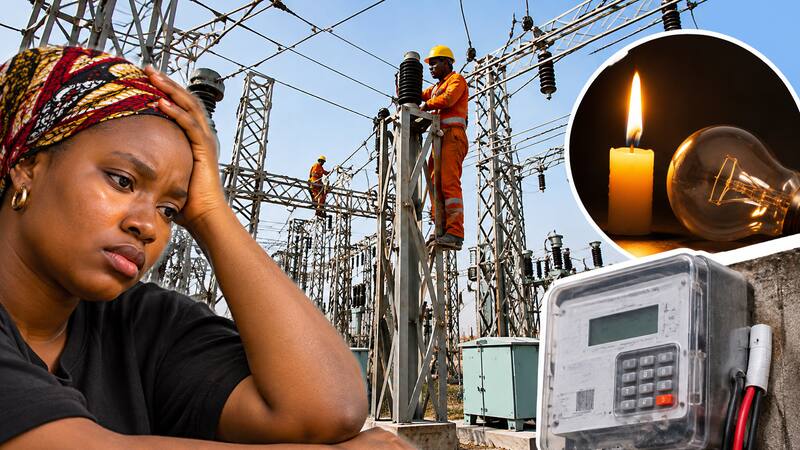
In recent days, Ikeja Electric, the power company tasked with providing residents of Lagos State with electricity, has spent more time apologising than delivering the service it is meant to provide.
On Thursday, the company issued yet another public apology to its customers after it failed again to supply the expected minimum of 20 hours of electricity to its upscale Band A feeders on November 3rd and 4th.
This latest appeal marks the company’s eighth apology in just ten days. Band A customers pay absurdly high tariffs for stable and reliable power. Instead, they get constant outages and perfunctory apologies.
While the epileptic and embarrassing electricity supply is somewhat an indictment of Ikeja Electric, the assessment of the power situation is not an attack on the company. The company is merely emblematic of a monumental national mess. Every other electricity distribution company (DisCo) in Nigeria faces the exact same troubling impasse. They cannot distribute what they do not have. They simply pass the heavy burden of a structural, infrastructural deficiencies and dysfunction system down to the end consumers.
The Neglected Citizens
While Band A customers get incessant apologies, millions of Nigerians who are in lower electricity categories get absolute silence and disdain. Customers on Bands B, C, D, and E are treated like second-, third-, fourth-, and fifth-class citizens
When the grid collapses or generation drops, these lower bands shoulder the crippling burden of intense load shedding. DisCos quickly channel and push the little available power to Band A to avoid regulatory concern and customers’ outrage. Yet, the DisCos never issue public apologies to these lower bands. Their darkness has become a thing of unspoken official consensus. Their daily suffering is simply normalised.
The Nigerian Electricity Regulatory Commission (NERC) position .
NERC reinforces this blatant energy consumer segregation. In June 2026, directed special compensation strictly for Band A customers over severe electricity shortages. The regulations mandate that feeders receiving less than 18 hours of daily power get a 2 per cent energy credit.
But what about the other bands? NERC’s compensation framework completely sidelines and completely ignores them. They receive no compensation for missed targets. They receive no regulatory cover whatsoever. They are entirely abandoned by the very commission meant to protect all electricity consumers equally.
A National Embarrassment
To understand the severity of this crisis across all bands, look at the National Grid. As of 9:53 a.m. on Thursday morning, the total load allocation for the entire country sat at exactly 2,953.00 Megawatts (MW). That figure is extremely appalling and pathetic.
Nigeria is a country with an estimated over 244 million people. Generating less than 3,000 MW is an absolute joke and calls into question the seriousness of a government desirous of comprehensive national development and a robust one-trillion-dollar economy. This is not the hallmark of a country that wants to industrialise and grow gross domestic product at a double-digit rate. A nation cannot run a modern economy on diesel generator fumes or solar and inverter. Electricity is the foundation of industrialisation, and industrialisation is the bedrock of economic prosperity.
For proper context, look at South Africa. South Africa currently operates with an electricity capacity of 32,246 MW. They have a population of about 63 million people. That is roughly a quarter of Nigeria’s population.
Yet, South Africa distributes 11 times more electricity than Nigeria, despite having far fewer citizens. This troubling contrast underscores the malaise that besets Nigeria’s power sector. Other nations build thriving industries on the back of energy security. Nigerians are left reading performative apology notes on the internet.
Abysmal grid performance
The Nigerian Independent System Operator (NISO) explained the poor performance of the grid in a statement on Thursday.
NISO attributed the current drop in power generation to two main factors. First, the operator cited severe gas supply shortages at thermal power generating stations. Second, it pointed to reduced water inflows into reservoirs. This low water level severely cripples the generation capacity of hydroelectric stations.
Because these stations are operating below par, the total electricity sent to the grid drops sharply, which consequently affects the power allocated to distribution companies, shrinking it drastically. NISO promises to optimise available generation and maintain grid stability.
But these technical explanations offer no material respite or real comfort. The gas supply excuse reeks of laziness, complacency and utter lack of imagination in solving a perennial problem. A nation incredibly rich in natural gas should never lack the gas to power its own grid.
Ultimately, compensation for a select few does not and will never compensate for actual electricity. The constant apologies from DisCos are mere symptoms of a deep systemic rot.
Until the federal government take matters into its own hands and gives the nation’s shameful and embarrassing power situation the seriousness and dedication it deserves. The vicious cycle of the poor and sorry state of electricity supply will persist.