
Seven months after armed men attacked Angwan Rukuba community in Jos North, Plateau State, the bullet holes on shops remain visible, serving as a reminder of the violence that shattered lives and livelihoods on March 29.
An affected resident, who had operated his chemist and provision store for more than two decades, said he initially mistook the gunshots for an operation by officials of the National Drug Law Enforcement Agency until a customer inside his shop was hit.
The attack occurred on Palm Sunday when armed men on motorcycles invaded the Gari Ya Waye area, shooting at residents before forcing their way into homes and shops.
More than 10 people were initially reported killed, but the death toll rose to 33 as some of the injured later died in hospital.

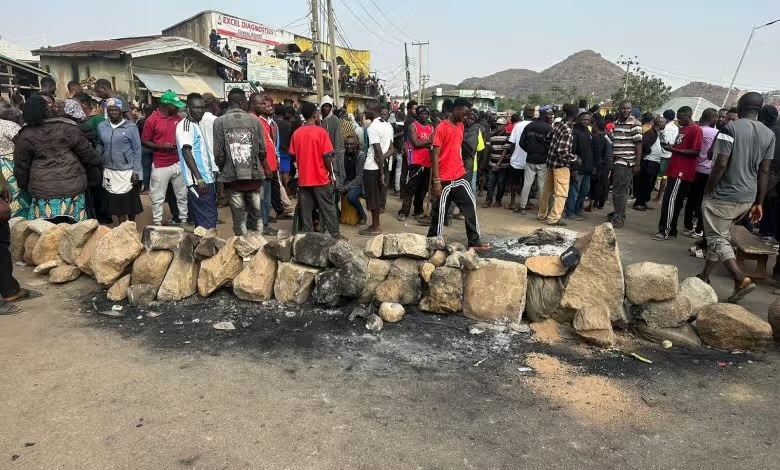
The victim said he escaped unharmed by what he described as a miracle, while a customer and a girl who sought refuge in his shop were both shot.
A promise that residents say has not been fulfilled
Three days after the incident, President Bola Tinubu visited Plateau to meet victims and community representatives at Yakubu Gowon Airport.
During the visit, he expressed sympathy and assured residents that the tragedy would not happen again.


“There is nothing I can give you, whether money in billions, but console you and promise you that this experience will not repeat itself,” Tinubu said.
He also promised improved security surveillance, including the installation of streetlights and cameras, and pledged that those responsible would be brought to justice.
However, less than a day after his visit, another deadly incident was reported in the state.
A review by Within Nigeria identified at least 29 attacks across Plateau communities after the president’s assurance, resulting in more than 100 deaths.
Among the incidents was an April 3 ambush on youths returning from a mining site in Nyango Gyel, Jos South, which reportedly killed at least three people.
Three days later, gunmen attacked Pwomol village in Barkin Ladi, killing three residents, while separate attacks on communities in Riyom and Barkin Ladi on April 20 claimed at least six lives.
The violence continued in subsequent months, including the killing of a pastor, his wife and their two children in Gako village on April 26.
In June, at least 20 people died in attacks on Kawel and Kopkon communities in Bokkos, while an August 18 assault on Bim-Pier community in Mangu reportedly killed at least 23 people, mostly women and children.
Further killings were recorded in September and October across Barkin Ladi, Riyom, Jos South and other areas, with victims including travellers, miners, security personnel and community vigilantes.
Residents question government response
Although Angwan Rukuba has not recorded another attack since March, an affected resident said fear remains widespread and residents are uncertain about the government’s ability to prevent further violence.
“It will never happen again? Has it not continued happening in other communities in Plateau?” the resident asked.
“The attacks haven’t stopped; even last week, there was an attack. My only advice is if you have your way, protect yourself, don’t wait on government.”
Conflict researcher and lecturer at the Centre for Peace and Security Studies, Modibbo Adama University, Saheed Owonikoko, questioned the credibility of the president’s assurance, arguing that his decision to meet victims at the airport rather than visit the affected community weakened the message.
“If the president, who has a lot of security details, is afraid to go to that area, do you think people will hold anything that he is saying very seriously? I don’t think so,” Owonikoko said.
He maintained that public assurances could not resolve insecurity without practical interventions.
“An ordinary word proclamation does not solve a security crisis. You have to take concrete steps,” he said.
Relief and security measures
Tinubu had announced N2bn in relief support for victims and later met a 32-member Plateau delegation at the State House, asking leaders to review previous government reports and recommend measures to address the recurring violence.
The victim, however, said he had received no assistance from either the federal or state government, apart from hearing that hospital bills were paid for a woman injured during the attack.
Angwan Rukuba Youth Forum secretary, Enoch Garba, said residents remained traumatised despite the return of normal commercial activities, adding that sudden sounds still frightened some people.
He acknowledged the installation of some streetlights but said several parts of the community remained poorly illuminated, while residents also needed a faulty electricity transformer replaced.
Plateau commissioner for information, Joyce Ramnap, said the state government had installed streetlights equipped with CCTV cameras and strengthened surveillance around Angwan Rukuba.
“The state government is not resting on its oars to ensure that Plateau is safe for everyone within and around the state,” she said.
On relief payments, Ramnap said verification and needs assessments were necessary before funds could be distributed, adding that the state’s ministry of humanitarian affairs was still relatively new.
She also said the government wanted suspects linked to the attacks prosecuted, although security concerns had influenced the handling of court proceedings.
The challenge of ending recurring violence
Owonikoko attributed the prolonged crisis partly to the politicisation of ethnic and religious identities, which he said had intensified tensions between communities.
He described the situation as a conflict trap in which unresolved attacks trigger reprisals and further violence, particularly where government intervention is weak.
The researcher called for greater decentralisation of security, including stronger local policing structures that could respond more quickly to threats.
“We have to decentralise security platforms. I am of the opinion that even local government needs to have police,” he said.
He also warned that the failure to protect communities, deliver relief and ensure accountability could undermine public confidence and encourage some residents to seek alternative forms of justice.
For this resident, the physical damage to his shop remains unrepaired, but the deeper concern is whether residents can feel safe again without waiting for another tragedy.