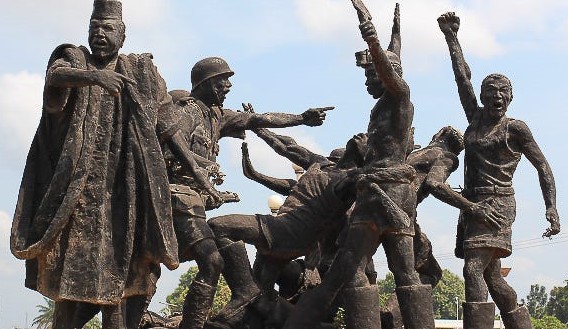
On November 18, 1949, British colonial police opened fire on a group of unarmed Nigerian coal miners who were peacefully protesting for better working conditions, fair wages and welfare reforms at the Iva Valley Coal Mine in Enugu.
Reports showed that 21 miners were killed on the spot, while fifty-one others sustained gunshot wounds of varying degrees.
Eyewitnesses disclosed that the miners had gathered at the mine in continuation of their strike over unpaid back-pay, poor working conditions and the inhuman system of casualisation known as ‘rostering’.
The men, who had been on work-to-rule, said they were only demanding what was rightfully due to them. They carried no weapons. Many had tied red cloth to their helmets and clothing as a sign of solidarity.
Trouble started when a detachment of police officers, led by Superintendent F.S. Philip arrived at the mine to remove explosives and disperse the gathering.
Witnesses said the miners were singing and chanting when the police opened fire without warning.
A survivor, who pleaded anonymity, said;
“We were not fighting. We were singing. Suddenly, we heard gunshots. Men started falling. Some were shot in the back while trying to run.”
The first victim was identified as Sunday Anyasado, a young hewer who had recently married. He was followed by Livinus Okechukwuma, a machine man, and Okafor Ageni, a tubman who had stepped out to ask what was happening.