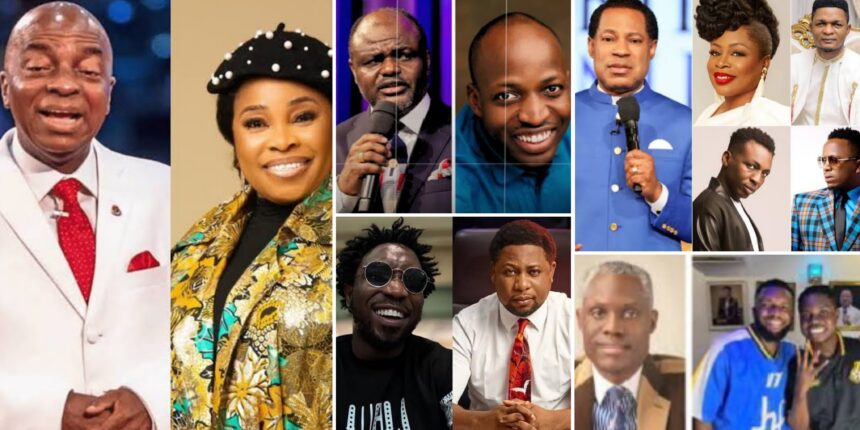
Tope Alabi’s account of how Bishop David Oyedepo corrected her dressing has brought attention to a series of encounters between prominent Nigerian pastors and gospel musicians. Some incidents involved personal advice over appearance and conduct, while others centred on the messages in gospel songs, the behaviour of music ministers and the growing financial demands associated with church performances.
Several of these encounters unfolded publicly, with pastors explaining their positions during sermons and musicians sharing their experiences or responding to allegations. From Oyedepo to Pastor Chris Oyakhilome and Femi Lazarus, the stories reveal different moments when religious leaders confronted issues surrounding the gospel music industry.
Tope Alabi recounts how Oyedepo criticised her dressing

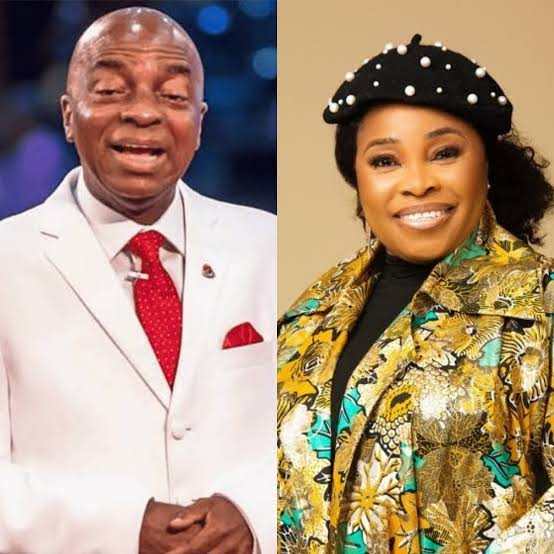
Nigerian gospel singer Tope Alabi shared an experience involving Bishop David Oyedepo, founder of Living Faith Church Worldwide, during a visit to his office. Speaking at a music ministers’ conference in Abeokuta, Ogun State, Alabi recalled how the cleric corrected her appearance after she visited him wearing tight denim trousers and a short blouse that exposed part of her waist.
According to the singer, Oyedepo had occasionally invited her for discussions, guidance and corrections, and their relationship allowed him to speak to her about matters beyond her music career. During one of those visits, he looked at her outfit and questioned whether it was appropriate for someone at her stage of life, particularly as her children were approaching the age when they could start having families of their own.
Recalling the encounter, Alabi quoted Oyedepo as saying, “You whose children will soon give birth, look at what you are wearing.” The pastor reportedly questioned whether that was how she intended to dress at that stage of her life, making it clear that he was unhappy with her choice of clothing.
Alabi said she excused herself, went to a nearby shop and purchased a longer blouse before returning to see the cleric. She explained that the decision was her way of showing that she had understood his correction and was willing to act on it, turning the encounter into an experience she later shared publicly.
Reflecting on the experience, the singer said, “So anytime now when Papa speaks to me, Papa knows that it is an obedient child he is speaking to.” She also discussed how some adults become unwilling to accept corrections from older people, regardless of the wisdom or experience behind the advice.
Alabi added, “Many of us who are grown to my age can no longer obey someone older than us.” Her account presented the encounter as a personal lesson in humility, respect and accepting guidance from someone she considered a spiritual elder.
Abel Damina questions contemporary gospel music

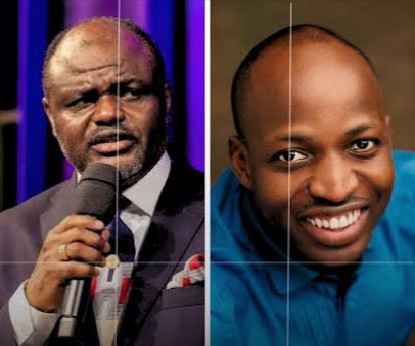
On June 10, 2024, Pastor Abel Damina, founder of Power City International Church, raised concerns about contemporary gospel music, particularly the increasing use of repetitive chants during worship sessions. The cleric questioned the spiritual significance of musicians repeating a few lines for extended periods while describing the practice as an expression of the Holy Spirit.
During a sermon, Damina said, “I hear the latest thing that music ministers are doing now is what is called Chanting.” He subsequently questioned the practice, asking, “What is chanting, repeating one or two lines for over one hour and they call it Spirit?”
His criticism became stronger as he suggested that certain musical practices were introducing spiritual ideas he considered inconsistent with biblical Christianity. Damina described the development as “Voodoo coming through the back door and Satan and abstract projection coming through the back door in the name of music.”
The pastor also challenged the idea that a song should automatically be accepted because a recognised gospel musician wrote or performed it. He declared, “I don’t care who the song writer is,” stressing that the lyrics of Christian songs should be examined against biblical teachings.
One of the songs he questioned was Channels of My Spirit Open, associated with gospel singer Dunsin Oyekan. Damina asked, “Like the song Channels of my spirit open, what Channels?” His concern centred on the meaning of the expression and whether it reflected the teachings of the Bible.
Damina’s criticism focused on the song’s lyrics and the wider practices he believed were becoming common among contemporary gospel musicians, bringing Oyekan’s song into the discussion.
Damina compares gospel singers with Davido, Tiwa Savage, Burna Boy
On February 8, 2025, Damina, founder of Power City International Church, returned to the subject of gospel music, this time questioning the business arrangements and professional demands of some established gospel artistes. His comments followed a viral discussion involving Pastor Chris Oyakhilome, who had spoken about former gospel musicians associated with Christ Embassy and their decision to leave the ministry.
Damina argued that some gospel musicians had adopted the same commercial structures associated with mainstream entertainment, including professional management, agents, booking arrangements and performance requirements. To illustrate his argument, he compared their operations with those of popular Nigerian secular artistes.
He declared, “There is no difference between them and Davido, Tiwa Savage and Burna Boy.” The pastor maintained that some gospel performers operated like mainstream entertainers, with churches expected to meet several conditions before securing their appearances.
He also questioned whether every song performed by artistes described as gospel ministers actually communicated the Christian gospel. According to him, music should carry the message of Christ’s death, burial and resurrection rather than merely offering motivation or entertainment.
Explaining his position, Damina said, “The gospel must have the facts in it.” He argued that songs without those central elements should not automatically be classified as gospel music simply because they were performed by Christian artistes.
His criticism extended to the performance fees allegedly demanded by some popular gospel musicians. Damina claimed that some charged as much as $50,000 for a single night, while others reportedly demanded ₦10 million for appearances.
He described some of the arrangements as commercial activities operating under the identity of gospel ministry, saying, “These are businessmen using the Bible as a meal ticket.” He also complained that some musicians left the churches where they developed their talents after becoming successful, choosing instead to establish independent professional brands.
Chris Oyakhilome speaks about former Christ Embassy singers
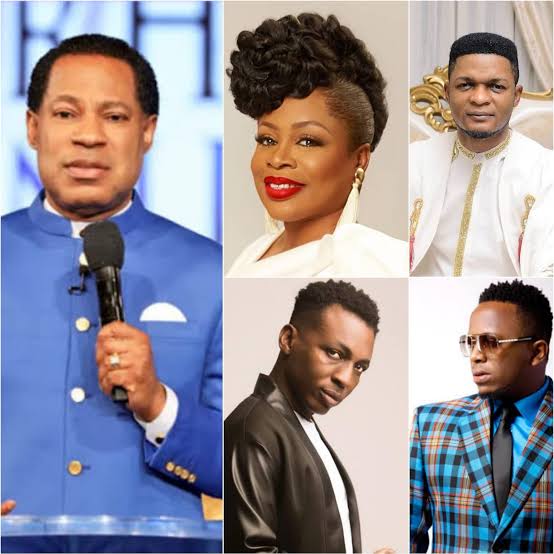
Pastor Chris Oyakhilome, founder and president of Christ Embassy, attracted attention in February 2025 after discussing gospel musicians who previously served in his ministry. His comments centred on singers who became popular through the church before eventually pursuing careers outside the ministry.
According to Oyakhilome, some of the musicians had concentrated on leading praise and worship but were less interested in other spiritual responsibilities expected of church workers. He suggested that their priorities changed as their popularity increased and opportunities to earn money from music became more attractive.
The pastor said, “They were not soul winners; they led praise in church, and when it was time for prayers, they were gone.” He also expressed dissatisfaction with the direction of church music, accusing some performers of making worship increasingly centred on themselves rather than God.
Oyakhilome stated, “They danced for themselves, celebrated themselves not God.” His remarks suggested that he believed the purpose of worship had become secondary to performance and personal recognition among some musicians.
The cleric explained that he initially supported and celebrated the singers before becoming concerned about their changing attitudes. He said, “I did at the beginning and celebrated them, but when I changed, they refused to change with me, so I had to let them go.”
He further expressed hope that the musicians would reconsider their decisions, declaring, “I hope they all repent.” His comments generated discussions about the relationship between church music departments and professional gospel artistes who develop their careers within established ministries.
Names such as Sinach, Frank Edwards, Joe Praize and Eben became associated with the discussion because of their previous connections with Christ Embassy.
Femi Lazarus questions gospel musicians’ performance fees


Another major confrontation emerged in March 2025 when Apostle Femi Lazarus, lead pastor of Light Nation Church, criticised the financial demands allegedly made by some gospel artistes before accepting invitations to minister at church programmes.
On March 18, Lazarus disclosed that someone had requested ₦5 million to sing at a church event. He expressed concern about the growing cost of inviting popular gospel musicians, suggesting that the financial expectations surrounding some performances were becoming excessive.
The controversy developed further around March 23 and 24, when Lazarus presented an alleged performance invoice during a sermon. The document reportedly contained a $10,000 performance fee, alongside several conditions covering travel, accommodation, feeding and payment arrangements.
According to the details presented, the artiste required a compulsory 50 per cent non refundable advance payment, with the remaining balance expected 2 days before the programme. The invoice also reportedly included a first class ticket for the singer, economy tickets for accompanying team members, executive hotel accommodation and meals for the artiste’s entourage.
One particularly striking detail was the reported requirement for an entourage of approximately 40 people. Lazarus questioned the demands and argued that some performers appeared to be operating more like commercial entertainers than ministers invited to serve at church gatherings.
He also criticised the way some artistes justified their expensive appearances, saying, “When they pay you this kind of money you have to act drama to justify the amount paid.”
The pastor questioned whether the amounts being demanded were consistent with the purpose of gospel ministry, particularly when churches were inviting musicians to lead worship and minister through songs.
Timi Dakolo challenges Femi Lazarus over allegations
Lazarus’s comments attracted a response from Nigerian singer Timi Dakolo, who questioned the pastor’s decision to present an alleged invoice without identifying the artiste involved. Dakolo argued that the public should know who was responsible for the demands if the document was being used to make claims about gospel musicians.
He challenged the pastor, writing, “Name the artist in order to justify capping.” His response brought the discussion beyond performance fees to the question of whether gospel musicians should be expected to offer their services without substantial compensation.
Dakolo argued that singers had professional responsibilities, including paying band members, managers and other people involved in their performances. He also questioned why churches could spend significant amounts on buildings and programmes while expecting musicians to accept relatively small payments for their work.
The disagreement became more heated when Dakolo questioned the financial arrangements surrounding Lazarus’s own school of ministry, suggesting that religious leaders also charged for certain services connected to their ministries.
Kesiena Esiri criticises Ebuka Songs over Peller’s livestream

On July 24 and 25, 2025, Rev Kesiena Esiri Henry, a Nigerian cleric, publicly criticised gospel singer Ebuka Songs following his participation in a livestream involving popular TikTok personality Peller.
The livestream attracted attention because it featured religious expressions, prayers and gospel music in an entertainment setting. Esiri took issue with the way certain spiritual activities were presented, particularly the treatment of speaking in tongues and prophecy.
The pastor questioned the conduct of someone who identified as a gospel singer while participating in an interaction he believed made light of Christian spiritual practices. His criticism was directed at Ebuka Songs, making the incident different from some of the wider industry criticisms made by other pastors.
Esiri questioned the singer’s conduct, saying, “How can you explain to me that somebody who says he sings for God.” He went further to describe the livestream, stating, “We saw him on a video with one clown mocking tongues, mocking prophecy….”
His remarks centred on the responsibility he believed gospel musicians had to protect the seriousness of the spiritual activities they publicly represented. For Esiri, the concern was not simply that a gospel singer had appeared alongside a popular social media personality, but that the interaction involved religious expressions he considered inappropriate.
The reported criticism brought Ebuka Songs into another discussion about how gospel musicians balance their religious identity with their growing presence in entertainment spaces and online livestreams.
Wale Olasoji questions churches’ dependence on popular gospel artistes

Pastor Wale Olasoji, Senior Pastor of Living Impact Christian Centre, also featured in discussions about the financial relationship between churches and established gospel musicians. His criticism focused on the tendency of some congregations to spend substantial amounts inviting popular external artistes while overlooking the talents available within their own music departments.
His position centred on the importance of developing local choir members and encouraging people already serving in churches rather than depending heavily on expensive guest performers for worship programmes.
The issue connects with the wider debate raised by Abel Damina and Femi Lazarus about the cost of engaging established gospel musicians. His comments formed part of the wider discussion about the relationship between churches and popular gospel artistes.
The different incidents involving these pastors show how conversations about Nigerian gospel music have extended beyond songs and performances to include personal conduct, modest dressing, spiritual responsibilities and financial arrangements. While Tope Alabi shared an experience in which she accepted Oyedepo’s personal correction, other incidents involved pastors publicly questioning the direction of contemporary gospel music and the conduct of musicians operating within the industry.