


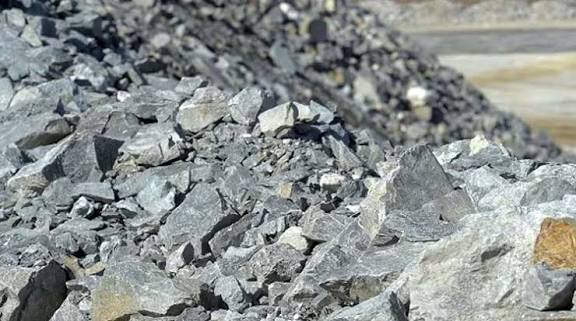
It is a popular and acceptable assertion that Nigeria is naturally endowed and immensely rich in mineral resources. With the fast-evolving world and advancement in technology, these hitherto undiscovered or underutilised mineral resources have become a crucial and important component of industrialisation and commerce. One of such mineral resources is lithium. Lithium is to the modern world what crude oil was to the industrial revolution of the early 19th century and mid-20th century. If everything goes according to plan, Nigeria will again make a fortune from lithium like it did with crude oil in the 70s and 90s but squandered the hefty proceeds.
It has often been said that the discovery of crude oil was a curse to Nigeria, as it became the Dutch disease that undermined and hampered the growth of other critical sectors of the economy, like agriculture and mining, which used to be the mainstay of the Nigerian economy during the colonial era and the early years of independence. The discovery of oil which somewhat coincided with the abolition of Nigeria’s regional system of government that was responsible for the use of key cash crops — cocoa in the West, groundnut in the north and palm oil in the east to earn foreign exchange and develop the nation — spurred a drastic decline in interest in agriculture especially from the government. The government abandoned agriculture for crude and the people followed suit.
It’s not so much the neglect of agriculture that infuriates one but the troubling wastefulness and profound lack of vision by the successive Nigerian governments during the many oil booms starting in the 70s that leave one desolate and forlorn. The absence of foresight and impactful leadership during the oil booms is deeply worrisome. The rhetoric and public remarks of General Yakubu Gowon, the man who oversaw the affairs of the nation during the high oil prices of the 70s, give one a sense of how the country has continued to be beset by bad and unimaginative leaders who stunt its growth. He was said to have remarked that Nigeria’s problem wasn’t money but how to spend. When he made that distasteful statement, Nigeria did not and still does not have a ten-lane highway that connects the nation’s key states. It did not and still does not have a cross-country rail network that connects every major town and city in the country and opens it up. Japan already had a high-speed train in the 60s.
From the soaring oil prices of the 70s occasioned by the oil boom of that era to the oil windfall of the 90s brought about by the Gulf War during the regime of military head of state, General Ibrahim Badamasi Babangida, Nigeria wasted its many golden and glorious opportunities to use the riches brought to it by the black gold to develop the country. It frittered away the financial gains and squandered the proceeds with corruption and mismanagement which engendered economic distortion and stagnation. However, another opportunity has presented itself to course-correct and address the harrowing mistakes of the past. We now have a second chance with lithium like we once had with crude oil.
With the world moving away from fossil fuel-powered vehicles and electric vehicles (EVs) gaining momentum and considerable acceptance around the world, the demand for lithium has surged, especially among leading electric vehicle manufacturing countries like China. It has become a veritable cornerstone and key driver for the world’s economy. Lithium is a key component in the production of batteries for electric vehicles and renewable energy storage systems, and with the growing demand for lithium, Nigeria can position itself to become a major player in the global lithium market.
Preliminary estimate puts Nigeria’s lithium reserves at around $34 billion with potential to rise to $70–165 billion in the next decade. Nigeria stand to gain a lot from harnessing and maximising the potential of lithium. Lithium deposits have been discovered in several Nigerian states, including Nasarawa, Kogi, Kwara, Ekiti, Cross River and Kebbi, among others. The Nigerian government has recognised the potential of these reserves and is actively promoting lithium investment activities.
Nigeria does not rank yet among the world’s leading lithium producers – Australia, Chile and China account for more than 80% of global production – but discoveries made so far indicate huge potential, according to the prospectors. One key attraction of Nigerian lithium is its high grade, with some deposits containing as much as 13% lithium oxide. Deposits with a mere 0.4% lithium are often worth exploitation.
While lithium holds so much potential for Nigeria and can contribute immensely to its economy, the early signs are not encouraging and anyone who is hoping the country will use the gains of lithium mining to bring about economic growth and prosperity may want to reduce their expectations. The Minerals and Mining Act of 2007 elucidates the legal framework for lithium mining in Nigeria. The act vests ownership of all mineral resources in the Federal Government under the supervision of the Ministry of Mines and Steel Development. The ministry carries out the issuance of exploration licenses, mining leases, quarry leases, and small-scale mining leases.
However, these regulations have done little or nothing to halt the brazen disregard for the country’s mining laws. In fact, illegal lithium mining across the country has been reported to cause several environmental and social concerns, including child labour. This means a lion’s share of Nigeria’s lithium mining happens outside legal frameworks and is unregulated, leading to unsafe practices. In some parts of the country, numerous mines function without official oversight, employing rudimentary methods that disregard environmental and safety standards. This refusal to adhere to regulations and oversight has resulted in unsafe practices that impact both the environment and battery communities. To address these existential challenges, the government must implement a robust regulatory framework.
The best way for Nigeria to fully harness the potential of lithium-ion and reap enormous gains is through value addition and not just the export of raw, unrefined lithium. But Nigeria does not have the needed technical know-how and infrastructural facilities to produce and export batteries made from lithium. Its arduous journey to becoming a major player in the lithium-ion battery production industry has not begun. The entire lithium battery-grade compound production process is capital-intensive. It requires tremendous, reliable, and efficient power, technological expertise, and essential chemical supply chains, which the country clearly does not have at the moment.
Developing the lithium battery production value chain typically involves stages: mining capacity development, refining and processing infrastructure, and battery production. While some companies have started constructing lithium processing plants in Nigeria, it is not clear if these will produce battery-grade lithium compounds. Nigeria has recorded some investments in lithium mining via the Chinese. Two Chinese companies are investing $800 million in two lithium processing factories. Jiuling Lithium Mining Company is constructing a $600m facility in Niger state. The facility is expected to start production later this year. In Nasarawa State, a $200m lithium processing facility is being built by Canmax Technologies.
Be that has it may, Nigeria cannot afford to entirely surrender its lithium processing to foreign investors, it needs to grab the bull by the horn and be part of the whole value chain instead of just participating in profit sharing that sees it get shortchanged by greedy investors because it leaves the entire industry to certain vested interest, lest it repeats the mistakes it made with oil. Even though it doesn’t have what is required to set up and operate a lithium processing plant now, it must begin the process of doing so by investing in research and development in the sector