


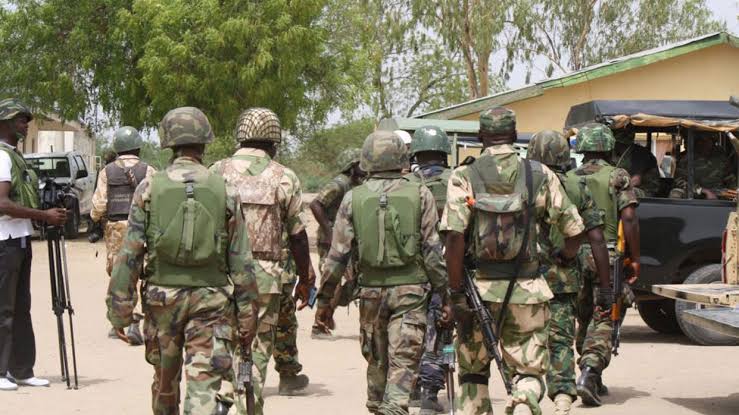
Be that as it may, something has to be said for how this military tradition drains state resources and places a burden on the government in the context of providing sound, reliable and efficient security for the nation.
It is no longer news that President Bola Tinubu has carried out a reshuffling of his security team. He announced a shake-up in the military hierarchy on Friday. The move led to changes that resulted in the termination of the appointments of service chiefs, marking President Tinubu’s first deliberate and comprehensive rejigging of his security team.
From speculations attributing the decision to the recent report of a coup attempt to those insinuating that the shake-up was less about security but more about politics as Tinubu moves to consolidate power by handing over key security agencies, especially the military, to loyalists particularly people from his ethnicity, the decision has been greeted by mixed reactions and divergent views. The major casualty of the change in the military hierarchy is Christopher Musa, who was the chief of defence staff (CDS) before yesterday’s shake-up. He is replaced by Olufemi Oluyede, a lieutenant general.
The presidency has since debunked speculations and conjectures linking the changes to the purported coup plot. While one can easily dismiss and wave off the reasons behind the shake-up as it is the prerogative of the president to hire and fire anyone he appoints, including service chiefs holding critical and sensitive positions, we must also take into account what this kind of shake-up in the nation’s security architecture does to the army.
The discussion on how the forced retirement of senior military officers due to the appointment of their subordinates and juniors to high positions undermines and neuters the army must not be treated with scant regard. For instance, the appointment of Olufemi Oluyede means that Musa, who held the spot before him, will now proceed on retirement. It would likely not have mattered much to many citizens, who watched on helplessly but with growing concern, if Musa was the only one who would be affected by the reshuffling of the military top brass.
This, however, will not be the case. Alongside Musa, all the officers in his regular course, who were commissioned with him, will retire voluntarily. When a Service Chief is asked (forced) to resign or exit his office, even though he has a higher rank (Lieutenant General) than his regular course, they will all retire (Major General) voluntarily with him as well because an officer in the lower regular course will take over and so, the new Officer’s regular course are now the leading regular course.
What this means is that every single officer who is above the recently appointed service chiefs in hierarchy and chain of command will now draw the curtain on their military career. At least sixty officers, mostly generals, will be affected by the shake-up. Officers from the Nigerian Defence Academy Regular Courses 38, 39 and a few from Course 40 will be affected, sources in the military said.
While the military tradition of easing out top military officers when their juniors are elevated above them has been attributed to the need to maintain discipline, hierarchy, professionalism and command structure in the army is understandable and cannot be faulted because even in civilian organisations that are nowhere has rigid, regimented and sensitive as the army, promoting a junior employees over their senior while the senior remains in the company could breed discontent, resentment and rancour which tends to negatively impact the operation and management of the company which in turn could lead to its collapse.
Be that as it may, something has to be said for how this military tradition drains state resources and places a burden on the government in the context of providing reliable and efficient security for the nation. Millions of naira are expended on training these officers at home and abroad. There should be a practical solution to the conundrum. A better way to handle the situation, instead of having these top military officers who suddenly find themselves out of a job for no fault of theirs, wasting away and rendering the years spent training, learning and honing their military skills useless, especially as optional retention in service is alien to the military profession and not allowed.
Considering the number of officers forced to leave in one fell swoop and again, the resources the country spends on training them, we may want to look at other ways to put their experience and transferable skills to use outside military service. For instance, we can deploy them as full-time lecturers in military institutions, but as civilians, they would lecture on strategic thinking, leadership, etc. This way, they don’t become redundant, and the country benefits from their knowledge and wealth of experience. Their skills and experience should be utilised and maximised in other areas of human endeavours not left to waste.