


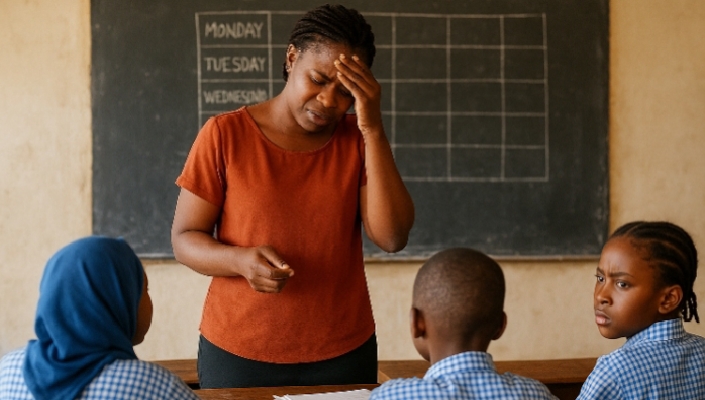
The classroom is silent for a fraction of a second—just long enough for a teacher to catch her breath, adjust her glasses, and glance at the clock. Then the door swings open, the students shuffle in, the morning announcements crackle over the loudspeaker, and the teacher finds herself already behind schedule. The chalk dust hangs in the air like whispered regrets, the timetable on the board still blinking, unfinished. Somewhere inside that routine lies something far more volatile than misplanned lessons or late arrivals. It is an accumulated tension: the pressure of too many children, too few resources, too little recognition.
It is what happens when the person meant to inspire, instruct, nurture begins to wear thin. In Nigeria’s schools, this is no occasional faint ripple—it’s becoming a slow‑burning tremor under the foundations of education. Teachers are breaking. Burnout and depression are quietly stalking them, and the consequences are far bigger than classrooms and lesson plans.
This article pulls back the curtain on the human cost of teaching in Nigeria: the unseen emotional toll, the mounting workload, the structural failures—and the urgent need to address a crisis that has been too long overlooked.
The Scale of the Crisis: Understanding Burnout and Depression Among Nigerian Teachers
In Nigeria, teaching is often portrayed as a noble calling. But beneath the honorifics lies a reality of weariness. Numerous studies have documented just how deep the fissures run. For example, a study of primary school teachers in southeast Nigeria found that 69.9% of respondents reported psychological distress, and 36.0% experienced burnout. In another survey focused on secondary school teachers, the prevalence of stress was 72.2% and depression 29.3%.
Burnout is typically understood in three dimensions — emotional exhaustion, depersonalisation (a sense of detachment from one’s work or pupils), and reduced personal accomplishment. For Nigerian teachers, emotional exhaustion alone was reported at 40% in one study, depersonalisation at 39.4%, and reduced sense of achievement at 36.8%.
What do these numbers tell us? They suggest that thousands of teachers across Nigeria wake up, go into classrooms, deliver lessons, grade assignments—and at the same time carry a hidden load that doesn’t show in registers or lesson plans. The mental health of teachers is not a secondary issue; it is central to the functioning of the school system.
Moreover, the crisis is not confined to stress. Depression and anxiety are present, even if they remain less visible. The link between sustained burnout and clinical‑level mental health conditions is well documented globally; the same interplay exists in Nigeria, complicated by scarce resources and weak mental‑health infrastructure.


In short: Nigerian teachers are working under conditions of high psychosocial risk, and many are paying the price. The scale of the crisis demands more than sympathy—it deserves system‑wide recognition and action.
What Drives the Breaking Point: Key Stressors in Nigerian Schools
There is no single cause for teacher burnout in Nigeria. Rather, it is the convergence of many stressors—structural, institutional, personal—that push many teachers to the brink. The following are among the most potent.
Heavy workloads and large class sizes
Teachers routinely face large numbers of pupils, inadequate teaching materials, and classes packed beyond optimal size. One study found that increased workload and role ambiguity strongly predicted burnout among Nigerian teachers. When the teacher’s time is divided among hundreds of assignments, constant discipline issues, and administrative errands, the work becomes less about teaching and more about survival.
In many schools, especially public and under‑resourced ones, the teacher is as much janitor, counsellor, administrator and disciplinarian as instructor. Each role demands energy. Each role distracts from the core: helping children learn. Over time, the split focus and relentless pace eat away at resilience.
Poor working conditions, lack of resources and unclear roles
Teaching in Nigerian schools often means dealing with inadequate infrastructure: crumbling buildings, missing instructional materials, elevated noise levels, erratic electricity, and overcrowded classrooms. These problems are compounded by unclear job descriptions and limited support from school leadership. A systematic review of organisational behaviour in Nigerian public secondary schools found that autocratic leadership styles, lack of collegial support and deficient resources were strongly linked with higher levels of teacher burnout.
When teachers walk into a classroom expecting to teach, only to find the overhead projector broken, chairs missing, windows unhinged or textbooks in short supply, the work becomes worse than difficult—it becomes demoralising. Over time, the teacher’s sense of mission begins to fray.
Emotional burden: pupils, discipline, and detachment
Many teachers report working with pupils who display aggression, misbehaviour, or come from traumatised backgrounds. In such circumstances, teachers inadvertently take on roles of emotional support, often without training or compensation. The emotional labour required—managing conflict, holding space for distressed children, being the one constant in a child’s unstable life—is immense. The mental toll is compounded when the teacher has no outlet.
Extensive research shows that emotional exhaustion arises not just from workload, but from the sustained effort of caring, managing, monitoring, correcting, encouraging—day in, day out. When the young child rushes in with tears or the teenager storms out angry, the teacher remains in the eye of the storm, and after years, that calm centre cracks.
Stagnant career growth, low recognition and delayed remuneration
In Nigeria, many teachers face stagnant salaries, delayed payments, lack of professional development, and limited recognition for their efforts. Despite being the backbone of academic and civic formation, many live in relative invisibility, their contributions undervalued. This mismatch between effort and reward builds frustration. A sense of diminishing returns begins to accompany every morning lesson.
A sense of “I’m doing more, I’m getting less” permeates such classrooms. It chips away at motivation, posture, even the joy of teaching. Over time, the teacher asks: Why am I doing this? And if the answer is only “for the children,” while conditions erode, the answer begins to feel hollow.
Personal lives entwined: the spill‑over effect
Many Nigerian teachers carry dual burdens: classroom stress and domestic responsibilities. Especially for female teachers, who may also be primary carers at home, the overlap can be overwhelming. One piece of commentary noted that female educators balancing home duties and full‑time teaching were 30 % more likely to experience emotional exhaustion in some Nigerian studies.
When the classroom doesn’t stay on the clock, when after‑school grading bleeds into family time, when school discipline issues follow one home, the boundary between work and rest dissolves. Once rest fails, the body and mind begin to deteriorate.
The Human Cost: Unseen Lives Behind the Chalkboard
If the earlier sections dealt in statistics, this section tries to breathe life into those numbers. What does burnout or depression look like when the teacher lives it? How does the toll play out in days, weeks, years?

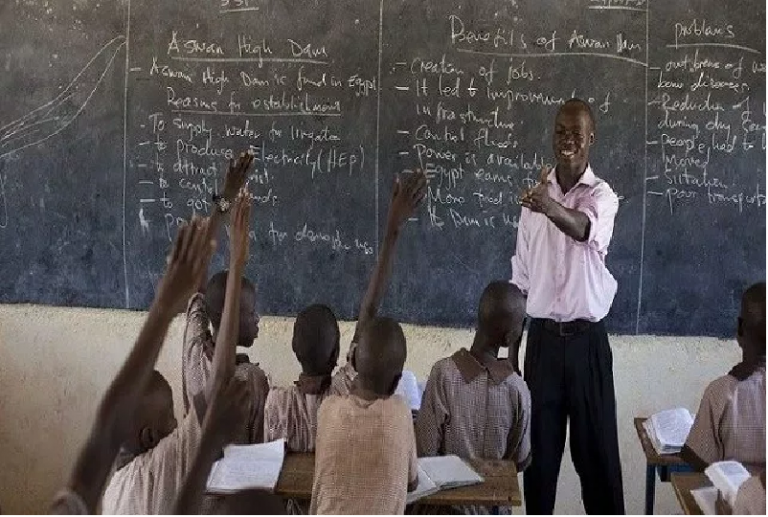
Consider the teacher who enters the staff room ten minutes early, but uses those minutes not to relax but to plan for a class she knows will be chaotic. She hears the chalk screech, counts the bodies, senses the whispers of indiscipline, and already experiences a tightening in her chest. By midday, she has answered 40 questions, steered two fights, handed forms to three children whose parents rarely show up, and accepted yet another request for extra lesson. In the evening she returns home—her head still humming the names of children who didn’t understand today’s geometry—and somewhere in the twilight she wonders whether tomorrow will be the same or worse.
Depression in this context may begin as mild apathy: the teacher stays in bed an extra fifteen minutes, uses the weekend to sleep rather than to recharge. Then the weekend becomes less restorative. She cancels the football match, declines the community meeting. The evenings shrink. The laughter with colleagues becomes rarer. When she finally steps into class, the enthusiasm is thinner, the voice softer. The classroom lights seem harsher. The student’s eyes harder to meet.
Burnout is not dramatic on the first day. It creeps. It is the teacher who used to stay after school now leaving promptly. It is midday headaches that become weekly. It is the growing pile of ungraded scripts. It is the half‑smile when a child thanks her for helping. It is the shortening conversation with the spouse because the teacher is too tired to ask about the family.
And the consequences? The teacher’s health begins to falter—sleep disturbed, appetite changed, mood muted. The classroom suffers: the warming of the teacher’s voice, the creative lesson, the extra push for the weaker child—these begin to vanish. Students sense it, adjust. The school notice board shows more absenteeism. The teacher, once the bedrock, becomes the one barely holding on.
When the teacher breaks, the ripple spreads: colleagues pick up the slack, students pick up the void, the quality of learning diminishes. And in a country where education is a critical driver of social mobility, this is not a private tragedy but a public crisis.
The Ripple Effects: What Teacher Burnout Means for Schools, Pupils and Society
When teachers begin to break, the consequences extend far beyond individual classrooms.
Reduced teaching quality and learning outcomes
Burned‑out teachers struggle to maintain engagement, creativity and energy in their lessons. The capacity to provide extra help, to identify and support struggling pupils, diminishes. The emotional energy required to inspire, to connect, to monitor progress wanes. Over time this affects pupil motivation, attendance, achievement and behaviour. Schools may report more failures, more disruptions, more drop‑outs. The system’s ability to deliver on its mission suffers.
Increased teacher absenteeism, turnover and demotivation
When teachers are ill‑equipped to cope with stress, absenteeism rises. When the same behaviours persist, many leave the profession altogether. High turnover disrupts continuity, wastes recruitment and training resources, and destabilises school culture. For each teacher lost, the system must bear the cost of hiring replacements, readjusting timetables, and rebuilding relationships with pupils. The cost is both human and economic.
Emotional contagion and reduced school morale
Teacher burnout doesn’t happen in isolation. A staff room where tiredness, frustration and cynicism predominate drags overall morale downward. Younger teachers observe this mood, may adopt maladaptive coping, resign mentally or physically. The sense of purpose in the staff room dims. When the adults lose hope, the pupils’ hope is threatened too.
Societal cost: undermining a key development pillar
Education is widely accepted as a vehicle for social mobility, economic growth and civic formation in Nigeria. If the teacher workforce is weakened by burnout and depression, the entire education sector loses effectiveness. The long‑term societal consequences include lower human‑capital formation, weaker civic formation, diminished social trust, and reduced prospects for achieving educational equity. The teacher crisis becomes a national crisis.
Hence, addressing teacher well‑being is not a nicety—it is foundational to Nigeria’s future. The health of teachers is the health of education. The health of education is the health of society.
Why Nigeria’s Education System Is Especially Vulnerable
Every country has teaching stress—but Nigeria’s education system carries unique burdens that amplify the risk of burnout and depression among teachers.
Under‑funding and resource shortages
The Nigerian education sector has long suffered from inadequate funding. Large class sizes, dilapidated infrastructure, broken equipment and lack of instructional materials are common. When a teacher enters such an environment, the teaching task is harder from the start. Struggling to deliver results under constrained conditions increases personal strain and limits the sense of accomplishment.
Status of mental‑health care and stigma
Mental health services are under‑resourced in Nigeria. One review showed that despite a population of about 200 million people, only around 250 psychiatrists were available. Teachers who develop depression, anxiety or burnout symptoms face barriers to seeking help: stigma, lack of awareness, limited access to care, low institutional support. These barriers mean that early signs often go unchecked and escalate.
Weak institutional support and training
Teachers often enter the profession with limited training in how to manage stress, emotional labour, class dynamics, large‑scale teaching. While teacher preparation programmes cover pedagogy, they rarely equip educators to handle the psychosocial aspects of their workload: discipline, trauma, large class sizes, shifting policies. Studies reveal that Nigerian teachers have limited coping strategies for occupational stress. Without institutional frameworks to support teacher well‑being, personal resilience becomes the only buffer—and that buffer cracks.
Socio‑cultural expectations and workload beyond the classroom
In many Nigerian communities, the teacher is expected to fill many roles: mentor, parent figure, community leader. The daily workload formally ends when class finishes, but real work continues: marking, remedial lessons, counselling, meetings, school events. Meanwhile, private responsibilities remain. The blending of professional demands and personal life weakens boundaries. The teacher becomes unable to “switch off,” and this continuous drain fosters emotional exhaustion.
Retention and rural‑urban disparities
Teacher turnover is high in rural Nigerian schools. A qualitative study found that poor living and working conditions, remote postings, lack of infrastructure and inadequate remuneration drove teachers away. In remote settings, the layering of isolation, poor facilities, long hours and constant travel magnifies burnout risk. While urban schools suffer too, rural postings often exacerbate the strain and limit recovery opportunities.
In short: Nigeria’s educational context places heavy demands on teachers, while the systems designed to support them are weak or absent. The result: the risk of breakdown is structurally elevated.
Paths to Recovery: Strategies and Interventions
While the scale of the problem is daunting, there are concrete strategies that can help stabilise and restore teacher well‑being in Nigeria. These require commitment at the individual, school and system level.
Institutional reforms: workload, resources and leadership
Better workload management—reducing class sizes, allocating preparation time, limiting after‑hours duties—can relieve core stressors. Schools should ensure adequate instructional materials, functioning infrastructure, and clear role definitions. Leadership matters: supportive, participative school leaders produce better teacher wellbeing than autocratic ones.
Investment in school improvement is investment in teacher mental health. Even simple changes—fixing a leaking roof, replacing broken chairs, providing quiet prep time—signal respect and relieve constant irritation. When teachers feel supported, the emotional climate changes.

Professional development and mental‑health literacy
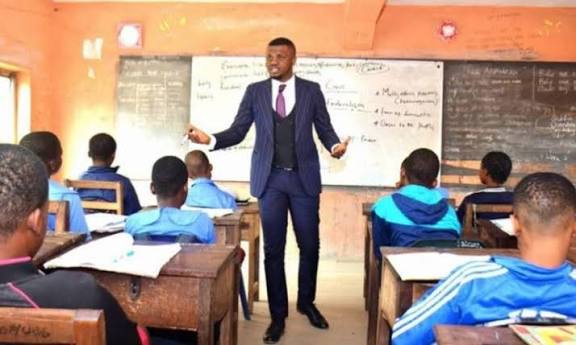
Teachers need not only pedagogic training but also training in coping strategies, stress management, time‑use, classroom management under duress, and detecting early mental‑health issues among themselves and pupils. Planning for teacher well‑being must become part of professional development. One study noted that teachers’ mental health literacy in Nigeria remains low and interventions are possible.
If teachers understand what burnout looks like, recognise early signs in themselves and peers, they may intervene before reaching crisis. School management and educational boards should embed mental‑health awareness into the culture of schooling.
Peer‑support, mentoring and community of practice
Burnout tends to isolate. The teacher loses connection with colleagues, retreats inward, believes they must cope alone. An intentional mentoring programme—pairing newer teachers with experienced ones trained in supportive supervision—can provide emotional buffer. Dialogue spaces, peer‑support groups, structured reflection sessions help teachers share burdens, gain fresh perspective, and reduce sense of isolation.
Schools and districts should encourage communities of practice where teachers talk not just about lesson plans but about their emotional load, coping strategies, classroom climate, and well‑being. Shared experience normalises struggle and builds collective resilience.
Access to mental‑health services and support systems
Given the shortage of mental‑health professionals in Nigeria, creative solutions are required: school‑based counselling, partnerships with NGOs, digital mental‑health platforms, peer‑led support groups. Because stigma remains significant, the school environment must make help accessible, confidential and non‑punitive. Teachers should know that seeking help is a strength, not a weakness.
System‑wide resource allocation is vital: the ministry of education, local governments and teacher unions should advocate for structured mental‑health support for teachers akin to what exists in other professions. Waiting until collapse is too late; preventative infrastructure is needed.
Policy alignment and sustainable funding
Long‑term improvement requires policy alignment. Teacher wellbeing must be embedded in educational policy frameworks, budgeting, monitoring and evaluation. Data on teacher burnout should be collected, tracked and published. Schools should be accountable not only for pupil outcomes but for teacher outcomes. Resources—financial, human, material—must be allocated sustainably. Without policy change, interventions will remain patchy and unsystematic.
Reflective Conclusion
The map of education in Nigeria is plotted in chalk and daylight, in classrooms and blackboards, in the faces of children learning and teachers teaching. But beneath the visible terrain lies another map—the terrain of exhaustion, resilience drained drop by drop, hope bending like a worn blackboard near its frame. When the teacher breaks, the chalk falls silent, the blackboard gathers dust, and the classroom loses its heart.
If Nigeria is to build an education system worthy of its promise, it must recognise that teacher well‑being is foundational. Investing in texts and buildings is vital—but investing in the people who deliver the teaching is even more so. Because when teachers flourish, students flourish. When teachers falter, entire communities feel the tremor.
In the stillness after the students leave and the doors are locked, the teacher sits alone in the empty classroom, the overhead lights humming, the papers ungraded, the future of many young lives balanced in her fatigue. The question is this: will we, as a society, stand by and watch the teacher break? Or will we recognise the fracture, apply the tools, restructure the system—and lift the teacher back up, before the chalk goes still for good?