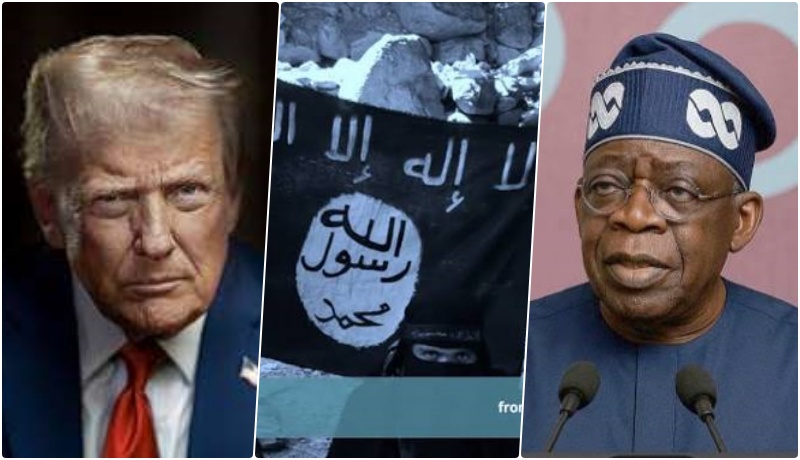
On Saturday, May 16, 2026 President Bola Tinubu announced the killing of a senior Islamic State leader, Abu-Bilal Al-Manuki, also known as Abu-Mainok.
According to the president, the ISIS leader was killed during a joint operation carried out by Nigerian and United States forces in the Lake Chad Basin.
In a release personally signed, President Tinubu said the operation marked “a significant example of effective collaboration in the fight against terrorism” between both countries.
He further said that “a daring joint operation that dealt a heavy blow to the ranks of the Islamic State.”
He added that “early assessments confirm the elimination of the wanted IS senior leader, Abu-Bilal Al-Manuki, also known as Abu-Mainok, along with several of his lieutenants, during a strike on his compound in the Lake Chad Basin.”


Appreciating the effort of the United States of America, USA, Tinubu said “Nigeria appreciates this partnership with the United States in advancing our shared security objectives. I extend my sincere gratitude to President Trump for his leadership and unwavering support in this effort,” the statement read.
He praised military personnel from both countries, saying, “I commend the personnel involved on both sides for their professionalism and courage, and I look forward to more decisive strikes against all terrorist enclaves across the nation.”
Donald Trump Corroborates Tinubu’s statement
However, corroborating the statement, the US president, Donald Trump said that the operation was made possible through joint collaboration of the two countries.
“Tonight, at my direction, brave American forces and the Armed Forces of Nigeria flawlessly executed a meticulously planned and very complex mission to eliminate the most active terrorist in the world from the battlefield,” Trump wrote on Truth Social on Friday.
According to Trump, the slain militant leader, whom he described as the “second in command of ISIS globally,” had believed he could evade capture in Africa.
“Abu-Bilal al-Minuki, second in command of ISIS globally, thought he could hide in Africa, but little did he know we had sources who kept us informed on what he was doing,” he said.
Explaining further, the US leader added that Al-Minuki, who was placed under American sanctions in 2023 over his ties to the Islamic State group, would “no longer terrorize the people of Africa, or help plan operations to target Americans.”
He stressed that “with his removal, ISIS’s global operation is greatly diminished,” while thanking the Nigerian government for its “partnership” in the operation.
The joint operation underscores growing security cooperation between Nigeria and the United States as both countries intensify efforts to weaken extremist networks operating across the Lake Chad Basin and the wider West African region.
Controversy trail the reported killing
Following the reported killing of ISIS leader, instead of the usual jubilation by the Nigerians and other affected countries, it has been enmersed in controversies.
However, since Mr Mainok was announced killed on Saturday in a joint operation, many Nigerians have raised concerns that the Nigerian military had claimed it had killed the same man in 2024.
A case of mistaken identity
By and large, on Saturday the presidency said the 2024 report, claiming Abu-Bilal Al-Minuku, ISIS’ second-in-command, had been killed was a case of mistaken identity.
The presidency insisted that the latest operation targeting the insurgent leader was “100 percent certain.”
However, reacting in a statement, Bayo Onanuga, special adviser to the president on information and strategy, said security officials had clarified that the earlier report linking Al-Minuki to a 2024 military operation in Kaduna state was a “case of mistaken identity or misattribution”.
According to the statement, “It is acknowledged within military and intelligence circles that Al-Manuki’s name had appeared among lists of suspected ISWAP/Boko Haram commanders reportedly killed in 2024 during operations around the Birnin Gwari forest axis in Kaduna State,” the statement reads.
“However, security officials now clarify that the earlier listing was a case of mistaken identity or misattribution in the fog of sustained counterinsurgency operations.”
Onanuga noted that intelligence later showed that Birnin Gwari was never within Al-Manuki’s operational territory, casting doubt on the earlier assessment.
“Security officials said efforts were initially aimed at capturing him alive before the final operation was carried out,” he said.
Stressing further, he said, “Unlike the previous report, security authorities insist that the latest strike was executed with a significantly higher degree of precision, target validation, and multi-source intelligence confirmation.”
Onanguga added that officials maintain that multiple layers of verification were applied before authorisation of the final kinetic action, making the last operation distinct from earlier incidents in which battlefield assessments later required revision.
“In their assessment, ‘this time, there is no ambiguity,’” he said.
He also defended public announcements of counterterrorism operations, noting that mistaken reports of killings had occurred in previous global anti-terror campaigns involving figures such as Abubakar Shekau and former ISIS leader Abu Bakr al-Baghdadi.
“Such cases highlight not failure but rather the evolving, often imperfect nature of intelligence gathering in asymmetric warfare,” he added.
“While public scrutiny remains an essential part of democratic accountability, security experts caution that premature dismissal of military claims can inadvertently undermine operational morale and strategic messaging,” the presidential spokesperson said.

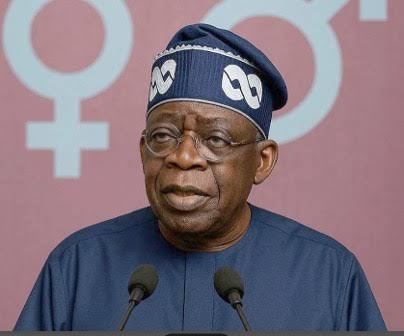
“For now, military authorities remain firm in their position: The latest operation that targeted Abu-Bilal Al-Manuki represents a validated, intelligence-driven success against a senior figure of the Islamic State network. And in their words, this time, they are “100 per cent certain.”
Recall that in April 2024, the Defence Headquarters revealed some of the identities of terrorist commanders killed in Northern Nigeria, including the head of the Is-Al Furqan Province (ISGS and ISWAP), Abu Bilal Minuki also known as Abubakar Mainok.
The then Director, Defence Media Operations, Edward Buba while addressing the press said Mainok, who operated along Birnin Gwari Forest in Kaduna State and the Abuja-Kaduna Highway, was killed by troops on February 21.
Buba explained that one of Mainok’s gang members, popularly known as Haruna Isiya Boderi was also killed by troops alongside Kachallah Damina, another terrorist on March 24.
The military high command said Damina was killed alongside over 50 other terrorists including Kachallah Alhaji Dayi, Kachallah Idi (Namaidaro), Kachallah Kabiru (Doka), Kachallah Azarailu (Farin-Ruwa), Kachallah Balejo, Ubangida, Alhaji Baldu.
Buba said the terrorist commanders were among no fewer than 2,351 terrorists killed, and 2,308 arrested by troops in the first quarter (Q1) of 2024.
In his words, “The armed forces are fighting a vicious enemy in the ongoing operations across the country. Nevertheless, the military is ready, prepared, equipped and focused on what to do with these terrorists and their cohorts.
“Surely, we have been collecting intelligence, hunting them and striking them where they may be hiding and hibernating. Our aim is to kill this terrorist and the infrastructure that supports them,” he said.
The Defence Headquarters credited the achievements to the synchronised airstrikes of both ground and air troops, carried out on terrorists’ enclaves.
He said, “For instance, immediately upon acquisition of vital targets, fighter jets are scrambled to carry out major bombarding raids on significant terrorist enclaves.
“Troops equally conducted ambushes, raids, fighting patrols and offensive against the terrorist. The attacks and offensive actions by troops during the period Jan – Mar 2024 resulted in 2,351 terrorists neutralised, 2,308 persons arrested and 1,241 kidnapped hostages rescued.
But the military has now said that the terrorist killed in 2024 is actually not Mr Mainok.
According to the military, similarities in names and aliases are common within insurgent networks operating across the Lake Chad region.
The Defence Headquarters (DHQ) provided a different explanation from the Presidency on the controversy surrounding the killing of Abubakar Mainok.
As the controversy continued to rage, the Defence Headquarters issued a statement on Saturday that appears to contradict the presidency’s statement.
Trying to defend itself and prove to the doubting public that, indeed, the ISIS leader is no more, the Defence Headquarters did not directly describe the 2024 report as an intelligence error or mistaken identity.
Instead, it emphasised that the use of identical aliases among insurgents remains common in the region.
Samaila Uba, the spokesperson for the Defence Headquarters, explained the apparent contradiction stemmed from the widespread use of similar names and aliases among fighters of the Islamic State West Africa Province (ISWAP) and Boko Haram.
In his words, “it is important to state that within the North East region and across the Lake Chad Basin, the use of similar or identical names, aliases and nom de guerres is common among ISWAP and Boko Haram terrorists,” Mr Uba, a major general, stated.
According to him, the practice forms part of the insurgents’ indoctrination process aimed at deliberately obscuring identities and complicating counterterrorism operations.
He said the Mr Mainok killed in the latest strike had been positively identified through human intelligence and technical surveillance.
“The Abu-Bilal Al-Minuki eliminated on 16 May, 2026, has been positively identified through human intelligence and technical surveillance as a senior global operative within the Islamic State network, with direct links to international terrorist coordination, funding and operations across the Sahel. There is therefore no ambiguity in his identity,” he added.