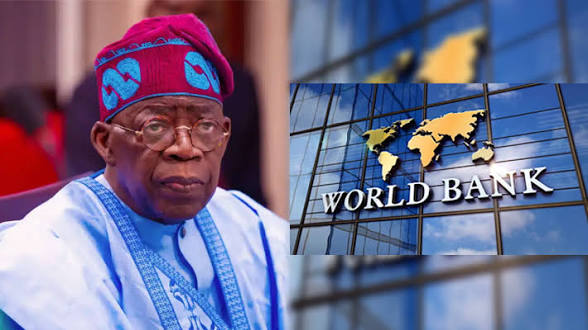
Something has been building quietly across timelines, comment sections, public discussions, and economic conversations in Nigeria, something that did not begin with a single moment but gathered weight over time until it spilled into global attention, especially on the pages of the World Bank, where Nigerians suddenly appeared in large numbers expressing anger, concern, and demand for a pause on fresh borrowing discussions tied to Nigeria’s financial future under President Bola Tinubu.
The spark that pulled attention was a reported proposed $1.25 billion loan package linked to development programs expected to support sectors such as electricity expansion, digital infrastructure, agriculture, economic reforms, and job creation, with discussions circulating around an approval timeline projected for June 26 2026.
What made the moment stand out was not only the existence of the loan discussion but the intensity of public reaction that followed online, where Nigerians turned social media platforms into a pressure point, questioning the direction of borrowing, the visibility of past projects, and the long term implications of rising debt.
The story is not just about a loan request, it is about accumulated frustration, economic pressure felt at household level, and a widening trust gap between policy announcements and lived reality, which is why the reaction quickly grew beyond commentary into something far louder and more coordinated in appearance.
Trigger Point Behind Loan Announcement Pressure
Reports circulating in public discourse suggested that the Nigerian government entered discussions for a new financial package worth $1.25 billion aimed at supporting national development programs framed under investment and job acceleration initiatives.
These discussions were linked to sectors that often dominate Nigeria’s economic agenda, including power supply challenges, digital expansion strategies, agricultural support systems, and broader macroeconomic reform plans designed to stabilize growth indicators.
The proposed structure of the program, reportedly tied to long term development financing, placed it within the category of multilateral lending conversations that Nigeria has engaged in repeatedly over the years with international financial institutions, particularly the World Bank.
Public attention intensified when the details spread across social platforms, where many Nigerians interpreted the timing of another large borrowing discussion as part of a pattern rather than an isolated policy decision, especially given existing concerns around national debt levels.
This interpretation became the emotional trigger that pushed online users from passive reading into active participation, resulting in widespread engagement directed at official social media pages associated with the lending institution.
Digital Outcry Across Social Platforms
Once the loan discussion became widely circulated, Nigerian users began to flood comment sections under posts shared by the World Bank on Instagram and other platforms, creating a visible wave of coordinated digital expression that quickly drew attention.
Comments were centered around demands to reconsider further lending, with repeated concerns about repayment burden, project transparency, and the perceived cycle of borrowing without visible proportional development outcomes.
Many users expressed frustration using direct language that called for a halt to additional loans, while others framed their messages around accountability for previous financial assistance already extended to the country over past years.
The scale of engagement became so large that it was described in multiple reports as overwhelming to standard comment moderation systems, creating the impression of a digital protest that was sustained over time rather than a short burst of activity.
This wave of reactions did not emerge from a single organized group but appeared as a convergence of individual sentiments shaped by shared economic anxiety and long standing public debate on national borrowing practices.
Comment Restriction Response Pattern Observed
Following the surge in comments, the World Bank reportedly implemented restrictions on comment sections under certain posts, a move that was interpreted by observers as a response to unusual volume and repeated messaging patterns.
While no official statement explicitly confirmed that Nigerian users were the sole reason for the restriction, the timing of the limitation aligned closely with the peak of online engagement related to the loan discussions.
Some observers interpreted the restriction as a moderation response designed to manage spam like activity, while others viewed it as a necessary step to maintain platform stability during sudden spikes in engagement.
The lack of a direct explanatory statement created space for speculation, which further fueled online conversation and deepened public interest in the broader issue of Nigeria’s borrowing trajectory.
Despite the restrictions, engagement did not disappear entirely, instead shifting across other platforms and continuing through discussions on debt sustainability and governance accountability.
Debt Pressure Rising Public Concern
A major driver behind the online reaction is Nigeria’s ongoing debt profile, which has become a recurring point of national debate among economists, policymakers, and citizens.
Public discussions often reference figures placing Nigeria’s total debt burden in the range of ₦159 trillion, a number that has become symbolic in conversations about fiscal pressure and long term repayment obligations.
Debt servicing projections have also contributed to concern, with estimates suggesting that a significant portion of government revenue may be directed toward repayment obligations, including figures around $11.6 billion projected for 2026 in some analyses.
For many citizens, these numbers are not abstract statistics but indicators of reduced fiscal space for domestic investment in infrastructure, healthcare, education, and employment generation programs.
The perception that a large share of national income is allocated to servicing existing debt has strengthened skepticism toward additional borrowing proposals, especially when visible outcomes are not clearly felt at community level.
Public Trust Crisis – Governance Memory
The reaction toward new borrowing discussions is also shaped by a broader trust issue that has developed over years of economic policy cycles in Nigeria, where loans are often announced with development objectives but later questioned in terms of execution.
Many citizens express concern that repeated borrowing does not always translate into proportional infrastructure delivery or measurable improvement in living standards, creating a gap between policy intention and public perception.
This gap has gradually influenced how new financial announcements are received, with skepticism becoming a default reaction rather than optimism, especially when tied to external lenders such as the World Bank.
Social memory of past projects, unfinished infrastructure, and delayed reforms contributes to this sentiment, reinforcing the idea that accountability mechanisms are not sufficiently visible or reassuring to the public.
As a result, each new borrowing discussion becomes part of a larger narrative rather than a standalone event, which intensifies reaction even before official approval processes are completed.
Political Climate Borrowing Debate
The broader political environment under President Bola Tinubu has also influenced how borrowing discussions are interpreted, particularly as economic reforms and fiscal adjustments continue to shape national discourse.
Debates around subsidy reforms, currency adjustments, and infrastructure funding have created a backdrop where financial decisions are closely watched and frequently debated in public spaces.
Within this climate, any announcement involving external borrowing is quickly connected to wider questions about economic direction, debt sustainability, and long term national planning strategies.
Opposition voices and civic commentators often use these moments to highlight concerns about fiscal responsibility, while supporters emphasize development needs and structural investment gaps.
This tension creates an environment where financial policy is not only technical but also highly emotional and politically sensitive.
Global Lending Context Nigeria Position
Nigeria’s relationship with international financial institutions, including the World Bank, has historically involved multiple cycles of borrowing, repayment, and renewed engagement for development financing.
These arrangements are typically framed around long term development goals such as infrastructure expansion, economic diversification, and social sector investment, reflecting structural needs within the economy.
However, public interpretation of these arrangements often differs from official framing, especially when visible outcomes are slow to materialize or unevenly distributed across regions.
This difference in perception plays a significant role in how new loan discussions are received by the public, contributing to skepticism and active online response.
As global financial systems continue to offer structured lending pathways, domestic reception remains heavily influenced by lived economic experience and trust in governance outcomes.
Timeline Sequence Emerging -Public Narrative
The reported sequence begins with discussions around a proposed $1.25 billion loan package tied to development programs aimed at economic reform and infrastructure support.
Attention increased as details circulated publicly, leading to heightened engagement across social platforms where citizens began reacting to perceived implications of additional borrowing.
By the period leading up to June 26 2026, the discussion had already expanded beyond policy circles into mainstream public discourse, especially online communities.
The surge in comments on official pages of the World Bank marked a visible peak in digital reaction, followed by moderation measures that limited comment visibility in some instances.
This sequence reflects how modern policy debates now move rapidly from official announcements to global public engagement within short timeframes.
Reality Check: Official Position Status
Despite the intensity of online reactions, there has been no official indication that lending activities to Nigeria have been halted, and discussions at institutional level remain within formal negotiation frameworks.
Nigeria continues to engage with international partners on development financing, with borrowing discussions forming part of broader fiscal planning strategies rather than immediate final approvals.
The online reaction therefore represents public sentiment and pressure expression rather than a decisive policy outcome or termination of financial engagement.
While digital protests can influence conversation and draw attention to public concerns, final lending decisions remain subject to institutional review, government negotiation, and project approval processes.
This distinction is important in understanding the gap between social media momentum and formal economic policy execution.
Reflection On Public Voice
The widespread reaction directed at the World Bank reflects a deeper national conversation about debt, trust, and economic direction under President Bola Tinubu, where citizens are increasingly using digital platforms to express concern over financial decisions that shape their daily realities.
What appears as a viral online moment is actually the surface of a longer running debate about sustainability, accountability, and the future cost of repeated borrowing in a developing economy.
The strength of the reaction shows that public engagement with economic policy is no longer passive, as citizens now actively respond to global institutions in real time when national decisions are announced or discussed.
Whether this digital pressure will influence future borrowing conversations remains part of an unfolding story, but what is already clear is that the conversation around Nigeria’s debt is no longer confined to official rooms, it now lives openly in public spaces where every voice competes for attention.