
There are moments that appear ordinary when they happen, yet become difficult to ignore once they leave the room and enter the public space, and the brief exchange between a UBA graduate trainee and Tony Elumelu has taken precisely that route, turning what looked like a simple introduction at a graduation ceremony into a much wider conversation about respect, age, corporate culture and the way Nigerians address people who occupy positions of authority, with every new clip and reaction adding another layer to an incident that has already travelled far beyond the event where it began, while the identities and comments attached to the conversation have made the episode even more difficult for social media users to treat as just another passing viral moment.
The exchange that started the conversation
The incident happened during the UBA Graduate Management Accelerated Programme graduation ceremony, where Elumelu was engaging with graduating trainees and taking questions from the audience, and when one female graduate trainee stood up to speak, she began her interaction with a greeting that immediately caught Elumelu’s attention, saying, “Good morning, Tony,” before the exchange took an unexpected turn when Elumelu appeared to hear another name and responded, “Toyin? Toyin?”, prompting the young woman to clarify that she had said Tony, after which the billionaire businessman made his preference about how he should be addressed clear to everyone present.

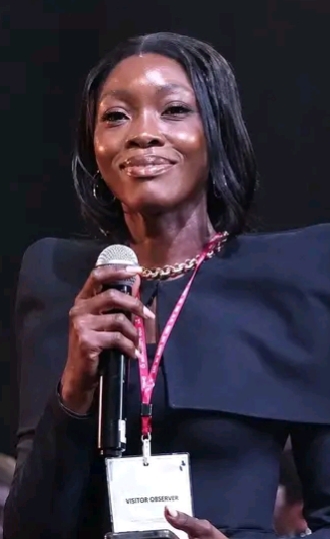
Elumelu then told her, “Okay. No, you won’t call me Tony. You’ll call me Mr Elumelu or TOE. You won’t call me Tony, or Chairman. I don’t subscribe to that kind of… Oyinbo life, okay?”, and the trainee quickly adjusted her greeting, responding, “Good morning, Mr Elumelu,” before continuing with the question she had originally intended to ask, with the exchange itself lasting only a brief moment but generating a much larger conversation after the video began circulating online, as viewers started examining not just what was said but the social expectations surrounding the way a young employee addresses a much older executive.
The immediate correction became the part of the video that drew the most attention because it placed 2 different ideas of professional interaction directly beside each other, with one side seeing first name usage as a normal feature of modern corporate communication and another seeing the relationship between age, authority and Nigerian social etiquette as important enough to require a formal title, and that difference became even more noticeable because the woman did not argue with Elumelu or continue insisting on the name she had used, instead accepting the correction and moving on with the interaction.
Peller’s Reaction Brings a Different Angle to the “Tony” Controversy


TikTok creator Peller also weighed in on the viral exchange between Tony Elumelu and the UBA graduate trainee, but his reaction went beyond simply arguing over whether the young woman should have used Elumelu’s first name, with the content creator drawing attention to how the same incident might have been interpreted if the person involved came from a less privileged background or did not have the educational credentials of the trainee. His comments added a distinctly social dimension to the controversy because he questioned the way Nigerians often connect behaviour to education and social class.
Peller’s reaction was delivered in his characteristic conversational style, with the TikToker imagining how people would have responded if “someone like us” had been the person who addressed Elumelu as Tony, arguing that the criticism would likely have taken a very different direction. He said, “If it was someone like us who did what that lady did to Tony Elumelu, they would start saying, ‘That is why I say education is important.’ That girl is a graduate o.”
He continued by pointing to Elumelu’s age and argued that the question of respect should not be reduced entirely to educational background, saying, “And she open her wide mouth say good morning Tony. Person wey be say make we leave money aside, age alone will cover you down.” That part of his reaction is important because Peller was effectively separating 2 issues, the woman’s status as a graduate and the more traditional Nigerian expectation that age itself should command a certain level of respect.
Peller then returned to his comparison with people from less privileged backgrounds, saying, “If say na person like us, dey go say na because he is uneducated. He did not go to school. Them go whine your career…” His point therefore was not simply that the trainee was wrong to call Elumelu Tony, but that society can sometimes explain the same behaviour differently depending on who commits it, with education, class and social standing influencing the way people interpret the person involved.
His reaction became particularly relevant because the original controversy had already developed around questions of age, corporate etiquette and generational behaviour, while Peller introduced another consideration by asking how the reaction might change if the person standing before Elumelu did not have the same educational or social profile as the trainee. That gave his comments a different emphasis from reactions that focused entirely on whether the greeting itself was respectful enough.
Israel DMW’s harsh reaction


Among the public figures who reacted strongly was Israel DMW, Davido’s aide, whose response went beyond the question of whether calling Elumelu Tony was appropriate and connected the incident to upbringing, social media culture and what he described as a wider generational problem, writing, “Can you just imagine? Effects of online university graduate, lipstick, eyelashes, TikTok, Gen Z shit, and lack of home training.”
Israel’s choice of words made his position particularly direct because he did not treat the moment as an innocent mistake involving corporate communication, instead linking the trainee’s conduct to what he described as the influence of online education, beauty culture, TikTok and a lack of home training, making the exchange part of a much broader complaint about how younger Nigerians are perceived to approach older people and figures of authority.
His reaction consequently became part of the viral conversation itself, because the original video was no longer being discussed solely on the basis of Elumelu’s correction, with the response from people such as Israel adding another dimension to the story and bringing the familiar Nigerian idea of home training into a debate that had initially appeared to be about workplace etiquette.
Daddy Freeze brings age into the debate

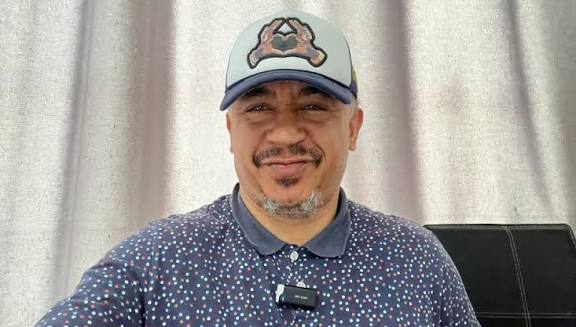
Daddy Freeze also reacted to the incident, placing particular emphasis on Elumelu’s age and position, with his reported statement reading, “How would you look at 63 year old Tony Elumelu and say ‘Tony’? Gen Zs lack common sense. I’m not embarrassed for the girl, I’m embarrassed for her parents.”
That reaction gave the conversation a distinctly generational tone because the question was no longer simply whether first names are accepted in modern workplaces, but whether there are situations where age and social standing should naturally lead a younger person to use a more formal form of address, particularly when the person being addressed is not just an older individual but also the chairman of a major financial institution.
Daddy Freeze’s response also placed responsibility beyond the trainee herself by bringing her parents into the discussion, suggesting that the incident could be viewed as a reflection of how young people are taught to relate to older people, and that became significant because it reinforced the argument that Nigerian etiquette cannot always be separated from the environment in which a person was raised.
Lizzy Jay’s traditional respect argument


Nollywood actress and comedian Lizzy Jay also joined the conversation, with her reaction reportedly focusing on the same question of familiarity and respect while bringing actress Toyin Abraham into the discussion, an angle that added another layer to the debate because the issue was no longer restricted to Elumelu’s specific position but became connected to the broader Nigerian habit of using titles and respectful forms of address when speaking to people who are older or occupy senior positions.
The point behind that perspective rests on a distinction many Nigerians understand instinctively, which is that knowing someone’s first name does not necessarily mean having the social permission to address that person by it, particularly when there is a substantial age difference or a clear professional hierarchy between both individuals, and that distinction is one reason the exchange resonated so strongly with viewers who saw the trainee’s greeting as overly familiar rather than simply modern.
Fr Kelvin Ugwu asks a different question


Catholic priest and commentator Fr Kelvin Ugwu approached the incident from another direction, questioning what the trainee had actually done wrong and pointing to the reality that first name communication is common in many Western professional environments, where employees can address senior executives without automatically attaching titles to their names.
That perspective is important because it introduces the possibility that the trainee’s greeting may not have been intended as an insult or deliberate act of disrespect, especially in an environment connected to a large corporate organisation where modern management practices can sometimes encourage openness, accessibility and less rigid communication between junior and senior employees, meaning that the same words can carry very different meanings depending on the culture surrounding the person using them.
The question raised by Ugwu therefore goes beyond the individual involved and touches the workplace itself, because if an organisation operates within a modern corporate environment that values direct communication, a younger employee may reasonably assume that first name usage is acceptable until an individual tells them otherwise, and that is precisely why Elumelu’s correction became so important to the discussion because he was able to establish his personal preference immediately.
Omoyele Sowore takes the argument further


Activist Omoyele Sowore took an even more confrontational approach to the controversy, challenging the power relationship behind Elumelu’s insistence on being addressed as Mr Elumelu or TOE and questioning why there should be such a strong expectation of deference from a billionaire executive.
Sowore’s intervention therefore moved the discussion away from etiquette alone and towards authority, status and the expectations that come with wealth and corporate power, making his reaction different from those who simply argued that the trainee should have shown more respect because of Elumelu’s age or position, as the focus became the reason a particular form of address should carry such importance in the first place.
The reaction also brought an older tension between Sowore and Elumelu back into public conversation, giving the episode a wider context beyond the graduation ceremony and ensuring that the debate around the trainee was being viewed through several different personal and ideological lenses.
Morayo Brown highlights the corporate culture question

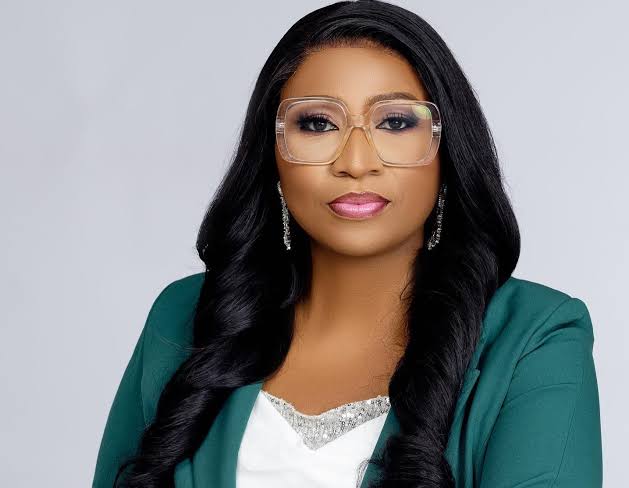
Media personality Morayo Brown offered a perspective that placed the incident within the complicated meeting point between Nigerian culture and modern corporate practice, a distinction that helps explain why the same exchange can be interpreted so differently by people who watched exactly the same video.
First name communication is not unusual in many corporate environments, particularly organisations influenced by multinational management culture, and it can be used to create a workplace where employees feel less intimidated when speaking to senior figures, while Nigerian social culture often attaches considerable importance to age, status and respectful titles, especially when a younger person is addressing someone who is substantially older.
That collision is at the heart of the Elumelu controversy because the trainee was not speaking to a stranger at a social gathering, nor was she addressing an ordinary colleague at the same level of seniority, she was speaking at a formal UBA programme to the person who sits at the top of the organisation’s hierarchy, which makes the question of context particularly important when interpreting what happened.
Shaffy Bello’s old comments return to the spotlight

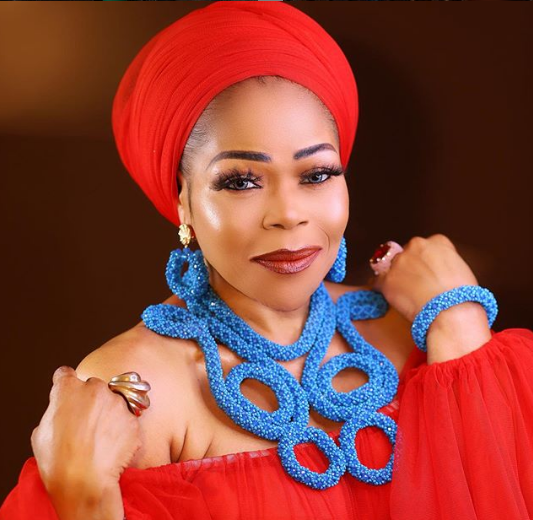
Shaffy Bello’s name became part of the conversation for a different reason, and this distinction matters because her widely circulated comments were not originally made as a reaction to the Elumelu incident, instead they were older remarks about how younger people address her, but they resurfaced because her position closely resembles the cultural argument being made around the UBA exchange.
Bello has previously spoken about younger people calling her simply “Shaffy” and explained that she sometimes corrects them because of the age difference between herself and some of those people, particularly because she has children around the age of some younger people who approach her, and she has made it clear that she expects a certain level of respect when younger people address her.
One of her remarks that resurfaced during the controversy was, “Even children in the U.S. call me ‘Ma’,” while another statement that began circulating again was, “This is Africa,” reflecting her view that Nigerian cultural expectations around age and respect cannot simply be discarded because younger people have become accustomed to different forms of communication.
Bello has also expressed irritation at younger people approaching her with a simple “Hi” rather than using a more respectful greeting, making her older comments particularly relevant to the Elumelu debate even though she was not directly reacting to the UBA trainee, because they demonstrate that the question of first name familiarity has existed as a broader generational issue long before this particular video went viral.
The Stanford video changes the conversation
The controversy took another turn when an older video resurfaced showing Elumelu participating in a session at Stanford Graduate School of Business, where a student interviewer greeted him with, “Hi Tony,” and he did not appear to object to the use of his first name.
That clip immediately became relevant because viewers began comparing the Stanford interaction with the UBA exchange, especially the contrast between a young person abroad using Tony casually and the UBA trainee being told that she should instead use Mr Elumelu or TOE, and the comparison quickly became one of the most discussed aspects of the wider story.
Context remains important because the Stanford session took place within an American academic environment, while the UBA exchange happened during a corporate programme in Nigeria, meaning that the cultural expectations in the 2 settings were not necessarily identical, and the resurfaced footage does not by itself establish that Elumelu considers first name usage acceptable everywhere or that his position at UBA contradicts his behaviour at Stanford.
What the Stanford clip does show, however, is why the controversy became more complicated than the original video suggested, because people were now looking at Elumelu’s own interactions in different environments and asking whether the rules around how he should be addressed depend on the country, the setting, the institution or the relationship between the people involved.
First name culture inside corporate Nigeria
The discussion also brought attention to the fact that first name communication is not foreign to Nigerian corporate life, with some professionals pointing to experiences in banking where employees and managers have been encouraged to communicate using first names as part of efforts to reduce unnecessary hierarchy.
The reasoning behind that approach is straightforward because junior employees may feel more comfortable raising concerns, asking questions or challenging ideas when they do not feel that every interaction requires elaborate formalities, while senior employees can appear more approachable when the workplace does not insist on rigid titles at every turn.
That argument does not necessarily mean that every employee has the right to call every executive by a first name, because workplace culture can still depend on the preferences of the individual and the rules of the organisation, but it does show why the trainee’s greeting cannot automatically be interpreted as deliberate disrespect without considering the professional environment in which she had been operating.
Elumelu’s correction remains central
Regardless of the reactions that followed, Elumelu’s own words remain the clearest indication of how he wanted the interaction handled, because he explicitly told the trainee, “You won’t call me Tony. You’ll call me Mr Elumelu or TOE,” before adding, “You won’t call me Tony, or Chairman. I don’t subscribe to that kind of… Oyinbo life, okay?”


The distinction is notable because Elumelu did not simply demand that she call him Chairman, instead he rejected that option as well and gave her 2 alternatives, Mr Elumelu or TOE, which indicates that his objection was specifically connected to the first name Tony rather than a general desire to be addressed by the most prestigious title associated with his position.
The trainee’s response was equally straightforward because she did not challenge the correction or prolong the exchange, instead saying, “Good morning, Mr Elumelu,” and continuing with her question, which meant that the disagreement effectively ended at the ceremony even though the internet later transformed that brief interaction into a much larger public conversation.
Elumelu’s graduation post creates another wave
The story received another burst of attention after Elumelu later shared a highlight video from the GMAP graduation ceremony, showing moments from the event, including graduates and award presentations, but social media users immediately began searching the footage for the female trainee involved in the viral exchange.
Some commenters claimed they could not see her in the video and began speculating about whether her absence had any connection to the earlier interaction, with one person writing, “The person that compiled this video ? you didn’t add the reason we’re here,” while another directly addressed Elumelu, writing, “Hello Tony, you need to apologize to that young lady, thank you.”
Other comments focused on the search itself, with one user writing, “Not me looking for her in the crowd!” while another wrote, “You see as them no feature her abi? very good.”
Those reactions should be separated from established facts, however, because there is no confirmed evidence from the available reporting that the trainee was deliberately excluded from the graduation highlight video as punishment for what happened, and the online assumption remains speculation rather than a confirmed account of what occurred behind the scenes.
How the reactions connect
The names that became associated with the controversy represent several different ways Nigerians understand respect, workplace communication and age, with Israel DMW focusing heavily on home training and Gen Z culture, Daddy Freeze placing emphasis on Elumelu’s age and social position, Lizzy Jay drawing from traditional Nigerian etiquette, Fr Kelvin Ugwu questioning whether first name usage is inherently disrespectful, Morayo Brown highlighting the clash between corporate culture and Nigerian expectations, and Sowore challenging the power dynamics behind the demand for a particular form of address.
Shaffy Bello’s older comments entered the conversation because they offered a familiar cultural reference point, showing that the discomfort surrounding younger people addressing older Nigerians by their first names is not limited to Tony Elumelu or the banking industry, and the resurfaced Stanford footage introduced another dimension by showing Elumelu in an environment where the first name Tony was used without the same visible correction.
The result is a story that has grown beyond the few seconds captured during the UBA graduation ceremony, because the exchange has become a mirror for a much older Nigerian question about how people balance modern professional culture with traditional expectations around age, status and respect, particularly when the person involved operates comfortably across both Nigerian and international environments.
Why the brief moment became such a big story
The original exchange was remarkably short, but it contained several elements that naturally attract public attention, including a young graduate trainee, one of Nigeria’s most prominent business figures, a formal corporate event, a direct correction over a person’s name and a reference to “Oyinbo life,” all within a few seconds of conversation.
Once the clip circulated, viewers did not need to agree about what the trainee meant or what Elumelu intended for the debate to grow, because the words themselves were clear enough to invite different interpretations, and the arrival of celebrity reactions, older statements and the Stanford footage gave the public more material to compare with the original moment.
That is why the controversy has remained active across August 20, August 21 and August 22, 2026, with each new piece of context changing how people approach the original clip, while the central exchange itself remains remarkably simple: a trainee said Tony, Elumelu corrected her, she switched to Mr Elumelu and continued with her question.
The question beneath the viral video
At its core, the episode brings together 2 very recognisable cultures that increasingly meet inside Nigerian workplaces, with one placing greater emphasis on hierarchy, age and formal respect and the other favouring direct communication, accessibility and first name interaction, especially in professional environments influenced by international corporate practices.
Neither the Stanford footage nor the reactions from public figures erase the circumstances of the UBA exchange, just as the UBA exchange does not erase the fact that first name culture exists within modern corporate environments, and the distinction between those settings is precisely what has kept the conversation alive rather than allowing it to disappear after the original clip.
For the trainee, the moment ended when she accepted Elumelu’s preferred form of address and continued her question, but for everyone watching afterwards, the exchange opened a much larger conversation about what respect sounds like in modern Nigeria, whether familiarity should be earned before it is used, how much age should influence professional communication and whether the rules of corporate interaction remain the same when the setting changes.
The most striking part of the episode is therefore not simply that a young woman called a billionaire executive Tony, nor that the executive corrected her, but that a few words were enough to expose the complicated space between Nigerian social etiquette and modern corporate culture, with reactions from Israel DMW, Daddy Freeze, Lizzy Jay, Fr Kelvin Ugwu, Morayo Brown, Omoyele Sowore and the resurfaced comments from Shaffy Bello giving the incident several competing contexts.
Then came the Stanford footage, followed by the reactions to Elumelu’s graduation post, and suddenly the original exchange had become more than a moment at a graduation ceremony, because viewers were no longer looking at the clip in isolation, they were comparing different environments, different generations and different expectations of respect, making the “Tony” exchange one of those unusually small moments that reveal a much bigger conversation already taking place beneath the surface of Nigerian corporate life.